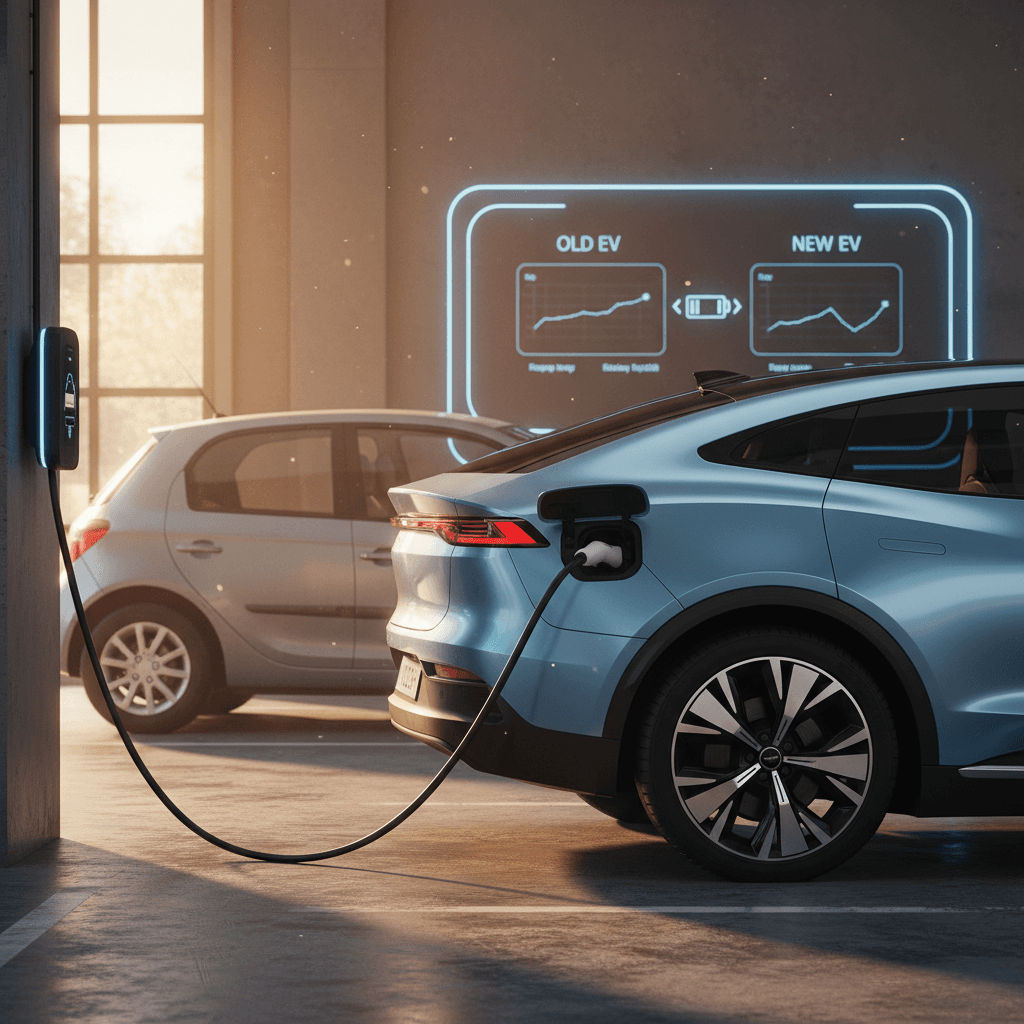
If you bought one of the early mainstream EVs, think 2013–2018 Nissan Leaf, BMW i3, early Tesla Model S or Model 3, you’re probably asking a familiar question in 2026: **is it time to upgrade from my older EV to a newer EV**? Range has changed, charging has changed, and so have used prices. The good news is that with today’s softer EV values and better battery tech, moving into a newer electric car can be one of the smartest value plays in the entire market, if you do it with a plan.
Why this matters now
Why Consider Upgrading From an Older EV?
Key benefits of upgrading to a newer EV
It’s not just about more range, though that helps.
More usable range
Faster charging
Better tech and safety
On top of that, the market has changed. New EV discounts, the end of federal EV tax credits after September 30, 2025, and a flood of off-lease vehicles drove **steep depreciation** in 2024–2025. That hurt first owners, but it created a sweet spot for shoppers moving from an older EV into a newer one, especially if you’re willing to buy used through a transparent marketplace like Recharged that verifies battery health and fair pricing.
7 Signs Your Older EV Is Ready for an Upgrade
Checklist: Is it time to upgrade your older EV?
1. Your real-world range feels limiting
If you used to comfortably do your daily routine at 60–70% charge but you’re now starting every day at 90–100% just to feel safe, your **usable range cushion** has probably shrunk enough to justify looking at newer options.
2. You’ve lost 20–30% of original range
Modern fleet data shows many EVs still retain around 80% of original capacity after 8 years of normal use. When you’re down more than 20–30% from new and it’s affecting how you drive, a newer EV can restore peace of mind.
3. Public charging has become a chore
Older EVs with 50 kW or slower DC charging can make road trips painfully long. If you find yourself skipping trips or routes because of charging time, you’re running into a **technology ceiling**, not just mild inconvenience.
4. You’re facing a big repair out of warranty
Suspension work, outdated infotainment modules, onboard chargers, or high-voltage components can get pricey once the basic warranties expire. If you’re staring at a four-figure estimate, compare it to upgrading into a newer EV with remaining coverage.
5. Your lifestyle has changed
Maybe you’ve moved to a colder climate, added a longer commute, or started taking regular road trips. Changes like these can turn a once-perfect 100–150 mile EV into a daily compromise.
6. Safety or tech is clearly behind the curve
If your car lacks modern driver assistance, LED headlights, over-the-air updates, or even basic smartphone integration that newer EVs offer, you’re not just missing comfort, you’re leaving **resale value** on the table by hanging on too long.
7. The numbers favor a newer used EV
Between lower fuel and maintenance costs and today’s aggressive used pricing, a 3–6 year-old EV can cost less to own each month than keeping an aging pioneer model, especially if you finance smartly and get a strong offer for your current car.
Battery Health: How Much Range Loss Is Too Much?
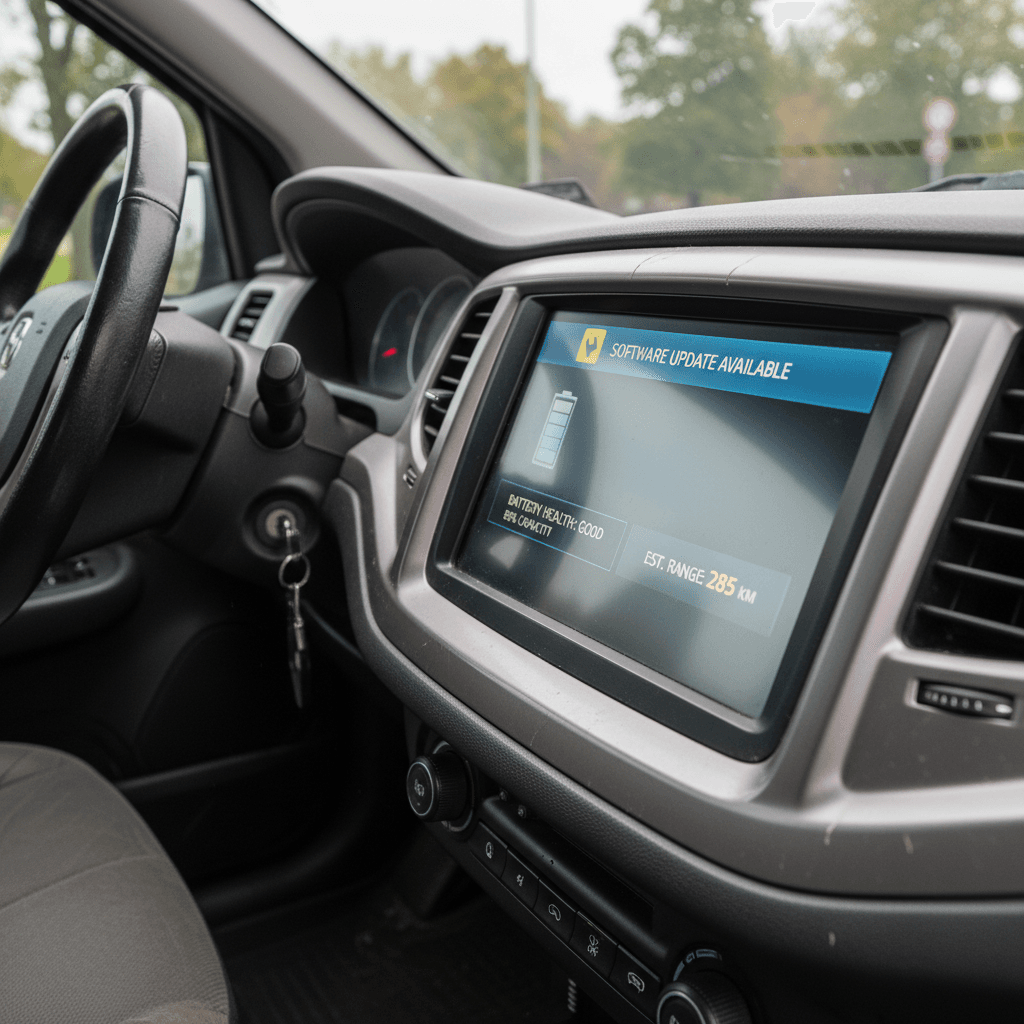
Your battery is the single biggest factor in deciding whether to **upgrade from an older EV to a newer EV** or keep driving what you have. The encouraging news: large real‑world studies on tens of thousands of EVs show average degradation around **1.5–2% per year** under typical use, and many modern packs still hold roughly **80% capacity after eight years** when treated reasonably.
What “normal” EV battery aging looks like
Use objective battery data, not guesswork
When you can confidently keep your older EV
- Battery health is above 80–85% of original capacity.
- Your daily driving fits easily within 50–60% of the usable range.
- DC fast charging still works reliably and isn’t painfully slow.
- You’re still within, or just outside, the factory battery warranty.
When it’s time to look seriously at upgrading
- Battery health is sliding below 75–80% and falling.
- You routinely hit 0–5% on normal days or have to top up mid‑day.
- Public charging is limited by an outdated connector or low power limit.
- The cost of a potential pack repair or replacement dwarfs your car’s value.
Cost Math: Keep Your Older EV or Upgrade?
Upgrading only makes sense if the math holds up. In 2026, EV depreciation has already done much of its damage. Many 3–6 year-old EVs have taken a large value hit, but their **running costs remain low**, and their batteries still have a lot of life left. That combination can make a newer used EV cheaper to own than clinging to a first-generation model that’s losing relevance and range.
Cost comparison: keeping an older EV vs. upgrading to a newer used EV
Illustrative monthly cost comparison for a typical U.S. driver around 12,000 miles per year. Numbers are directional, not quotes.
| Line item | Keep 10-year-old EV | Upgrade to 4-year-old used EV |
|---|---|---|
| Loan/lease payment | $0–$150 (if paid off) | $350–$450 (used purchase/finance) |
| Electricity/fuel | $40–$60 | $40–$60 |
| Maintenance & repairs | $120–$200 | $60–$110 |
| Registration/insurance | $90–$130 | $110–$150 |
| Total monthly cost (est.) | $250–$540 | $560–$770 |
Older EVs can be cheap to keep if the battery is healthy, but a newer used EV can deliver more range and safety for a similar monthly outlay when depreciation has already done its work.
How this math really works
Choosing Your Next EV: Newer Used or Brand-New?
Three upgrade paths from an older EV
Each has tradeoffs in cost, tech, and risk.
1. Newer used EV (3–6 years old)
2. Nearly new EV (1–3 years old)
3. Brand-new EV
For most people upgrading from a first‑wave EV, a **3–6 year-old used EV** hits the balance of price, range, and features. You skip the biggest value drop, still pick up major gains in range and safety versus your current car, and you’re not betting your budget on early‑adopter pricing. That’s exactly the segment Recharged is built around: inspected used EVs with verified battery health and transparent history, plus financing and nationwide delivery to make the swap painless.
Step-by-Step: How to Upgrade From an Older EV to a Newer EV
Practical steps to go from older EV to newer EV
1. Clarify how much range you truly need
Track your daily and weekly driving for a few weeks. Note your longest regular days, plus a handful of yearly trips. For many owners, a comfortable buffer is **2× your longest regular round-trip** in rated range.
2. Get an objective battery health report on your current EV
Whether through a dealer, independent specialist, or a marketplace like Recharged that can ingest diagnostic data, get a **real state‑of‑health number**. This will influence both your trade‑in value and whether upgrading now or later makes more sense.
3. Set a total monthly cost target, not just a payment
Instead of asking, “What payment can I get?” look at **total monthly cost**: payment (if any), charging, insurance, and realistic maintenance. This is how you avoid being lured by a low payment that hides higher running costs.
4. Shortlist 2–3 newer EVs that fit your life
Look for models that comfortably exceed your range needs, support a charging network you can actually use, and have solid reliability data. Recharged’s listings and model guides can help you compare real‑world range, charging speeds, and common trouble spots.
5. Get trade-in or instant offer quotes for your old EV
Get numbers from multiple sources, local dealers, instant‑offer services, and a specialist like Recharged that knows how to value EVs with healthy batteries. A transparent EV‑specific offer can easily beat a generic dealer bid.
6. Compare financing and ownership paths
Decide whether you want to **finance, pay cash, or possibly lease**. In a quickly evolving tech segment, shorter terms and modest down payments can make sense so you’re not locked in if the market shifts again.
7. Time your move around maintenance and seasons
If a major service is due soon or winter will further shrink your range, upgrading a few months earlier can pay off in fewer headaches and better trade‑in appeal.
How to Get the Most for Your Old EV
What increases your older EV’s value
- Documented battery health that shows capacity and charging behavior.
- Service records, software update history, and recall completion.
- Included home charging equipment (proper Level 2 unit can be a plus).
- Clean interior/exterior with no obvious cosmetic neglect.
- Popular color and configuration for your region.
What drags value down fast
- Heavy degradation, missing or damaged fast‑charging capability.
- Accident history that involved the battery or high‑voltage system.
- Title issues (salvage, rebuilt) or missing documentation.
- Obvious owner modifications to electrical systems.
- Outdated, unsupported infotainment hardware with known issues.
Where Recharged fits in
Ready to find your next EV?
Browse Vehicles- Detail the car and fix obvious, low‑cost cosmetic issues before photos or appraisals.
- Make sure all charging cables, adapters, and manuals are present and neatly organized.
- Have your most recent battery or service reports handy for potential buyers.
- Photograph the car in good light, with the **state of charge and range** visible on the dash for online listings.
Common Mistakes to Avoid When Upgrading EVs
Upgrade mistakes that cost owners money
Biggest upgrade missteps
Learn from other owners’ experience, not your own wallet.
Ignoring battery health
Chasing the lowest price only
Overlooking charging compatibility
Don’t stretch too far on term length
FAQ: Upgrading From an Older EV to a Newer EV
Frequently asked questions about upgrading your EV
Bottom Line: When Upgrading Your EV Makes Sense
Upgrading from an older EV to a newer EV in 2026 isn’t about chasing the latest gadget. It’s about regaining **usable range, charging convenience, and peace of mind** at a time when used EV pricing is unusually attractive and battery durability looks better than early skeptics predicted. If your current car’s battery is still strong and fits your life, there’s nothing wrong with driving it longer. But if range anxiety has crept back in, repairs are piling up, or you’re staring at outdated tech, this is a compelling moment to step into a newer electric car, especially a carefully vetted used one.
The smartest path is simple: measure your real needs, get an honest read on your battery, and compare total ownership costs instead of just payments. A marketplace like Recharged, with financing, trade‑in or instant offer options, nationwide delivery, and a Recharged Score on every EV, can turn that upgrade from a guess into a confident decision. That’s how you make your next electric car not just newer, but genuinely better for the way you drive.