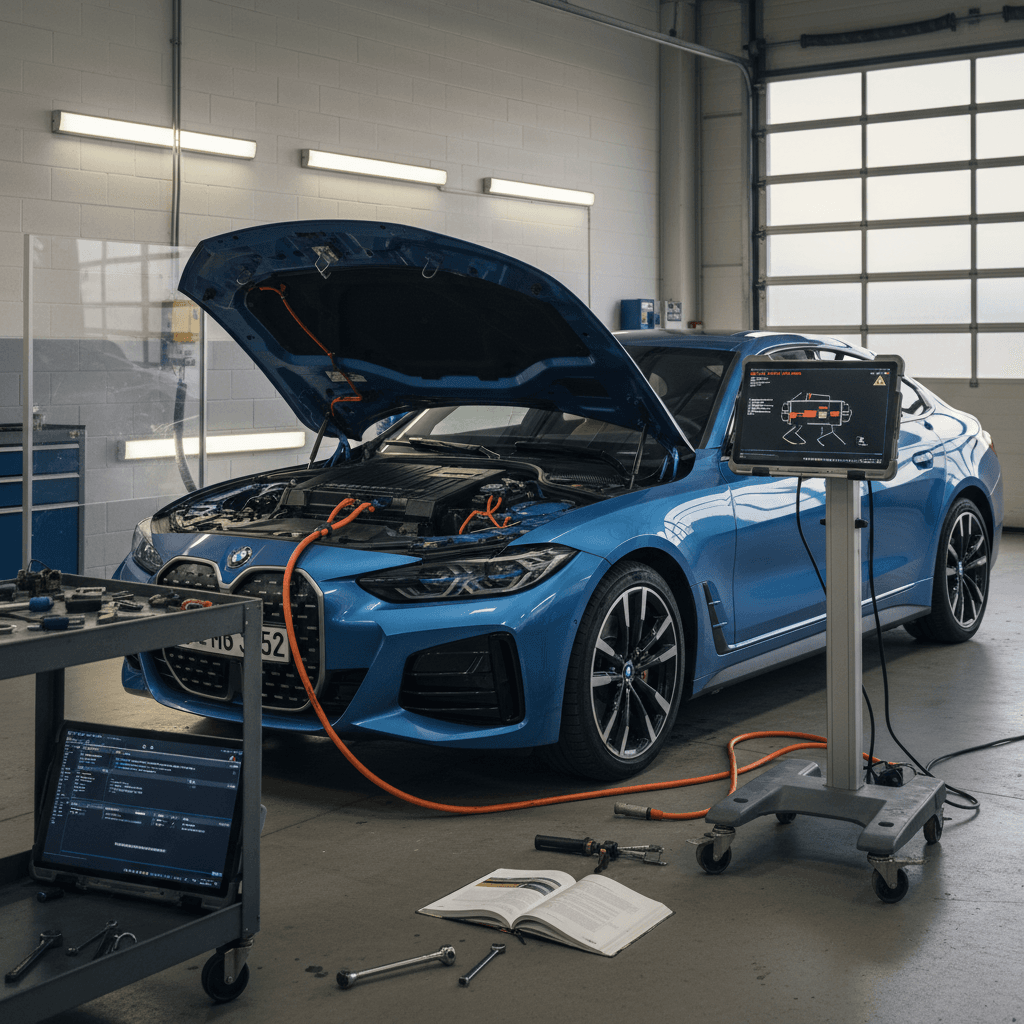
If you own or are shopping for a 2022 BMW i4, you’ve probably heard about one or more recalls, especially around the high‑voltage battery. This guide pulls together the most important 2022 BMW i4 recalls list in one place, explains how serious each issue is, and shows you how to check any i4 (particularly a used one) for open campaigns before you drive or buy.
Model years covered
Overview: Why 2022 BMW i4 recalls matter
BMW’s first mass‑market EV sedan, the i4 (G26), launched in the U.S. for the 2022 model year. Like most first‑wave EVs, the 2022 i4 has gone through a few safety recalls, mainly around its high‑voltage battery and the software that controls it. These issues are serious enough that BMW and NHTSA stepped in, but they’re also fixable when you know what to look for.
2022 BMW i4 recall landscape at a glance
From a buyer’s perspective, recalls are not an automatic deal‑breaker. In fact, a 2022 i4 that’s had all recall work completed can be a better, safer car than one built later with outstanding issues. The key is knowing which recalls exist, how risky they are if left unaddressed, and how to verify completion on any VIN you’re considering.
Quick 2022 BMW i4 recalls list
Major U.S. recalls affecting the 2022 BMW i4
High-level summary of the key recalls that apply to at least some 2022 BMW i4 vehicles. Exact coverage depends on VIN and build date; always confirm using a VIN lookup.
| Recall ID (NHTSA) | Approx. year announced | Component / issue | Risk if not fixed | Typical remedy |
|---|---|---|---|---|
| 22V-541 | 2022 | High-voltage battery may short-circuit | Fire risk and warning to stop driving or charging | Battery module inspection and replacement of affected packs |
| 22V-944 | Late 2022 | Battery management software (SME control unit) | Unexpected power shutdown, possible loss of propulsion | Update high-voltage battery ECU/software |
| 2024 drive-motor software recall | 2024 | Electric drive motor software may wrongly shut down HV system | Sudden loss of drive power while driving | Update inverter / drive-motor control software |
| Other service actions | Ongoing | Items like coolant valve, driver-assistance camera, charging hardware | Reduced performance or features, nuisance warnings | Software updates or part replacement as needed |
Always confirm recall applicability by VIN, two cars built the same year may have different campaign histories.
Recall scope varies by VIN
High-voltage battery recall 22V-541: Short-circuit and fire risk
The most widely discussed early i4 campaign is Safety Recall 22V-541, covering a small number of 2022 BMW i4 Gran Coupes built roughly between late November 2021 and mid‑June 2022. In these cars, certain high‑voltage battery modules may have been manufactured out of spec, creating a risk of internal short circuit and thermal event.
- Applies to: Select 2022 BMW i4 Gran Coupe vehicles built in the first months of production
- Issue: Potential internal short‑circuit within a high‑voltage battery module
- Symptoms: In many cases, there may be no warning before a failure
- Risk: Increased risk of fire and sudden loss of drive power
- BMW response: Stop‑drive guidance for affected VINs until inspected and repaired
Why this recall is taken so seriously
If a 2022 i4 you’re considering was in the affected VIN range, BMW dealers either replaced the entire high‑voltage battery pack or verified that it used unaffected modules. Once the work is documented as completed, there’s no ongoing special limitation, but it’s smart to keep those service records with the vehicle history for future buyers.
Questions to ask about recall 22V-541 on a used 2022 i4
1. Was this VIN ever in the 22V-541 population?
Ask the seller for a printout from BMW’s internal system or NHTSA’s site showing whether the car was covered by 22V-541 at any point.
2. If yes, what repair was performed?
Confirm if the high‑voltage battery was <strong>replaced</strong> or just inspected and cleared. A full pack replacement can be a long‑term positive for a used‑EV buyer.
3. When was the repair done?
Repairs completed in late 2022 or 2023 should show up on BMW service history. A more recent repair means less calendar time on the new pack.
4. Are documents available?
Service invoices or BMW recall completion letters are gold when it comes to proving the work was done correctly and on time.
Battery software recall 22V-944: Unexpected shutdown risk
A second major campaign, Recall 22V-944, also targets the 2022–2023 BMW i4. This one isn’t about the physical battery hardware but the control software in the high‑voltage battery management system (BMW calls this module the SME). Under specific conditions, the original software could mis-handle fault detection and trigger an unnecessary shutdown of the high‑voltage system.
- Applies to: 2022–2023 BMW i4 models produced between roughly November 2021 and October 2022
- Issue: Battery management control unit (SME) software logic could cause an unintended HV shutdown
- Symptoms: Loss of drive power, warning messages, and vehicle coasting to a stop
- Risk: Increased crash risk if shutdown happens at speed, though steering and braking remain functional
- BMW remedy: Reprogram the SME control unit with updated software (often via dealer visit; in some markets via OTA)
Software recalls are low-friction fixes
A lot of owners experienced this recall as nothing more than a scheduled service visit or an over‑the‑air update notification. Still, if you see “high‑voltage system” or “drivetrain” warnings on a 2022 i4, it’s worth checking whether this recall is complete and whether any fault codes remain after the software update.
Drive motor software recall (2024): Sudden loss of drive power
In 2024, BMW announced a large EV recall, over 70,000 vehicles across several models, including the 2022–2025 BMW i4, for a drive-motor software issue. In certain rare situations, the software could misinterpret a fault in the high‑voltage system and trigger a shutdown of the electric motors, leading to a sudden loss of drive power while driving.
- Applies to: Many 2022–2025 BMW i4 vehicles (all powertrains) depending on production period
- Issue: Inverter/drive-motor control software could shut down propulsion unnecessarily
- Symptoms: Sudden loss of acceleration with warnings related to drive system or high‑voltage system
- Risk: Elevated crash risk if the event happens at highway speeds or while overtaking
- BMW remedy: Update electric motor/inverter software to a revised version that handles fault logic correctly
For current owners
If your 2022 i4 hasn’t had this recall completed, you might not notice any symptoms at all. The software update is preventative: it reduces the chance of a no‑warning power loss in the future. Many owners only discover it via a notice in the BMW app or mail.
For used-vehicle shoppers
On a pre‑purchase inspection, verify that the drive‑motor software recall is closed. If it’s still open, you can negotiate to have the seller complete it before delivery, or factor the service visit into your plans right after purchase.
Good news: recalls improve the fleet over time
Other campaigns: Service actions and minor issues
Beyond the headline high‑voltage and drive‑motor recalls, 2022 BMW i4s can be subject to smaller service campaigns, quality enhancements, or regional recalls. These might not always show up in mainstream news stories, but they’re still worth checking, especially on a used car.
Typical non-battery campaigns seen on 2022 BMW i4s
Exact coverage depends on build date, options, and region.
Cooling & valves
Some i4s have had campaigns related to coolant changeover valves or thermal management components. Left alone, these usually cause reduced performance or error messages rather than safety risks.
Driver-assistance systems
Camera or sensor alignment campaigns may reduce issues with lane‑keeping, adaptive cruise, or automated braking. These are about restoring intended functionality and preventing nuisance warnings.
Charging hardware & software
Updates can improve charging reliability, communication with fast chargers, and compatibility with new infrastructure. For EV owners, these small campaigns can have an outsized impact on day‑to‑day usability.
Don’t ignore “service actions” in the fine print
How to check if a 2022 BMW i4 has open recalls
No matter where you’re buying, franchise dealer, independent lot, or private party, you should assume nothing and verify recall status by VIN. Fortunately that’s easy and free.
Step-by-step: Checking recall status on a 2022 BMW i4
1. Locate the VIN
You’ll find the 17‑character VIN on the lower driver‑side windshield, the driver‑door jamb label, registration, or insurance card. For an online listing, ask the seller to share it.
2. Run it through NHTSA
Go to the U.S. government’s recall lookup at nhtsa.gov/recalls and enter the VIN. This will show <strong>open safety recalls</strong> that have not yet been completed.
3. Check BMW’s own portal
Visit BMW USA’s safety and emissions recall page and plug in the same VIN. BMW’s system often lists recalls plus <strong>service campaigns</strong> that might not show in NHTSA’s tool.
4. Ask for a dealer printout
If you’re buying from a dealer, ask them to print the <strong>campaign and service history</strong> for the VIN. This will show what recalls were completed, when, and at what mileage.
5. Verify with service records
Cross‑check recall entries with invoices or digital service history. Consistent documentation is a strong signal the car’s been maintained by the book.
Don’t assume “no messages” means no recalls
What these recalls mean if you’re shopping a used 2022 BMW i4
As a used‑EV shopper, recalls should change how you evaluate a 2022 BMW i4, not necessarily whether you buy one. The i4 remains one of the more compelling premium EVs on the market: strong performance, mature BMW driving dynamics, and a familiar fastback form factor. The real question is how well a particular car’s recall and service story has been handled.
When recalls are actually a positive
- A car with a documented battery replacement under 22V-541 may effectively have a younger high‑voltage pack than its model year suggests.
- Completed software campaigns mean you’re getting the latest calibration for battery, charging, and drive‑motor control.
- A thick folder of recall and maintenance records signals a detail‑oriented owner.
Red flags to watch for
- Open safety recalls the seller shows no urgency about addressing.
- Gaps between recall notification and completion that stretch many months without explanation.
- Repeated high‑voltage or drivetrain errors even after software recalls were supposedly completed.
How Recharged approaches recall history
Owner tips: Living with a recalled or repaired i4
If you already own a 2022 i4, or you’ve just bought one used, the goal is to stay ahead of any remaining campaigns and watch for early warning signs. EV drivetrains are simpler than combustion engines, but when things go wrong they can be software‑driven and subtle until they’re not.
Practical tips for 2022 BMW i4 owners
Reduce risk and catch issues early.
Watch the BMW app
The My BMW app will often flag recalls or service campaigns before you see a mailed notice. Don’t ignore the banner; tap through and schedule.
Note any power loss
If you feel a sudden loss of power, see system warnings, or experience the car dropping into neutral‑like coasting, document exactly what happened and schedule service immediately.
Document everything
Keep digital copies of recall letters, dealer invoices, and battery‑health reports. This paperwork can meaningfully improve resale value later.
Take “do not drive or charge” instructions literally
2022 BMW i4 recalls FAQ
Frequently asked questions about 2022 BMW i4 recalls
Bottom line on 2022 BMW i4 recalls
The 2022 BMW i4’s recalls are a reminder of what happens when legacy automakers move quickly into EVs: early builds can have software and battery issues that need to be cleaned up in the field. The good news is that BMW and NHTSA have identified the major risks, from potential battery short‑circuits to overly conservative shutdown logic, and put clear remedies in place.
If you’re shopping a used 2022 i4, focus less on whether the car has ever been recalled and more on how completely and transparently those recalls were handled. A VIN check, solid service documentation, and ideally a third‑party battery‑health report will tell you far more about long‑term confidence than any single campaign number. And if you’d rather not decode all of that alone, a platform like Recharged can help you cut through the noise, with verified Recharged Score reports and EV‑specialist support from search to delivery.