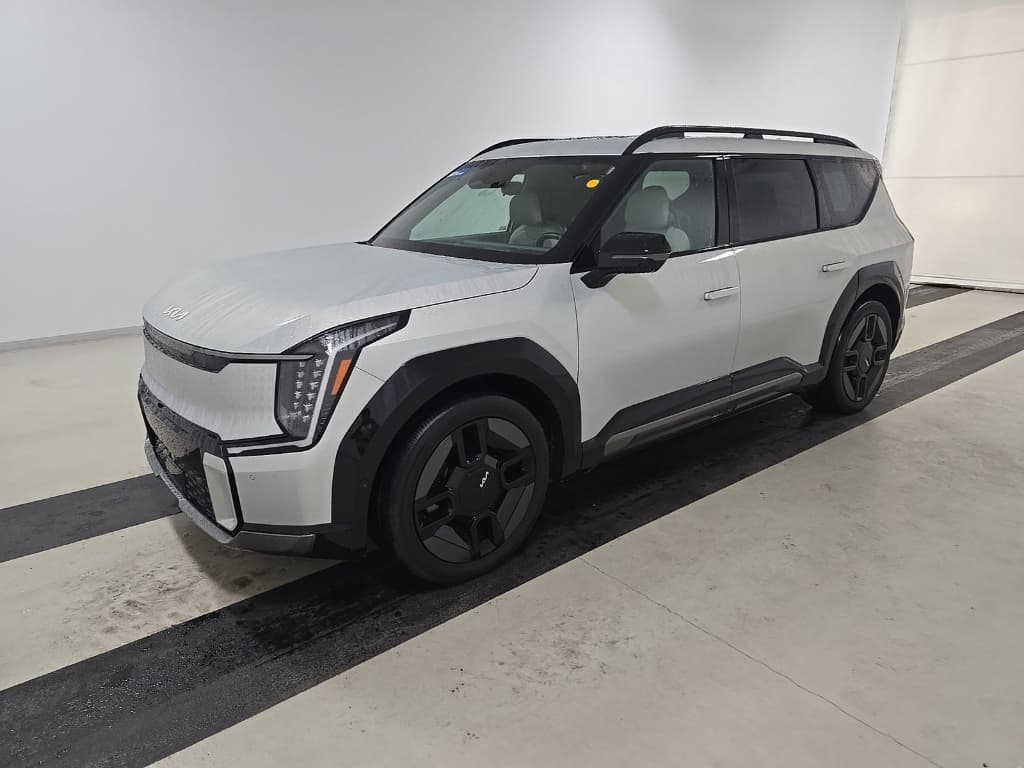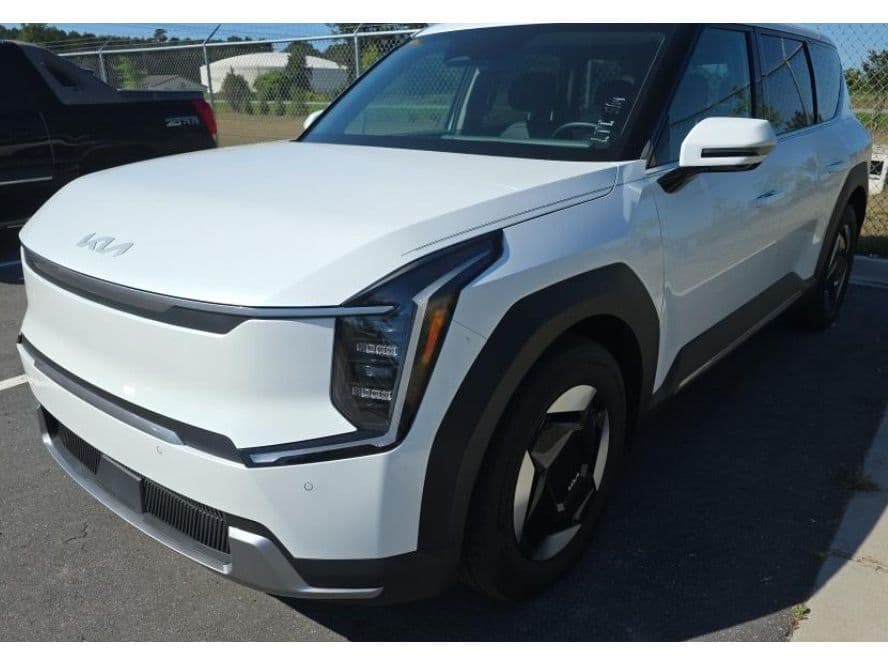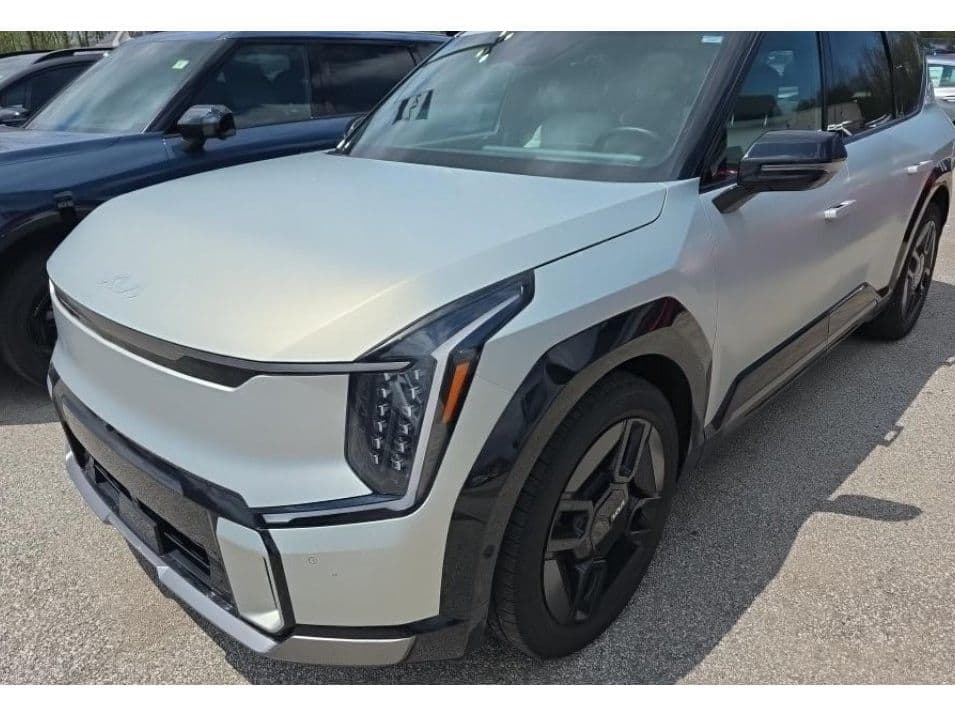
If you’re shopping for a **used three-row electric SUV**, you’ve basically walked into a two-car shootout: **used Kia EV9 vs Rivian R1S**. One is the sensible, value-packed family hauler that charges like a phone on 5G. The other is an overlanding fever dream on 35s that just happens to have three rows. They occupy the same footprint on your driveway, but very different real estate in your life and your wallet.
Why this matchup matters
Overview: Used Kia EV9 vs Rivian R1S
Kia EV9: The rational pick
- Generally far cheaper used than an R1S
- Excellent DC fast charging and solid real-world range
- Big, airy cabin that feels like a modern family minivan in disguise
- More conventional dealer network and parts pipeline
- Less capable off-road, but perfectly fine for dirt roads, snow, and family duty
Rivian R1S: The emotional pick
- Wild performance and serious off-road hardware
- Higher ground clearance, adjustable air suspension, real low-traction chops
- Distinctive design and premium interior feel
- Typically $15,000–$25,000 more than a comparable-year EV9 on the used market
- Newer brand, direct-sales support model, more startup-like ownership experience
Start with your use case
Key spec snapshots (new models, useful for used buyers)
Pricing & Value on the Used Market
Let’s talk money, because that’s where these two diverge hardest. When new, the **Kia EV9** opened around the mid-$50,000s for a base Light RWD and into the low-to-mid $70,000s for better-equipped dual-motor trims. By contrast, a new **Rivian R1S** typically starts in the high-$70,000s and climbs quickly if you want the big battery or extra motors. On the used market in 2026, that gap largely persists: you’re often looking at EV9s priced where R1S depreciation is just getting started.
Typical used price bands (early 2024–2025 model years)
Approximate U.S. asking prices as of early 2026. Exact pricing varies by mileage, trim, location, and condition.
| Model | Model years you’ll see used | Common trims used | Typical asking range* | Notes |
|---|---|---|---|---|
| Kia EV9 | 2024–2025 | Light, Light Long Range, Wind, Land, GT-Line | ≈$40,000–$55,000 | High-mileage Lights can dip into the high-$30Ks; low-mile GT-Line/Land still in low-to-mid $50Ks. |
| Rivian R1S | 2022–2024 | Dual-Motor Standard/Large, older Quad-Motor | ≈$60,000–$85,000+ | Early Quad-Motor/Max Pack and limited editions can still crest $90K depending on spec. |
Always check current local listings and battery health reports, used EV pricing can move quickly with incentives and market shifts.
Sticker shock reality check
From a pure **value-per-dollar** standpoint, the used EV9 is wearing the crown. Depreciation has already knocked a healthy chunk off MSRP, especially on early 2024 units, and you’re still getting a mainstream brand with strong warranty coverage and service access. The R1S, on the other hand, behaves more like a boutique luxury SUV: prices are stickier, the brand cachet is higher, and you pay dearly for the off-road hardware and design drama.
Range, Efficiency & Charging Experience
How far they go, and how fast they refill
Range numbers are lab coats; charging behavior is where daily life happens.
Kia EV9 range & efficiency
- Max range trims are rated around 300+ miles in rear-drive form, with dual-motor versions typically in the 260–280-mile ballpark.
- Real-world highway range with a family and cargo will be lower, but efficiency is competitive for a big, three-row brick.
- Expect respectable MPGe versus the heavier, taller R1S, meaning fewer charging stops on the same size battery.
Rivian R1S range & battery options
- Multiple battery packs: Standard, Large, and Max, with the Dual-Motor Max Pack rated at around 400+ miles of range.
- Tri-/Quad-Motor performance setups trade some efficiency for acceleration and off-road capability.
- Real-world highway tests often show lower numbers than EPA, especially on big tires with a roof rack or cargo box.
On paper, the **R1S can simply go farther** if you find a Max Pack truck at the right price. But many used shoppers won’t see those halo configurations in budget. More commonly, you’ll compare mid-pack EV9s against Dual-Motor R1S models with the middle battery, in which case the range gap shrinks and the Kia’s efficiency edge starts to matter more.
Fast charging: where the EV9 punches above its weight
The R1S is no slouch at DC fast charging either, and Rivian’s own Adventure Network of DC fast chargers adds another layer of flexibility alongside public CCS/NACS infrastructure. But if you live on the fast-charger, the EV9’s charging curve and efficiency make it feel like it’s playing a league up.
Space, Practicality & Family Duty
Both vehicles promise three-row seating and up to seven seats, but their personalities couldn’t be more different. The **EV9** is a family room on wheels; the **R1S** is a high-rise loft that also happens to ford streams.
Cabin & cargo: where the kids sit vs where the gear goes
Kia EV9 practicality highlights
- Boxy profile with a long wheelbase yields generous second-row legroom and a genuinely adult-tolerable third row.
- More conventional SUV seating position and big glass area, easy to see out of, easy to park.
- Flat floor and smart storage; feels like a modern, upscale family crossover first, EV second.
- Better cargo volume behind the third row than the R1S, which matters if strollers and sports bags are part of your life.
Rivian R1S practicality highlights
- Tall stance and short overhangs favor approach and departure angles more than Costco runs.
- Third row is usable but feels tighter, especially with bulky child seats in row two.
- Cargo area is slightly smaller behind the third row; you’ll pack more vertically.
- Cool touches, hidden storage cubbies, power outlets, camp-friendly features, appeal to outdoor-focused owners.
Family-hauler win: EV9
Performance, Towing & Off-Road Capability
In a straight-line drag race or on a rutted trail, the Rivian barely lets the Kia on the same field. But the real question is not whether the R1S is more capable, it is, but whether that extra capability is worth the premium on the used market **for you**.
Performance & capability snapshots (representative trims)
These are ballpark figures from popular configurations shoppers are likely to see used, not an exhaustive spec catalog.
| Vehicle | Representative powertrain | 0–60 mph (approx.) | Max rated range trim | Max tow rating | Off-road focus |
|---|---|---|---|---|---|
| Kia EV9 | Dual-motor AWD (Wind/Land/GT-Line) | ≈4.5–5.0 sec | ≈300+ mi (RWD long range) | Up to ~5,000 lbs (by trim) | Mild: dirt roads, snow, forest service tracks |
| Rivian R1S | Dual-/Tri-/Quad-Motor AWD | ≈3.0–4.5 sec depending on motors | Up to ≈400+ mi (Dual Max) | Up to ~7,700 lbs | Serious: height-adjustable air suspension, off-road drive modes, real trail capability |
Always confirm exact specs (motors, battery, tow rating) for the specific VIN you’re buying.
Overbuying capability
For most families, the EV9’s dual-motor trims are already comically quick for a three-row SUV. Passing on a two-lane or merging onto a short on-ramp is a non-issue. Light towing, small campers, utility trailers, jet skis, is well within its comfort zone, especially on models rated closer to 5,000 pounds.
If, however, you have a **real trailer habit**, boats, overlanding trailers, race cars, or you live where the pavement ends and the fun begins, the R1S makes a stronger argument. Its higher tow rating, multiple motor options, and genuine off-road suspension tuning make it the better choice for people who actually use low-range and recovery boards.
Tech, Safety & Driving Feel
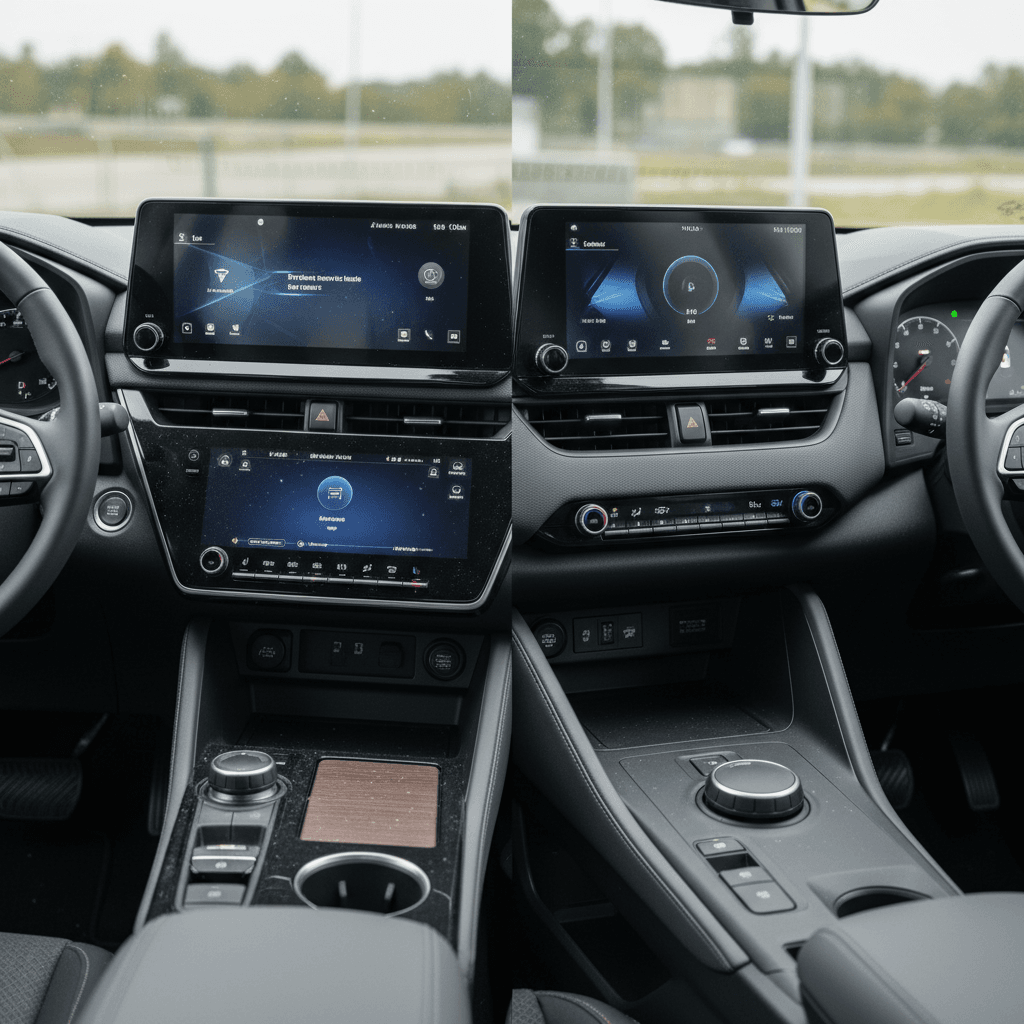
Both SUVs are rolling tech showcases, but they deploy their silicon differently. **Kia** leans on a more traditional infotainment approach with twin screens and a mix of touch and physical controls. **Rivian** goes full tablet, with a big central screen and a clean, almost concept-car interior.
Behind the wheel of a Kia EV9
- Steering and ride quality skew comfort-first; it feels like a well-sorted family crossover.
- Dual 12.3-inch screens, available head-up display, and a relatively shallow learning curve if you’ve driven recent Kias or Hyundais.
- Plenty of driver-assistance tech, adaptive cruise, lane centering, available highway assist, tuned for calm, not drama.
- Cabin design is modern, with eco-materials and lounge-like lighting, but still familiar enough for non-car people to figure out quickly.
Behind the wheel of a Rivian R1S
- Feels more like a high-clearance premium SUV: substantial, tall, and planted.
- Ride is very good for such a capable off-roader, especially on the air suspension, but big tires and weight are always present.
- The UI and software are slick and distinctive, but updates and ecosystem quirks are part of the ownership story.
- Interior materials and design feel more boutique, great if you want your EV to feel special every time you get in.
Safety & driver assistance
Ownership Costs, Reliability & Battery Health
With any used EV, the crucial question is not just “what did this cost new?” but “**what will this cost me to live with for the next 5–8 years?**” That’s where mainstream brands like Kia can quietly undercut startups like Rivian.
Warranties, service and long-term confidence
Kia EV9 ownership picture
- Traditional 5-year/60,000-mile basic warranty and a generous 10-year/100,000-mile battery warranty from new.
- Wide dealer network; easier access to parts and EV-certified technicians in most metro areas.
- Insurance and repair costs tend to align more with mainstream midsize SUVs than six-figure exotics.
- Depreciation has already done some work for you, used pricing is more approachable, and future drops may be gentler percentage-wise.
Rivian R1S ownership picture
- Factory warranty coverage is solid, but with a shorter basic term than Kia and different battery coverage structure.
- Direct-sales and service model can be a plus or minus depending on your proximity to a Rivian service center or mobile coverage.
- Complex hardware (air suspension, multiple motors, off-road hardware) can mean higher out-of-warranty risk and repair costs.
- Resale values have been strong so far, but you’re starting from a higher purchase price, which magnifies every percentage point of depreciation.
Don’t skip a battery-health report
For many used buyers, the comfort of walking into a Kia store, or having a local independent EV specialist, outweighs the allure of Rivian’s bespoke service model. If you’re in a major metro with a Rivian Service Center nearby, the calculus changes. If you’re not, every long trip with an R1S comes with a mental pin on the map: “Where do I go if something weird happens?”
Which Should You Buy Used: EV9 or R1S?
Buy a used Kia EV9 if…
- You want a three-row electric family hauler that feels like a modern minivan replacement.
- You care more about price, space, range, and fast charging than about rock-crawling or 3-second 0–60s.
- You’d like the predictability of a mainstream dealer network, long battery warranty, and more conventional ownership path.
- Your budget lives in roughly the $40,000–$55,000 zone and you want maximum EV for the money.
Buy a used Rivian R1S if…
- You actually use or truly value serious off-road and towing capability.
- You want your EV to feel like a premium, design-forward object every time you walk up to it.
- You’re comfortable paying a meaningful premium, often five figures, for capability and character.
- You live reasonably close to Rivian service and you enjoy being part of an enthusiast-y early-adopter community.
The Recharged take
If you’re leaning EV9, a used example with a clean history and strong battery-health score is a sweet spot for family EV ownership right now. If your heart is set on an R1S, go in with eyes open on price, service access, and long-term repair risk, and then enjoy every overbuilt, over-capable mile. In either case, using a verified battery report and transparent pricing, like you’ll find with the **Recharged Score** and expert EV specialists at Recharged, turns a nerve-wracking six-figure decision into an informed, confident one.
Checklist: Test-Driving a Used EV9 or R1S
Essential steps before you buy
1. Pull a detailed battery-health report
Ask for a recent, third-party or dealer-performed battery diagnostic. On Recharged, every EV includes a Recharged Score with quantified battery health so you’re not guessing about remaining capacity.
2. Confirm warranty start date and coverage
Look up the in-service date to see how much basic and high-voltage battery warranty remains. With early EV9s and R1Ss, you may have several years of coverage left, or almost none.
3. Verify charging behavior
Test DC fast charging if possible, or at least Level 2, watching how quickly the car ramps up and whether it holds expected power. Slow or inconsistent charging can hint at battery or thermal issues.
4. Inspect tires, suspension and underbody
On R1S especially, check for uneven tire wear, off-road scrapes, and suspension noises. On EV9, listen for clunks over rough pavement and inspect for curb rash that might indicate harder use than the odometer suggests.
5. Test all driver-assistance and tech features
Confirm that adaptive cruise, lane-keeping, cameras, parking sensors, and infotainment functions all work as advertised. On Rivian, verify that the latest software updates are installed; on Kia, look for any outstanding recalls or TSBs.
6. Take a fully loaded test drive
Bring people and stuff. Fill the third row, load the cargo area, and drive your real-world routes, highway, hills, parking garages. You’ll quickly feel whether the EV9’s calm or the R1S’s drama better fits your life.