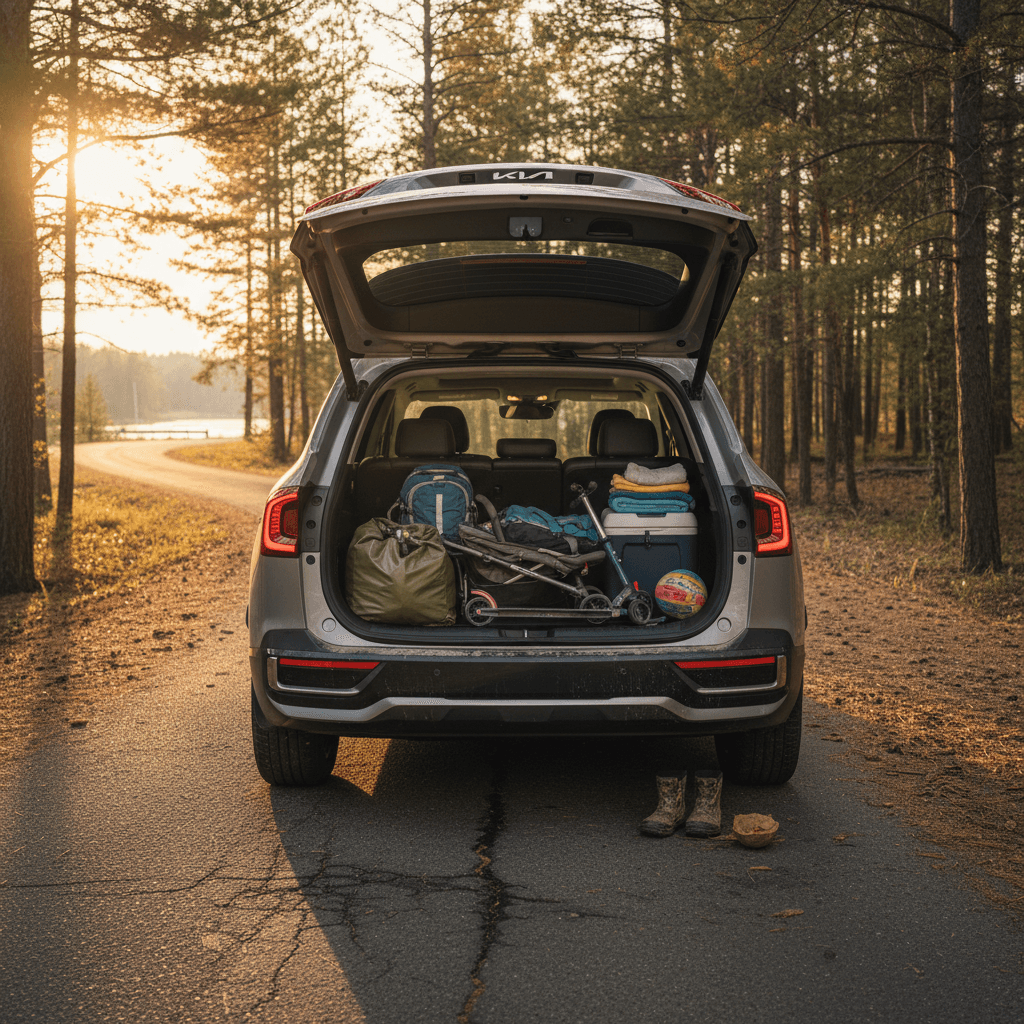
If you’re looking at a Nissan Ariya, you’re probably trying to figure out one thing: **does the cargo space actually work for my life?** The specs only tell part of the story, so this guide walks through the Nissan Ariya cargo space dimensions in both cubic feet and inches, then translates those numbers into *real-world usability*, from strollers and Costco runs to skis and road-trip luggage.
Quick take
Nissan Ariya cargo space at a glance
Core Nissan Ariya cargo specs
On paper, **22.8 cubic feet** of space behind the second row puts the Ariya right in the compact-to-midsize EV SUV sweet spot. Fold the rear seats and you unlock **59.7 cubic feet** of total cargo volume, enough for moving-day loads, bikes, or a big road-trip haul. What matters more is how easily you can use that space, which we’ll get into next.
Full Nissan Ariya cargo dimension breakdown
Let’s start with the hard numbers. These are the factory and dealer-quoted **Nissan Ariya cargo space dimensions** that apply broadly across 2023+ Ariya models sold in the U.S. (exact trim names vary, but the body shell and cargo bay are the same).
Nissan Ariya cargo dimensions (key measurements)
Primary cargo volume and dimensional measurements for the Nissan Ariya.
| Measurement | Value | What it means for you |
|---|---|---|
| Cargo volume behind 2nd row | 22.8 cu ft | Everyday space with rear seatbacks up |
| Cargo volume with 2nd row folded | 59.7 cu ft | Maximum volume with rear seats folded |
| Cargo length (seats up) | 38.3 in | From liftgate to rear seatbacks |
| Cargo width at beltline | 54.6 in | Widest usable width near the floor |
| Cargo width (seats folded) | ~74.8 in | Diagonal / extended width with seats down |
| Cargo height | 26.9 in | Floor to cargo opening height at liftgate |
| Seating capacity | 5 passengers | Two rows, no third row |
| Frunk (front trunk) | None | All storage is in the rear and cabin |
Dimensions are approximate and can vary slightly by trim and interior configuration.
Numbers may vary slightly
One important note: unlike some EV rivals, the **Nissan Ariya does not have a traditional frunk**. The space under the hood is mostly dedicated to power electronics and HVAC, so all of your cargo goes in the rear or in the cabin. The upside is a lower, flatter rear floor that’s easy to load.
How the Ariya’s cargo area is laid out
Raw volume is only half the story. The Ariya’s cargo area is designed to be **wide, flat, and easy to access**, which makes it more usable than some spec sheets suggest, especially if you regularly haul awkwardly shaped items.
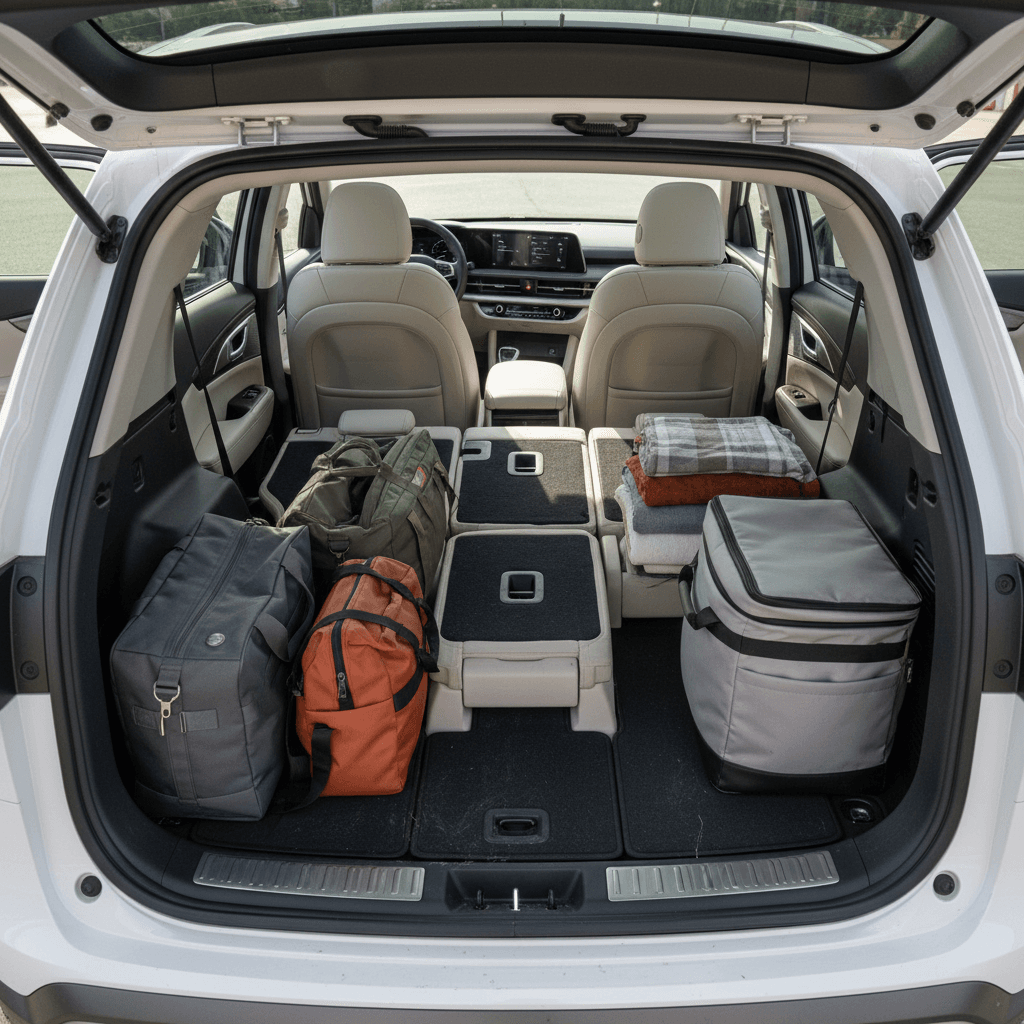
Key Nissan Ariya cargo layout features
Why the space feels larger than the numbers suggest
Wide floor opening
Usable cargo height
Flat load floor
Don’t forget the Divide-N-Hide system
60/40 split-folding rear seatbacks
The Ariya’s rear seatbacks fold in a 60/40 split, so you can carry longer items like skis or a flat-pack box while still keeping one or two rear seating positions usable. This is where that **~59.7-cubic-foot maximum volume** becomes flexible space rather than a single big box.
Underfloor and side storage
Depending on trim, you may get underfloor bins and side pockets that don’t show up in the official cubic-foot number. They’re ideal for charging cables, emergency kits, or dirty gear you’d rather keep out of the main cabin.
Real world: what actually fits in an Ariya
Specs are useful, but you probably care more about **strollers, suitcases, pets, and weekend projects**. Here’s how the Nissan Ariya’s cargo space translates into everyday scenarios.
Common packing scenarios in a Nissan Ariya
1. Grocery and Costco runs
With the rear seats up, 22.8 cubic feet is plenty for a big weekly shop. You’re looking at 8–10 full grocery bags plus bulky items like paper towel packs, with room left for a soft cooler or backpack.
2. Family airport run
Think in terms of suitcases: behind the second row, you can typically fit **2–3 large checked bags plus 2 carry-ons** if you stand them upright and use the full width. Soft duffels and backpacks fill the gaps easily.
3. Stroller + kid gear
Most compact and mid-size strollers will slide in sideways thanks to the ~54.6-inch width. That still leaves space beside or on top for a diaper bag, toys, and a week’s worth of groceries.
4. Road-trip mode (seats folded)
Fold the rear seats and you unlock close to 60 cubic feet. That’s enough for **camping gear for two people, a cooler, two folding chairs, and extra bins**, or for a college move with several medium boxes and storage totes.
5. Home improvement runs
The ~38.3-inch cargo length with the seats up will handle most storage totes and small furniture boxes. Drop the rear seatbacks and you can slide in longer flat-pack items or trimmed lumber diagonally, especially if you remove the cargo floor panel.
6. Pets and crates
The cargo height and flat floor work well for medium to large dog crates. For dogs that ride without crates, the wide, low opening makes it easy for them to hop in and out without stress.
Bottom line on usability
Ariya cargo space vs. other electric SUVs
The obvious question is how the **Nissan Ariya cargo space dimensions** stack up against key rivals like the **Ford Mustang Mach‑E** and **Hyundai Ioniq 5**. In short, the Ariya lands in the middle of the pack.
Cargo volume: Ariya vs. popular EV crossovers
Approximate cargo volumes for common EV crossovers, focusing on space behind the 2nd row and with seats folded.
| Model | Behind 2nd row | Max cargo volume | Frunk? |
|---|---|---|---|
| Nissan Ariya | 22.8 cu ft | 59.7 cu ft | No |
| Hyundai Ioniq 5 | ≈27.2 cu ft | ≈59–60 cu ft | Tiny (cable bin) |
| Ford Mustang Mach‑E | ≈29.7 cu ft | ≈59.7 cu ft | Yes (≈4.7 cu ft) |
| Volkswagen ID.4 | ≈30.3 cu ft | ≈64.2 cu ft | No |
Figures are manufacturer- or publication-reported and rounded; they can vary slightly by model year and trim.
Two quick takeaways: * The Ariya’s **rear cargo space is slightly smaller** than some direct rivals when the seats are up. * With the seats folded, it’s effectively on par in total volume, but you don’t get a frunk to stash cables or dirty items up front. If maximum cargo is your top priority, a Mach‑E or ID.4 offers more space. If you’re coming out of a compact crossover or sedan, however, the Ariya will likely feel like a meaningful upgrade in practicality.
What matters more than one or two cubic feet
Tips to make the most of Ariya cargo space
Even if you’re not driving the cargo king of the segment, a few smart habits can make the Ariya’s 22.8–59.7 cubic feet work far harder for you.
Practical ways to stretch Nissan Ariya cargo capacity
Small tweaks that free up a surprising amount of usable room
Use stackable bins
Pack to the full width
Reconfigure the floor panels
Fold only what you need
Keep essentials under the floor
Consider a hitch rack
Safety first when loading
Shopping used: how to evaluate Ariya cargo space
When you’re looking at a **used Nissan Ariya**, it’s tempting to focus on range, features, and price, and you should. But if you plan to keep the car for years, it’s worth spending a few extra minutes evaluating the cargo area properly.
Cargo-space checklist for a used Nissan Ariya
1. Bring your real-life cargo
If you have a stroller, golf clubs, or music gear you haul constantly, bring it to the test drive. Specs say 22.8 cubic feet, but fitting *your* items is what matters.
2. Test the seat folding and floor panels
Fold both sides of the rear seat, try the split-fold, and experiment with any Divide-N-Hide panels. Make sure mechanisms operate smoothly and the floor sits flat.
3. Look for wear and water damage
Check for stains, warped floor panels, or rust around tie-downs that could indicate prior leaks or spills. These are easy to miss if you only glance at the surface.
4. Inspect underfloor storage
Lift the floor to inspect bins and cavities. Make sure there’s no mold, lingering odors, or loose hardware, and confirm the jack and tools (if equipped) are present.
5. Confirm accessories and cargo cover
A missing cargo cover or floor divider system can be expensive to replace. Verify what’s included with the car and factor replacement costs into your offer if needed.
6. Think about future needs
If your family, hobbies, or commute may change, ask yourself whether the Ariya’s max **59.7 cubic feet** gives you enough headroom, or if you’d be more comfortable in a larger EV SUV.
How Recharged helps on the used side
Ready to find your next EV?
Browse VehiclesFAQ: Nissan Ariya cargo space
Frequently asked questions about Nissan Ariya cargo space
Bottom line: is the Nissan Ariya big enough for you?
When you put all the numbers and real-world scenarios together, the **Nissan Ariya cargo space dimensions, 22.8 cubic feet behind the rear seats and 59.7 cubic feet with them folded, put it squarely in the practical EV crossover camp**. It doesn’t lead the class on paper, but the wide opening, flat floor, and flexible split-fold seats make it easy to live with for groceries, family trips, and weekend projects.
If you’re comparing used Ariya models to other EVs, think carefully about how you actually pack: strollers, suitcases, bikes, home-improvement runs. Then use the dimensions and checklists in this guide to decide whether the Ariya’s layout fits your life. And if you’d like someone to sanity-check that choice, **Recharged can help you compare cargo space, range, and battery health across multiple used EVs**, then deliver your favorite right to your driveway.