If you’re cross‑shopping a BMW i4 against a gas 3 Series or 4 Series, the sticker price only tells part of the story. The real question is the BMW i4 true cost of ownership over 5 years: depreciation, charging, maintenance, insurance, and taxes all piled together. That’s where electric BMWs can quietly undercut their gas siblings, or surprise you if you’re not paying attention.
What this guide covers
BMW i4 basics that shape your costs
Before you can estimate 5‑year costs, you have to understand the basic ingredients that make the BMW i4 relatively affordable, or expensive, to own. The i4 is essentially a 4 Series Gran Coupé that happens to be electric, so a lot of the cost structure looks familiar to BMW owners, with some EV twists.
Key BMW i4 variants and why they matter
Trim, battery, and drivetrain all nudge your 5‑year costs up or down
eDrive35
Single‑motor, rear‑wheel drive with the smallest battery pack.
- Lowest purchase price
- Shortest range, but still commuter‑friendly
- Often cheapest to insure
eDrive40
Rear‑wheel drive with the larger battery.
- Stronger performance
- Longer real‑world range
- Slightly higher purchase and tire costs
M50
Dual‑motor, all‑wheel drive performance version.
- Quickest and heaviest i4
- Highest MSRP and tire wear
- Usually the priciest to insure
Trim choice and your wallet
Five-year BMW i4 cost of ownership: quick snapshot
Illustrative 5‑year cost snapshot (U.S., daily driver)
About the numbers in this guide
Depreciation: how fast does a BMW i4 lose value?
Depreciation is almost always the single biggest cost in a 5‑year ownership window, and EVs are no exception. Early in the EV curve, models like the BMW i4 can depreciate faster than equivalent gas cars because technology moves quickly and incentives distort new‑car pricing. That’s bad news if you buy new, but a big opportunity if you buy used.
Illustrative 5‑year depreciation for a BMW i4
Rounded, ballpark numbers for an i4 eDrive40‑type configuration, assuming normal mileage and no major accidents.
| Scenario | Purchase price today | Estimated value after 5 years | 5‑year depreciation |
|---|---|---|---|
| Buy new i4 (MSRP‑level) | $63,000 | $28,000–$32,000 | $31,000–$35,000 |
| Buy 2‑year‑old i4 used | $45,000 | $24,000–$28,000 | $17,000–$21,000 |
| Buy 3‑year‑old i4 used | $40,000 | $22,000–$26,000 | $14,000–$18,000 |
Depreciation is front‑loaded: most value loss happens in the first 3 years.
Look closely at that second row. Buying a 2‑year‑old i4 instead of new cuts your 5‑year depreciation bill roughly in half. You’re letting the first owner eat the juiciest part of the curve, while you still get modern tech, plenty of range, and often some remaining battery warranty coverage.
Why battery health trumps mileage for used i4s
Energy costs: charging an i4 vs fueling a gas BMW
Once you’ve paid for the car, your next biggest 5‑year lever is what you spend on energy. The BMW i4 is reasonably efficient for a sporty luxury EV sedan, but realistic cost depends on where you charge and how often you fast‑charge.
Baseline assumptions
- Annual mileage: 12,000 miles
- Energy use (i4): ~30 kWh/100 miles (mixed driving)
- Home electricity: $0.15 per kWh (U.S. average ballpark)
- Public fast charge: ~$0.30–$0.40 per kWh
- Comparable gas BMW: 28 mpg on premium
- Gas price: $3.75/gal premium
5‑year energy cost comparison
- i4, 80% home / 20% fast‑charge: roughly $650–$850 per year → about $3,250–$4,250 over 5 years
- Gas BMW at 28 mpg: roughly $1,600–$1,800 per year → about $8,000–$9,000 over 5 years
That’s a rough $4,000–$5,000 fuel savings window for the i4 over five years, assuming you’re not living at fast chargers.
Fast‑charging can double your energy cost
Maintenance and repairs: what breaks and what doesn’t
One of the most compelling pieces of EV economics is the maintenance line item. The BMW i4 shares a lot of hardware with other BMWs, but its electric drivetrain eliminates many of the classic BMW maintenance headaches: no oil changes, no timing chains, no spark plugs, no exhaust system, and far fewer fluid services.
BMW i4 maintenance: where you save, and where you don’t
Compared with a similar‑year BMW 3/4 Series gas car
Things you skip
- Engine oil and filter changes
- Spark plugs and coils
- Exhaust system repairs
- Emissions equipment issues
Still on the hook for
- Tires (often wear faster on heavy EVs)
- Brake fluid changes
- Cabin air filters
- Suspension components
Potential EV‑specific items
- High‑voltage coolant service (long‑interval)
- Onboard charger or electronics (rare but pricey)
- Out‑of‑warranty battery or drive unit repairs (very rare but significant)
For a typical owner doing ~12,000 miles a year, it’s reasonable to think of the i4’s routine maintenance and minor repairs as landing in the $500–$800 per year ballpark over 5 years, depending on tire choice and how strictly you follow BMW’s service schedule. A comparable gas BMW can easily beat that number, on the wrong side, especially as it ages.
Battery replacement fear vs. 5‑year reality
Insurance, registration, and taxes
Luxury EVs like the BMW i4 tend to be more expensive to insure than mass‑market EVs, roughly in line with comparable BMW 3/4 Series models. You’re insuring a pricier car with a complex body structure and expensive electronics, even if the drivetrain is simpler than a gas car.
- In many U.S. metros, a typical full‑coverage policy for an i4 might land in the $1,600–$2,400 per‑year range depending on your driving record, location, credit, and coverage choices.
- Some insurers still price EVs conservatively because they expect higher repair costs, especially for collision damage affecting high‑voltage components.
- Registration and property tax treatment varies heavily by state, some offer EV discounts or flat‑fee registrations, others tax EVs more aggressively to recover road‑use revenue.
How to keep BMW i4 insurance reasonable
Home charging setup costs, and long‑term savings
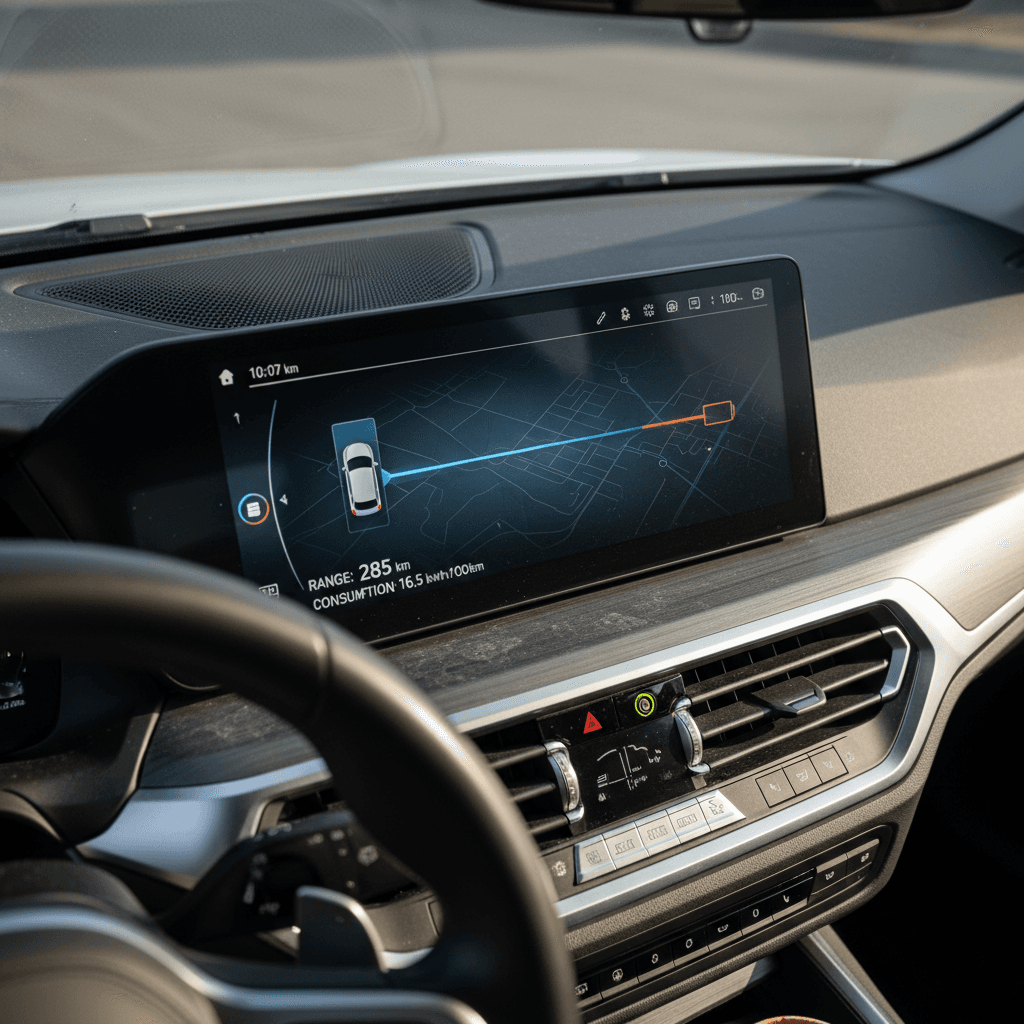
From a 5‑year cost perspective, installing home charging for your BMW i4 is a bit like prepaying some of your fuel bill. You’ll spend a chunk up front on hardware and electrical work, then reap the benefit of low, predictable per‑mile costs for as long as you own an EV.
Typical home charging setup costs for a BMW i4
Ballpark estimates for a U.S. homeowner adding Level 2 charging.
| Item | Low estimate | High estimate |
|---|---|---|
| 240V outlet (NEMA 14‑50) + wiring | $400 | $1,200 |
| Wall‑mounted Level 2 charger hardware | $400 | $900 |
| Permits and inspection (where required) | $50 | $250 |
| Total one‑time setup | $850 | $2,350 |
Your actual bill depends heavily on panel capacity, distance to the garage, and local labor rates.
Spread that total over a 5‑year ownership period and you’re effectively adding $170–$470 per year to your cost picture, but likely still coming out thousands ahead versus buying gas, especially if you drive more than 10,000 miles per year.
Don’t forget incentives
New vs used BMW i4: 5‑year cost comparison
To pull everything together, let’s compare a simplified, illustrative 5‑year cost picture for a new i4 versus a 2‑ to 3‑year‑old used example. The numbers here are directional, but the relationships are what matter.
Illustrative 5‑year cost comparison: new vs used BMW i4
Assumes 12,000 miles per year, mixed home/public charging, and typical insurance/maintenance in the U.S.
| Category (5‑year total) | New i4 purchase | 2‑ to 3‑year‑old used i4 |
|---|---|---|
| Depreciation | $31,000–$35,000 | $14,000–$21,000 |
| Energy (electricity) | $3,250–$4,250 | $3,250–$4,250 |
| Maintenance & repairs | $2,500–$4,000 | $3,000–$4,500 |
| Insurance | $8,000–$11,000 | $7,000–$10,000 |
| Home charging setup (if needed) | $850–$2,350 | $850–$2,350 |
| Total 5‑year cost (rough) | $42k–$47k+ | $33k–$37k+ |
Buying used is mostly about slashing depreciation; ongoing running costs are similar if the cars are in comparable condition.
Even with conservative assumptions, you can see how buying a used i4 with good history and strong battery health can pull $8,000–$10,000 out of your 5‑year cost structure compared with buying new. Energy and maintenance don’t change much; the big win is paying less for someone else’s depreciation.
Where a used BMW i4 really shines
How Recharged helps lower your BMW i4 ownership costs
Buying the right BMW i4 is half the battle; buying it with the right information is the other half. That’s where a used‑EV‑focused platform can tilt the economics in your favor.
What Recharged brings to the BMW i4 ownership equation
Reduce uncertainty, avoid bad cars, and lock in fair pricing.
Verified battery health (Recharged Score)
Every i4 on Recharged includes a Recharged Score with battery health diagnostics, so you’re not guessing about the most expensive component in the car.
Fair market pricing & cost transparency
Recharged benchmarks each vehicle against the used EV market, helping you avoid overpaying and understand how depreciation will likely unfold from here.
Financing, trade‑in & delivery
From financing and trade‑in offers to nationwide delivery and a digital‑first buying experience, Recharged is built to make EV ownership simple and transparent.
Ready to find your next EV?
Browse VehiclesBecause Recharged focuses exclusively on electric vehicles and runs detailed battery‑health checks, you’re less likely to end up with an i4 that looks cheap on paper but has hidden issues that inflate your 5‑year cost of ownership.
FAQ: BMW i4 true cost of ownership over 5 years
Frequently asked questions
Bottom line: is a BMW i4 worth it over 5 years?
When you zoom out over a full 5‑year ownership window, the BMW i4 tends to look better the more miles you drive and the more you can lean on affordable home charging. Depreciation is steep if you buy new, but that same curve makes well‑vetted used i4s some of the most compelling values in the luxury EV space right now.
If you want the BMW driving experience without the gas‑station bills, and you’re willing to invest in proper charging, the i4 can deliver a very competitive true cost of ownership. And if you let someone else take the first 2–3 years of depreciation, ideally backed by a Recharged Score battery report and transparent pricing, you can stack the economics even further in your favor.