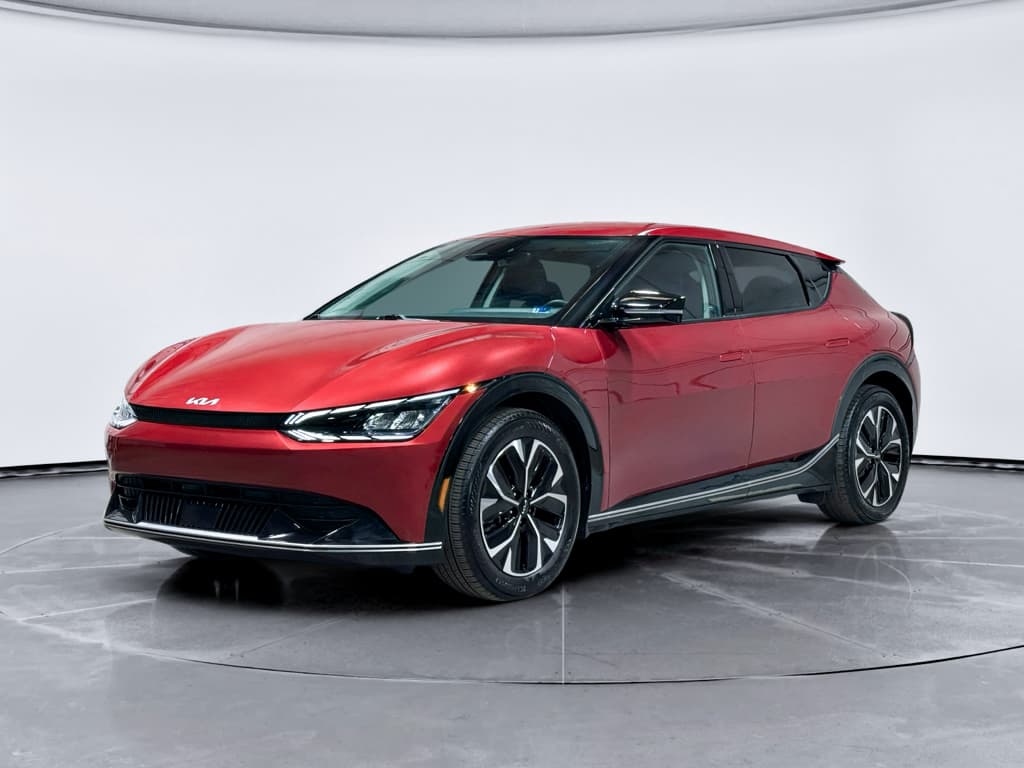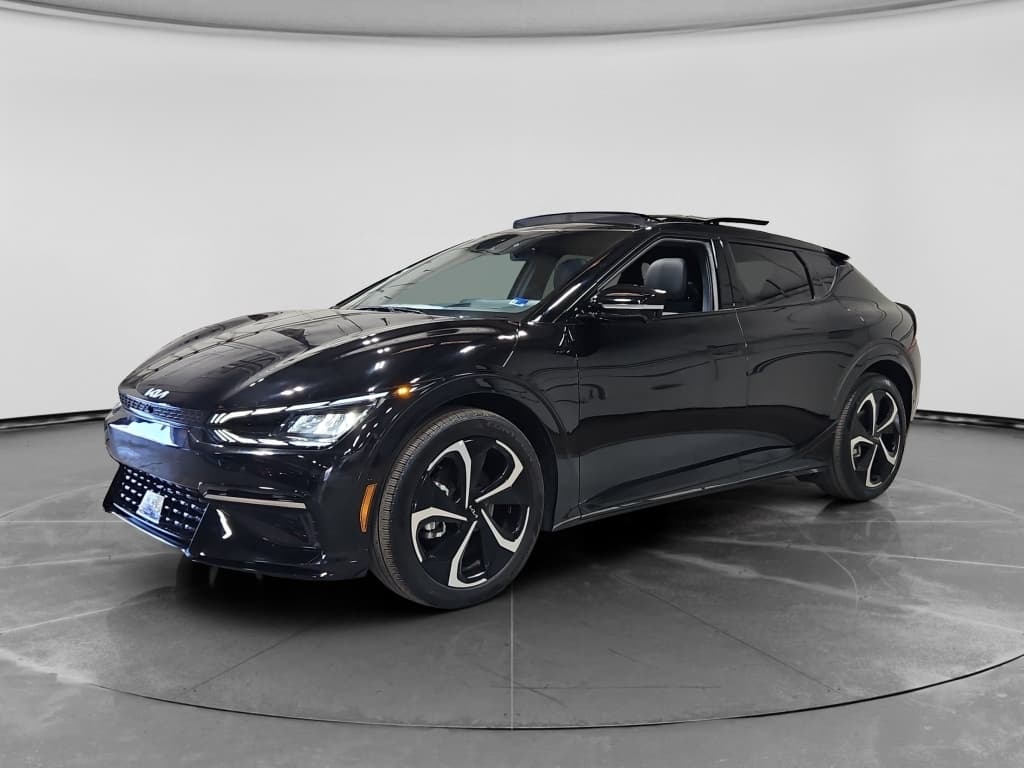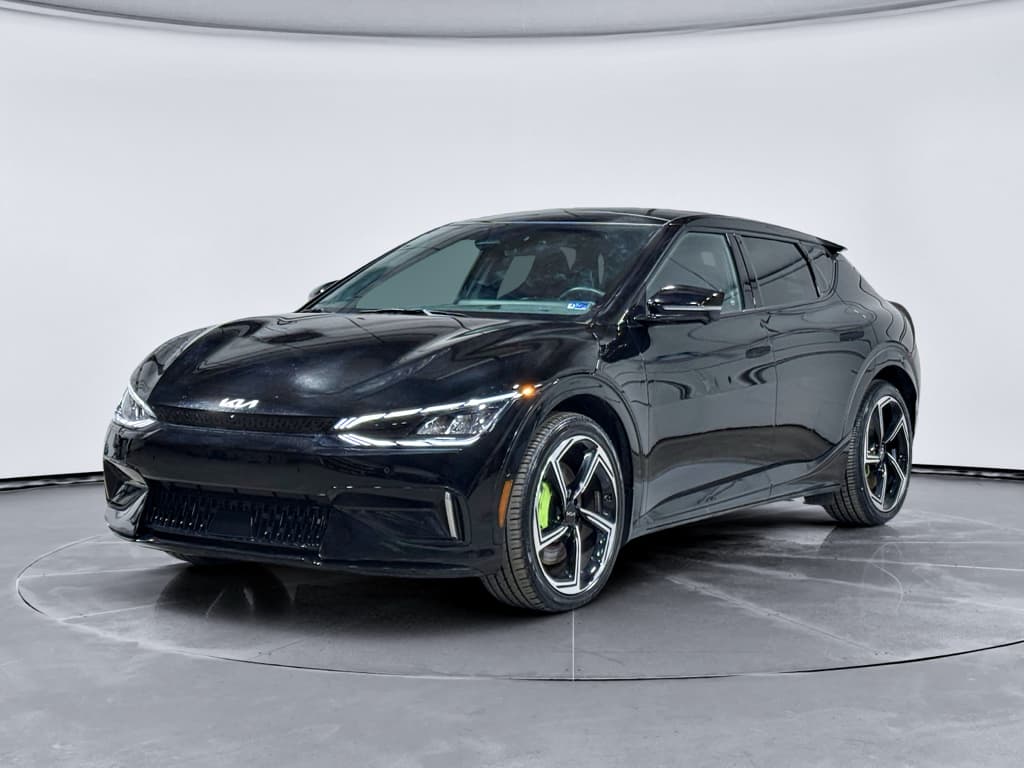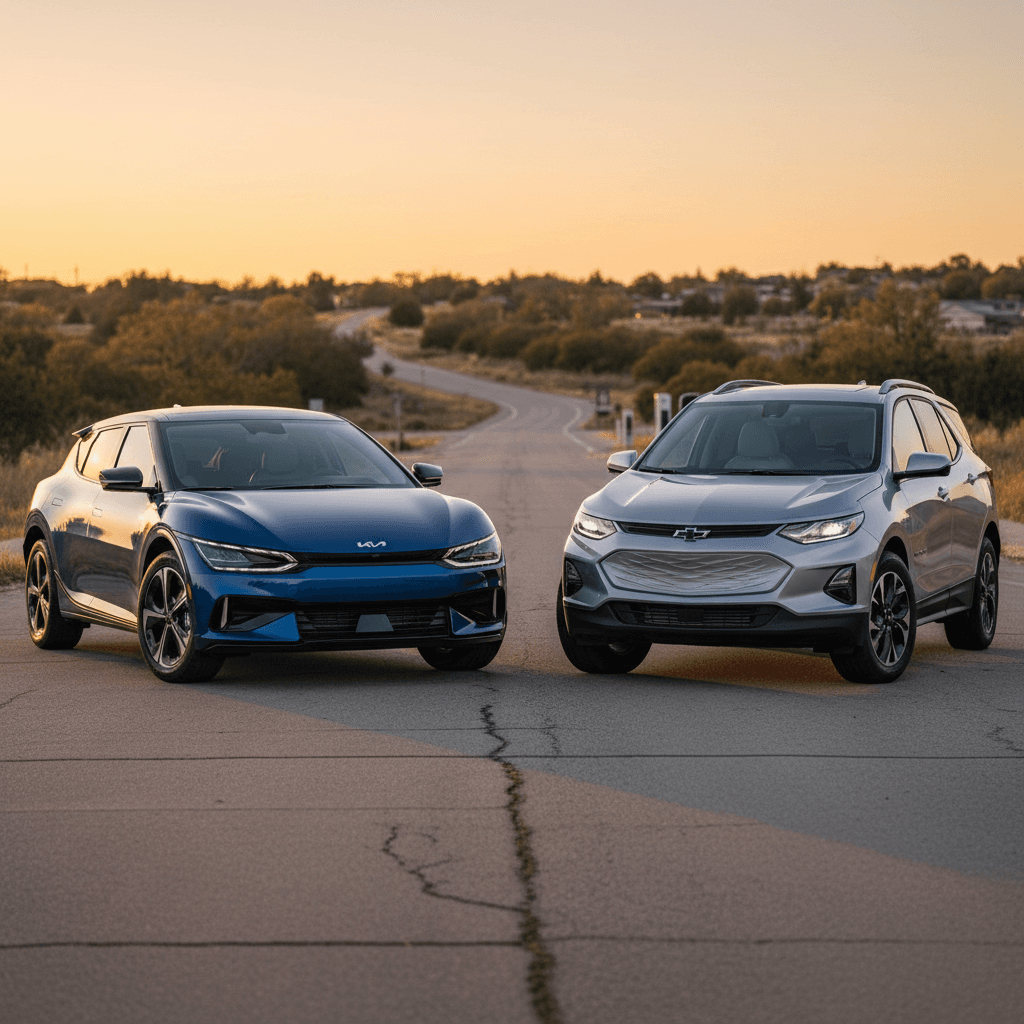
If you’re cross-shopping a used Kia EV6 vs Chevy Equinox EV, you’re exactly where the EV market is heading: practical, family-sized crossovers with real range. The catch is that the EV6 has been on the road for a few years, while the Equinox EV is just starting to filter into the used market. That makes the comparison less about shiny spec sheets and more about value, battery health, charging experience, and how each fits your life.
Context: One veteran, one rookie
Overview: Used Kia EV6 vs. Chevy Equinox EV
Kia EV6 (used)
- Segment: Sporty compact crossover (more hatchback/wagon than tall SUV)
- Platform: Hyundai–Kia E‑GMP, 800V architecture
- Typical used price (early trims): Often in the mid‑$30Ks depending on year, miles, and trim
- Range: Roughly 230–310+ miles depending on battery and drivetrain
- Charging: Among the fastest-charging non‑Tesla EVs on the market with up to ~235 kW peak DC and ~18 minutes 10–80% in ideal conditions
Chevy Equinox EV (used)
- Segment: Mainstream compact SUV, more upright and traditional than EV6
- Platform: GM Ultium with ~85 kWh pack and 400V architecture
- Price new: 2025 models start around mid‑$30Ks before incentives; used pricing is still forming
- Range: GM quotes up to ~319 miles FWD and around the mid‑280s for AWD, depending on trim
- Charging: DC fast charging up to about 150 kW, roughly 77 miles in 10 minutes at a high‑power station
Think beyond the window sticker
Quick take: Who should buy which?
Quick match: EV6 vs Equinox EV by buyer type
Use this as a starting point, then dive into the details below.
Choose a used Kia EV6 if…
- You care about fastest‑possible DC charging for road trips.
- You like a sportier, lower driving feel with strong performance options.
- You’re comfortable driving a slightly less upright vehicle that feels more like a hatchback.
- You want proven real‑world data and more used inventory to choose from.
Choose a Chevy Equinox EV if…
- You prefer a conventional SUV shape with good headroom and cargo access.
- You value GM’s safety/driver‑assist suite and tech like Super Cruise (on higher trims).
- You want long range at relatively low new price, which should translate into attractive used pricing.
- You prioritize North American Charging Standard (NACS) access and GM’s growing charging partnerships.
Price and incentives: Used market reality
You’ll see new Chevy Equinox EVs advertised starting in the mid‑$30,000s before incentives, with better‑equipped trims running well into the $40Ks. By contrast, early Kia EV6 Light and Wind trims have already taken a depreciation hit, so used examples can live in a similar price band even though they were more expensive new. That means your decision increasingly comes down to what you get for similar money, not which MSRP looks lower on paper.
Watch out for federal and state incentive differences
Price & depreciation dynamics (big picture)
Range and efficiency
Kia EV6 vs Chevy Equinox EV: headline range numbers
Representative EPA‑style range estimates. Exact figures depend on model year, wheel size, and drivetrain.
| Model / configuration | Battery (approx usable) | Drivetrain | Typical EPA range |
|---|---|---|---|
| Kia EV6 Light RWD (early years) | 58–63 kWh | RWD | ~230–240 miles |
| Kia EV6 Wind RWD / long‑range | 77–84 kWh | RWD | ~300–319 miles (model‑year dependent) |
| Kia EV6 AWD long‑range | 77–84 kWh | AWD | ~270–285 miles |
| Chevy Equinox EV FWD (larger pack) | ~85 kWh | FWD | Up to ~319 miles |
| Chevy Equinox EV eAWD | ~85 kWh | AWD | Mid‑280s to low‑300s miles |
Always verify the specific VIN’s EPA rating; these are typical values rather than guarantees.
On paper, it’s basically a draw on range. Both a long‑range EV6 and a FWD Equinox EV can deliver around 300 miles on a full charge in favorable trims. Where they differ is in efficiency vs. shape. The EV6’s lower, sleeker profile tends to do better at highway speeds, while the taller Equinox EV trades some aero efficiency for the seating position many SUV buyers prefer.
Look past the maximum range headline
Charging speed and road-trip ability
If you care about DC fast charging, this is where the Kia EV6 separates itself. Thanks to its 800‑volt E‑GMP platform, the EV6 can hit peak DC speeds around the mid‑200‑kW range on a compatible 350‑kW charger, taking it from 10–80% in roughly 18 minutes in ideal conditions. The Equinox EV, by contrast, tops out at around 150 kW, adding about 77 miles in 10 minutes and taking longer overall for large SOC changes.
Kia EV6 charging highlights
- 800V architecture enables very short highway stops.
- Peak DC power around 230+ kW on capable chargers.
- 10–80% in about 18 minutes on a strong DC fast‑charging session.
- 11 kW AC onboard charger for home Level 2, finishing a full charge overnight on a 48‑amp circuit.
- Vehicle‑to‑load (V2L) capability lets you power tools, camping gear, or even other EVs at low rates.
Chevy Equinox EV charging highlights
- Ultium pack supports up to around 150 kW DC charging.
- GM quotes roughly 77 miles in 10 minutes at a strong public fast charger.
- Up to 11.5 kW AC onboard charging standard; top trims offer a beefy 19.2 kW onboard option for very fast home charging if you have the electrical service to match.
- Designed to work with GM’s growing charging partnerships and NACS (Tesla) access, improving station availability even if speeds are slightly lower than EV6.
Real-world takeaway
Space, practicality, and comfort

Interior and cargo: form vs function
Both seat five, but they feel very different from behind the wheel.
Kia EV6 practicality
- Cabin feels more like a sport wagon than tall SUV.
- Plenty of legroom front and rear, but rear headroom can be tighter for tall passengers because of the sloping roofline.
- Cargo area is deep but not as boxy, which can affect bulky items like strollers or tall boxes.
- Interior design is modern and driver‑focused; many trims get dual widescreen displays and higher‑end materials.
Chevy Equinox EV practicality
- More traditional upright SUV seating, easier in‑and‑out for many buyers.
- Generous rear headroom and a usefully square cargo area, rated at over 57 cu ft with seats folded in some trims.
- Standard large infotainment screen and practical storage solutions.
- Overall, more "normal SUV" vibes, which many households actually prefer day‑to‑day.
Family usability check
Performance and driving experience
Both the EV6 and Equinox EV cover daily‑driver duties effortlessly, but they approach performance differently. The EV6 lineup ranges from efficient RWD trims to genuinely quick AWD versions and a wild high‑performance GT variant. The Equinox EV, meanwhile, focuses on balanced power and smoothness rather than outright speed, with FWD models around the low‑200‑hp mark and eAWD variants stepping up power and torque.
Typical performance snapshots
Representative figures for mainstream trims; exact numbers vary by model year and wheel/tire choices.
| Model / trim (representative) | Drivetrain | Approx. power | 0–60 mph feel |
|---|---|---|---|
| Kia EV6 Light RWD | RWD | ~165–180 hp equivalent | Adequate; smooth but not neck‑snapping |
| Kia EV6 Wind / GT‑Line AWD | AWD | ~300+ hp | Quick; strong mid‑range passing power |
| Kia EV6 GT | AWD | 600+ hp | Genuinely fast; overkill for most used shoppers |
| Chevy Equinox EV FWD | FWD | Low‑200‑hp range | Smooth, modestly quick |
| Chevy Equinox EV eAWD | AWD | Around 300 hp | Quick, similar to mainstream AWD crossovers |
Performance isn’t just 0–60, ride, noise, and tuning matter a lot when you live with an EV every day.
Test-drive both if performance matters
Tech, safety, and driver assistance
Kia EV6 tech & safety
- Dual 12.3‑inch screens on many trims, with a clean UI and good EV‑specific info.
- Kia Drive Wise driver‑assist suite: adaptive cruise, lane‑keeping, blind‑spot monitoring, and more, depending on trim.
- Available augmented‑reality head‑up display on higher trims.
- Over‑the‑air update capability on newer model years, improving software over time.
Chevy Equinox EV tech & safety
- Large central screen (up to 17.7 inches in higher trims), running Google Built‑in with native Maps and Assistant.
- Standard Chevy Safety Assist: forward‑collision warning, automatic emergency braking, lane‑keep assist, and more.
- Available Super Cruise on upper trims, enabling hands‑free driving on mapped highways.
- High‑resolution cameras, available 360° view, and parking aids that make city driving easier.
Where each model shines
Battery health and long‑term durability
Because the EV6 hit the market earlier, we already have several model years of real‑world data. So far, its batteries appear to be holding up well when owners avoid abusive fast‑charging behavior and extreme heat. The Equinox EV, built on GM’s second‑generation Ultium chemistry, doesn’t yet have the same long‑term track record simply because it’s newer, but Ultium is engineered specifically for large‑scale EV production and long warranties.
Used‑buyer battery health checklist
Applies to both EV6 and Equinox EV, but the details differ slightly.
1. Verify warranty status
Both Kia and Chevy offer lengthy battery warranties (often 8 years / 100,000 miles or more). Confirm in‑service date and miles so you know how much coverage is left.
2. Check real SOC and range
On a test drive, observe how quickly the state of charge (SOC) drops and compare indicated range to the original EPA figure. Large unexplained gaps can indicate higher degradation or past abuse.
3. Get independent battery health data
A Recharged Score Report includes verified battery health diagnostics using pack‑level data rather than guesses from the dashboard. That’s especially important on early EV6s, which have had more years to accumulate fast‑charge cycles.
Don’t buy blind on battery health
Ownership costs and resale
Day‑to‑day running costs for both the EV6 and Equinox EV are far lower than a comparable gasoline SUV. You’ll skip oil changes, timing belts, and a lot of traditional maintenance, and electricity is usually cheaper per mile than gasoline. The key differences come from insurance, tires, and depreciation.
- Both vehicles use relatively wide, EV‑rated tires that can be expensive to replace, budget for this every 25,000–40,000 miles depending on driving style.
- Insurance can be higher than an equivalent gasoline Equinox because of repair costs and vehicle value; quotes will vary by ZIP code and driver profile.
- Depreciation on EVs has been steep in the early years of the market, but mass‑market crossovers like these are likely to stabilize as they become the default family car rather than a niche product.
- A used EV6 with a few years on the odometer has already taken its biggest depreciation hit; a nearly‑new used Equinox EV may still be in the steep part of the curve.
Leverage transparent pricing data
How to choose: Practical checklist
Step‑by‑step: Decide between a used EV6 and Equinox EV
1. Clarify your daily driving and charging
List your typical weekday mileage, your longest regular trip, and whether you have (or can install) home Level 2 charging. If you can plug in overnight, both models’ range is more than sufficient.
2. Decide on driving feel vs. seating position
Test‑drive both. If you like a lower, more connected drive with sportier responses, you’ll probably prefer the EV6. If you want a familiar, upright SUV feel with easier step‑in height, lean toward the Equinox EV.
3. Evaluate fast‑charging needs
If you’ll road‑trip several times a year, the EV6’s 800V fast‑charging advantage will save time. If most of your driving is local or regional and you prioritize station availability over maximum speed, the Equinox EV plus NACS access is a strong combo.
4. Compare real vehicles, not just trims
On the used market, condition, mileage, tire wear, and options matter more than trim names. A well‑cared‑for base EV6 can be a better buy than a neglected higher‑trim Equinox EV, and vice versa.
5. Get a battery‑forward inspection
Use a provider like <strong>Recharged</strong> that can supply a Recharged Score Report with verified battery health, charging history indicators, and pricing context. This is the single most important difference between buying used EVs and used gas cars.
6. Run total cost, not just purchase price
Factor in insurance quotes, expected tire costs, taxes/fees, any home‑charging upgrades, and potential incentives or tax credits. The winner on monthly cost might not be the one with the lower sticker.
FAQ: Used Kia EV6 vs Chevy Equinox EV
Frequently asked questions
Bottom line: Which EV crossover is right for you?
If you want the sharpest driving dynamics and the shortest DC fast‑charging stops, a used Kia EV6, especially a long‑range trim, has a clear advantage. If you prefer a more traditional SUV feel, value GM’s driver‑assist tech like Super Cruise, and like the idea of a brand‑new Ultium‑based crossover that’s just starting its warranty clock, a Chevy Equinox EV makes a lot of sense, even as a low‑mileage used purchase.
Either way, the smart move is to shop EVs the way you’d shop any major piece of technology: focus on battery health, charging experience, and total cost of ownership, not just the shiniest trim. Buying through Recharged means every vehicle comes with a Recharged Score Report, expert EV‑specialist support, financing options, and nationwide delivery, so whether you land on an EV6 or an Equinox EV, you’re not guessing about the most important part of your next electric crossover.