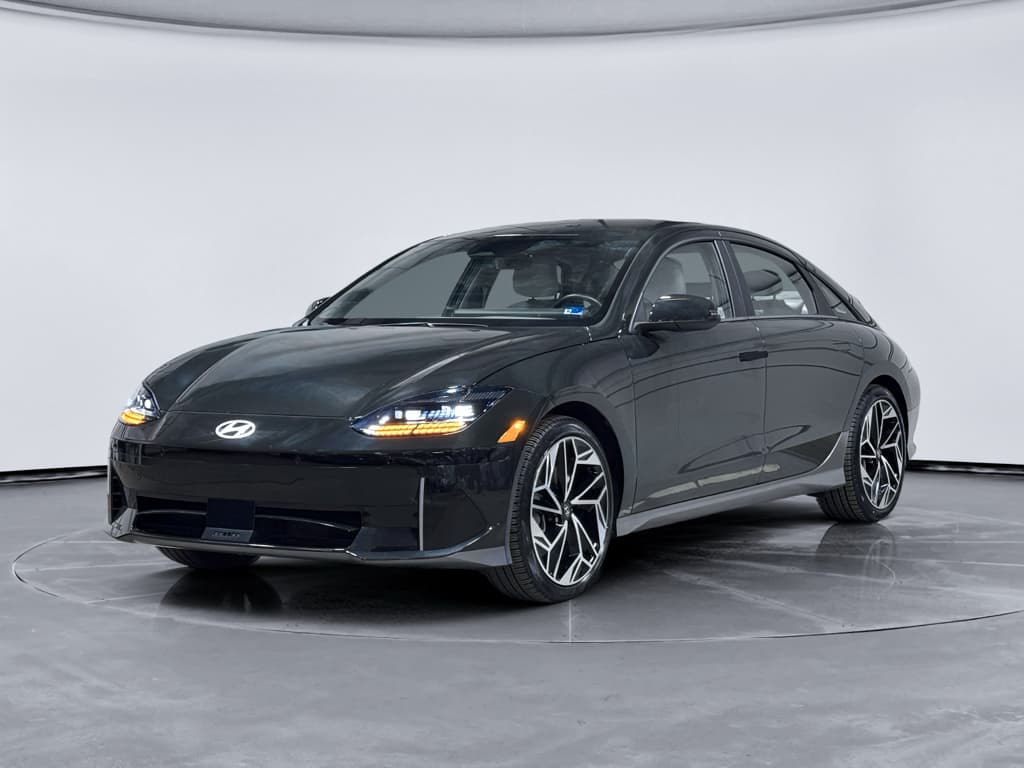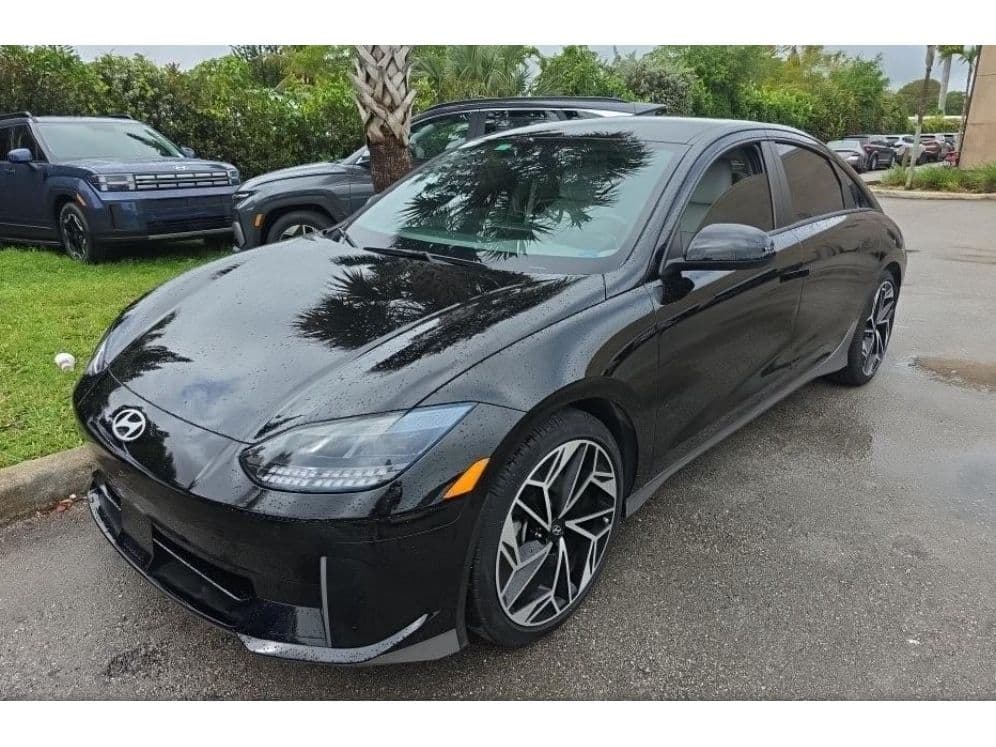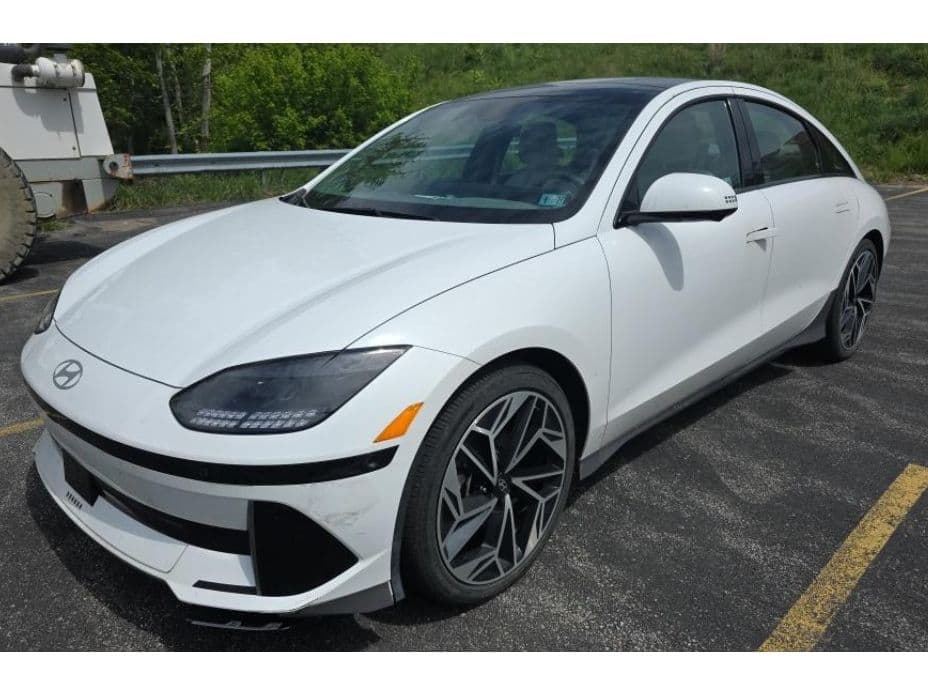
You’re cross‑shopping a used Hyundai IONIQ 6 vs BMW i4, which means you already have excellent taste. These are two of the sharpest electric sedans on sale: one a slippery, spaceship‑styled Hyundai built on a dedicated EV platform, the other a handsome BMW coupe‑sedan that hides its electricity under a very traditional 4‑Series silhouette. On the used market, though, they tell very different stories about value, range, and long‑term ownership.
Both are excellent, but in very different ways
IONIQ 6 vs BMW i4: Who this guide is for
This comparison is written for shoppers in the real world: people considering a used electric sedan in the next 6–12 months, likely financing, possibly trading in a gas car, and definitely not interested in becoming an amateur charging engineer. We’ll keep the engineering‑speak to a minimum and focus on how these cars feel and what they cost when you buy them used.
- You’re choosing between a used IONIQ 6 and BMW i4, or they’re both on your shortlist.
- You care about range and charging speed, not just 0–60 numbers.
- You want to understand depreciation, battery health, and warranty coverage on a used EV.
- You’d like clear guidance on which car fits which kind of driver.
Quick answer: which used EV sedan fits you?
Used Hyundai IONIQ 6 vs BMW i4: at a glance
Two excellent EV sedans, two very different personalities
Choose a used Hyundai IONIQ 6 if…
- You want max range for the money (up to mid‑300s miles in SE Long Range RWD trims).
- You road‑trip a lot and care about ultra‑fast 800V charging, 10–80% in ~18 minutes in ideal conditions.
- You like a futuristic cabin with lounge‑like ambience and excellent efficiency.
- You value Hyundai’s 10‑year/100,000‑mile battery warranty and typically softer depreciation on mainstream brands when buying used.
Choose a used BMW i4 if…
- You want a luxury badge and traditional BMW driving feel.
- You prioritize refinement and chassis balance over ultimate efficiency.
- You’re okay with somewhat shorter range but want strong performance, especially in xDrive40 or M50 trims.
- You care about interior materials and brand cachet as much as you do about charging stats.
Used‑market reality check
Specs at a glance: used Hyundai IONIQ 6 vs BMW i4
Core specs: typical U.S. trims you’ll see used
Approximate factory specs for popular 2024–2025 U.S. configurations frequently appearing on the used market. Exact numbers vary by wheel size and options.
| Model / Trim (typical) | Drivetrain | Battery (usable) | EPA range (mi) | 0–60 mph (approx.) |
|---|---|---|---|---|
| Hyundai IONIQ 6 SE Standard Range RWD | RWD | ~53 kWh | ~240 | ~7.3 s |
| Hyundai IONIQ 6 SE Long Range RWD | RWD | ~77 kWh | ~340–360 | ~6.0 s |
| Hyundai IONIQ 6 SEL / Limited AWD | AWD | ~77 kWh | ~270–310 | ~5.0 s |
| BMW i4 eDrive35 | RWD | ~67 kWh | ~250–275 | ~5.8 s |
| BMW i4 eDrive40 | RWD | ~81 kWh | ~295–318 | ~5.4 s |
| BMW i4 xDrive40 | AWD | ~81 kWh | ~270–307 | ~4.9 s |
| BMW i4 M50 | AWD | ~81 kWh | ~230–270 | ~3.7 s |
Think of this as a starting point; always confirm the exact trim and range rating on the specific car you’re considering.
Don’t shop on range numbers alone
Driving experience: character vs effortlessness
Hyundai IONIQ 6: calm, slippery, quietly quick
The IONIQ 6 is built on Hyundai’s dedicated E‑GMP EV platform, and you feel that from the first block. It’s low, wide, and very planted, with the wheels shoved out to the corners. The steering is light but accurate, and the car prefers clean, efficient lines over hooligan antics.
- RWD Long Range models feel perfectly adequate for American traffic, brisk but never brutal.
- AWD trims add real shove off the line and secure all‑weather traction without turning the car into a hot rod.
- The ride is tuned for comfort and stability, not lap times. It’s the sort of car that eats highway miles without drama.
If you like the sensation of gliding past gas stations in near silence, the IONIQ 6 delivers that in spades.
BMW i4: a classic BMW, now battery‑powered
The i4 shares bones with the 4‑Series Gran Coupe, and it drives like a well‑sorted BMW that just happens to be electric. Weight is significant, but BMW’s chassis tuning keeps it tidy and engaging.
- eDrive35/40 are the sweet spots: rear‑drive balance, strong mid‑range punch, very composed at speed.
- xDrive40 and M50 pile on power and grip; the M50 can feel genuinely outrageous in everyday traffic.
- Steering has more natural heft than the Hyundai, and body control is tighter, especially on sportier suspensions and wheel packages.
If you still care about turn‑in, brake feel, and the way a car settles into a fast sweeper, the i4 is the connoisseur’s pick.
Performance verdict
Range and efficiency: which goes farther?
Headline EPA ranges (recent U.S. models)
In the real world, the IONIQ 6 tends to out‑efficiency the BMW. Its teardrop body, low frontal area, and very slippery aero mean you see impressive watt‑hours‑per‑mile numbers at highway speed. On long U.S. interstates, owners regularly report consumption that beats many crossovers using the same battery pack.
The BMW i4 is no glutton, but it’s a heavier, more conventional shape with wider tires and, in many trims, more power. You’ll usually see slightly lower efficiency than in the Hyundai for the same conditions. That’s compounded in the M50, which trades a chunk of range for drama.
Used‑EV range sanity check
Charging speed and road‑trip ability
On paper and in practice, the IONIQ 6’s 800‑volt E‑GMP platform is a standout. On a suitably powerful DC fast charger, Hyundai quotes 10–80% in about 18 minutes under ideal conditions. That’s sports‑bike quick in EV terms. Even on more common 150 kW chargers, it’s a fast, efficient stop.
The BMW i4 supports up to roughly 180–200 kW DC fast charging, depending on model year and trim. That’s still genuinely quick, but you’re usually looking at something closer to 30 minutes for a substantial 10–80% session. For a single road trip a year, this is a footnote. For regular long‑distance driving, it becomes a quality‑of‑life issue.
Questions to ask yourself about charging
1. How often do you road‑trip?
If you’re doing multi‑state drives several times a year, the IONIQ 6’s 800V charging and strong efficiency add up to <strong>shorter, fewer stops</strong>.
2. What charging networks do you use?
Both cars work with major CCS fast‑charging networks today. As NACS (Tesla) access rolls out to more brands, check that your specific model year supports the adapters or native ports available in your region.
3. Do you have home Level 2 charging?
At home on Level 2, both cars are similar, think <strong>roughly 6–8 hours for a big charge</strong>. If you rely on public charging day‑to‑day, prioritize the car that pairs best with your local infrastructure.
4. Is time or price more important?
Fast charging is often more expensive per kWh. If you’re price‑sensitive and mostly charge at home off‑peak, the Hyundai’s efficiency can trim your electric bill over time.
Space, comfort, and practicality
Cabin and seating
Hyundai IONIQ 6 feels like a rolling lounge: open floor, slim seats, and a distinctly EV‑first vibe with twin 12.3‑inch screens. The rear seat has good legroom but the extreme roofline can pinch headroom for taller passengers.
BMW i4 is more conventional: you’re in a 4‑Series Gran Coupe with batteries. Front seats are excellent, with more bolstering and adjustability in higher trims. Rear legroom is fine but not limo‑like, and the sloping roof and high floor mean taller adults may brush the headliner.
Cargo and everyday usability
The IONIQ 6’s fastback shape hides a relatively small trunk opening and modest volume for a mid‑size sedan. Split‑fold rear seats help, but if you’re hauling strollers or big dogs, it’s not ideal.
The BMW i4’s hatchback design is its secret weapon. Pop the tailgate and you get a wide, tall aperture that swallows luggage, bikes (with front wheels off), and flat‑pack furniture far more easily than the Hyundai. Both cars lack big front trunks.
Practicality verdict
Tech and infotainment: futurist vs traditionalist
Both cars run large, high‑resolution screens and modern driver‑assistance suites. The differences are in philosophy.
Tech personalities: Hyundai IONIQ 6 vs BMW i4
Two very different takes on the digital cockpit
Hyundai IONIQ 6
- Twin 12.3‑inch displays under a single glass panel, with a clean, EV‑native UI.
- Hyundai’s driver‑assist suite is one of the better tuned: smooth lane‑centering and adaptive cruise.
- Menu logic is mostly straightforward, and wireless smartphone integration is common.
- Feels airy and minimalist, almost Scandinavian in mood.
BMW i4
- BMW Curved Display: 12.3‑inch cluster plus 14.9‑inch central touchscreen.
- BMW’s latest iDrive OS is powerful but can feel menu‑dense on first acquaintance.
- Excellent head‑up display and navigation graphics in many trims.
- The cabin feels more traditional luxury, thicker steering wheel, more physical switchgear.
Infotainment aging on used cars
Ownership costs, depreciation, and warranty
This is where buying used flips the script. New, the BMW i4 is significantly more expensive than the IONIQ 6. On the used market, both have already taken a depreciation hit, and that luxury premium becomes your opportunity or your problem, depending on how you look at it.
Key ownership cost factors on a used IONIQ 6 vs BMW i4
The badge isn’t the only thing that separates these two over time
Depreciation
Hyundai IONIQ 6 typically starts cheaper new and falls faster in the first years, which is good news for used buyers. You often get more range and equipment per dollar than in a used BMW.
Warranty coverage
Hyundai’s 10‑year/100,000‑mile battery warranty is a major safety net if you’re buying within that window. BMW’s high‑voltage warranty is shorter; check the in‑service date and mileage carefully.
Maintenance & repairs
Routine EV service is modest for both: tires, brakes, fluid checks. But out‑of‑warranty repairs on a BMW, especially suspension and electronics, are usually pricier than on a Hyundai.
Financing and insurance on used EVs
Buying used: what really matters for these EVs
Used IONIQ 6 & BMW i4: must‑check items
1. Battery health, not just mileage
Two cars with the same odometer reading can have very different battery histories. A highway‑commuter IONIQ 6 that mostly slow‑charged at home can be healthier than a low‑miles BMW i4 that lived on DC fast chargers. Tools like the <strong>Recharged Score</strong> give you an objective read on battery condition.
2. DC fast‑charge history
Frequent fast‑charging in hot climates can accelerate degradation. Ask for charging history if available, and check for thermal‑management warnings in the vehicle’s history report.
3. Tire and wheel condition
Both cars can come on large, low‑profile wheels. Curbed rims and uneven tire wear aren’t just cosmetic; they hint at suspension issues and future costs.
4. Software and feature set
Verify that key driver‑assist features, navigation, and smartphone integration work exactly as you expect. An older iDrive version or missing update can change the experience significantly.
5. Remaining warranty and coverage
Confirm <strong>in‑service date</strong> and mileage against the original battery and powertrain warranties. Factor the cost of an extended service plan if you’re stretching beyond those windows, especially on the BMW.
Don’t skip a specialist inspection
How Recharged helps with used IONIQ 6 and BMW i4
Shopping these cars on classified sites often means taking the seller’s word on the single most expensive component in the vehicle: the battery. That’s precisely what Recharged exists to fix.
Why shop your used EV with Recharged
Especially for complex, high‑value sedans like the IONIQ 6 and BMW i4
Recharged Score battery report
Every car on Recharged comes with a Recharged Score Report that includes verified battery health, fast‑charge behavior, and how the car’s range performance compares to when it was new. No guessing based on a dashboard estimate.
Transparent pricing & financing
Recharged benchmarks each vehicle against fair‑market used EV pricing, so you can see if that slick i4 M50 or long‑range IONIQ 6 is actually a good deal. You can also pre‑qualify for financing online without impacting your credit score.
EV‑specialist support & delivery
From trade‑in or instant offer on your current car to nationwide delivery and an EV‑savvy support team, Recharged is built around making your first, or next, EV purchase simple and low‑stress.
Ready to find your next EV?
Browse VehiclesFAQ: used Hyundai IONIQ 6 vs BMW i4
Frequently asked questions
Bottom line: which used EV sedan should you buy?
If you’re the pragmatic type, the sort who likes long range, short charging stops, and a low‑drama ownership experience, the used Hyundai IONIQ 6 is the clear favorite. It’s one of the most efficient EV sedans on the road, backed by a generous battery warranty, and often priced attractively on the used market. You give up some cargo flexibility and badge prestige, but you gain a quietly excellent everyday companion.
If, on the other hand, you still care deeply about how a car feels at the limit of an on‑ramp, if the weight of the steering and the quality of the interior matter as much as kilowatt‑hours, the BMW i4 earns its keep. It’s the more emotional purchase: richer to drive, prettier to sit in, easier to pack thanks to its hatch.
The good news is that you don’t have to choose blind. With a Recharged Score Report, EV‑specialist support, and transparent pricing, you can line up a specific used IONIQ 6 and a specific BMW i4 and compare them on the things that actually matter: battery health, real‑world range, total monthly cost, and how they fit your life. Start there, and whichever you pick, you’ll end up with a genuinely impressive electric sedan.