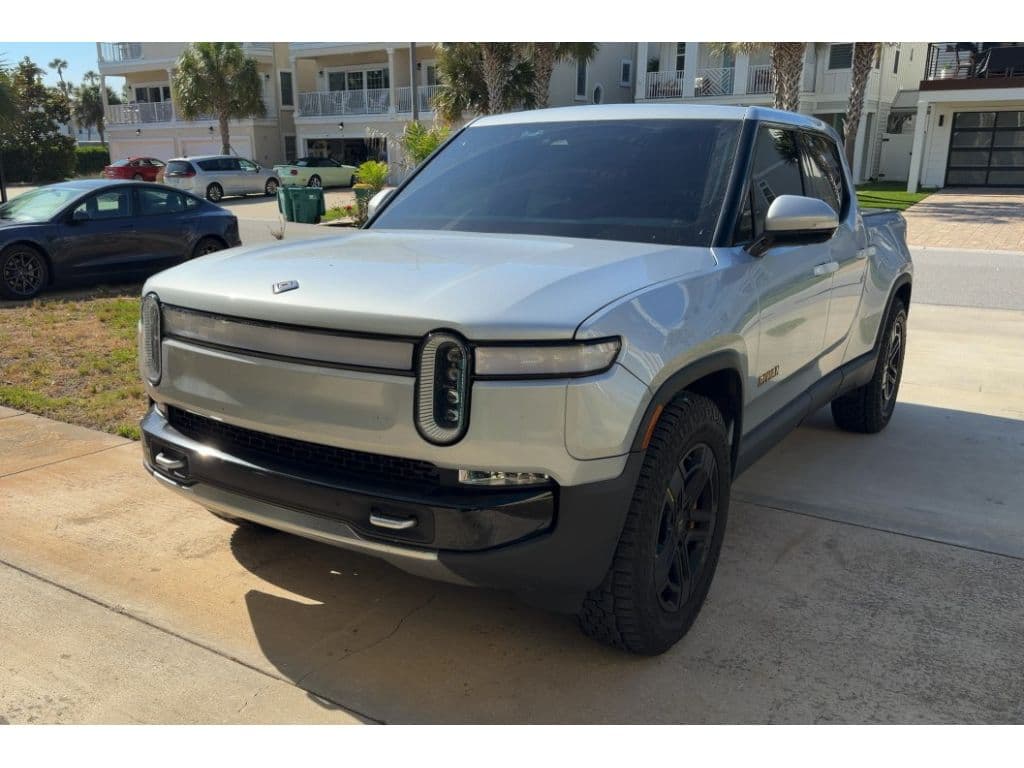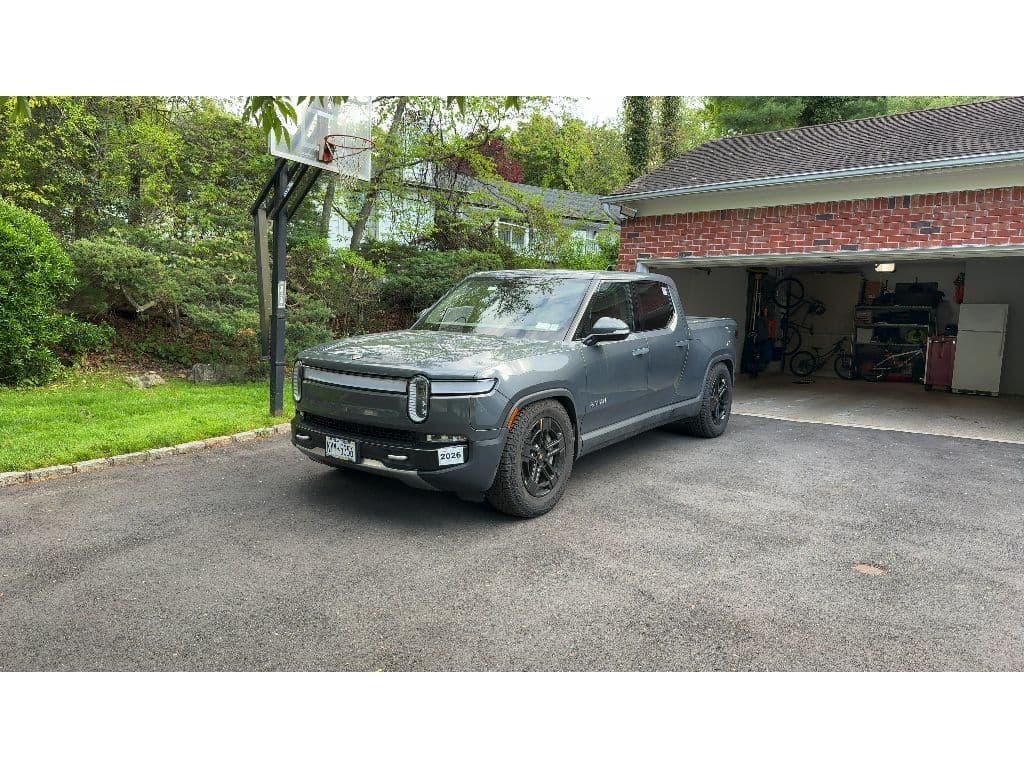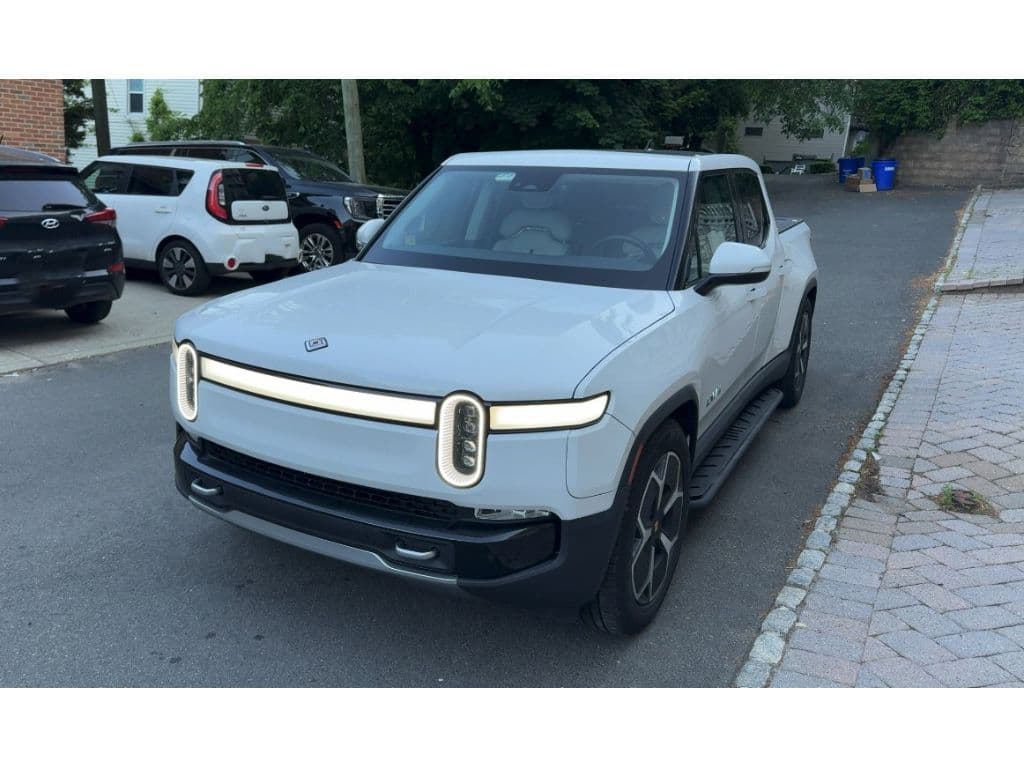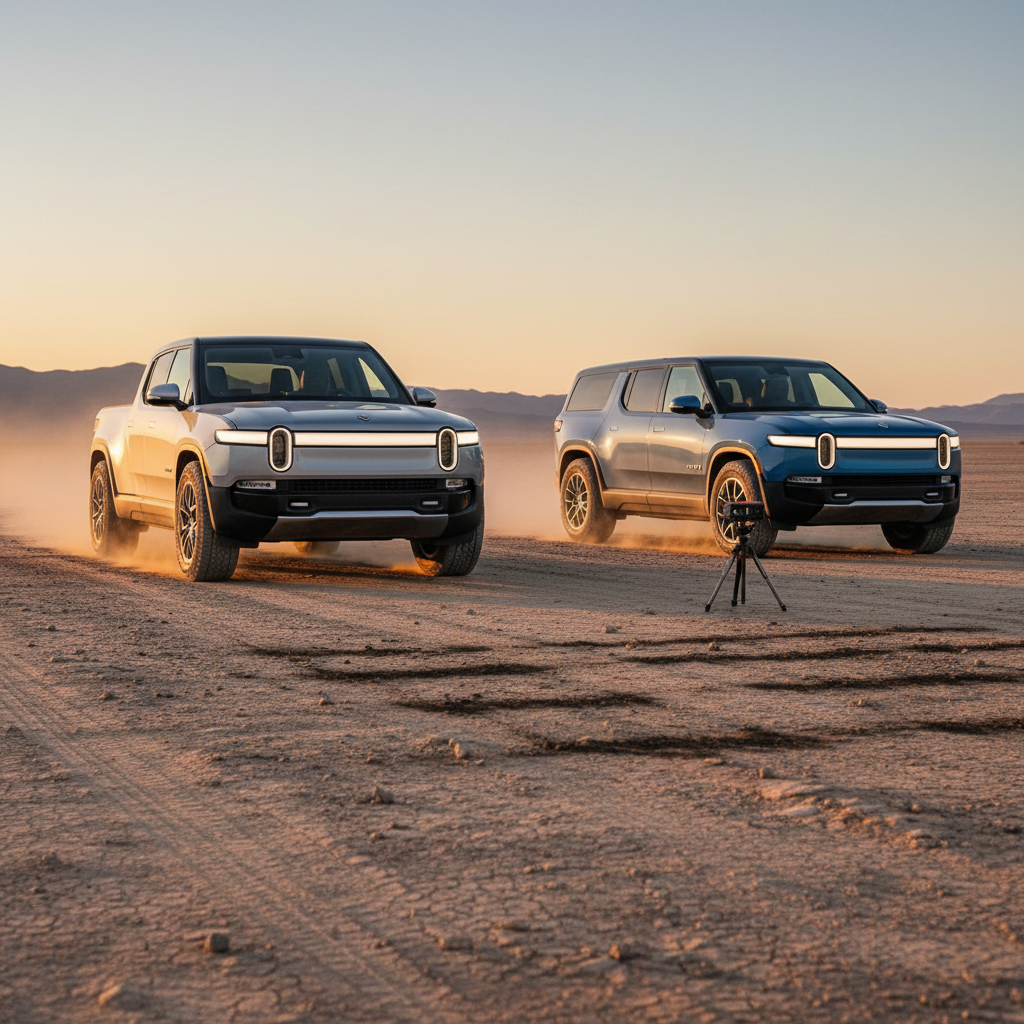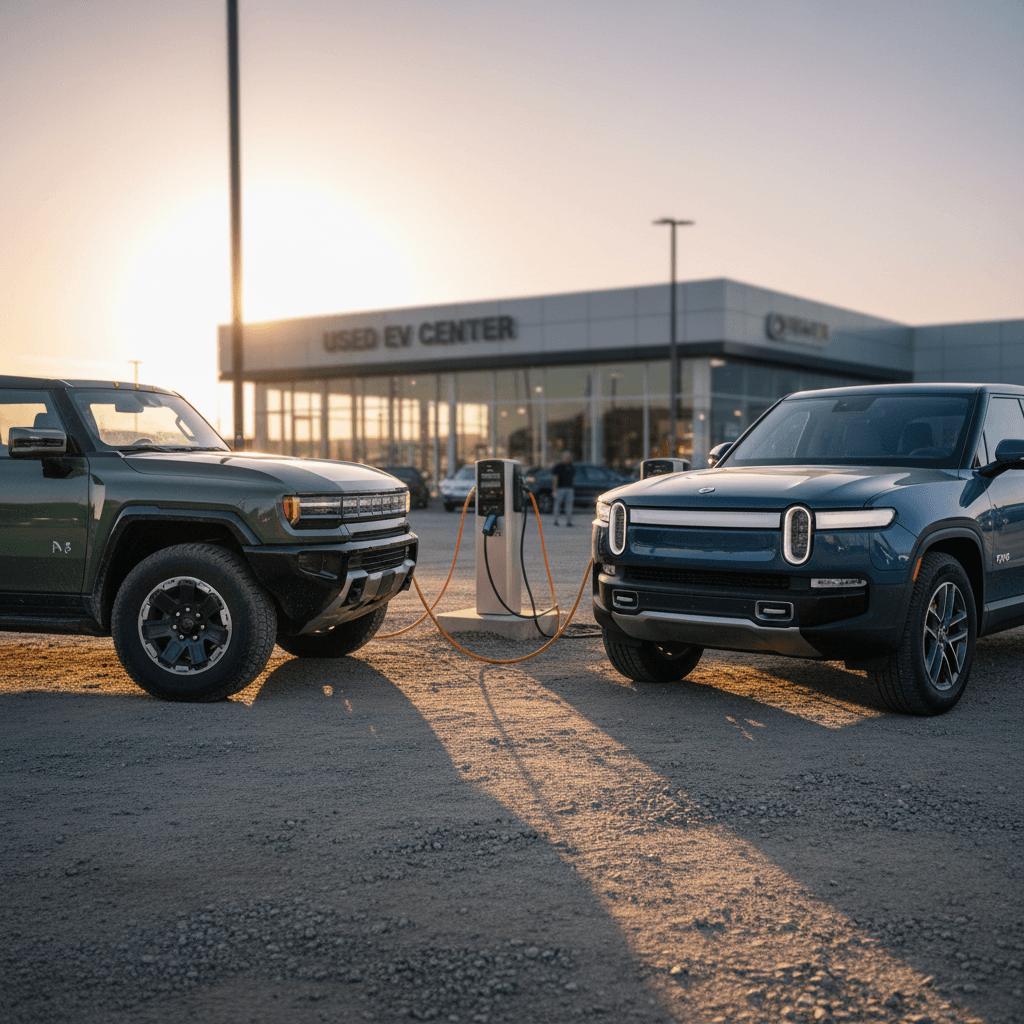
If you’re cross-shopping a used GMC Hummer EV and a used Rivian R1T, you’re not just buying a truck, you’re making a statement. One is a 9,000‑pound electric monument to excess; the other is a design‑forward adventure tool from a Silicon Valley‑adjacent startup. Both are fast, both are fascinating, and both can be brilliant, or frustrating, used buys if you don’t look closely at battery health, real‑world range, and how you’ll actually live with them.
Two very different takes on the electric truck
Why compare a used Hummer EV and Rivian R1T?
On paper, a used Hummer EV and a used Rivian R1T chase the same buyer: someone who wants a high‑end, off‑road‑capable electric pickup with outrageous acceleration and genuine towing ability. On the lot, they solve different problems. The Hummer EV is a full‑size behemoth that dominates a lane the way a locomotive dominates track. The R1T is midsize by American standards, easier to park, and tuned for overlanding chic rather than shock‑and‑awe theatrics.
Shopping used adds another layer: early‑adopter trucks, frequent over‑the‑air software changes, and big battery packs that haven’t had decades to prove their aging curves. That’s where a verified battery health report, like the Recharged Score that comes with every vehicle on Recharged, stops being a nice‑to‑have and becomes non‑negotiable.
Headline numbers: used Hummer EV vs Rivian R1T
Specs at a glance: used GMC Hummer EV vs Rivian R1T
Core specs (when new) that still matter used
These headline figures shape how each truck feels and what to watch for on the used market. Exact numbers vary by trim and year, but this gives you the lay of the land.
| Spec | Used GMC Hummer EV Pickup (common trims) | Used Rivian R1T (common trims) |
|---|---|---|
| Horsepower | Up to ~1,000 hp (tri‑motor), ~625–570 hp (dual‑motor variants) | ~533 hp (dual‑motor), ~835–850 hp (quad/tri‑motor) |
| Battery capacity | ≈170–246 kWh Ultium | ≈105–135+ kWh usable (Large/Max packs) |
| EPA range (best cases) | Roughly 300–380 mi depending on pack and tires | Up to ~410–420 mi with Max pack, ~270–350 mi on smaller packs |
| Curb weight | Around 9,000+ lb | Roughly 7,000–7,100 lb depending on configuration |
| Towing capacity | Up to ~8,500–9,500 lb (trim‑dependent) | Up to 11,000 lb across most trims |
| Bed length | About 5 ft (≈60 in) | About 4.5 ft (≈54 in) plus the Gear Tunnel |
| On‑board AC charger | Up to 19.2 kW | Typically 11.5 kW |
| DC fast‑charge peak | Up to ~300–350 kW on 800‑V charging | Roughly 200+ kW peak, pack‑dependent |
Always verify the exact trim, battery pack, and wheel/tire setup on the specific used truck you’re considering.
Specs are marketing, used condition is reality
Performance and driving feel
Used Hummer EV: Electric super‑truck energy
The Hummer EV in tri‑motor form is a physics experiment that somehow escaped the lab. When you floor it in Watts to Freedom launch mode, this 9,000‑pound brick simply rabbits away, leaving your inner ear to file a formal protest. Even dual‑motor trucks feel absurdly strong in everyday driving.
The steering is light, four‑wheel steering shrinks the turning circle, and the ride on air suspension is surprisingly plush over broken pavement. But you’re always aware of the mass. On a back road, it feels like hustling a luxury condo down a hiking trail.
Used Rivian R1T: Sporty, composed, confidence‑building
The R1T’s performance is less bombastic but more usable day to day. Dual‑motor trucks still feel quick; quad‑motor versions add the party trick of independent torque vectoring at each wheel, letting the truck pivot through corners and claw for grip off‑road in a way the Hummer simply can’t match.
On pavement, the Rivian’s smaller footprint, more communicative steering, and lower weight make it genuinely enjoyable to drive. It’s still a big truck, but you can place it in a lane without white‑knuckling every construction zone.
Performance verdict (used)
Range, efficiency, and battery health on the used market
Range is where the two trucks quietly trade roles. The Hummer EV brings a monstrous battery, up to roughly 246 kWh in some trims, but it’s feeding a nine‑thousand‑pound, wind‑unfriendly brick. The Rivian R1T has a smaller pack but a much more efficient shape. On paper, later R1T Max Pack trucks can crest 400 miles of rated range when new, while Hummer EV pickups typically live a bit under the 400‑mile line even with their biggest packs.
- In mixed daily use, many Hummer EV owners report efficiency that can dip into the low 1s mi/kWh, especially on big off‑road tires and at highway speeds.
- R1T owners usually see stronger efficiency, but heavy towing or big all‑terrain tires can still knock range down dramatically.
- Cold weather, frequent DC fast charging, and repeated deep discharges matter more as these trucks age, especially with packs this large and expensive.
Why battery health matters more on these trucks
Towing, hauling, and real-world utility
Both of these trucks can tow more than many owners will ever ask of them. The Hummer EV is stout, but the Rivian R1T has the specs‑sheet bragging rights here: up to about 11,000 pounds of towing versus the Hummer’s roughly mid‑8,000s to mid‑9,000s, depending on trim. Payload numbers tell a similar story, the Rivian punches above its visual weight.
How they handle truck work in the real world
On the used market, consider not just what they *can* tow, but how they *feel* doing it and what it does to range.
Used Hummer EV
- Towing feel: Incredibly stable; the mass of the truck helps settle the trailer, but you always feel the weight in braking distances.
- Range hit: Towing can carve range dramatically, especially at interstate speeds. Plan your DC fast‑charge stops carefully.
- Bed & storage: Slightly longer bed than Rivian, plus a big frunk, but no Gear Tunnel equivalent.
Used Rivian R1T
- Towing feel: Confident and controlled, with impressive torque from dual or quad motors.
- Range hit: Towing a heavy trailer can chop range to a fraction of the EPA number; Max Pack helps but isn’t magic.
- Bed & storage: Shorter bed, but the ingenious Gear Tunnel plus frunk make packing for trips easier than the tape measure suggests.
Used‑truck towing reality check
Off-road capability vs everyday comfort
These two were both engineered with dirt in their DNA. The Hummer EV arrives with party tricks, CrabWalk, under‑body cameras, available front and rear lockers, and big 35‑inch tires in off‑road trims. The Rivian counters with adaptive air suspension, multiple off‑road modes, and in quad‑motor form, independent torque at each wheel that feels like four tiny tugboats muscling you up and over obstacles.
Hummer EV off‑road
- Strengths: Incredible ground clearance, serious armor, and trick modes make it shockingly capable in wide‑open spaces.
- Weaknesses: Width and weight. On tight trails or soft surfaces, you’re constantly negotiating physics and the laws of property damage.
Rivian R1T off‑road
- Strengths: Narrower, lighter, with superb traction control. More at home threading through trees or technical rock sections.
- Weaknesses: Less flamboyant than the Hummer; some early trucks had software quirks that were later smoothed by over‑the‑air updates.
Trail verdict
Size, maneuverability, and daily practicality
A used Hummer EV is essentially an electric full‑size heavy‑duty truck. It’s longer and significantly wider than the R1T, with a stance that makes suburbia’s narrower streets and parking decks feel like a video game on hard mode. Four‑wheel steering helps, dramatically, but you can’t totally hide the bigness.
- The Hummer EV’s cabin is lounge‑sized, with generous front and rear legroom and a big, cinematic view of the road ahead.
- The R1T’s interior is still spacious for five but feels more like a premium midsize truck, easier to climb into, easier to park, and less intimidating in older downtowns.
- Both offer large front trunks (frunks), but the Rivian’s Gear Tunnel is the secret weapon: a lockable, weather‑sealed pass‑through for skis, recovery gear, or the optional camp kitchen.
Living with them in a city or suburb
Charging experience and road trips
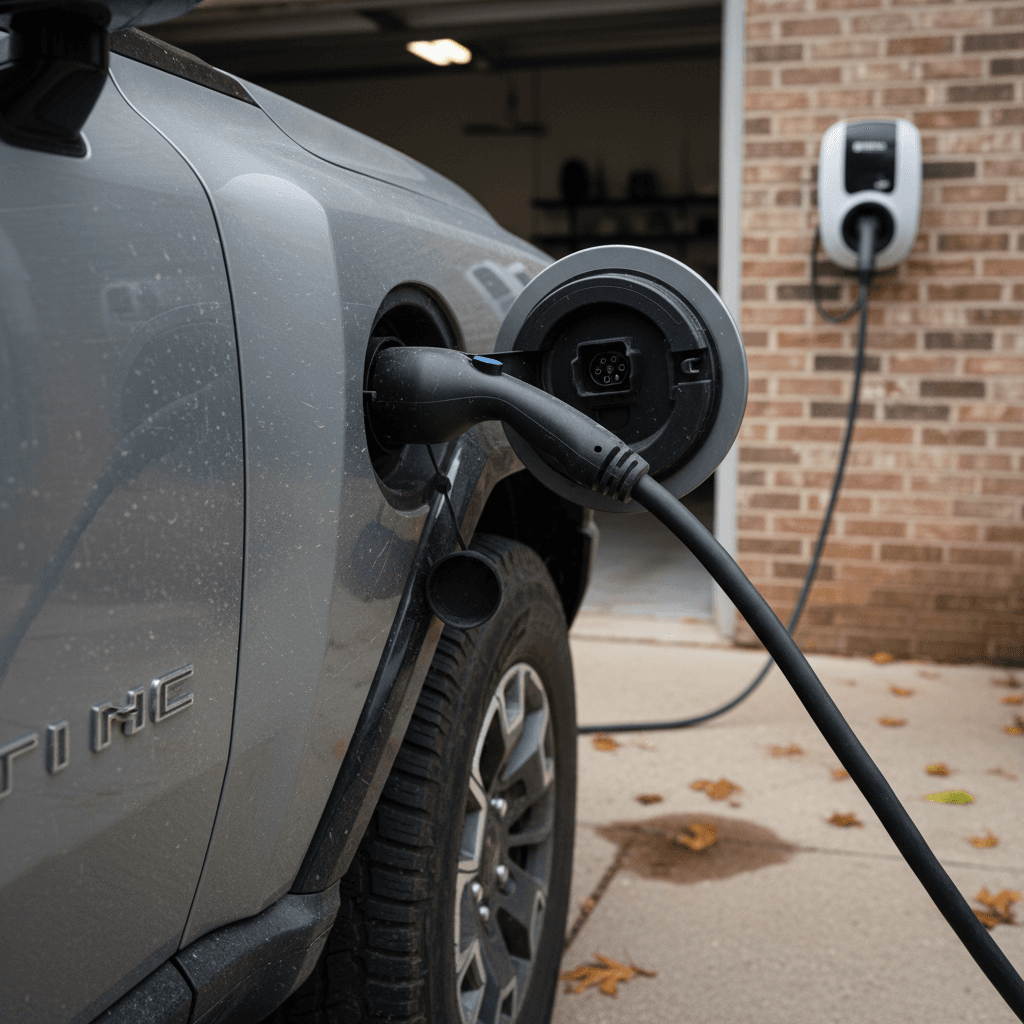
Both trucks support DC fast charging and reasonably strong AC home charging. The Hummer EV has an ace up its sleeve: a very strong on‑board AC charger (up to 19.2 kW when paired with a high‑amp Level 2 circuit), plus Ultium’s ability to reconfigure for 800‑volt DC fast charging on compatible stations. The R1T’s on‑board AC charger is more modest but perfectly adequate for overnight home charging on a 48‑ or 60‑amp Level 2 setup.
Charging a used Hummer EV vs Rivian R1T
Same networks, different personalities at the plug.
Hummer EV charging experience
- Pros: Very fast peak DC rates on compatible 800‑V chargers; excellent on‑board AC charging for well‑wired homes and shops.
- Cons: Huge battery means even a fast charger is working uphill. Adding 10–80% simply takes longer than on a smaller‑pack truck.
Rivian R1T charging experience
- Pros: Smaller pack and good efficiency make road‑trip planning simpler; Rivian’s own Adventure Network can be a bonus along certain routes.
- Cons: Peak DC rates are solid but not record‑breaking; early trucks may have older charging curves compared with newer builds.
Used‑EV charging strategy
Ownership costs, depreciation, and reliability signals
On the used market, both of these trucks have already taken a healthy first‑owner depreciation hit, which is good news for you. The Hummer EV started life with six‑figure price tags in heavily optioned trims; the Rivian R1T, while not cheap, generally stickered lower. That means percentage‑wise, Hummers can sometimes look like “more truck for the money” used, especially if you find an early Edition 1 whose original buyer absorbed the sting.
Key cost questions to ask before choosing a used Hummer EV or R1T
1. How was the truck used?
A lightly driven Hummer that mostly commuted will have lived a very different life from a Rivian that towed a camper every other weekend, or vice versa. Ask for service records, towing history, and usage patterns.
2. How healthy is the battery, really?
Don’t settle for a dashboard guess. A <strong>Recharged Score battery health report</strong> uses diagnostics to estimate remaining capacity and flag concerning charge patterns like constant DC fast charging.
3. What software version is it on?
Both GM and Rivian update these trucks constantly. On the R1T especially, ride, range, and driver‑assist behavior can change with firmware. Make sure you understand what’s installed and what’s pending.
4. What will insurance and tires cost?
Huge off‑road tires, big curb weight, and high sticker prices can all push premiums and running costs up. Pricing 35‑inch all‑terrains for a Hummer EV can be an eye‑opening exercise.
5. Are you comfortable with service access?
GMC’s dealer network is extensive, but EV expertise varies. Rivian uses service centers and mobile technicians. Make sure there’s a workable plan near you either way.
Don’t skip the pre‑purchase inspection
Which used electric truck actually fits you?
Choose your truck: used Hummer EV vs Rivian R1T
Pick the Hummer EV if…
You want an <strong>electric spectacle</strong>, something that makes a Cybertruck look under‑dressed.
You mostly drive in <strong>wide‑open suburbs or rural areas</strong> where size is an asset, not a liability.
You’re more interested in <strong>occasional off‑road adventures and jaw‑dropping acceleration</strong> than threading tight trails every weekend.
You have or can install <strong>robust home charging</strong> and don’t mind longer DC fast‑charge sessions on road trips.
You’ve found a truck with a <strong>clean battery‑health report and service history</strong> that shows mostly light duty use.
Pick the Rivian R1T if…
You want a truck that’s <strong>genuinely enjoyable to drive every day</strong>, not just shocking in a straight line.
You live where <strong>parking garages, older neighborhoods, or tight trails</strong> are part of daily life.
You’ll actually <strong>tow, camp, or overland</strong> and value efficiency and range over raw mass.
You like Rivian’s <strong>design‑forward interior and clever storage</strong> (Gear Tunnel, accessories, etc.).
You appreciate <strong>frequent over‑the‑air improvements</strong> and are comfortable with a younger, tech‑centric brand.
Put simply: the used Hummer EV is an electric amusement park ride that happens to have a bed. The used Rivian R1T is an all‑terrain multi‑tool that happens to be very fast. Neither is wrong. The right answer is the one whose compromises line up with your life, not just your Instagram feed.
How Recharged helps used EV truck buyers
Shopping for a used electric truck shouldn’t require a PhD in battery chemistry. Recharged was built to make used EV ownership simple and transparent, whether you fall for the Hummer EV’s swagger or the R1T’s quiet competence.
What you get when you buy a used EV truck through Recharged
Less guessing, more driving.
Recharged Score battery health report
Financing & trade‑in made easy
Nationwide delivery & expert support
Ready to find your next EV?
Browse Vehicles