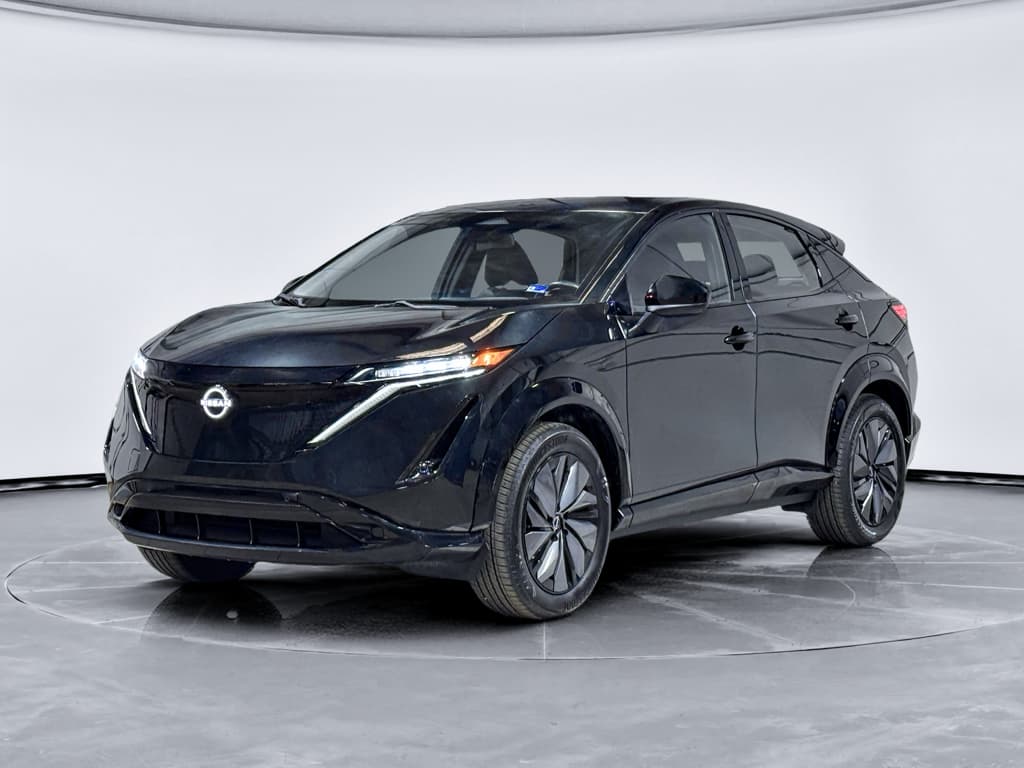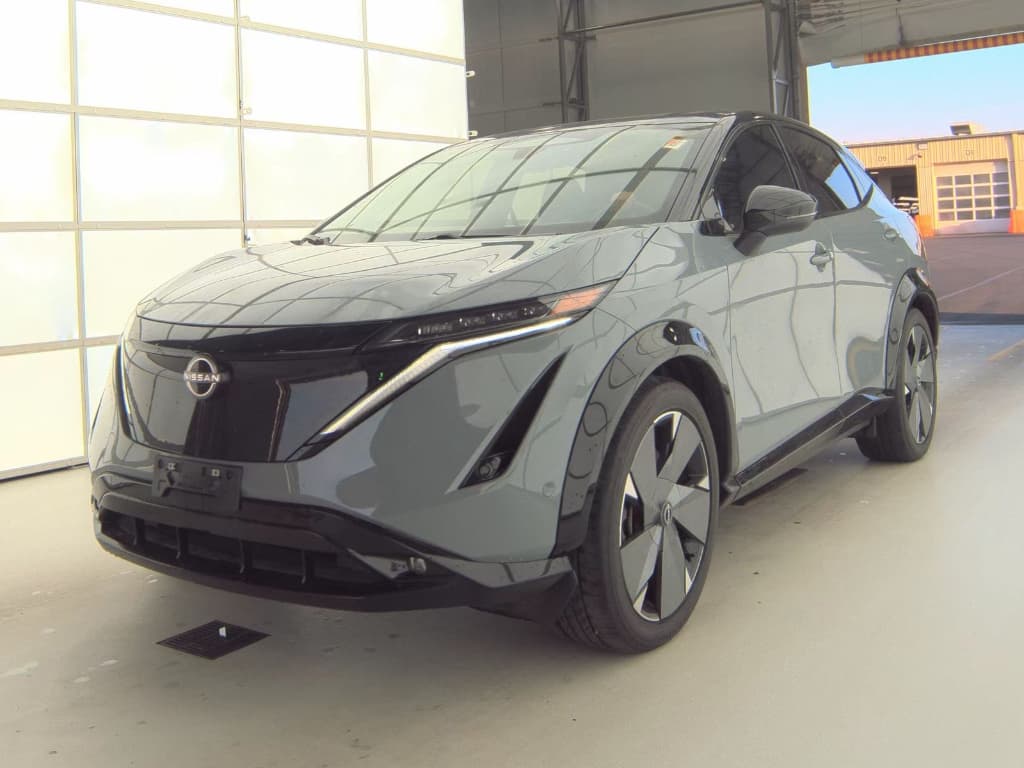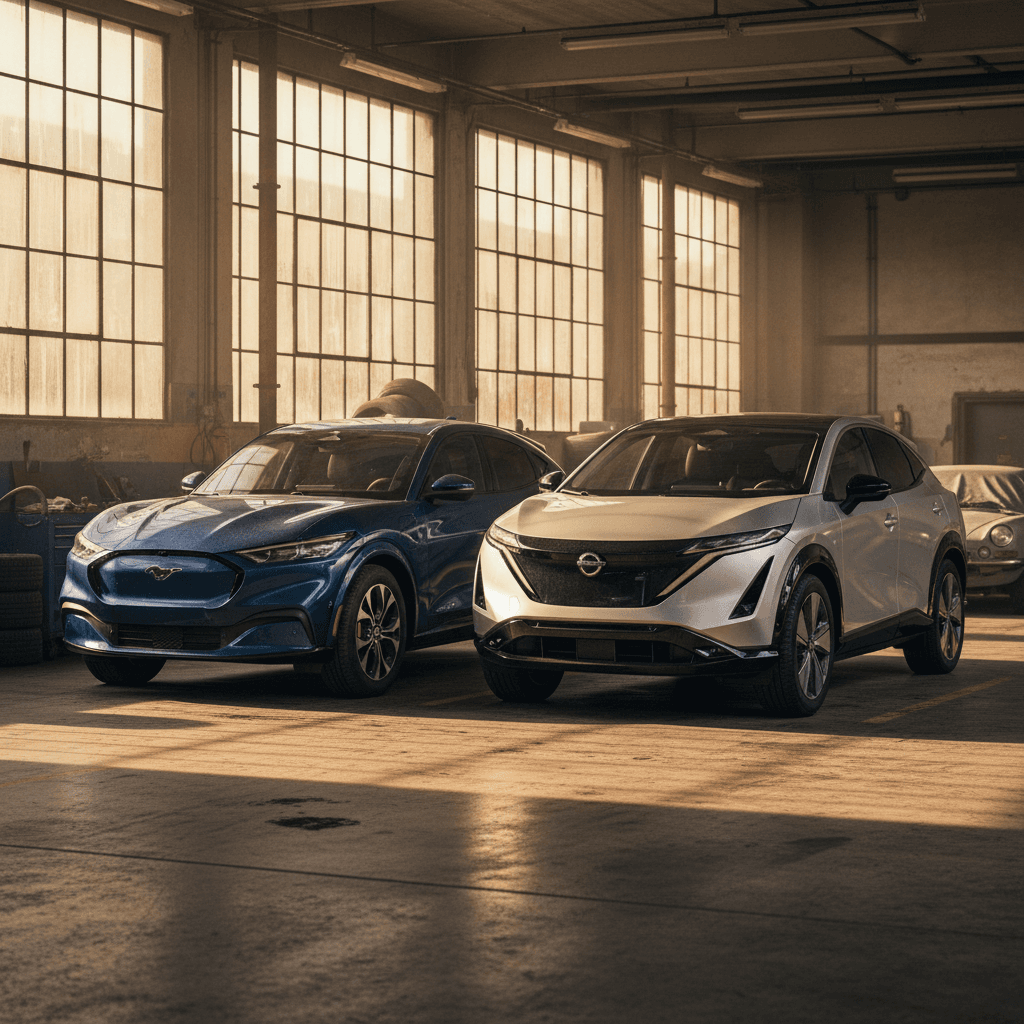
If you’re shopping for a used electric SUV, the Ford Mustang Mach-E and Nissan Ariya are two of the most interesting options on the market. Both offer usable range, modern tech, and SUV practicality, but as used vehicles, they differ in battery behavior, charging performance, reliability, and long‑term support. This guide breaks down used Ford Mustang Mach-E vs Nissan Ariya in the ways that actually matter once the new‑car sheen has worn off.
Context: Ariya discontinuation & used‑market implications
Overview: Used Mustang Mach-E vs Nissan Ariya
Ford Mustang Mach-E (used)
- Personality: Sporty, more engaging to drive, stronger DC fast charging.
- Best for: Drivers who value performance, road‑trip charging, and a large Ford dealer network.
- Key watch‑outs: Software‑heavy experience, multiple recalls (mostly fixed by over‑the‑air updates or dealer visits), and trim‑to‑trim variability in range.
Nissan Ariya (used)
- Personality: Quiet, refined, comfort‑oriented with an upscale interior feel.
- Best for: Commuters and families prioritizing comfort and smoothness over outright performance.
- Key watch‑outs: Slower DC charging than many rivals, U.S. discontinuation after 2025 model year, and fewer on‑road support tools than Ford’s ecosystem.
How Recharged fits in
Quick specs: used Ford Mustang Mach-E vs Nissan Ariya
Core specs that matter on the used market
Headline specs for common trims you’re likely to see used in the U.S. (exact numbers vary by model year).
| Model (typical trims) | Battery (usable kWh) | EPA range (mi) | Max DC fast charge | Drive options |
|---|---|---|---|---|
| Mustang Mach-E Standard Range | ~68–72 | 230–273 | 115 kW | RWD / AWD |
| Mustang Mach-E Extended Range | ~88–91 | 260–320 | 150 kW | RWD / AWD |
| Nissan Ariya 63 kWh | 63 | 205–216 | 130 kW | FWD / AWD |
| Nissan Ariya 87/91 kWh | ~87–91 | 257–304 | 130 kW | FWD / AWD |
Think of these as ballpark figures to orient your search; individual vehicles and trims will differ.
At a glance: where each EV tends to win used
Range and battery health on the used market
Range is the headline number in every EV ad, but as a used‑EV buyer you care more about realistic range with some battery wear than the factory window‑sticker claim. Both the Mustang Mach‑E and Ariya use liquid‑cooled packs and have shown relatively stable degradation so far, but trim choice and prior fast‑charging habits matter more than the badge on the grille.
Used Mustang Mach-E: range profile
- Standard‑range packs (roughly 68–72 kWh usable) typically deliver somewhere in the low‑ to mid‑200‑mile real‑world range when new. On a three‑ or four‑year‑old example with normal use, planning for 190–220 miles is sensible.
- Extended‑range RWD trims can be rated up to roughly 300–320 miles. In mixed driving, a healthy used example often supports 230–270 miles between charges.
- Mach‑E efficiency is competitive but not class‑leading; cold weather or high speeds can shave range quickly, especially on the performance‑oriented GT models.
Used Nissan Ariya: range profile
- The 63 kWh pack is rated around 205–216 miles depending on trim and drive type. In typical used‑car conditions, treat 170–200 miles as a realistic planning number.
- The larger 87/91 kWh pack offers 257–304 miles of EPA range depending on configuration, but the Ariya tends to be less efficient than many rivals, including the Mach‑E, so expect real‑world range slightly below the headline numbers.
- For commuters, both vehicles provide plenty of buffer. For long‑distance drivers, extended‑range Mach‑E and large‑battery Ariya trims are the ones to focus on.
Cold‑weather reality check
How Recharged derisks battery health
Ready to find your next EV?
Browse VehiclesCharging speed and road‑trip viability
On the U.S. used market, both the Mustang Mach‑E and Nissan Ariya use the CCS fast‑charging standard (many later cars will also gain NACS/Tesla‑port access via adapters or port changes). That means you’ll be using broadly the same public fast‑charging networks, but how quickly each SUV can gulp down energy, and how well it holds that speed, differs in practice.
Charging comparison: used Mustang Mach-E vs Nissan Ariya
Assuming healthy batteries and good fast‑charger conditions.
Mustang Mach-E charging traits
- Max DC rate: Up to 115 kW on standard‑range trims and up to 150 kW on extended‑range versions.
- Real‑world DC sessions: It’s realistic to see 10–80% in ~30–40 minutes on a high‑power charger with an extended‑range pack.
- Ford ecosystem: BlueOval Charge Network aggregation, FordPass app routing, and growing access to Tesla Superchargers improve road‑trip usability.
Nissan Ariya charging traits
- Max DC rate: Around 130 kW for both 63 kWh and 87/91 kWh packs, not slow, but behind the quickest rivals.
- Real‑world DC sessions: Nissan quotes roughly 35–40 minutes for 10–80% on the larger pack at a 130 kW charger, but charge curves can taper earlier than Mach‑E’s.
- Charging strategy: Ariya owners are better off planning slightly longer stops or more frequent top‑ups on long trips.
Road‑trip planning advice
Space, comfort, and interior experience
Both of these EVs are compact crossovers on paper, but they deliver that space in different ways. The Mustang Mach‑E leans into its performance‑crossover identity, while the Ariya feels more like a quiet, near‑luxury commuter with a lounge‑like cabin.
Mustang Mach-E: practical but sporty
- Cargo: Competitive rear cargo area plus a useful front trunk (frunk) on many trims, though the sloping roofline can eat into vertical space.
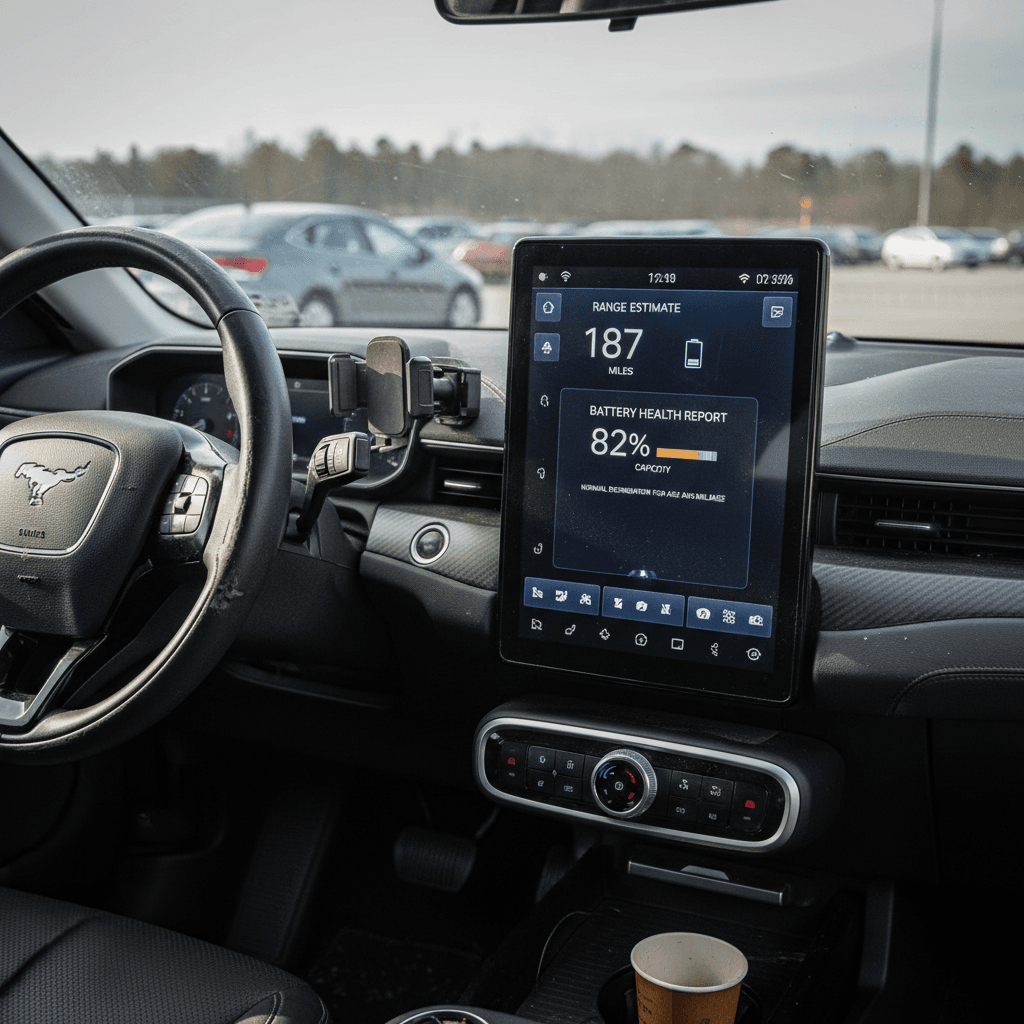
- Cabin feel: Modern and minimalist but intentionally sporty, with a tall central touchscreen and digital cluster.
- Seats: Generally supportive, especially in performance trims, though some shoppers find the ride a bit firmer than rivals on 19–20 inch wheels.
- Noise & refinement: Respectable for the class, but not as hushed as Ariya on rough pavement.
Nissan Ariya: comfort‑first crossover
- Cargo: Similar overall space to Mach‑E, with a more conventional SUV roofline and configurable storage; no frunk, but clever underfloor organization in back.
- Cabin feel: One of the Ariya’s biggest strengths, soft materials, a calm design, and a more premium ambience than you’d expect given its price point when new.
- Seats: Comfort‑focused with an easy driving position and a quieter, more isolating ride, especially on smaller wheels.
- Noise & refinement: Excellent isolation for the class, making it a strong commuter and road‑trip cruiser if you don’t drive aggressively.
Performance and driving character
The Mustang Mach‑E was explicitly positioned as a performance‑flavored EV crossover, while the Ariya was tuned around comfort and predictability. That basic DNA doesn’t change when you buy used, but tire choice, wheel size, and battery weight all influence how each SUV feels on the road.
Driving character: which feels better depends on you
Both are quick compared to gas crossovers, but personality matters more than 0–60 bragging rights.
Acceleration
Mach-E: Even non‑GT trims feel punchy, and dual‑motor versions are legitimately quick. GT models get into true sports‑car territory.
Ariya: Single‑motor trims are brisk but not thrilling. Dual‑motor e‑4ORCE versions add welcome punch but still lean comfort rather than sharpness.
Handling & feel
Mach-E: More playful steering and chassis tuning; you can feel the Mustang branding in highway ramps and back roads.
Ariya: Stable and predictable with light steering, great for commuting, less engaging if you like to drive quickly.
Ride & refinement
Mach-E: Firmer, especially on big wheels, which some buyers love and others find busy on broken pavement.
Ariya: Softer and quieter, prioritizing isolation over feedback.
Who should favor which?
Reliability, recalls, and long‑term confidence
Used buyers can’t afford to ignore reliability. Both SUVs are still relatively young in the market, so we’re working with early data, but some patterns have emerged, especially around software and recalls for the Mach‑E and charging and supply‑chain constraints for the Ariya.
Key reliability themes to understand
1. Ford Mustang Mach-E recalls & software fixes
The Mach‑E has seen several notable recalls, including issues with high‑voltage contactors, electronic door latches, and even park‑system software on certain model years. The good news: many fixes come via <strong>over‑the‑air updates</strong> or straightforward dealer campaigns. When buying used, verify that recall work is complete and that the vehicle has been regularly updated.
2. Nissan Ariya’s shorter track record
The Ariya arrived later and in smaller volumes, so long‑term reliability data is thinner. Early impressions suggest typical Nissan EV robustness on the battery and powertrain side, but build quality and minor electronics issues can vary by example, especially given the complex interior tech.
3. Battery & thermal management
Both vehicles use liquid‑cooled battery packs, which is encouraging for long‑term health. Neither has the systemic, heat‑related degradation issues we saw in early air‑cooled EVs, but how the previous owner charged, particularly repeated DC fast charging, still matters.
4. Future support & parts availability
Ford is building a multi‑model EV strategy in North America, so parts and dealer support for the Mach‑E should remain strong. Nissan’s decision to discontinue the Ariya here after 2025 adds some uncertainty on future parts pricing and availability, though the company has committed to continued support.
Non‑negotiable step for any used EV
Used prices, value, and depreciation
Due to rapid EV price adjustments since 2022 and shifting incentives, both the Mach‑E and Ariya have seen significant depreciation. That’s a headache for first owners, but a major opportunity for used‑EV shoppers who are willing to do their homework.
Typical used pricing ranges (U.S., early 2026)
Ballpark asking‑price ranges you might see from dealers and online marketplaces. Actual prices vary by trim, miles, condition, geography, and incentives.
| Model years | Ford Mustang Mach-E | Nissan Ariya | What it usually buys you |
|---|---|---|---|
| 2021–2022 | Low–mid $20Ks to high $20Ks | Mid $20Ks to low $30Ks | Earlier Mach‑E trims (Select/Premium SR or ER) vs. early Ariya 63 kWh and some 87 kWh FWD trims. |
| 2023 | High $20Ks to low $30Ks | Low–mid $30Ks | Updated Mach‑E feature sets and more Ariya inventory, often with driver‑assist and larger packs. |
| 2024 (and younger used) | Low–mid $30Ks+ | Mid $30Ks to low $40Ks | Lightly‑used, low‑mileage examples that still feel like new cars, often with advanced driver‑assist and tech packages. |
Use these as directional anchors, then lean on live market data, like the fair‑price analytics in a Recharged listing, for a specific vehicle.
Depreciation dynamics
Ownership costs, incentives, and support
Beyond the purchase price, you’ll want to look at energy costs, maintenance, financing, and any remaining incentives or warranties. EVs are generally cheaper to run than gas crossovers, but the details still matter when comparing two specific models.
Ownership experience: where each SUV stands out
Most EV running costs are low; the difference is in the details.
Energy & charging costs
Mach-E: Slightly better efficiency than Ariya in many tests, especially for dual‑motor variants, which can shave a bit off your energy bill over tens of thousands of miles.
Ariya: A bit thirstier in kWh per mile. Not a deal‑breaker, but if your electricity is expensive it’s worth factoring into total cost of ownership.
Maintenance & service
Both vehicles benefit from EV‑typical low maintenance: no oil changes, fewer moving parts. Ford’s much larger U.S. dealer network makes it easier to find technicians familiar with the Mach‑E. Ariya service is more concentrated at larger Nissan dealers with EV experience.
Financing & used‑EV support
Recharged can help you finance a used Mach‑E or Ariya with EV‑savvy lenders, structure trade‑ins, and arrange nationwide delivery. That matters because used‑EV values move quickly; having clear financing upfront makes it easier to act when the right car appears.
Don’t forget used‑EV incentives
Which used EV SUV is right for you?
There’s no single winner here; the better choice depends on how you drive and what you value. But general patterns do emerge when you look at the used‑EV market instead of the showroom floor.
Choose a used Mustang Mach-E if…
- You prioritize fun-to-drive character and stronger acceleration.
- You plan to road‑trip often and want quicker DC fast charging plus a richer public‑charging ecosystem.
- You like the idea of over‑the‑air software updates and a large domestic dealer network.
- You’re okay trading a slightly firmer ride for more responsive handling.
Choose a used Nissan Ariya if…
- You value a quiet, refined cabin and comfort‑oriented ride above all else.
- Your driving is mostly commuting and regional trips, so slightly slower DC charging isn’t a deal‑breaker.
- You prefer an upscale interior feel and are attracted by potential depreciation‑driven bargains.
- You’re comfortable owning a model that’s being discontinued in the U.S., with future support coming through a smaller pool of EV‑savvy Nissan dealers.
How Recharged helps you decide
Checklist for shopping a used Mach-E or Ariya
Practical steps before you buy
1. Match battery size to your real needs
List your typical daily miles, longest regular trips, and access to home charging. If you almost always drive under 60 miles a day with home charging, a standard‑range Mach‑E or 63 kWh Ariya may be enough. Road‑trippers should prioritize extended‑range Mach‑E or 87/91 kWh Ariya trims.
2. Verify battery health, not just mileage
Two EVs with identical odometer readings can have very different battery histories. Ask for a <strong>formal battery health report</strong>, or shop through Recharged, where the Recharged Score includes independent diagnostics on every vehicle.
3. Check recall and software‑update status
For the Mach‑E especially, confirm that all open recalls have been completed and that the car has received recent software updates. For the Ariya, verify that infotainment and driver‑assist systems are operating as expected and on current software.
4. Inspect tires, brakes, and suspension
Performance‑oriented Mach‑E trims may have led harder lives, with more tire and brake wear. Comfort‑focused Ariyas can hide worn suspension components behind a quiet ride. A good pre‑purchase inspection will uncover both.
5. Test fast‑charging behavior if possible
If you can, take the vehicle to a public DC fast charger and observe the charge curve. Does it ramp up quickly and hold reasonable power, or taper off early? Anomalies can flag battery or thermal‑management issues.
6. Compare total cost, not just list price
Factor in home‑charging upgrades, potential state and utility rebates, insurance, and your local electricity rates. A slightly more expensive Mach‑E with better efficiency or charging behavior might cost less to own than a cheaper, thirstier Ariya, or vice versa.
FAQ: used Ford Mustang Mach-E vs Nissan Ariya
Frequently asked questions
Both the used Ford Mustang Mach‑E and Nissan Ariya represent a new phase for the EV market: high‑tech electric SUVs that are now attainable in the used‑car lanes. The Mach‑E trades more heavily on performance, charging speed, and Ford’s scale; the Ariya trades on comfort, cabin quality, and depreciation‑driven value. If you anchor your decision in verified battery health, completed recalls, and how you actually drive, either can be an excellent second‑owner EV. And if you’d rather not navigate that complexity alone, Recharged is built to make used‑EV ownership transparent, from your first search to the day the car arrives in your driveway.