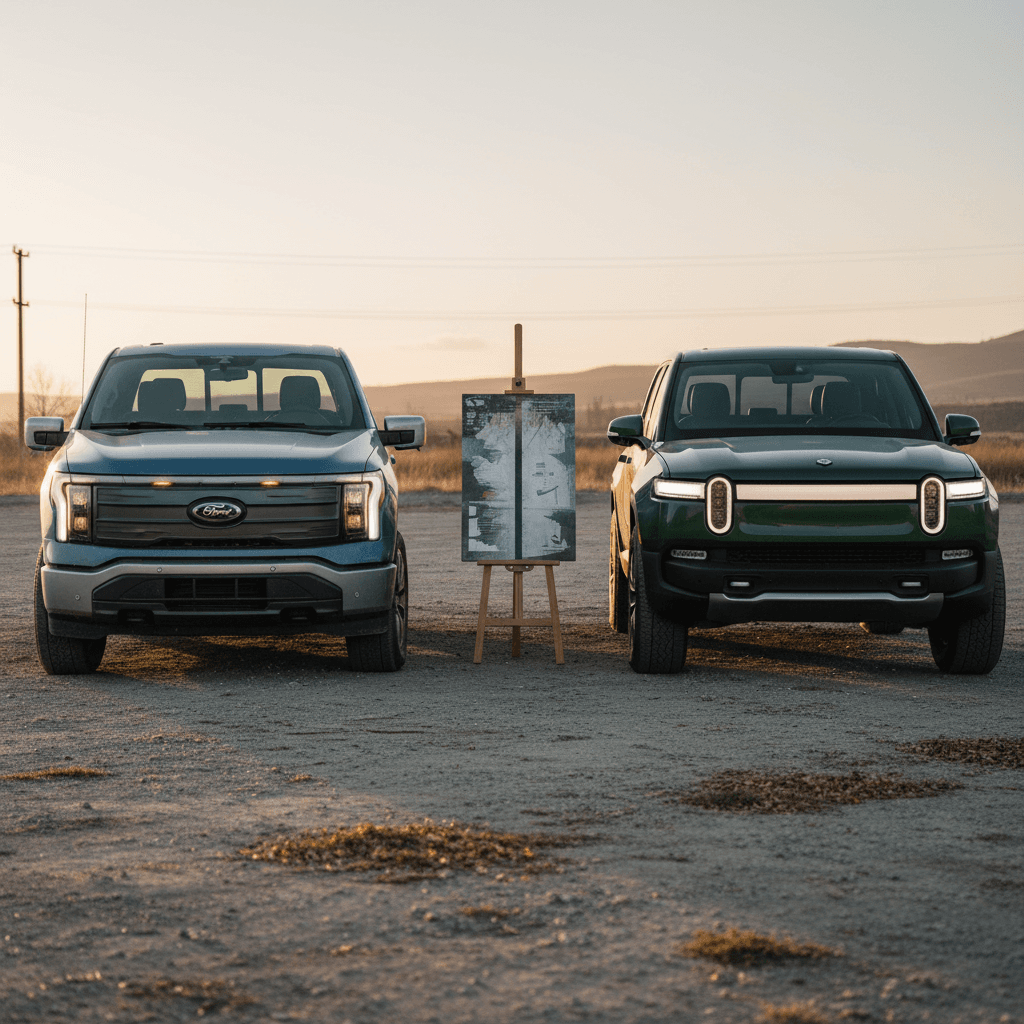
If you’re shopping for a used electric truck in 2026, your short list probably comes down to a **used Ford F-150 Lightning** or a **used Rivian R1T**. Both are seriously quick, silent, and capable, but they’re aimed at slightly different kinds of drivers, and their used‑market stories are evolving fast after Ford announced it would end new‑truck Lightning production in late 2025.
Context for 2026 shoppers
Why Compare Used F-150 Lightning vs Rivian R1T in 2026?
The F-150 Lightning and Rivian R1T were the **first modern electric pickups to hit U.S. driveways**. Today, you’re not just choosing between specs on a brochure, you’re choosing between trucks that have lived real lives: road trips, Home Depot runs, maybe a few towing adventures. On the used market, the question isn’t only “which truck is better,” but **which truck is better for you at the price and condition you can actually buy today**.
- You want a true pickup that feels familiar if you’ve owned gas F-150s or Silverados.
- You’re cross‑shopping an EV truck with a three‑row SUV or luxury crossover for family duty.
- You need real towing and hauling, but you’re also range‑conscious and don’t want to spend your life at fast chargers.
- You’re wondering how Ford’s decision to end new Lightning production affects used values, parts, and support.
- You’re curious whether Rivian’s adventure‑first R1T is worth its higher purchase price on the used market.
Quick Take: Which Used EV Truck Fits You?
Used F-150 Lightning vs Rivian R1T: Who They Suit Best
If you only read one section, make it this one.
Used Ford F-150 Lightning is best if…
- You want a truck that feels like a normal F-150 inside and out, just electric.
- You plan to use it as a family truck and daily driver more than a hardcore adventure rig.
- You value Ford dealer network support and easier service access in smaller towns.
- You’re looking for more truck per dollar; used Lightning prices have softened faster.
- You tow occasionally, mostly under 7,500 pounds, and can plan charging stops.
Used Rivian R1T is best if…
- You want a purpose‑built adventure truck with clever storage and serious off‑road chops.
- You care about longer range options and stronger fast‑charging performance for road trips.
- You’re willing to pay more for design, performance, and tech.
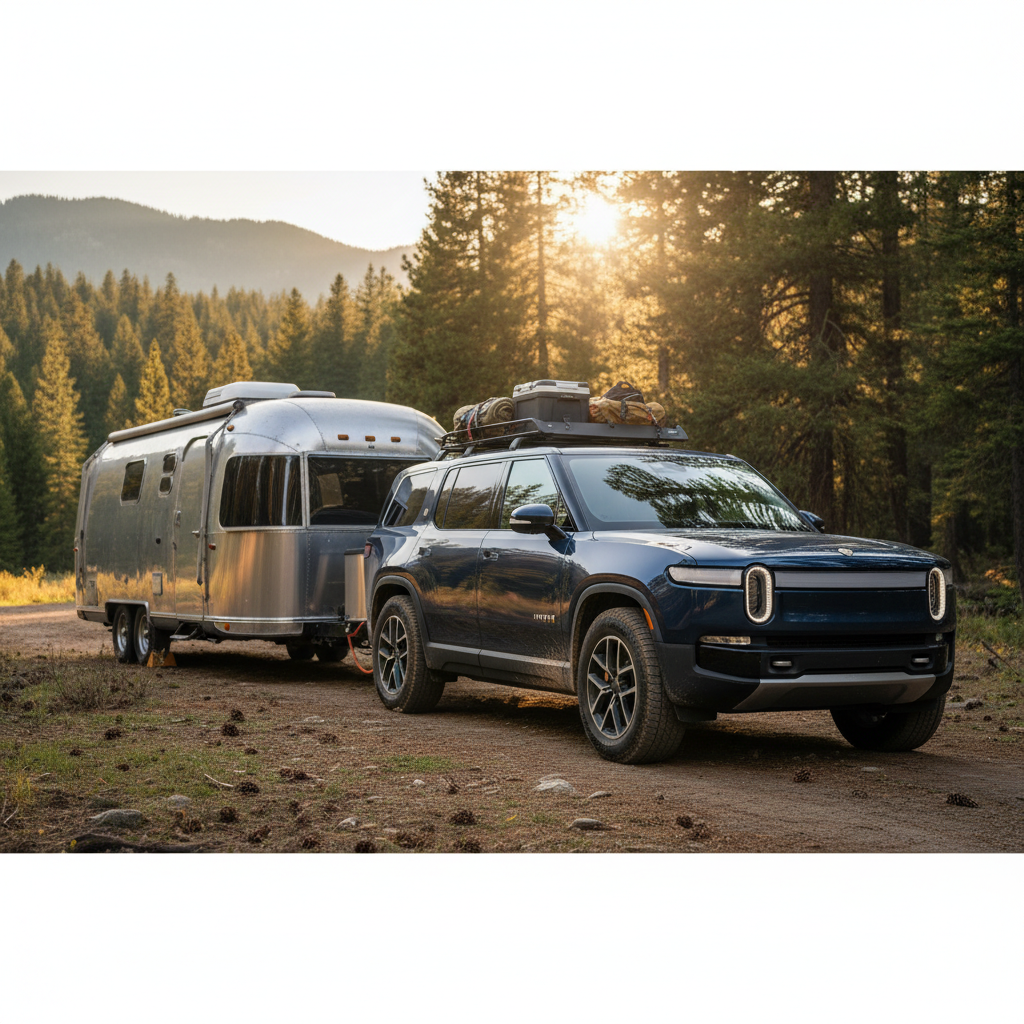
- You tow heavier trailers more often and want an 11,000‑pound tow rating.
- You like the idea of owning something that feels more like a premium outdoor tool than a work truck.
The 10‑second rule
Key Specs at a Glance
Used Ford F-150 Lightning vs Rivian R1T: Core Specs (Typical 2022–2024 Trucks)
Exact specs vary by year, trim, and wheels. These are common configurations you’ll see on the used market in 2026.
| Spec | Used F-150 Lightning (typical Lariat/Platinum ER) | Used Rivian R1T (typical Dual / Quad Large pack) |
|---|---|---|
| Drivetrain | Dual‑motor AWD | Dual‑ or Quad‑motor AWD |
| Horsepower | Around 452–580 hp depending on trim | ≈600 hp Dual, up to ≈835 hp Quad |
| EPA Range* | ≈240–320 miles (Standard vs Extended battery, wheel size) | ≈270–350+ miles (Standard/Large), up to ≈400 with Max pack |
| Max Tow Rating | Up to 10,000 lb (properly equipped, ER pack) | Up to 11,000 lb across most trims |
| 0–60 mph | Mid‑4 second range in performance trims | As low as ~3.0 seconds on Quad‑motor; mid‑3s Dual Performance |
| Bed Length | 5.5‑foot bed | ≈4.5‑foot bed |
| Front Trunk | Large powered "mega power frunk" | Deep powered frunk, slightly smaller but still generous |
| Onboard Power | Up to 9.6 kW of outlets; Pro Power Onboard; available home backup power | Multiple 120V outlets, camp‑friendly power but less whole‑home focus |
| Fast Charging | Peak ~150 kW DC fast charging | Peak often 200+ kW depending on pack; generally quicker road‑trip stops |
| Towing Impact | Heavy range hit; plan on ~50% loss at max tow | Also big hit, but larger battery options can help offset |
Always confirm battery size, motor configuration, and tow ratings on the specific truck you’re considering.
About those range and tow numbers
Used Pricing, Depreciation & Value
How the Used Market Treats Electric Trucks
Used pricing moves with incentives, gas prices, and news cycles, but by 2026 a few patterns are clear. **Ford F-150 Lightning values have slipped faster** than Rivian R1T values, partly because Ford sold more trucks, cut prices on new ones, and then pivoted away from the Lightning program entirely. That makes used Lightnings more approachable on price, but also raises smart questions about long‑term support.
Typical used Lightning pricing in 2026
- Early 2022–2023 Pro/XLT trucks can land in the mid‑$40,000s to mid‑$50,000s depending on mileage, battery, and options.
- Well‑equipped Lariat ER and Platinum examples often sit in the high‑$50,000s to mid‑$60,000s, down substantially from $80k‑plus new stickers.
- Because production has ended, some low‑mile, high‑spec trucks may firm up or even creep up if collectors decide this was a short‑run icon.
Typical used R1T pricing in 2026
- Early 2022–2023 Adventure / Explore Dual‑motor trucks commonly show up from the low‑$60,000s to low‑$70,000s.
- Quad‑motor and Max‑pack trucks, or low‑mile 2024s, can still push well above that, especially with desirable colors and wheels.
- Rivian’s more limited volume and “adventure‑luxury” positioning help it hold value a bit better than the Ford, at least so far.
Where Recharged fits in
Ready to find your next EV?
Browse VehiclesRange, Batteries & Real‑World Use
On paper, the Rivian R1T usually wins the range game, especially with its Large and Max battery packs. But **real‑world range on a used truck is a three‑part story**: original battery size, how it’s been used, and how honest the seller (and the truck’s software) is being about battery health.
Battery and Range: How They Differ
Both trucks are quick; their personalities show up in how they carry energy.
Ford F-150 Lightning batteries
- Standard and Extended Range packs; many used trucks are Extended.
- EPA ratings roughly mid‑200s to low‑300s miles when new, depending on trim and wheels.
- Ford’s software updates have continually tweaked range estimates and charging behavior.
Rivian R1T batteries
- Standard, Large, and Max packs on newer trucks; earlier ones mostly Large.
- EPA range spans from mid‑200s up to around 350+ miles on Large and ~400 with Max pack.
- Well‑tuned for fast‑charging and highway road trips compared to many early EVs.
Used‑truck reality
- Expect some normal battery degradation, think a modest haircut, not half the hair.
- Big wheel/tire combos and lift kits can shave real‑world range fast.
- A verified battery health report (like the Recharged Score) is worth its weight in electrons.
How to sanity‑check range on a test drive
Towing, Hauling & Everyday Utility
Both of these trucks can tow more than most owners will ever hook up. The Rivian R1T posts the bigger headline number, but the Lightning’s familiar full‑size body and longer bed make it easier to live with if your days are more Costco than canyon.
Utility Comparison: How They Actually Work as Trucks
Specs don’t tell you whether a truck is easy to live with. This table mixes hard numbers with daily usability.
| Category | Used F-150 Lightning | Used Rivian R1T |
|---|---|---|
| Max Towing | Up to 10,000 lb (properly equipped) | Up to 11,000 lb |
| Bed Length / Layout | 5.5 ft bed, roomy crew cab; feels like any modern full‑size | ≈4.5 ft bed, crew cab; more mid‑size footprint |
| Frunk Storage | Enormous powered frunk; great for luggage and groceries | Deep powered frunk; more vertical than wide, still very usable |
| Payload | Comparable to gas 1/2‑tons in similar trim; varies by spec | Around 1,700+ lb on many builds |
| Off‑Road Hardware | Available off‑road package but tuned more for slippery work sites than Moab | Air suspension, clever off‑road modes, underbody protection; genuinely trail‑ready |
| Onboard Power | Up to 9.6 kW outlets; some trucks set up for home backup | Multiple outlets, camp kitchen‑friendly but not whole‑home backup‑oriented |
| Parking & Maneuvering | Full‑size footprint; great cameras, but still a big truck | Shorter overall; easier to park and thread through tight trails |
Remember: EV towing is more about planning and charging access than who wins the spec sheet.
How towing feels from the driver’s seat
Charging Experience & Road Trips
In 2026, charging is as much about software and networks as it is about charge rates. Both trucks support DC fast charging and Level 2 at home, but the way they integrate with charging networks, and the size of their packs, changes how relaxed your road trips feel.
Ford F-150 Lightning charging experience
- Peak DC fast‑charge rates around 150 kW, with charge curves tuned more conservatively than some rivals.
- Access to major public networks; some trucks may have promotions or legacy access baked into original purchase.
- At home, many owners install a 48‑amp Level 2 wallbox to comfortably refill overnight.
- Because pack sizes are big, you often live between 10–80% for battery longevity, which still covers most commutes with ease.
Rivian R1T charging experience
- Peak DC fast charging frequently exceeds 200 kW on the right chargers with newer software.
- Rivian’s own Adventure Network plus broader public networks give you solid coverage on popular outdoor routes.
- With Large and Max packs, road trips feel more relaxed, fewer stops, more flexibility about which stations you choose.
- At home, a 48‑amp Level 2 charger is also the sweet spot, though even a 40‑amp setup works fine with overnight windows.
Don’t ignore your local charging reality
Ownership Costs, Reliability & Support
Early EV trucks are complex machines, and both Ford and Rivian have leaned heavily on over‑the‑air updates to fix quirks and improve behavior. On the used market, that means you’re not just buying a snapshot of 2022 engineering, you’re buying a truck that’s been evolving quietly in someone’s driveway.
Living with a Used Lightning vs R1T
Energy is cheap; surprises shouldn’t be.
Maintenance & repairs
- Both trucks skip oil changes and exhaust systems, but heavy trucks still eat tires.
- The Lightning benefits from Ford’s huge dealer network, though not every dealer is EV‑savvy.
- Rivian service centers are fewer, but owners often report strong concierge‑style service when issues do arise.
Reliability so far
- Both have had software bugs, trim rattles, and early‑build teething pains.
- Rivian owners talk about occasional fit‑and‑finish fixes; Ford owners mention software gremlins and some early charging quirks.
- On a used truck, service history and recall completion may matter more than brand averages.
Total ownership cost
- Electricity usually undercuts gas on a per‑mile basis, especially with home charging.
- Insurance can be higher than a gas F‑150, similar story for a premium‑priced R1T.
- A lower purchase price on a used Lightning can offset slightly higher energy use versus the Rivian.
Watch for these red flags on any used EV truck
How to Shop a Used Lightning vs Used R1T
Shopping used EV trucks is part detective work, part gut check. You’re trying to understand two things: what this truck was built to do, and what its previous owner actually did with it.
Used Electric Truck Checklist: Lightning & R1T
1. Confirm exact battery, motor, and tow specs
Don’t rely on badges or sales copy. Use the VIN, build sheet, or manufacturer account to verify battery size (Standard/Large/Max), motor configuration, and tow rating on the precise truck in front of you.
2. Pull a battery health and fast‑charge history report
Ask for a <strong>third‑party battery assessment</strong> like the Recharged Score. If possible, also look at fast‑charge history, trucks that fast‑charged daily at 100% may have aged harder than road‑trippers who mostly charged at home to 80–90%.
3. Check tires, suspension and underbody
Heavy EV trucks are hard on rubber and bushings. Look for uneven tire wear, worn all‑terrains, or off‑road scars on R1Ts. On Lightnings, inspect the underbody shields and bed for evidence of heavy work or off‑pavement life.
4. Test‑drive like you own it
Drive at highway speeds, over broken pavement, and in stop‑and‑go. Listen for clunks, rattles, and wind noise. Make sure all drive modes, cameras, and driver‑assist features behave as advertised.
5. Plug in during the test
If the seller is willing, plug into a DC fast charger during your test‑drive day. Watch peak charge rates and how quickly the truck ramps down. Slow or erratic charging can point to hidden issues, or just outdated software that needs attention.
6. Plan your ownership math
Factor in home charging installation, likely insurance, and how much you’ll tow. Then compare a slightly cheaper Lightning to a slightly more capable R1T in terms of <strong>five‑year total cost of ownership</strong>, not just the purchase price.
The trick to buying a used electric truck isn’t chasing the biggest battery or wildest 0–60 number. It’s finding the truck whose first owner lived the same life you plan to live with it, then verifying the battery has kept up its end of the deal.
Frequently Asked Questions: Used Lightning vs R1T
Used Ford F-150 Lightning vs Rivian R1T: Your Questions Answered
Bottom Line: Which Used EV Truck Should You Buy?
If you want a truck that feels like the electric version of America’s best‑seller, big cab, familiar ergonomics, dealer down the road, and you’re hunting for **maximum metal per dollar**, a **used Ford F-150 Lightning** is hard to ignore in 2026. Its early‑EV depreciation, plus Ford’s pivot away from new production, means there are real deals out there if you buy carefully and verify the battery’s story.
If your heart beats a little faster for trailheads, ski lots, and cross‑country road trips, and you’re willing to pay more up front for longer range, stronger off‑road hardware, and a more distinctive design, a **used Rivian R1T** is the better match. It’s the electric equivalent of an adventure wagon with a bed, fast, capable, and surprisingly polished inside.
Either way, the smartest move is the same: treat battery health like the new odometer, take your time on the test drive, and lean on EV‑savvy help where you can. Working with a specialist like Recharged gives you a Recharged Score battery report, transparent pricing, trade‑in and financing options, and guidance from people who live and breathe used EVs every day, so your first electric truck feels like a leap forward, not a science experiment.