If you only do one bit of homework before buying a used electric car, make it this: do a proper used EV warranty remaining check, especially on the high-voltage battery. That warranty is the financial airbags of EV ownership, get it wrong and you’re volunteering to be the crash test dummy.
Quick definition
Why remaining warranty is a bigger deal on a used EV
On a gas car, an expired powertrain warranty is annoying. On an EV, an expired battery warranty can be existential. A replacement pack can cost as much as an economy car; even a partial goodwill repair can run into five figures. That’s why manufacturers nearly all trumpet long 8–10 year battery warranties on new EVs: they’re trying to calm exactly the anxieties you’re having.
- The traction battery is the single most expensive part of the car.
- Battery warranties often extend to 8 years / 100,000 miles or more, even when bumper‑to‑bumper coverage has ended.
- Some brands cover only outright failure; others also cover capacity loss (for example, dropping below ~70% usable capacity).
- Not all warranties transfer the same way to second owners, and dealer staff are often fuzzy on the details.
Don’t trust the window sticker
EV warranty basics: battery vs everything else
Two main warranty buckets on any EV
Know which clock you’re reading before you check what’s left
High‑voltage battery & EV components
Typical terms: 8 years / 100,000 miles in the U.S., often longer for some brands and CARB states.
- Covers the traction battery, drive unit, and other high‑voltage parts.
- Some brands also guarantee a minimum battery capacity (for example, ~70%) during that period.
- Usually fully transferable to subsequent owners, but check brand‑specific rules.
Basic & powertrain / bumper‑to‑bumper
Typical terms: 3–5 years / 36,000–60,000 miles.
- Covers most of the rest of the car: electronics, interior, suspension, etc.
- Gas‑car style powertrain warranties sometimes coexist with separate EV component warranties.
- These are often shorter than the battery warranty and may be expired on older used EVs.
Battery warranty ≠ free new battery
Step-by-step: how to check remaining warranty on a used EV
Practical used EV warranty remaining check
1. Get the full VIN and current mileage
Ask the seller for the <strong>17‑character VIN</strong> and an up‑to‑date odometer photo. Every serious warranty check starts there. If they won’t share the VIN, you’ve learned enough: walk.
2. Look up the in‑service date
The warranty clock starts when the car was first sold or leased, not when it was built. Use the automaker’s <strong>owner portal</strong>, a factory warranty lookup page, or an EV‑savvy dealer’s service department to find the original in‑service date for that VIN.
3. Use the automaker’s online warranty tools
Most brands let you create a free owner account and add the VIN, or they offer a public warranty/VIN checker. Once added, you’ll see <strong>which warranties apply and their expiration dates</strong>. For GM, Hyundai/Kia, Nissan, Ford, Tesla, etc., this is often the cleanest view of what’s left.
4. Call a franchised dealer for that brand
If the portal is confusing or incomplete, call the service department of a brand‑name dealer, give them the VIN, and ask them to read out <strong>all active warranties with end dates and mileages</strong>. Ask for a printed or emailed copy if you’re serious about the car.
5. Confirm transferability as a second owner
Some legendary warranties, especially certain <strong>10‑year powertrain or EV system warranties</strong>, change when the car is sold. Confirm whether the remaining coverage <strong>fully transfers</strong> to you, or whether you get a shorter “subsequent owner” term.
6. Look for battery recalls or replacement history
A few EVs (notably some Chevy Bolts and early Leafs) have had <strong>battery recalls or replacements</strong>. A replaced pack might have its own warranty terms. Ask the dealer to run the VIN for recall history and note any replacement‑battery warranty in writing.
7. Cross‑check against age and mileage
Do the math yourself: if a battery warranty is 8 years / 100,000 miles and the car went into service in June 2019 with 72,000 miles today, you have ~3 years or 28,000 miles left, whichever comes first. Don’t rely on a salesperson to do that math for you.
How Recharged handles this for you
Ready to find your next EV?
Browse Vehicles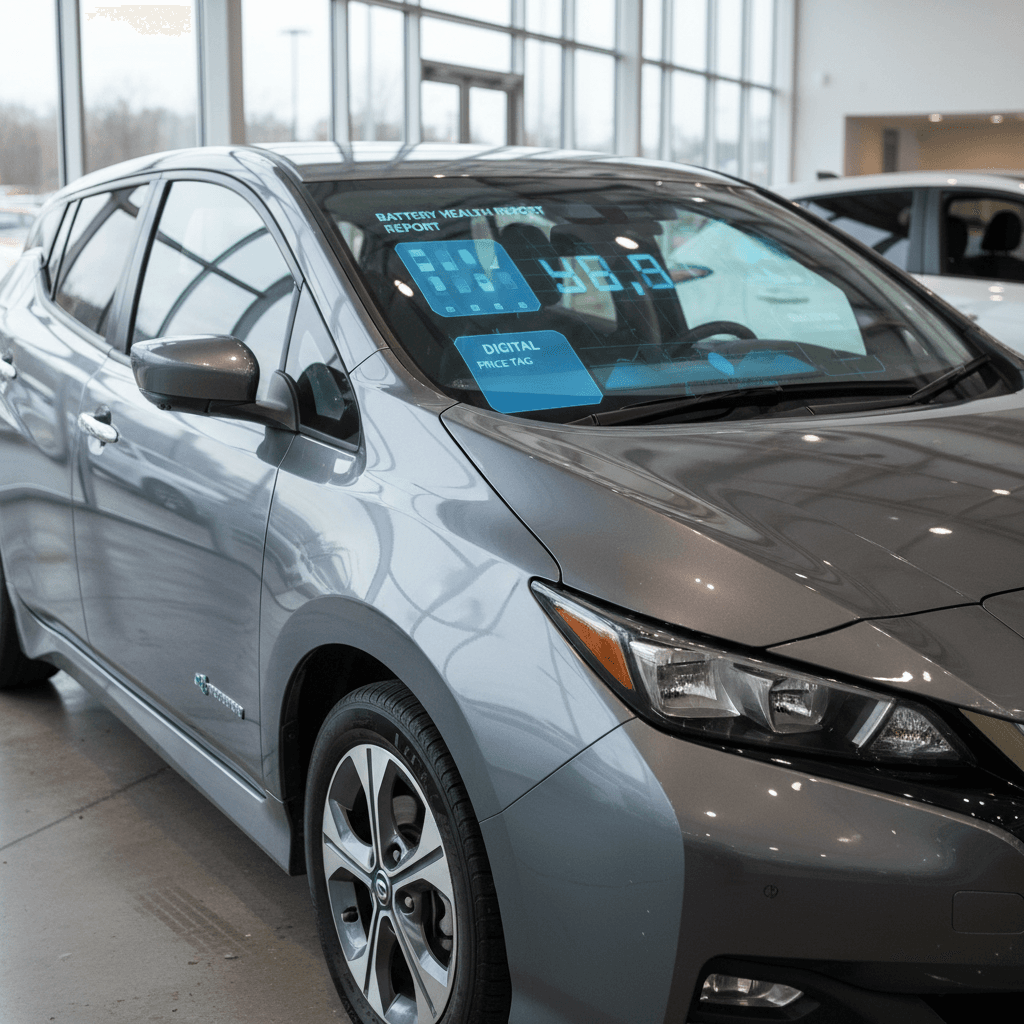
Brand-by-brand quirks when you check warranty remaining
Once you start doing used EV warranty remaining checks in the wild, you’ll notice that every brand has its own little personality tic. A few of the big ones worth knowing before you shop:
Common U.S. EV warranty patterns (high‑level overview)
Always verify specifics for the exact model year and state where the car was first sold, these are broad patterns, not gospel.
| Brand / Example | Typical battery warranty (U.S.) | Transfer to 2nd owner?* | Notable quirks |
|---|---|---|---|
| Chevrolet Bolt EV/EUV | Around 8 yrs / 100k mi battery & EV components | Yes | Some cars got recall battery replacements with their own 8‑yr/100k parts warranty; details live in GM’s systems. |
| Nissan Leaf | Roughly 8 yrs / 100k mi on battery, plus capacity bar warranty on certain years | Yes | Capacity warranty often keyed to dropping below a certain number of battery bars by a set time/mileage. |
| Hyundai / Kia EVs | Up to 10 yrs / 100k mi advertised on battery/EV system | Usually yes for EV system, but check powertrain fine print | Headline 10‑year warranties can change for subsequent owners; EV system coverage may transfer even when gas‑car powertrain doesn’t. |
| Tesla | Varies by model; many are 8 yrs with different mileage caps (e.g., 100k–150k mi) | Yes | No conventional dealer network; warranty details appear in the app/online account rather than a traditional portal. |
| Ford, VW, others | Commonly 8 yrs / 100k mi battery warranty | Yes | Coverage details often buried in the warranty booklet; dealer service departments can print VIN‑specific coverage. |
Battery warranties are generous on paper, but the fine print (capacity loss coverage, transfer rules) varies considerably by brand.
About those asterisks
Examples of real‑world quirks
- Chevy Bolt EV/EUV: Some cars with battery‑recall replacements ended up with a separate 8‑year/100,000‑mile parts warranty for the new pack. Others simply continue under the original EV component warranty. The only reliable way to know is a GM VIN warranty lookup or dealer printout for that specific car.
- Nissan Leaf: Beyond basic battery coverage, many Leafs have a capacity warranty tied to the dash’s capacity bars. For certain years, dropping to a specific bar count within 8 years/100,000 miles can trigger a warranty claim. Service advisors don’t always remember the bar threshold offhand, bring the warranty booklet language if you’re close.
- Kia/Hyundai EVs: The famous 10‑year/100k powertrain warranty on gas cars doesn’t always transfer fully to second owners, but the EV system or battery warranty often does. Unfortunately, some dealers either don’t know this or oversell third‑party warranties anyway. Verify through the brand’s official owner portal, not the finance office brochure.
- Tesla: Warranty information lives in your Tesla account or app, not a dealer DMS. For a used Tesla, ask the current owner for a screenshot of the “Additional Vehicle Information” and warranty page, or buy from a seller (like Recharged) that already has this documented.
What dealers often get wrong about used EV warranties
Myth 1: “The big warranty doesn’t transfer”
Sometimes a salesperson will casually declare that the splashy battery warranty you read about online “only applies to the first owner.” That’s occasionally true for powertrain warranties on gas cars, but much less common for EV battery and system coverage.
When in doubt, assume confusion, not malice. Then go to the written warranty booklet or the automaker’s site and look for the phrase “subsequent owners.”
Myth 2: “The battery was replaced so the warranty reset”
A replacement high‑voltage battery does not automatically restart the 8‑year/100k‑mile clock. In some recall programs, the new pack gets its own parts warranty term; in others, it’s simply covered under whatever’s left of the original warranty.
Again, the truth lives in the VIN‑specific warranty summary. Don’t accept a vague promise, get the actual expiration dates in writing.
Red flag: “We don’t know, but you’re covered”
Battery warranty vs battery health: two different questions
Even a perfect used EV warranty remaining check only tells you what happens if things go wrong in a way the automaker will acknowledge. It doesn’t tell you how the battery is aging today. Those are two separate diagnostics:
Warranty coverage vs real battery condition
You want answers to both before you buy a used EV.
What the warranty check answers
- Until what date and mileage is the high‑voltage battery covered?
- Does the warranty cover capacity loss or just outright failure?
- Are there any open recalls or special programs on this pack?
- Does coverage fully transfer to you as the next owner?
What a battery health report answers
- What’s the battery’s current state of health (SoH) and usable capacity?
- How does range compare to a new example of the same model?
- Any signs of cell imbalance or unusual degradation?
- Is this particular car a good candidate for long‑term ownership?
Where Recharged fits in
Turn the warranty check into leverage (and a paper trail)
A careful used EV warranty remaining check doesn’t just keep you out of trouble; it gives you negotiating ammo and a cleaner ownership story when it’s your turn to sell.
How to use warranty info to your advantage
Ask for written confirmation tied to the VIN
Once you’ve confirmed coverage with a dealer or portal, request a PDF printout, screenshot, or email that lists the <strong>VIN and each active warranty with expiration date and mileage</strong>. Save it with your purchase records.
Price in the downside if coverage is nearly over
If the battery warranty is within a year or 10,000 miles of expiring, you’re buying a car that’s about to lose its safety net. That should be reflected in the price, especially for models with expensive packs or known degradation issues.
Walk away from “mystery coverage”
If a seller won’t provide enough info to complete your used EV warranty remaining check, or shrugs off your questions, assume they’re either uninformed or hoping you will be. There is no shortage of used EVs; there is a shortage of good ones with clear paperwork.
Document everything for resale
Keep your warranty printouts, recall‑completion paperwork, and any battery health reports. When you go to sell or trade in (including with <strong>Recharged</strong>), that documentation can bump your car to the top of the pile.
A used EV can be one of the smartest buys in the car world right now, but only if you respect the math around battery coverage. A thorough, VIN‑specific used EV warranty remaining check, paired with a real battery‑health report, turns the whole exercise from a leap of faith into a reasoned bet. Whether you’re shopping locally or browsing Recharged’s nationwide used EV inventory, insist on seeing the warranty clocks and the battery data in black and white before you fall in love with the car.