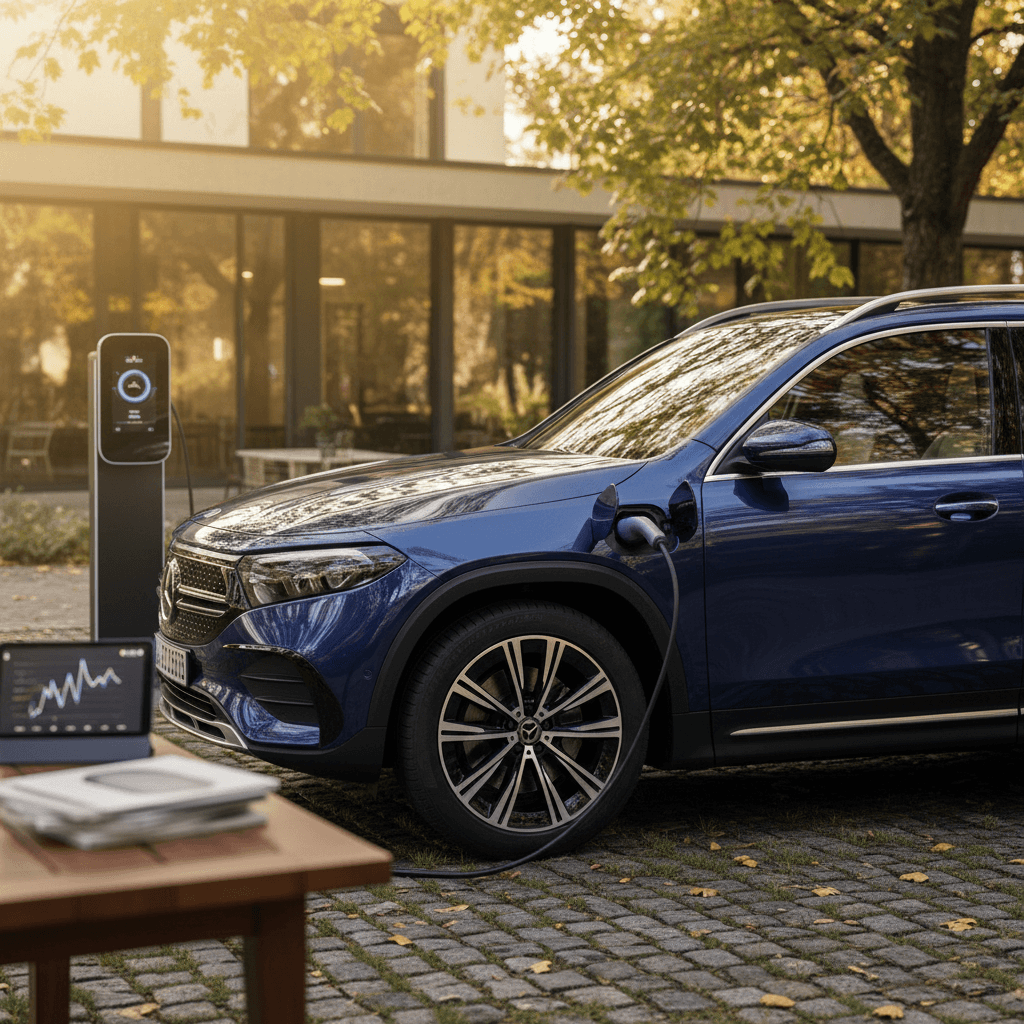
If you’re shopping for a compact luxury EV SUV with available three‑row seating, the 2024 Mercedes EQB ends up on just about every short list. This 2024 Mercedes EQB buying guide walks you through trims, range, charging, real‑world ownership costs and what to watch for, especially if you’re considering a used EQB from a dealer or marketplace like Recharged.
Quick take
2024 Mercedes EQB at a glance
Key 2024 EQB numbers
2024 Mercedes EQB core specs (U.S. overview)
High‑level specs for the three main EQB variants sold in the U.S. for 2024.
| Trim | Drivetrain | Power (hp) | Battery (usable kWh)* | EPA range (mi)** |
|---|---|---|---|---|
| EQB 250+ | FWD | 188 | ~70.5 | Up to 251 |
| EQB 300 4MATIC | AWD | 225 | ~70.5 | Around 205 |
| EQB 350 4MATIC | AWD | 288 | ~70.5 | Around 205–207 |
Always confirm exact equipment on any EQB you’re buying; wheels and packages can slightly change range and weight.
About specs and range numbers
Trim and powertrain guide: EQB 250+, 300 4MATIC, 350 4MATIC
Which 2024 EQB trim fits you?
All three EQB variants share the same basic body and battery; power, range and features differ.
EQB 250+ (FWD)
Best for efficiency and price.
- Single motor, front‑wheel drive.
- Lower power but the highest EPA range (up to 251 miles).
- Good pick if you rarely need AWD and mostly commute or run local errands.
EQB 300 4MATIC (AWD)
Balance of traction and value.
- Dual‑motor all‑wheel drive.
- More power than 250+ with a noticeable punch at highway speeds.
- EPA range drops into the low‑200‑mile zone.
EQB 350 4MATIC (AWD)
Quickest EQB.
- Dual‑motor AWD with the most horsepower.
- Strong passing power and smoother feel when loaded with passengers.
- Similar range to the 300 4MATIC but usually slightly lower.
Choosing between 250+ and 300/350
If you’re cross‑shopping trims, start with this question: Is all‑weather traction or maximum range more important for you? The 250+ is the mileage champ and usually the least expensive, but it’s FWD only. The 300 and 350 give you AWD confidence in snow and rain, at the cost of roughly 40–50 miles of rated range.
Packages and options to know
- Driver‑assistance bundles can add adaptive cruise, lane‑centering and active safety tech.
- Third‑row seat is often optional, many EQBs are five‑seaters, so confirm if you truly need seven seats.
- Wheel size (18" vs larger) changes efficiency; bigger wheels usually shave off a few miles of range.
On used EQBs, carefully read the window sticker or listing details so you’re comparing like‑equipped vehicles.
Trim‑shopping tip
Range and battery: what you’ll get in the real world
On paper, the 2024 EQB’s range runs from roughly about 205 miles for the AWD trims up to around 251 miles for the EQB 250+ in its most efficient spec. In practice, you should think in terms of a comfortable day‑to‑day window: about 150–200 miles on a full charge for most owners, depending on weather, speed and how much highway driving you do.
- The EQB’s ~70.5 kWh usable battery is modest compared with some newer rivals, but adequate for everyday commuting and school runs.
- Highway speeds, cold weather and a full load of passengers or cargo will pull range down faster than gentle in‑town driving.
- Mercedes’ efficiency tuning is better in 2024 than in the earliest EQ models, but this is still a taller, boxier SUV, not a slippery aero wagon.
Cold‑weather range expectations
How different drivers experience EQB range
Where you live and how you drive matter more than the brochure number.
Urban commuter
Think stop‑and‑go traffic, 35–50 mph, and moderate climates.
- Efficiency is best here; many owners see range close to the EPA rating.
- Regenerative braking helps stretch miles between charges.
Highway road‑tripper
Steady 70–80 mph driving is the hardest on range.
- Plan on 30–35% less range than the rating, especially in cold or windy conditions.
- You’ll rely more heavily on DC fast charging.
Cold‑climate driver
Frequent sub‑freezing temps plus short trips.
- Battery conditioning and cabin heat eat into range.
- Garage parking and preheating while plugged in make a noticeable difference.
Battery software recalls can change behavior
Charging: how fast the EQB really refuels
All 2024 EQB trims share the same basic charging hardware: a 9.6 kW onboard AC charger for home or Level 2 public stations and a DC fast‑charge system that can peak in roughly the 160–170 kW ballpark under ideal conditions. That’s not class‑leading, but it’s plenty for typical family duty cycles.
Typical 2024 EQB charging times
Approximate times from 10–80% state of charge, assuming healthy equipment and ideal conditions.
| Charging type | Power | Typical 10–80% time | Best use case |
|---|---|---|---|
| Level 1 (120V wall outlet) | 1–1.4 kW | 24+ hours | Last‑resort top‑ups, very light nightly charging |
| Level 2 home / public (240V, 40A) | Up to 9.6 kW | 7–9 hours (0–100%) | Overnight charging at home or extended destination stays |
| DC fast charging (CCS public) | Typically 70–150 kW sustained | Roughly 30–40 minutes | Highway road‑trips, mid‑day top‑ups on busy days |
Real‑world times vary with temperature, charger quality, state of charge and whether the battery is preconditioned.
Charging questions to answer before you buy
Confirm your home charging plan
Do you have access to a 240V outlet or can you install one? For most EQB owners, a 40‑ or 50‑amp Level 2 circuit is the sweet spot for overnight charging.
Map your local DC fast chargers
Open apps like PlugShare, ChargePoint or Electrify America and see what’s within a 20–30‑mile radius. Check recent user reviews for reliability, not just pin density.
Ask about prior charging behavior
On a used EQB, ask how the previous owner charged, mostly at home on Level 2, or frequent DC fast charging? Long‑term battery health is generally better with regular AC charging.
Test at least one fast‑charge session
If possible, include a DC fast‑charge stop in your test drive. You’ll see how the EQB ramps up, holds power and tapers, and whether any software‑update quirks show up.
Compatibility with Tesla Superchargers
Interior space: three rows in a compact EV
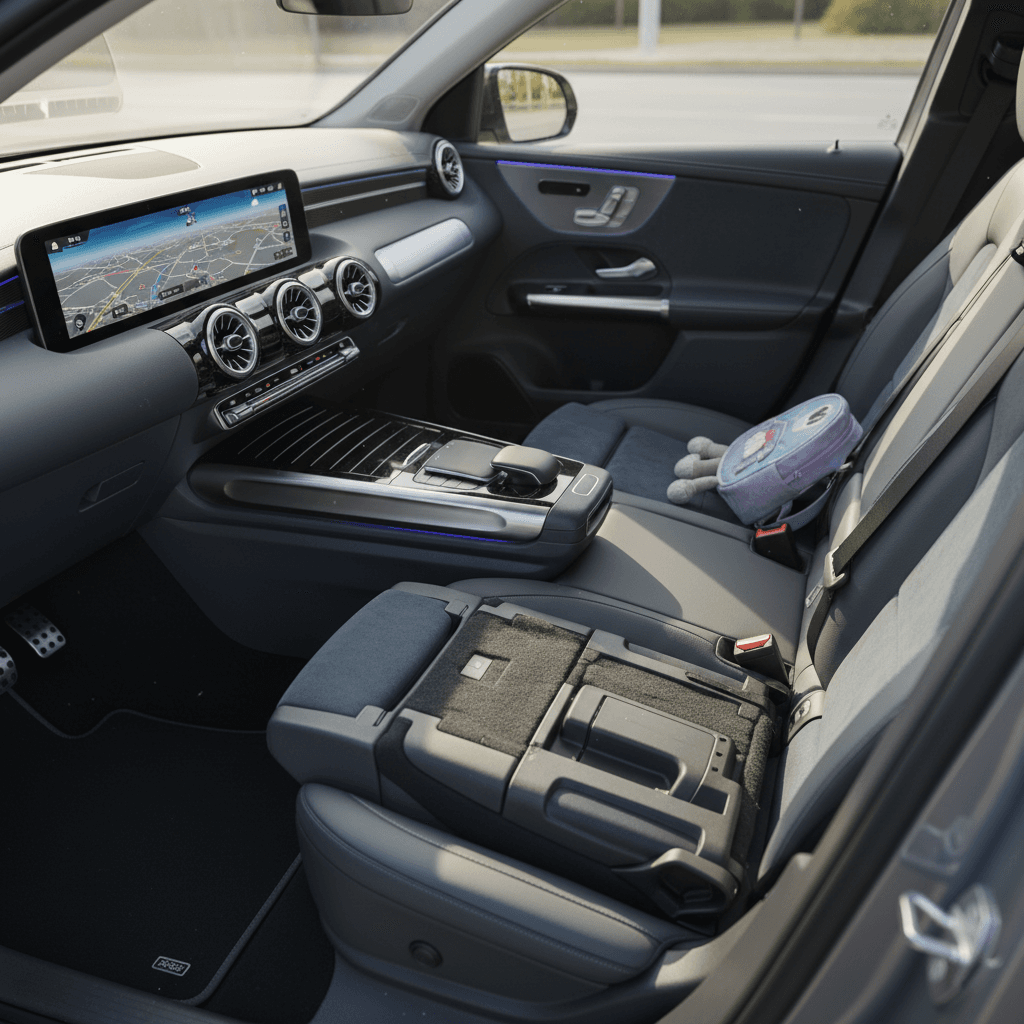
The EQB’s calling card is its boxy shape and optional third row. Think of it as an electric GLB: upright seating, generous headroom and a relatively short overall length that still fits easily into city parking.
What to expect from the EQB cabin
The third row is a bonus, not a full‑time adult space.
First and second rows
- Comfortable for adults, with good headroom and typical Mercedes materials.
- Seat comfort is tuned more for commuting than hard cornering.
- Panoramic roof (if equipped) brightens the cabin but can slightly reduce headroom.
Third row
- Best for kids or very short trips for smaller adults.
- Access requires sliding the second row forward, so test this with child seats.
- Some U.S. EQBs lack the third row entirely, verify if you need seven seats.
Cargo flexibility
- With the third row folded, you get a flat load floor and decent grocery‑and‑gear space.
- With both rows down, the EQB hauls bulky items surprisingly well for its size.
- No frunk; the front area is filled with crash structure and power electronics.
Family‑friendly highlight
Ownership costs and incentives
Sticker price is only the start with a 2024 EQB. You’ll want to think through energy costs, maintenance, insurance and incentives, especially if you’re comparing against a gas GLB or competing EVs.
Where the 2024 EQB saves (and where it doesn’t)
High‑level cost categories to consider for a new or used EQB.
| Cost area | What to expect vs gas SUV | What to watch |
|---|---|---|
| Fuel / energy | Lower per‑mile cost, especially if you can charge off‑peak at home. | Public DC fast charging can be expensive; lean on home Level 2 whenever possible. |
| Maintenance | No oil changes, fewer moving parts, reduced brake wear from regen. | Tires can be pricier; EVs are heavy, and some owners see faster tire wear. |
| Insurance | Similar or slightly higher premiums than a comparable GLB or GLC. | Shop multiple quotes; some insurers still price EVs conservatively. |
| Incentives | Leased EQBs have often qualified for a passed‑through federal clean‑vehicle incentive, effectively lowering monthly payments. | Rules change frequently, confirm lease credits and any state or utility rebates at the time you sign. |
Actual numbers depend on your electricity rate, driving profile and local tax rules, but the pattern is similar across compact luxury EVs.
Used‑EQB advantage
Reliability, recalls and battery-health risks
The 2024 EQB hasn’t been on the road long enough to generate decade‑long reliability data, but early reports paint a mixed picture: generally pleasant daily driving with some important battery‑related recalls and a handful of software and charging quirks you should know about.
- Battery‑management software updates have been issued to address potential safety issues, sometimes changing how quickly the car charges on DC fast chargers.
- Some owners report public fast‑charging sessions that are slower than the car’s specs suggest, especially after recall updates or on older charging hardware.
- Like many new EVs, the EQB relies heavily on software; infotainment bugs and app connectivity complaints aren’t unusual, though they’re often fixable via updates.
Due‑diligence must‑dos on a used EQB
Early EQB owners generally like how the SUV drives and rides, but they’ve been vocal about charging quirks and the impact of software updates on fast‑charge times.
New vs used 2024 EQB: what makes the most sense?
Reasons to buy or lease new
- Full factory warranty on both vehicle and high‑voltage battery.
- Access to the very latest software, OTA updates and potentially NACS‑adapter programs from Mercedes.
- Ability to custom‑order color, trim and options if you’re shopping while new inventory is still available.
New makes the most sense if you want maximum peace of mind, plan to keep the EQB through the warranty period, and value the newest tech features.
Reasons to go used or nearly new
- Lower upfront price thanks to early EV depreciation.
- Someone else absorbed the initial hit, but you still get a modern interior and features.
- You can compare multiple real‑world owner reviews and range reports before choosing a build.
Late‑model used EQBs on platforms like Recharged often include detailed battery‑health reports, which meaningfully de‑risk a used EV purchase.
Practical rule of thumb
How to test‑drive and inspect a 2024 EQB
On‑the‑ground checks for any EQB you’re serious about
1. Verify software and recall status
Ask the seller for documentation of completed recall work and software updates. In the car’s settings or with the dealer, confirm it’s on current, stable software.
2. Inspect charging hardware
Look closely at the CCS charge port for damage or corrosion. If there’s a home charger included in the sale, inspect cable condition and plug fitment.
3. Take mixed‑route test drives
Do at least 20–30 minutes mixing city and highway. Listen for wind and tire noise, test regenerative braking modes, and confirm there are no warning lights.
4. Try a DC fast‑charge session
If practical, start a fast‑charge session from roughly 15–20% state of charge and watch how quickly the EQB ramps up and how long it holds higher speeds before tapering.
5. Check third‑row usability
If the EQB has a third row, climb in and out, fold and raise seats, and test how it works with child seats in the second row. Many shoppers discover they don’t truly need the extra row.
6. Review battery‑health data
Where available, look at a <strong>battery‑health report</strong> that translates pack condition into simple language. Every EV sold through Recharged includes a Recharged Score report with this data built in.
Who the 2024 EQB is (and isn’t) right for
Is the 2024 EQB a good fit for you?
Match your driving profile to the EQB’s strengths and weaknesses.
Great choice if…
- You want a premium, compact SUV with a quiet, comfortable ride more than maximum performance.
- Your typical week is commuting, school runs and errands within a 20–40‑mile radius, with only occasional road trips.
- You value Mercedes design and tech, and you’re okay with range that’s adequate rather than class‑leading.
- You can reliably charge at home or work on Level 2.
Look elsewhere if…
- You routinely drive 250+ mile days with limited charging options.
- You want the absolute latest 800‑volt architecture and blazing DC fast‑charge speeds.
- You need a true adult‑usable third row every day; a larger EV SUV may serve you better.
- You don’t have predictable access to overnight charging and would rely heavily on public stations.
2024 Mercedes EQB FAQ
Frequently asked questions about the 2024 Mercedes EQB
Bottom line: should you buy a 2024 Mercedes EQB?
The 2024 Mercedes EQB isn’t the longest‑range or fastest‑charging EV SUV on the market, but it blends Mercedes comfort, a practical boxy shape and an optional third row into a compact footprint that works well for many families. If you have reliable home charging, drive mostly within a 50‑mile radius and value an upscale cabin more than headline specs, it deserves a close look.
If you’re leaning toward a used 2024 EQB, focus on battery health, charging behavior and recall history just as much as price and color. That’s exactly where Recharged can help: every EV we list includes a Recharged Score report with verified battery diagnostics, transparent pricing, and EV‑specialist support from first click to delivery. That way, whether you end up in an EQB 250+ or a fully loaded 350 4MATIC, you’ll know exactly what you’re getting before you sign.