Used EV prices have moved from headline-grabbing expensive to quietly bargain territory. In 2024 and 2025, used EVs in the US dropped sharply in value, often more than 15% year-over-year, while gas and hybrid prices barely moved. That means that in 2025, used EV prices are often at or below comparable gas cars, creating a rare window where electric can actually be the cheaper choice up front, not just over the lifetime of ownership.
At a glance: Used EV pricing in 2025
Why used EV prices are in the spotlight
From late 2023 through 2025, EV prices didn’t just soften, they repriced. Studies based on millions of used-car listings show that by mid‑2024, the average used EV in the US was selling for around $28,000–$29,000, while the average used gas car was over $31,000. By early 2025, one major analysis of 1–5‑year‑old vehicles found used EVs averaging about $32,000, after a 15% year‑over‑year drop, compared with just about 0.5% declines for gas and hybrid models.
Used EV price stats you should know
Why this matters if you’re shopping
How much used EVs cost in 2025
In early-to-mid 2025, the average 1–5‑year‑old used EV in the US is typically priced in the low $30,000s, but that average hides a huge spread. Mainstream compact EVs and early Teslas often land in the high teens to high $20,000s, while newer or premium models can still stretch well into luxury‑car territory.
Typical used EV price bands in 2025 (US market)
Approximate transaction ranges you’ll commonly see at dealers and online marketplaces.
| Price band (USD) | What you’ll typically find | Examples |
|---|---|---|
| Under $15,000 | Older short‑range city EVs, high‑mileage cars | Early Nissan Leaf, Fiat 500e, Chevy Spark EV |
| $15,000–$20,000 | Older but clean compacts, some first‑gen long‑range EVs | 2017–2019 Leaf SV/SL, 2017–2019 Bolt with miles |
| $20,000–$25,000 | Mainstream 200+ mile EVs with average mileage | 2019–2021 Chevy Bolt, Hyundai Kona Electric, Kia Niro EV |
| $25,000–$30,000 | Late‑model compacts, early Model 3s, small crossovers | 2018–2021 Tesla Model 3 SR+, VW ID.4, Kia EV6 Light |
| $30,000–$40,000 | Newer crossovers and AWD trims | 2022–2024 Model 3/Y, Ioniq 5, EV6, Mustang Mach‑E |
| $40,000+ | Premium or performance EVs, large SUVs and trucks | Model S/X, Rivian R1T/R1S, F‑150 Lightning, Taycan |
Real listings will vary by mileage, condition, trim, options, and regional supply.
Sample used EV price ranges by model
To make those bands more concrete, here’s what you’ll typically see for some of the most popular used EVs in late 2024 and 2025.
Real‑world used EV price examples
Approximate US dealer and marketplace pricing for 2019–2023 models with typical mileage.
Tesla Model 3
Typical range: low‑$20Ks to low‑$30Ks, depending on year and trim.
- 2018–2019 RWD: often around high‑$19Ks–mid‑$20Ks
- 2020–2021 Long Range/AWD: high‑$20Ks to low‑$30Ks
Model 3 prices fell sharply from 2022 highs and now undercut many comparable German sedans.
Chevrolet Bolt EV
Typical range: high‑$17Ks to mid‑$20Ks for 2019–2022 cars.
- Excellent value on a dollars‑per‑mile‑of‑range basis
- Battery recall work adds complexity but also reassurance if fully completed
Nissan Leaf
Typical range: mid‑$teens to low‑$20Ks.
- Short‑range 24–30 kWh cars: often under $15K
- 40–62 kWh Leafs: commonly $17K–$22K depending on trim and mileage
Hyundai Kona Electric / Kia Niro EV
Typical range: low‑$20Ks to high‑$20Ks for 2019–2022.
- 270+ miles EPA range in a compact, efficient package
- Good value if you’re OK with smaller crossover footprint
Tesla Model Y
Typical range: high‑$20Ks to high‑$30Ks for 2020–2023.
- Prices down more than 10% year‑over‑year in many datasets
- Heavy depreciation up front makes used examples compelling
Rivian, F‑150 Lightning, premium EVs
Typical range: mostly $50K+ even used.
- Still expensive, but many are down 20–30% from early adopter pricing
- Be extra diligent about options that affect range and towing
Where Recharged fits in
Ready to find your next EV?
Browse VehiclesWhy used EV prices fell so fast
If you followed EV headlines in 2021–2022, this drop can feel almost surreal. Back then, used EVs, and Teslas in particular, were selling for over MSRP in some cases. By mid‑2024, they were cheaper than used gas cars on average. Several forces came together to drive that reversal:
- Automakers and Tesla cut new EV prices and added incentives, dragging used values down with them.
- A wave of off‑lease EVs hit the market just as interest rates and payment fatigue cooled demand.
- Battery tech and range improved quickly, making older EVs feel "obsolete" faster than comparable gas cars.
- Policy uncertainty and charging‑infrastructure anxiety made some buyers hesitate, increasing days‑to‑sell and forcing deeper discounts.
- Tesla’s price cuts had an outsized effect: Teslas still make up a large share of the US EV fleet, so their used values set expectations for the rest of the segment.
Depreciation is painful, for the first owner
Key factors that drive used EV values
With EVs, the usual used‑car value drivers, age, mileage, trim, brand, still matter. But there are a few EV‑specific levers that move used EV prices more dramatically than gas cars.
The big levers behind used EV prices
Understand these and you’ll understand why two similar‑looking EVs can be priced thousands of dollars apart.
Battery health & warranty
Battery health is the single biggest driver of long‑term EV value.
- High state of health (SoH) packs command a premium
- Cars with remaining 8yr/100k‑mile battery warranties are safer bets
- Documented fast‑charging habits and hot‑climate use can influence pricing
Real‑world range
EPA range is just the start; buyers care about what the car can actually do now.
- Short‑range city EVs are heavily discounted
- 200+ mile EVs hold value much better
- Options like heat pumps and wheel size affect range and resale
Charging standard & access
As the US transitions to the NACS/Tesla connector, charging compatibility matters more every year.
- Factory NACS or bundled adapters reduce friction
- Access to major fast‑charging networks boosts value
Software & features
Over‑the‑air updates, driver‑assistance packages, and infotainment age influence willingness to pay.
- Some brands add features over time
- Others lock value‑add features behind subscriptions
Use case & geography
Short‑range EVs sell better in dense, temperate cities; long‑range crossovers command more in suburbs and cold climates.
- Local incentives and HOV access still move prices in some states
Brand reputation & support
Perceived reliability, dealer service capability, and parts availability matter.
- Brands with robust EV service networks hold value better
- Spotty battery‑replacement policies can drag values down
Used EV vs gas car: which is cheaper now?
The most striking shift since 2022 is that used EVs are no longer the expensive outlier. By mid‑2024, the average used EV was roughly 8–11% cheaper than the average used gas vehicle. In late 2024, analysts were already talking about used EVs trending toward a $25,000 price floor, versus gas cars holding around $30,000.
Up‑front purchase price
- Used EVs: Often cheaper sticker price than equivalent gas models today, especially for compact sedans and crossovers.
- Used gas cars: Hold value better; smaller price swings year to year.
For many buyers, a used EV that was out of reach in 2022 is now directly comparable in price to a mainstream gas model.
Total cost of ownership
- Fuel: Home charging is usually cheaper per mile than gas, though fast charging can narrow the gap.
- Maintenance: No oil changes, fewer moving parts, and less brake wear can save thousands over time.
- Depreciation: EVs have already taken a big hit; buying after the drop can blunt future losses.
When you combine lower purchase prices with lower running costs, the math leans strongly toward used EVs, if you pick the right car.
Run the numbers, not just the price
How battery health impacts used EV prices
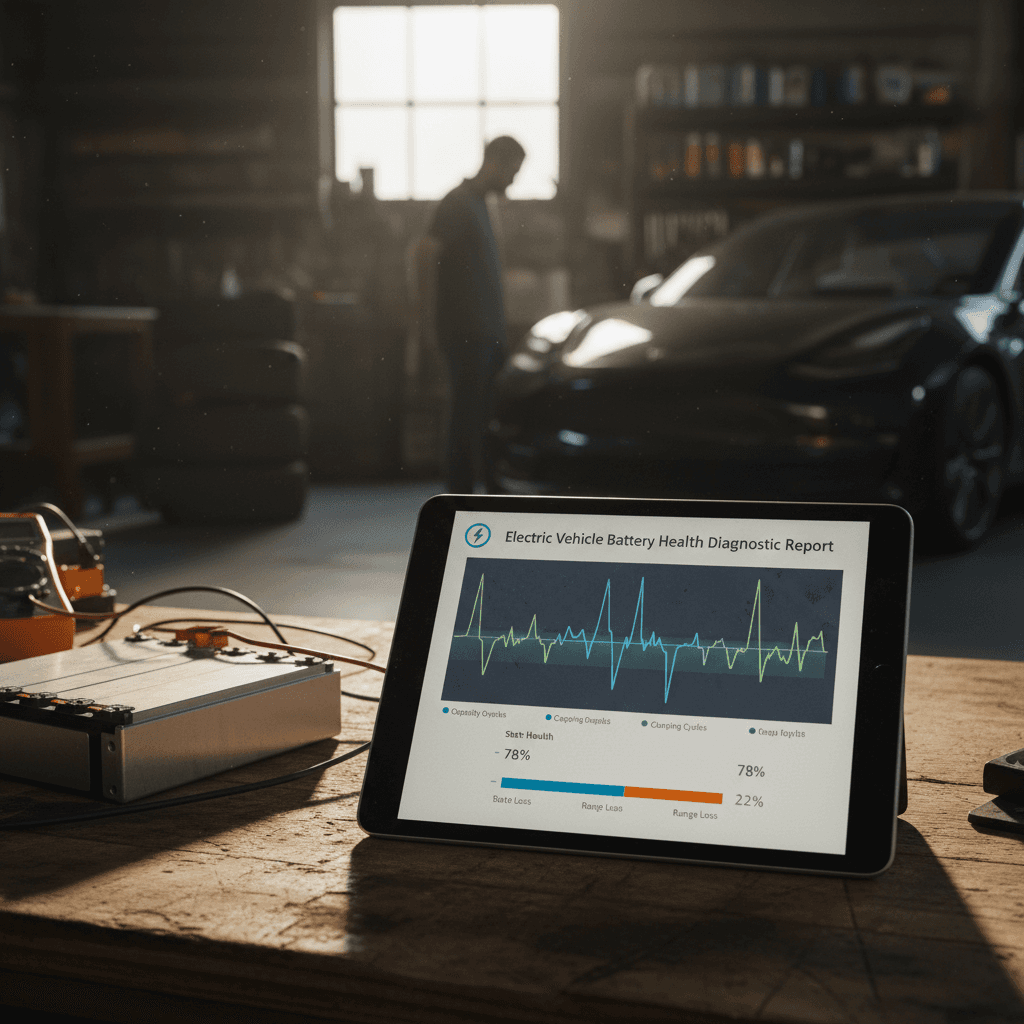
With EVs, the engine, transmission, and fuel system all collapse into one dominant component: the battery pack. That pack can represent 30–40% of the car’s value when new. A car with a strong, healthy battery is effectively a different asset than the same car with heavy degradation, even if they look identical on the lot.
Battery health checks that justify the price
1. Ask for a quantified State of Health (SoH)
Look for a clear percentage (for example, 92% SoH) from a trusted diagnostic tool, not just a guess based on range or a dashboard bar graph.
2. Confirm remaining battery warranty
Most EVs have 8‑year/100,000‑mile (or more) battery warranties. A car with several years left can support a higher price.
3. Look at real‑world range today
Take a long test drive or review logged data. A car that originally had 250 miles of range but now delivers 190–200 is still useful; one that struggles to hit 120 might deserve a big discount.
4. Review fast‑charging and climate history
Heavy DC fast‑charging and constant use in very hot regions can accelerate degradation. Documentation of moderate use and temperate climates supports stronger pricing.
5. Use a third‑party or marketplace report
Tools like the Recharged Score aggregate battery diagnostics, driving data, and vehicle history so you can compare cars on more than just mileage and model year.
How Recharged derisks battery uncertainty
Tax credits and incentives for used EVs
For US buyers, federal incentives have been an important part of the used EV price story. Through 2025, qualifying used EVs can be eligible for up to $4,000 in federal tax credit (subject to income, price caps, and other rules). On top of that, some states and utilities offer point‑of‑sale rebates, bill credits, or discounted charging rates for EV owners.
Policy is changing, check current rules
- If a used EV qualifies for a $4,000 federal credit, your effective price may be thousands lower than the advertised sticker.
- Some state and local programs layer on another $1,000–$3,000 in rebates or bill credits.
- Income caps and vehicle price caps mean not every buyer and not every EV will qualify, run the numbers for your situation.
- Marketplaces like Recharged can help you understand what incentives are already reflected in advertised pricing and which you’ll claim at tax time.
How to shop smart for a used EV in this market
The good news is that used EV prices are on your side in 2025. The bad news is that the market is more complex than a traditional used‑car lot. Here’s a structured way to approach it so you capture the upside without stepping on land mines.
Step‑by‑step: getting the best value on a used EV
1. Start with your use case, not the badge
List your real needs: daily miles, road‑trip frequency, garage or street parking, towing, child seats. That will tell you whether you truly need 300+ miles of range or if a cheaper 200‑mile EV works.
2. Shortlist 3–5 models that fit
Mix at least one mainstream value play (Bolt, Leaf, Kona/Niro, ID.4) with any aspirational picks (Model 3/Y, Ioniq 5, EV6). This keeps you from overpaying just for a logo.
3. Compare <strong>effective</strong> prices, not stickers
Account for tax credits, expected fuel and maintenance savings, and financing. A Recharged advisor can walk you through this math when you’re comparing vehicles on the site.
4. Make battery health a first‑class filter
Sort by verified battery state of health and remaining warranty before you get attached to paint colors and wheels.
5. Look at pricing versus broader market data
Check how a car’s asking price lines up with national used EV data for that model year and mileage. On Recharged, this is baked into our fair‑market pricing tools.
6. Plan your charging setup before you buy
Budget for a Level 2 home charger if you can install one, or verify reliable public charging near your home and workplace. The right charging plan can save money and improve daily usability.
Leverage expert help
Common pitfalls to avoid with cheap used EVs
“Cheap EV” doesn’t automatically mean “good deal.” Some of the biggest discounts in today’s market are attached to cars with real compromises. Here are the traps to watch for when a price looks almost too good.
Red flags behind surprisingly low used EV prices
These issues don’t always kill a deal, but they should change the price you’re willing to pay.
Heavy degradation & hot‑climate history
Cars that spent their lives in consistently hot regions and fast‑charged constantly can show outsized battery wear. A rock‑bottom price with vague battery history is a warning sign.
Awkward charging compatibility
Some older EVs lack easy access to today’s best fast‑charging networks without multiple adapters or workarounds. Factor the inconvenience into the price, or skip the car.
Open recalls or unresolved battery campaigns
Some models, like early Bolts, had serious battery recalls. Make sure the work was fully completed and documented; if not, that needs to be reflected in price and your risk tolerance.
Sparse service and software support
EVs from brands that pulled out of the market or that have thin dealer support can be hard to maintain and update. Cheap up front can mean costly headaches later.
Don’t buy blind on marketplace listings
Frequently asked questions about used EV prices
Used EV price FAQ
Bottom line: what today’s used EV prices mean for you
Between 2023 and 2025, used EV prices went from outlier‑high to unexpectedly low. That reset has been hard on early adopters, but it’s a major opportunity if you’re shopping now. For the first time, you can realistically compare a late‑model EV and a comparable gas car and find that the EV is cheaper to buy and cheaper to own, provided you pick the right model and verify the battery.
If you want to capture that upside without becoming a full‑time EV analyst, start your search on Recharged. You’ll see used EV prices grounded in current market data, every car comes with a Recharged Score battery health report, and EV‑specialist advisors will walk you through financing, trade‑in, and nationwide delivery. In a fast‑moving market, that combination of transparent pricing and verified battery health is what turns a low price into a genuinely smart buy.