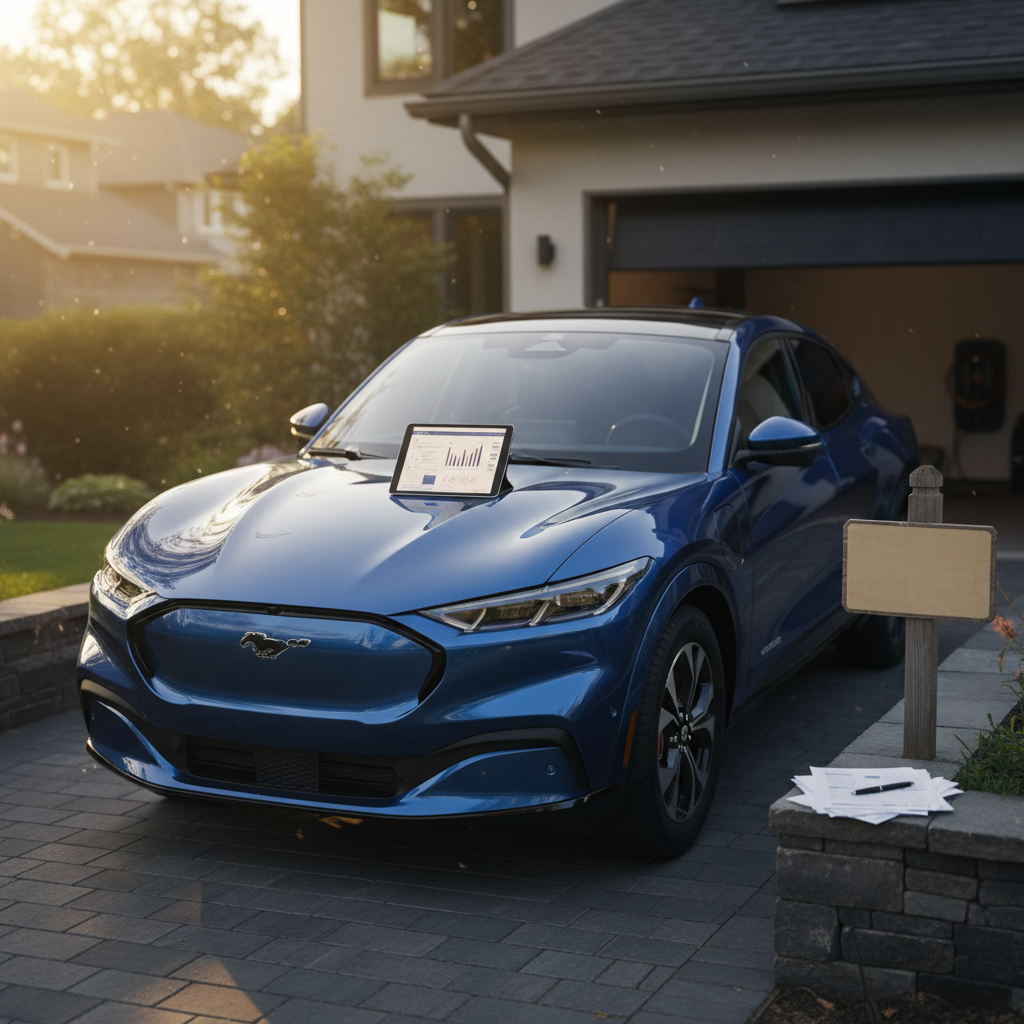
If you’re shopping for a used electric vehicle, the numbers on the finance screen can feel as important as the range on the dash. Understanding used EV loan terms, what to expect in 2026, helps you decide whether that monthly payment is actually a good deal or just stretched thin over too many years.
Quick snapshot: Used EV loan terms in 2026
Why used EV loan terms matter in 2026
Loan terms used to be a simple line item; today they’re a risk factor. Longer terms lower your monthly payment but increase the total interest you pay and the odds you’ll be upside down if values move. That’s especially relevant with used EVs, where battery health, technology changes, and recent policy shifts, including the end of federal used EV tax credits for purchases after September 30, 2025, can influence resale values and demand.
If you get the structure wrong, too long a term, rate that’s higher than it needs to be, or a small down payment on an older EV, you could be stuck in a loan that outlasts the useful life or perceived value of the vehicle. Get it right, and you lock in predictable transportation costs while taking advantage of lower fuel and maintenance expenses compared with a gas car.
Used EV financing snapshot for 2025–2026
Typical used EV loan terms in 2026
There’s no single standard used EV loan term, but most U.S. lenders follow similar patterns. Here’s what you can generally expect when you apply in 2026 for a used EV loan in the $20,000–$40,000 range.
Common used EV loan term options in 2026
Approximate ranges you’re likely to see from mainstream banks and credit unions. Exact terms vary by lender, credit tier, EV age, and mileage.
| Loan term | Common use case | Approximate APR range* | Pros | Cons |
|---|---|---|---|---|
| 36–48 months | Smaller loans, buyers focused on paying off quickly | ~7–11% for strong-credit borrowers; higher for others | Fast equity build, much less interest over life of loan | Monthly payment can be steep on higher-priced EVs |
| 60 months (5 years) | Balanced option for many used EV buyers | ~8–12% for average borrowers | Blend of manageable payment and reasonable total interest | Still paying interest for half a decade |
| 72 months (6 years) | Most popular term for used vehicles overall | ~9–13% in many cases | Lower monthly payment, easier to fit into tight budgets | Higher total interest, more time with negative equity risk |
| 75–84 months (6.25–7 years) | Larger loans ($25k+) and newer used EVs | Often reserved for newer models and strong-credit borrowers | Smallest payment, may make a higher-priced EV accessible | Highest total interest cost and longest time in debt |
Shorter terms cost more per month but reduce total interest; longer terms lower the payment but increase total cost.
Watch the fine print on 84‑month loans
How used EV loan terms compare to gas cars
What’s similar
- Term lengths: Used EVs and used gas cars are commonly financed over 60–72 months, with 84 months available on larger or newer vehicles.
- Rate structure: Lenders price APRs primarily off your credit profile, income, and debt-to-income ratio, not whether the car is electric.
- Loan-to-value (LTV): Banks still look at book value (for example, J.D. Power or similar) when deciding how much they’ll lend.
What’s different for used EVs
- Perceived risk: Some lenders are more conservative on older EVs or models with well-known battery issues, which can lead to tighter terms or higher APRs.
- Special EV programs: Credit unions and green lenders sometimes offer small rate discounts on EVs, especially for newer models.
- Resale uncertainty: Rapid tech changes and shifting incentives mean lenders watch depreciation patterns more closely on EVs, particularly over 72+ months.
Where EVs can win
Key factors that shape your used EV loan
Four levers that determine your used EV loan terms
You don’t control the interest-rate environment, but you control more than you think.
Your credit profile
EV age & mileage
Down payment & LTV
Lender type
Beyond those core levers, lenders may also look at your employment stability, income, other debts, and whether the vehicle is being purchased from a dealer or private party. Buying a used EV through a well‑established retailer with transparent reconditioning and battery documentation, like Recharged, generally makes lenders more comfortable extending competitive terms.
Structuring the right loan term for you
Choosing between 60, 72, or 84 months shouldn’t start with, “What gets my payment lowest?” A better question is, “How long am I likely to own this EV, and when does the loan balance cross under its realistic value?” That’s where EV‑specific factors, battery health, warranty coverage, and future tech changes, come into play.
Trade‑offs by used EV loan term
How each common loan length affects your payment, risk, and flexibility.
| Term length | Best for | Equity & risk | Flexibility | Who should think twice |
|---|---|---|---|---|
| 48–60 months | Buyers planning to keep the EV long term | Faster equity build; you’re less likely to owe more than it’s worth | Easier to sell or trade without bringing cash to the table | Shoppers who absolutely need the lowest possible payment |
| 72 months | Drivers prioritizing a comfortable monthly payment on a mid‑priced EV | Equity builds more slowly, especially in the first 2–3 years | Gives room in your budget, but can trap you if values fall faster than expected | Buyers of older EVs with out‑of‑warranty batteries |
| 75–84 months | Higher‑priced or newer used EVs where payment would otherwise be a stretch | Negative equity risk if values soften or if the EV ages out of battery warranty before payoff | Maximum payment comfort; can be reasonable if you plan to drive it well past payoff | Anyone rolling negative equity from a prior loan into the new used EV financing |
Use these trade‑offs as a framework, then run real numbers with your lender or a payment calculator.
A practical rule of thumb
Down payments and total cost on used EVs
In a higher‑rate environment, your down payment matters more. Typical used‑vehicle loans still work fine with 10% down, but with used EVs it’s smart to aim for 10–20% where possible, especially on older models.
- 10% down: Usually enough for lenders, but may leave you more exposed to negative equity if prices soften or if the EV has steeper depreciation early on.
- 15–20% down: Lowers your monthly payment and interest cost, and gives you more room if you need to sell or trade before the loan is paid off.
- $0 down: Often available from some lenders, but expect higher payments, more total interest, and more scrutiny of your credit profile. Use with caution on used EVs.
The silent cost: total interest
Special EV loans, credit unions, and promotions
Even though general auto loan rates remain elevated, there are bright spots for used EV shoppers. Many credit unions and regional banks now promote EV‑specific lending programs, sometimes with modest rate discounts versus standard used‑car rates. These offers often come with familiar conditions: higher minimum loan amounts for 75–84 months, model‑year cutoffs, and preferred pricing for clean‑title vehicles bought from dealers rather than private sellers.
Where to look for better used EV loan terms
You don’t have to accept the first offer from the showroom printer.
Credit unions & community banks
Captive & partner lenders
Online lenders & marketplaces
How Recharged can help
Ready to find your next EV?
Browse VehiclesHow battery health and age affect financing
With used gas cars, lenders rarely dig into the condition of the engine. With used EVs, battery health is front and center. A lender doesn’t want to finance a loan that outlasts the pack’s useful life or an owner’s willingness to repair or replace it.
- Newer EVs (for example, 2–5 years old) with strong range remaining are generally eligible for the longest terms and best APRs.
- Early‑generation models with smaller packs or known degradation issues may trigger shorter maximum terms or higher rates from some lenders.
- A third‑party battery health report, like the Recharged Score, can reassure both you and the lender that the pack can realistically support the term you’re considering.
Align the loan with the battery warranty
Checklist: What to do before you sign a used EV loan
Used EV loan terms checklist
1. Get pre‑qualified with at least two lenders
Secure a pre‑approval from a credit union or online lender before you visit a dealer or click “buy now.” This gives you a benchmark APR and term length to compare against in‑store offers.
2. Decide your maximum comfortable monthly payment
Work backward from your budget, not the sticker price. Include insurance, charging costs, and any subscriptions. Then compare how different terms (60 vs. 72 vs. 84 months) change that payment.
3. Check the EV’s battery and warranty status
Review a battery health report and remaining battery/drive unit warranty coverage. Tools like the <strong>Recharged Score</strong> make this straightforward. Avoid pairing very long terms with very old or out‑of‑warranty packs.
4. Run total interest and payoff scenarios
Use an auto loan calculator to see how much interest you’ll pay over different terms and when your balance is likely to fall below a realistic resale value for that EV.
5. Avoid rolling old negative equity forward
If you still owe more on your current vehicle than it’s worth, consider paying that difference in cash instead of folding it into the new loan, especially on an older used EV.
6. Read every line of the finance menu
Scrutinize add‑ons like extended warranties, GAP, and protection packages. Decide if they’re necessary for your situation before you agree to a payment that quietly includes them.
Don’t shop by payment alone
Used EV loan terms: FAQ
Common questions about used EV loan terms
Bottom line: What to expect from used EV loan terms
Used EV financing in 2026 isn’t mysterious, it’s just more sensitive to term length, battery health, and lender choice than a typical used‑gas‑car loan. Expect most offers to fall between 60 and 84 months, with APRs that reflect today’s higher‑rate environment but can be improved by stronger credit, bigger down payments, and EV‑friendly lenders.
If you match the loan term to how long you’ll realistically keep the car, align payoff with remaining battery life, and avoid stretching just to chase a lower monthly number, a used EV can be one of the most predictable, and affordable, ways to get around. And when you buy through Recharged, you get the added confidence of a data‑backed battery report, expert guidance on loan structures, and a fully digital experience that keeps the focus where it belongs: on a payment and term that actually work for you.