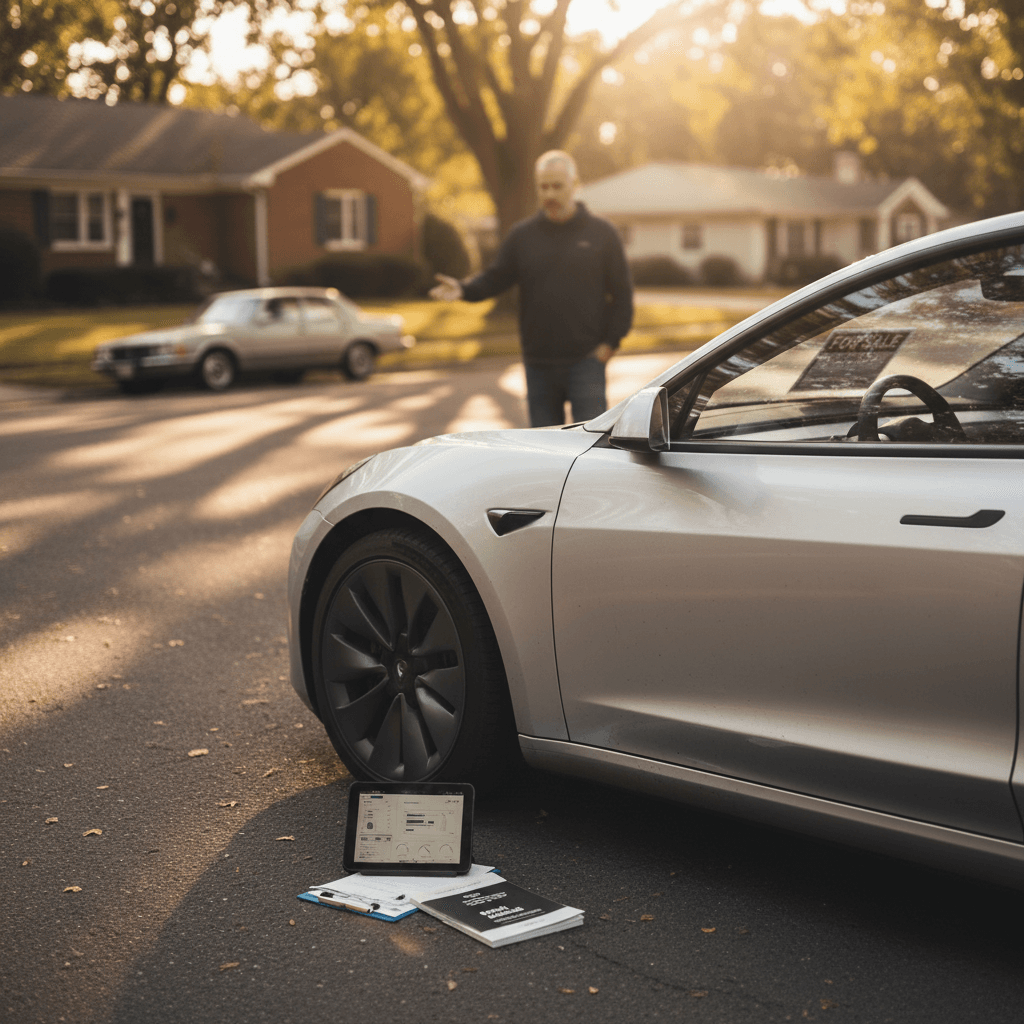
If you own a used electric car and you’re thinking about selling in 2026, timing is not just a detail, it’s money. The best month to sell a used electric car can easily swing your sale price by hundreds, sometimes thousands of dollars, especially as the EV market comes off a wild few years of incentives, price cuts, and battery‑anxiety headlines.
The short version
Why timing matters more for used EVs than gas cars
Used gas cars mostly follow familiar rhythms: tax‑refund season bumps, year‑end sales, a little seasonal wobble. Used EVs add a second layer of complexity: battery health, charging infrastructure, and incentives. That makes timing more consequential than it is for a typical Civic or Camry.
- Battery condition is the first thing serious buyers worry about, and values step down sharply at certain age/mileage milestones.
- Federal tax credits for used EVs came and went in 2024–2025, and state incentives continue to change, creating mini “rushes” of demand.
- Cold weather range anxiety can temporarily chill demand in some regions, then rebound as temps rise.
- Automakers have been aggressively cutting new‑EV prices since 2023, which periodically drags used values down. Selling right after a big new‑EV price cut is like selling your house the week after a new subdivision floods the market.
What the recent used‑EV market has looked like
Quick answer: the best months to sell a used electric car
You came for a date circled on the calendar, so let’s start there and then add nuance.
Best and worst times of year to sell a used EV
Assuming you’re in the U.S. and not in an extreme climate
Best overall window: Feb–May
In many U.S. markets, late winter through late spring is prime time to sell any used car, and especially used EVs:
- Tax refunds hit bank accounts, boosting buyer budgets.
- Weather improves, making test drives and shopping easier.
- Buyers start planning summer road trips and want something newer.
Secondary window: Sept–Oct
Early fall is a solid runner‑up:
- Families regroup after back‑to‑school; people replace aging commuters.
- Dealers prep for winter and may pay more for clean, ready‑to‑retail stock.
- Weather is still EV‑friendly in most of the country.
Toughest window: deep winter
December–January in cold climates can be slower for EVs:
- Range drops in freezing temps spook first‑time EV buyers.
- Holiday expenses crowd out big purchases.
- Shoppers fixate on “winter range” photos and headlines.
Don’t wait for the mythical perfect day
How seasonality really works in the used EV market
A lot of online advice about timing your sale is written for gas cars. It still mostly applies, but EVs react a little differently to the seasons.
Season‑by‑season expectations when selling a used EV
General patterns for U.S. markets in a “normal” year like 2026.
| Season | Buyer demand for EVs | Pricing power | What it feels like as a private seller |
|---|---|---|---|
| Jan–Feb | Low to medium | Medium | Fewer shoppers, but serious ones have tax refunds brewing. Good if you’re patient and price right. |
| Mar–May | High | High | Most inquiries and the strongest offers. Easier to hold firm on price for a clean, desirable EV. |
| Jun–Aug | Medium | Medium‑low | People are traveling; serious buyers still exist, but you may field more tire‑kickers. |
| Sep–Oct | Medium‑high | Medium‑high | Second wind of demand as routines resume; good time to move a commuter or family EV. |
| Nov–Dec | Low | Low | Holidays, weather and year‑end expenses slow things down, especially in cold regions. |
Actual results vary by region and model, but this gives you a realistic baseline.
Beware of national headlines
EV‑specific factors that should shape your timing
Seasonality is just the weather report. The real forecast for your wallet depends on the specifics of your car. Four things matter most: battery age, mileage, charging standard, and state of the local market.
1. Battery age and health
Forget horsepower; in a used EV, the star of the show is the traction battery. Buyers don’t think in model years, they think in degradation: “How much range is left?”
- Values tend to step down around 3–4 years, when the car leaves bumper‑to‑bumper warranty.
- There’s another psychological drop around 7–8 years, when original battery warranties begin to expire.
- Documented, independently verified battery health can soften those drops and widen your timing window.
2. Mileage and usage pattern
EV shoppers read odometers differently than gas shoppers. A 70,000‑mile Corolla is “barely broken in”; a 70,000‑mile first‑gen Leaf is a science experiment.
- If you’re closing in on a round‑number milestone, 60k, 75k, 100k miles, selling before you cross it usually helps.
- Lots of fast‑charging road‑trip miles can worry savvy buyers more than mellow, suburban commuting.
- A clean service history and a battery health report from something like a Recharged Score can calm a buyer’s nerves.
3. Charging standard and adapters
North America is mid‑migration from CCS and J1772 to the Tesla‑born NACS connector. That shift matters for resale.
- If your EV already has NACS from the factory, demand may be stronger in 2026 and beyond.
- If it’s CCS/J1772 only, consider timing your sale after the automaker releases its approved NACS adapter, or bundle a quality adapter with the car.
- Listing right after a big adapter rollout can boost buyer confidence and improve offers.
4. Local market and fuel prices
Used‑EV demand is hyper‑local. In some metros, a clean Model 3 sells in a weekend; in others, it sits next to a lonely Bolt for 60 days.
- Rising local gas prices still push shoppers toward EVs, even with federal tax credits gone after September 30, 2025.
- Check local listings to see how many similar EVs are for sale and how long they’ve been sitting.
- Platforms like Recharged use nationwide data to benchmark your car’s fair market range, so you don’t underprice in a hot zip code or overprice in a soft one.
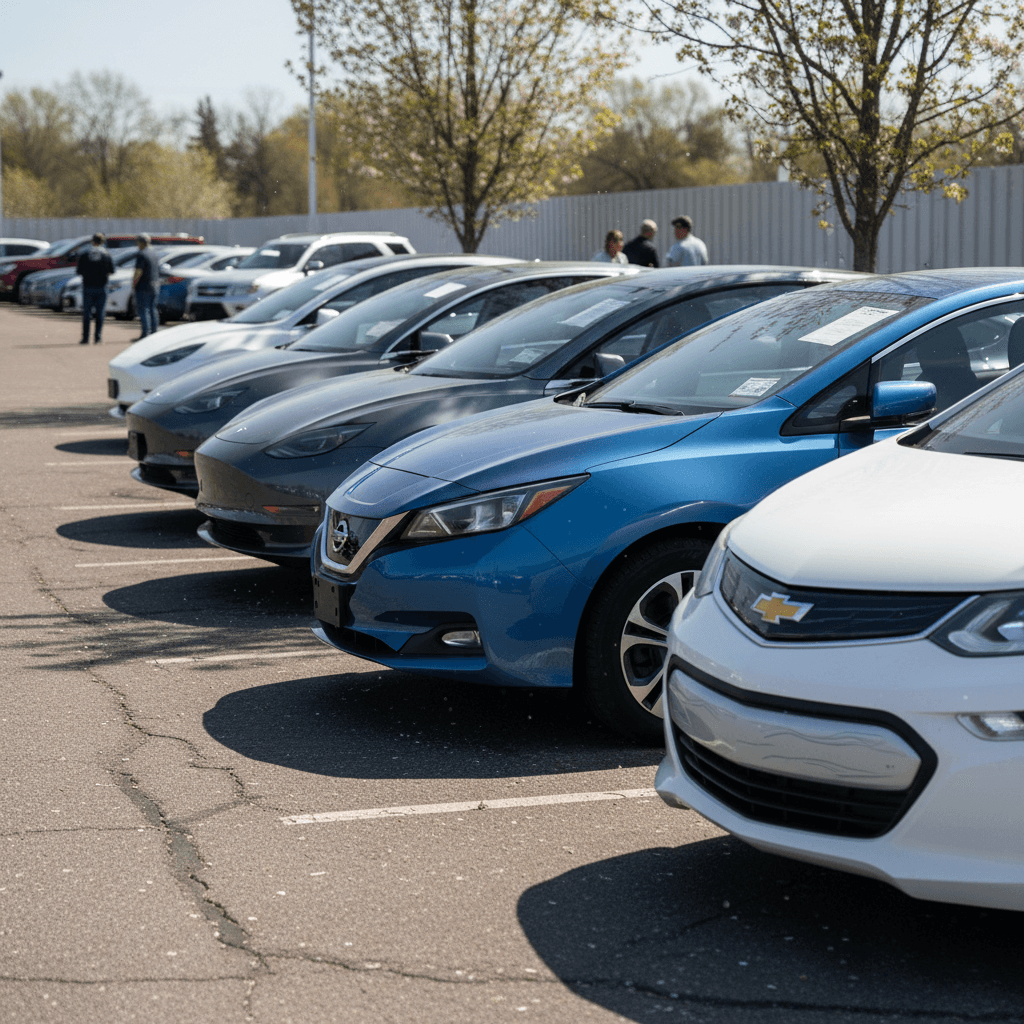
Should you sell your EV before or after winter?
For EVs, winter is reputationally rough. Cold weather legitimately reduces range, and the viral videos of cars stuck at chargers in blizzards rarely help the cause.
- If you live in a cold climate (Upper Midwest, Northeast, Rockies), listing in late winter or early spring, February through April, usually beats trying to get top dollar during a January cold snap.
- If you live in a mild climate (West Coast, much of the South), winter is less scary for buyers. You can often list in December or January without a big pricing penalty, especially if your car has a heat pump and strong range.
- If your EV’s winter range is already marginal (older Leaf, early i3, first‑gen plug‑in hybrids), avoid listing in the teeth of winter unless you’re pricing aggressively and marketing it as an urban or second car.
Be honest about winter range
Mileage, battery age and the 3‑year/7‑year cliffs
Depreciation on EVs has been front‑loaded: prices soared in 2021–2022, then corrected brutally in 2023–2024. By 2026, we’re closer to normal, but there are still clear psychological cliffs.
How age and mileage should influence your timing
Think of your EV’s life in phases, not just model years.
0–3 years old
Still the belle of the ball.
- Battery warranty is long, degradation is usually modest.
- If you’re selling in this window, you’re arguing over smaller swings: timing by season can matter more than age.
- Best move: Sell in a strong demand window (Feb–May or Sept–Oct) before crossing a big mileage milestone.
3–7 years old
The value sweet spot, with caveats.
- Battery warranty is ticking, but still active for many models.
- Crossing 60k–75k miles or a warranty cutoff can knock value and slow the sale.
- If your car is 3.5–4 years old, selling before you lose major warranty coverage often makes sense.
7+ years old
Where the market gets picky.
- Buyers scrutinize degradation, pack chemistry and charging speed.
- A verified battery health report is almost mandatory if you want top‑tier offers.
- Here, timing matters less than transparency; sell when you’re ready, but price to the reality of your pack.
Timing your sale around tax credits and policy changes
Federal EV tax credits were the gravitational force of the market from 2023 through September 30, 2025. With the One Big Beautiful Bill shutting those off for purchases after that date, the landscape shifted again in late 2025 and into 2026.
Where we are now (2026)
What this means for your timing:
- You no longer need to rush a sale to meet a federal deadline, but keep an eye on state‑level changes. A new state rebate can bring a wave of buyers into the market.
- When Congress or a state legislature talks about reviving or killing incentives, used‑EV shoppers get skittish. If your timeline is flexible, selling into a quiet policy period is calmer for everyone.
- If you’re trading into another EV, remember you’re on both sides of this equation: ideally, time your sale for a strong used‑EV window and your purchase for a softer new‑EV moment. Platforms like Recharged can model both sides for you.
Market playbook: 4 strategies for 2026 used‑EV sellers
There’s no one answer that fits a 2017 Leaf, a 2021 Model Y, and a 2020 Chevy Bolt. But there are patterns. Here’s how to think about timing based on your situation.
Choose the timing strategy that fits your EV and your life
You drive a newer EV (0–3 years old)
Target a <strong>spring 2026</strong> sale (Feb–May) if you want maximum buyer pool and a quick transaction.
Sell before you cross 36,000–45,000 miles if you can; that keeps you in the low‑mileage bucket for most shoppers.
If your automaker is rumored to be cutting new‑EV prices again, consider selling <strong>before</strong> the cut hits the news.
You have a 3–7 year‑old commuter EV
Check when your <strong>battery and powertrain warranties</strong> expire; aim to sell 3–6 months before that date.
Avoid listing during the coldest weeks if your real‑world winter range is already borderline.
Use a service like Recharged to get a <strong>battery health report</strong>; it can justify a higher asking price even in a crowded market.
You own an older or first‑gen EV
Here, the exact month matters less than the story you can tell about the car.
Bundle a Level 2 home charger or portable EVSE to sweeten the deal; it reduces a buyer’s up‑front costs.
List during months with <strong>pleasant weather</strong> in your region so test drives show the car at its best range‑wise.
You’re upside‑down on an EV loan
If you owe more than the car is worth, timing the month won’t magically fix it, but you can blunt the pain.
Get trade‑in and instant‑offer quotes from multiple buyers, including EV‑specialists like Recharged, to see who values your EV correctly.
If your payment is crushing you, selling sooner, into the next good seasonal window, is usually better than waiting for a perfect month that may never come.
Good news for patient sellers
How Recharged helps you time and execute the sale
Selling a used EV is a little like selling a racehorse with a medical file: the records matter as much as the paint. That’s where an EV‑first platform like Recharged earns its keep.
What Recharged can do for you as a seller
Especially if you don’t want to become a full‑time market analyst.
1. Verify and showcase your battery health
Every vehicle sold through Recharged gets a Recharged Score Report, which includes verified battery health diagnostics. That’s gold for timing and pricing:
- If your pack is healthier than average for its age, you can price with confidence and sell even in a slightly softer season.
- If it’s borderline, Recharged can help you position the car honestly and still find the right buyer.
2. Price to the real market, not the rumor mill
Recharged uses nationwide EV transaction data to calculate fair market pricing for your specific year, trim, mileage, and battery condition.
- No more guessing based on sketchy classifieds.
- You see how different listing months tend to affect time‑to‑sale in markets like yours.
- You can compare selling now vs. waiting 90 days, before you commit.
3. Choose how you want to sell
Recharged isn’t just a classifieds site. You can:
- Get an instant offer if you want to sell quickly and be done.
- Use a consignment model where Recharged handles marketing and logistics to aim for a higher price.
- Trade in your EV toward another vehicle on the platform and keep everything under one roof.
4. Make it easy for out‑of‑area buyers
Because Recharged offers nationwide delivery and a fully digital experience, you’re not limited to whoever happens to be driving past your driveway that weekend.
- That matters for EVs, where demand for your exact model might be stronger a few states away.
- Recharged’s EV‑specialist support team can answer buyer questions that would normally kill a deal.
Ready to find your next EV?
Browse VehiclesStep‑by‑step checklist before you list your EV
Once you’ve picked your window, say, March–April or September–October, the last bit of value is in the prep. Here’s a practical checklist to run through in the 2–3 weeks before you hit “list.”
Pre‑listing checklist: squeeze the most out of your chosen month
1. Pull your service and charging history
Gather records for tire rotations, brake service, cabin filter changes, and any warranty work. If you’ve logged fast‑charging vs. home‑charging habits, summarize them. Buyers love seeing that most miles were done on Level 2 at home.
2. Get a battery health report
If you’re selling through Recharged, your Recharged Score covers this. Otherwise, consider a reputable third‑party diagnostic. The more precise the state‑of‑health number, the less room there is for low‑ball offers based on vague fear.
3. Fix the cheap stuff now
Touch‑up cosmetic issues that are inexpensive but visually loud: curb‑rashed wheels, a cracked windshield, worn wiper blades. Small reconditioning done before a spring or fall listing can move you into a higher price bracket.
4. Detail the interior and reset the tech
A clean interior photographs better and signals that the car was cared for. Clear personal data from the infotainment system, log out of apps, and reset navigation favorites before test drives.
5. Photograph in flattering, weather‑appropriate light
If you’re listing in spring, shoot in late‑afternoon light with clean pavement, no piles of dirty snow, no half‑melted slush. Capture the charge port, the main screen at a reasonable state‑of‑charge, and any included charging equipment.
6. Decide your minimum acceptable price and your plan B
Before the inquiries start, decide the lowest number you’ll accept and how long you’re willing to wait. If the market doesn’t meet you there in your chosen month, have a backup: adjust price, switch to a consignment model, or take a firm instant offer from a buyer like Recharged.
Frequently asked questions about the best time to sell a used EV
FAQs: best month to sell a used electric car
Bottom line: when should you sell your used electric car?
If you want a simple rule, here it is: sell your used electric car in a good‑demand season, February through May or September through October, just before you hit a major mileage or warranty milestone, armed with a credible battery health report. That formula matters more than obsessing over the exact week you put up the listing.
Beyond that, think like a buyer. Show your EV on its best day, in its best weather, with its full story told straight. And if you’d rather not become an amateur market analyst, Recharged can do the heavy lifting, from battery diagnostics and fair‑market pricing to trade‑ins, instant offers, and nationwide delivery to your eventual buyer. Timing matters, but execution matters more, and you don’t have to do it alone.