If you’re shopping for used electric cars in Pennsylvania in 2026, you’re hitting the market at an inflection point. EV registrations in the state have grown quickly, public charging is finally catching up, and used EV prices have come down from their 2022–2023 highs. At the same time, federal incentives are changing and Pennsylvania has added new EV-specific fees, so the deals are good, but you need to be strategic.
The short version
Why used electric cars in Pennsylvania are attractive in 2026
Three big reasons used EVs make sense in PA now
Price corrections, growing charging, and policy support are aligning in 2026.
1. Prices have cooled off
2. More places to charge
3. Policy is pushing electric
In other words, 2026 is a year where the early‑adopter premium has mostly evaporated, but the structural advantages of EVs, lower operating costs, quiet performance, and strong incentives for some buyers, are still in place.
Snapshot of Pennsylvania’s EV market in 2026
Pennsylvania EV landscape, entering 2026 (big picture)
What this means for you
Pennsylvania EV incentives and fees in 2026
State: PA Alternative Fuel Vehicle Rebate
Pennsylvania’s Department of Environmental Protection runs the Alternative Fuel Vehicle Rebate program. For the July 1, 2025 – June 30, 2026 funding year, the state has budgeted a limited number of rebates (roughly 500) for qualifying EV purchases or leases.
- Applies to new or used battery electric and plug‑in hybrid vehicles purchased from a dealer.
- Rebate size depends on your household income and the vehicle type.
- Lower‑income households can access the largest rebates, up to the low‑thousands of dollars.
- You apply after purchase through the state’s eGrants system and must apply within the specified window.
Because funding is capped, plan as if the rebate is a bonus, not something you absolutely rely on to make the numbers work.
State: Road User Charge (RUC) for EV owners
Starting April 1, 2025, Pennsylvania replaced traditional EV registration surcharges with a Road User Charge for battery‑electric vehicles. In 2026, if you title a used EV in PA, you’ll likely:
- Register the EV like any other passenger vehicle.
- Pay a per‑mile or flat annual fee tied to EV ownership instead of paying gas tax at the pump.
- Report mileage or let the state estimate based on typical use, depending on how the program evolves.
This doesn’t erase the fuel savings of an EV, but it does slightly narrow the gap. When you compare a used EV to a gas car, include the RUC in your ownership cost math.
Federal used EV tax credit changes
How much do used electric cars cost in Pennsylvania in 2026?
Typical asking prices for used EVs in Pennsylvania (spring 2026)
High‑level price ranges for popular models you’ll see on Pennsylvania lots and marketplaces. Actual prices vary by battery health, trim, mileage, and history.
| Model / Segment | Model years you’ll see most | Typical price range | Good commuter candidate? |
|---|---|---|---|
| Nissan LEAF (compact hatchback) | 2018–2023 | $12,000 – $20,000 | Yes, if you have short daily drives and can charge at home. |
| Chevrolet Bolt EV / EUV (compact hatchback/SUV) | 2019–2023 | $14,000 – $23,000 | Excellent. Strong range and value if the battery recalls have been addressed. |
| Tesla Model 3 (sedan) | 2018–2022 | $20,000 – $33,000 | Great if you want range and access to Superchargers with the right adapter or port. |
| Hyundai Kona EV / Kia Niro EV (small SUV) | 2019–2023 | $18,000 – $28,000 | Very good for mixed city/suburban use; solid cold‑weather efficiency. |
| Ford Mustang Mach‑E (crossover) | 2021–2023 | $25,000 – $38,000 | Good if you want space and style; check software updates and charging history. |
| Volkswagen ID.4 (crossover) | 2021–2023 | $23,000 – $35,000 | Good, especially for families; ensure recall and software campaigns are up‑to‑date. |
Price ranges assume clean titles and average mileage; exceptional battery health or rare trims may command more.
Pennsylvania’s used EV prices generally track the wider Mid‑Atlantic: Philly suburbs often sit at the higher end of these ranges, while you may find slightly better deals in smaller markets if you’re willing to travel. Instead of fixating on the sticker alone, focus on effective cost: price minus any rebate, plus sales tax, plus expected charging and RUC costs over the years you’ll own the car.
Best used electric cars for Pennsylvania drivers
Used EV picks that work well in Pennsylvania
Match the car to your climate, commute, and road conditions.
City & inner‑ring suburbs
Nissan LEAF, Chevy Bolt EV/EUV, Hyundai Kona EV
- Short‑to‑medium daily miles.
- Easier street parking and tight urban spots.
- Great fit if you can plug in every night.
Families & snow belt commuters
Kia Niro EV, VW ID.4, Ford Mustang Mach‑E
- Higher ride height for winter conditions in central and northern PA.
- More cargo space for strollers, gear, and Costco runs.
- Look for heat pumps and good cold‑weather reviews.
Road‑trip and business drivers
Tesla Model 3 / Model Y, Hyundai Ioniq 5, Kia EV6
- Stronger DC fast‑charging capabilities.
- Bigger batteries for I‑76, I‑80, and I‑81 drives.
- Better integration with growing fast‑charging networks.
How Recharged can help with model choice
Ready to find your next EV?
Browse VehiclesBattery health is everything on a used EV
On a gas car, you worry about engines and transmissions. On a used electric car, the traction battery is the big-ticket item. Battery degradation isn’t scary if you understand it, it’s just a normal chemical aging process, but it’s the single factor that can turn a “great deal” into an expensive mistake if you ignore it.
Battery health checks you should never skip
1. Look for an objective battery health score
Ideally, you want a third‑party or OEM‑grade test, not just “it seems fine.” Recharged’s <strong>Score Report</strong> is built exactly for this: it measures usable capacity and flags unusual degradation versus similar cars.
2. Compare state of health (SoH) to peers
A 5‑year‑old EV at 90–92% of original capacity is typical. The same car at 75–80% deserves a deeper look into fast‑charging habits, thermal management, or potential warranty coverage.
3. Check for open battery recalls
Models like the Chevy Bolt EV had major battery recalls and replacements. A car with a <strong>completed recall and new pack</strong> may actually be a better bet than one that never needed a recall but has an older, partially degraded pack.
4. Review DC fast‑charging history
Frequent DC fast charging isn’t inherently bad on modern packs, but extreme patterns, fast‑charging multiple times per day, always to 100%, can accelerate wear. Ask what the previous owner’s routine was or look for logged data where possible.
5. Pay attention to cold‑weather behavior
In Pennsylvania winters, even a healthy battery can temporarily lose 20–30% of its range. On your test drive, start with a cold soak if you can and note how quickly the car warms and whether range estimates seem realistic.
6. Understand remaining battery warranty
Many EVs carry 8‑year/100,000‑mile (or more) battery warranties. A 6‑year‑old EV with 40,000 miles and 2 years of warranty left looks very different from an 8‑year‑old, 90,000‑mile example that’s about to age out.
The biggest used EV mistake
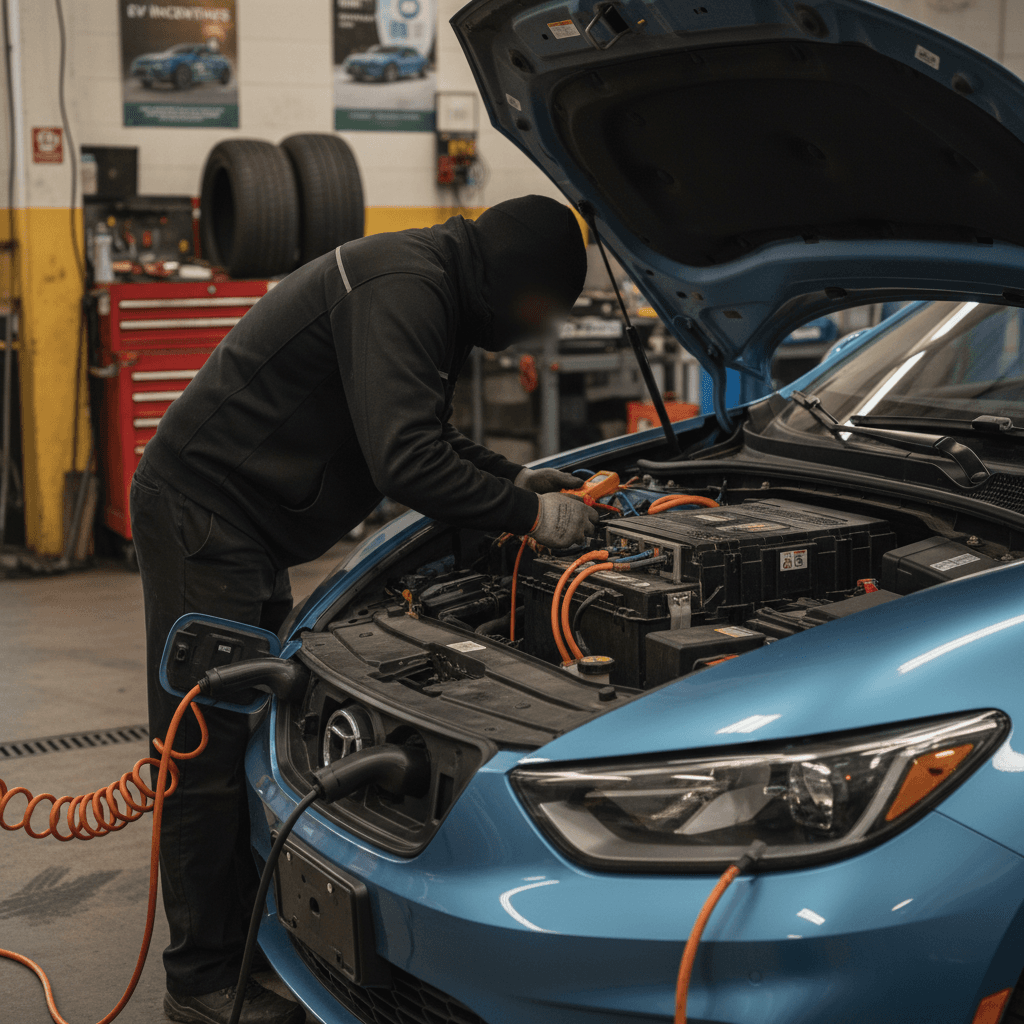
Charging used EVs in Pennsylvania: home, public, and road trips
Home charging: the real game‑changer
If you have off‑street parking anywhere in Pennsylvania, Level 2 home charging (240V) is the single best upgrade you can make with a used EV.
- Most used EVs add 20–35 miles of range per hour on Level 2.
- Overnight, that’s effectively a full battery every morning.
- You can often use a dryer‑style outlet where code allows, but talk to an electrician first.
For renters, look into 120V "Level 1" charging if your daily miles are low, or ask your landlord whether a shared Level 2 charger is possible. Some utilities and municipalities in Pennsylvania are beginning to support curbside and shared solutions.
Public and fast charging across PA
Pennsylvania is using NEVI funds to build DC fast‑charging hubs roughly every 50 miles on key corridors like I‑76, I‑80, I‑81, I‑83, and I‑79. Most major networks, Electrify America, EVgo, ChargePoint, and others, already operate across the state.
For you, that means:
- Road trips from Pittsburgh or Erie to Philadelphia are increasingly practical in mainstream used EVs.
- Even if you rely on public Level 2 during the week, you can top up quickly on weekends at DC fast sites.
- Apps like PlugShare, A Better Routeplanner, and network apps help you plan routes with realistic charging stops.
Try your local charging before you buy
Total cost of ownership: used EV vs gas car in PA
Where used EVs save you money
- Fuel: Even factoring in Pennsylvania’s Road User Charge, electricity per mile is typically cheaper than gasoline, especially if you charge off‑peak at home.
- Maintenance: No oil changes, fewer moving parts, and less brake wear (thanks to regen) usually mean lower routine maintenance.
- Urban driving: Stop‑and‑go traffic that kills gas mileage barely affects EV efficiency, especially in moderate temperatures.
Over 5–8 years, those savings can easily offset a slightly higher purchase price versus a comparable gas model, if you buy a car with a solid battery and don’t wildly overpay on financing.
Where the math can surprise you
- High annual miles: If you drive 25,000+ miles a year, you’ll save a lot on “fuel,” but you’ll also hit mileage limits on warranties faster.
- All‑public charging: Relying mostly on DC fast charging at retail rates can erode your cost advantage versus gas, especially in cold Pennsylvania winters.
- Resale risk: Technology and incentives are moving targets. A rock‑solid deal today is one where the car still makes sense for you even if resale values slide faster than expected.
Think in cost‑per‑mile, not just monthly payment
Step‑by‑step: how to buy a used electric car in Pennsylvania
Your 9‑step used EV buying roadmap in PA
1. Clarify your real‑world needs
List your typical daily miles, max winter commute, family size, parking situation, and road‑trip expectations. This will narrow you to realistic range and body‑style targets (e.g., compact hatch vs crossover).
2. Decide on a charging plan first
Before you even browse listings, figure out where the car will live and how you’ll charge it. If home Level 2 isn’t possible, favor models with strong DC fast‑charging and realistic winter range buffers.
3. Set a total budget, not just price
Include PA sales tax, registration, Road User Charge, insurance, and a conservative estimate for any rebate you’re likely to receive. If federal credits are uncertain, treat them as upside, not a requirement.
4. Shortlist models that fit Pennsylvania
Favor EVs with proven cold‑weather performance and strong charging support in the Mid‑Atlantic. Cross‑shop options on Recharged and other marketplaces, but use consistent criteria: battery health, range, warranty, and winter behavior.
5. Demand real battery health data
Whether you buy from a dealership, marketplace, or private seller, ask for objective battery diagnostics. On Recharged, this comes baked into the <strong>Recharged Score Report</strong>, so you don’t have to trust vague assurances.
6. Check recalls, software, and charging history
Run the VIN through recall databases, ask for service records, and confirm key software and charging updates are current. For cars like the Bolt EV or Kona EV, verify that major recall campaigns were properly completed.
7. Test drive in Pennsylvania conditions
If possible, test on your actual commute. Pay attention to heater performance, noise levels on rough roads, and how the car estimates range after some real‑world miles. Try at least one highway segment and some hills.
8. Compare financing and trade‑in options
Get pre‑qualified with your bank or credit union and compare against digital‑first options. Recharged offers <strong>EV‑friendly financing</strong> and can evaluate your trade‑in or make an instant offer, so you know your total out‑the‑door picture before you commit.
9. Close the deal and set up charging
Once you’ve picked the right car, schedule any needed home charging work and install the apps for the major public networks in your area. If you buy through Recharged, you can complete the process digitally and have the car delivered to your door in Pennsylvania.
Buying a used EV in PA with Recharged
FAQ: Used electric cars in Pennsylvania 2026
Common questions about used EVs in Pennsylvania
Is 2026 a good time to buy a used EV in Pennsylvania?
For many Pennsylvanians, 2026 is a sweet spot for buying a used electric car. Prices have corrected, the state’s charging build‑out is accelerating, and policy still leans in your favor, while some of the early‑adopter headaches have been ironed out. The flip side is that incentives are more complicated and EV‑specific fees like the Road User Charge are now part of the equation.
If you match the car to your real‑world needs, insist on hard battery health data, and run the total‑cost‑of‑ownership numbers with Pennsylvania’s taxes and fees in mind, a used EV can be one of the smartest ways to cut your fuel bills and emissions at the same time. And if you want a shortcut through the learning curve, Recharged is built for exactly this moment, used electric vehicles with transparent battery health, fair pricing, EV‑savvy financing, and delivery to your Pennsylvania driveway.