If you’re eyeing Toyota’s all‑electric bZ4X, you’re probably running the numbers: payment, charging, maintenance, and especially Toyota bZ4X insurance cost in 2026. The good news is that this compact electric SUV tends to sit in the “sensible” end of the EV insurance spectrum, but what you pay can still vary hundreds of dollars a year depending on how and where you insure it.
At-a-glance estimate
Toyota bZ4X insurance cost in 2026: quick overview
Toyota bZ4X insurance snapshot for 2026 (US)
Those ranges line up with model‑specific data points we’ve seen publicly: one major comparison site pegs bZ4X insurance around $1,272 for a 6‑month full‑coverage policy, about $2,500 a year for a sample driver profile, while an insurtech carrier quotes around $37/month for very pared‑back coverage aimed at low‑mileage urban drivers. Put simply: your number will sit somewhere on that spectrum depending on how much coverage you choose and how risky you look on paper.
Why estimates vary so much
How much does Toyota bZ4X insurance cost in 2026?
Estimated 2026 Toyota bZ4X insurance ranges (US)
These are directional ranges for full‑coverage insurance on a newer (2023–2026) Toyota bZ4X. They are not quotes, always check with insurers for exact pricing in your ZIP code.
| Driver profile | Annual estimate | Monthly equivalent | Notes |
|---|---|---|---|
| Experienced, clean record, suburban ZIP | $1,700–$2,000 | $140–$170 | Married homeowner, good credit, no recent claims |
| Average driver, mixed suburban/urban | $1,900–$2,400 | $160–$200 | What many bZ4X owners will recognize as “normal” in 2026 |
| Young driver (under 25), clean record | $2,400–$3,200+ | $200–$270+ | Age surcharge hits EVs and gas cars alike |
| City driver, higher‑risk ZIP | $2,400–$3,000+ | $200–$250+ | Theft and crash frequency drive rates up, even with good credit |
| Liability‑only on older/leased‑out bZ4X | $800–$1,400 | $70–$120 | No comp/collision, often a poor fit for a newer EV still worth five figures |
Estimates assume 12,000 miles/year and typical liability limits (e.g., 100/300/50) unless noted.
Nationwide, EVs still cost noticeably more to insure than comparable gas cars because of higher vehicle prices and complex repair procedures. Industry data heading into 2026 pegs that gap around 15–50% higher for EVs overall depending on the study and model mix. The bZ4X sits closer to the modest end of that spread because it’s priced and positioned like a mainstream compact SUV, not a six‑figure luxury flagship.
- If you’re trading out of a high‑trim gas crossover, your bZ4X insurance may feel familiar, or even slightly lower.
- If you’re stepping up from an older compact sedan or a long‑paid‑off car, expect a noticeable jump simply because the bZ4X is worth more to replace.
- If you already insure a newer EV (Model 3, Ioniq 5, ID.4), your bZ4X quote will likely be in the same neighborhood.
What actually drives bZ4X insurance rates
The big levers behind your 2026 bZ4X premium
Insurers mostly care about how likely you are to file a claim and what it will cost when you do.
Where you live and park
Your driving history
Coverage and deductibles
EV‑specific cost factors
- Battery and electronics: The bZ4X’s high‑voltage battery and electronics make up a big chunk of its value. Even if they’re rarely damaged, insurers price for the potential cost.
- Repair networks: Not every shop is comfortable with EV structural and high‑voltage repairs yet. In some regions, that limited capacity pushes labor rates higher.
- Parts availability: Because the bZ4X is still relatively new, some body parts and components have longer lead times, which can increase claim costs and rental‑car days.
Personal profile factors
- Credit‑based insurance score: In most US states, insurers are allowed to use a credit‑based score when setting premiums. Better score, lower rate.
- Mileage and use: A bZ4X that does 8,000 miles a year on school runs and errands looks cheaper to insure than one commuting 20,000 highway miles.
- Household and bundling: Multi‑car and home/auto bundles are still some of the biggest discounts you’ll see on a quote sheet.
Pro move: quote the bZ4X two ways
Trims, drivetrain, and safety: why they matter for insurance
The bZ4X doesn’t have a wild trim spread, but the details do nudge your premium. Newer model years in the US typically offer XLE and Limited trims with either front‑wheel drive (FWD) or all‑wheel drive (AWD). AWD models carry a bit more hardware and power, so they’re usually insured slightly higher than FWD twins, all else equal.
How bZ4X configuration can influence insurance pricing
These differences are often small on their own, but they can stack up.
| Feature | Impact on premium | Why it matters |
|---|---|---|
| AWD vs. FWD | AWD usually slightly higher | More components and power, and in some markets, more winter‑driving exposure. |
| Limited vs. XLE | Limited often higher | Higher MSRP and more tech to repair (wheels, headlights, sensors). |
| Newer model year (2025–2026) vs. 2023 | Newer often higher | Vehicle is worth more to replace; depreciation hasn’t had time to help you yet. |
| Advanced safety tech | Can lower injury claims | Standard Toyota Safety Sense 3.0, lane assist, AEB, and strong crash scores can help keep liability pieces of your premium in check. |
Assumes similar driver, location, and coverage across each row.
Safety is on your side
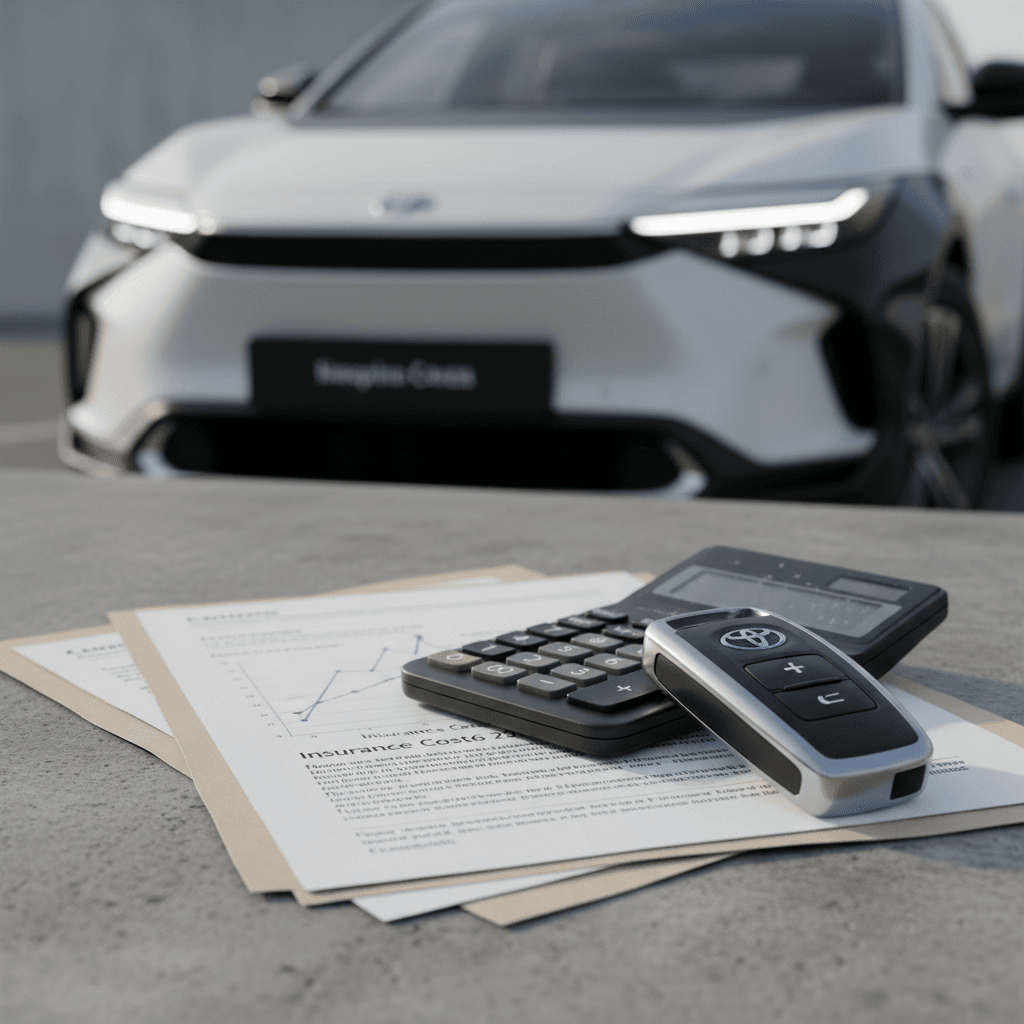
Is the Toyota bZ4X cheaper to insure than other EVs?
Compared with high‑end electric SUVs and sedans, the Toyota bZ4X generally sits on the more affordable side of EV insurance costs in 2026. Think of it as closer to a Nissan Ariya, Hyundai Kona Electric, or VW ID.4 than a Tesla Model S or Mercedes EQE SUV when you look at premiums.
How bZ4X insurance typically stacks up vs. other EVs (directional)
This table uses broad industry trends and model pricing. Exact premiums depend heavily on you and your ZIP code.
| EV model | Relative insurance cost vs. bZ4X | Why |
|---|---|---|
| Tesla Model 3/Model Y | Often higher | Higher claim severity, repair complexity, and vandalism/theft patterns in some markets. |
| Hyundai Ioniq 5 / Kia EV6 | Similar to slightly higher | Similar pricing and performance; some trims are more powerful and pricier than bZ4X. |
| VW ID.4 / Nissan Ariya | Very similar | Mainstream compact EV SUVs with comparable MSRPs and mission. |
| Luxury EVs (Model S/X, EQE SUV, iX) | Much higher | High vehicle values and expensive body/trim parts push premiums up. |
| Compact used EVs (Leaf, older Bolt EV) | Lower | Lower replacement cost and smaller size typically reduce insurance. |
All rows assume full‑coverage policies and comparable driver profiles.
Don’t compare to your neighbor’s premium
7 ways to lower your Toyota bZ4X insurance bill in 2026
Practical moves that actually cut bZ4X insurance costs
1. Shop more than one quote
Get rates from at least three carriers, ideally a mix of big national brands and a couple of EV‑friendly newcomers. Many drivers leave $150–$300 a year on the table by renewing automatically.
2. Ask specifically about EV discounts
Some insurers now offer <strong>electric‑vehicle or low‑mileage discounts</strong> because EV drivers tend to be detail‑oriented and drive fewer long‑distance road trips. These aren’t always advertised on the homepage, ask outright.
3. Tweak your deductibles carefully
If you’re carrying $250 or $500 comp/collision deductibles, pricing out $750 or $1,000 can shave real money off your premium. Just make sure you keep enough cash in savings to comfortably pay that deductible after a claim.
4. Bundle with home or renters insurance
Bundling your Toyota bZ4X policy with a home, renters, or umbrella policy can unlock some of the biggest percentage discounts any insurer offers. It’s not glamorous, but it works.
5. Use telematics if you’re a smooth driver
Many carriers now offer phone‑based or plug‑in programs that track how you drive. If you accelerate gently, avoid late‑night drives, and don’t slam the brakes, you can earn hefty discounts after an evaluation period.
6. Adjust coverage as the bZ4X ages
A brand‑new bZ4X is worth insuring with full coverage. But if you’re in a 6‑ or 7‑year‑old example with a modest loan balance, or paid off entirely, you can revisit whether comp and collision limits still make sense.
7. Keep your credit profile healthy
In most states, a stronger credit‑based insurance score lowers premiums. Paying bills on time, keeping card balances modest, and avoiding lots of new credit inquiries can quietly trim your bZ4X insurance over a few renewal cycles.
Where not to save
Insurance costs on a used bZ4X (and how Recharged helps)
If you’re not set on buying new, a used Toyota bZ4X can be a smart way to tame both your payment and your insurance bill. As the bZ4X ages and its market value drops, the comprehensive and collision portions of your premium typically follow. That’s why a well‑priced, three‑ to five‑year‑old EV often insures more like a conventional compact SUV than a cutting‑edge tech toy.
Why a used bZ4X can cost less to insure
- Lower vehicle value: A used bZ4X is cheaper to replace than a brand‑new one, so comp and collision pieces of your policy usually drop.
- More data for insurers: By 2026, carriers have several model years of loss data on Toyota’s EV SUV, which often leads to more refined (and sometimes lower) pricing.
- Room to adjust coverage: As the loan balance shrinks, or disappears, you have more flexibility to raise deductibles or rethink full coverage.
How Recharged fits in
- Every used EV on Recharged comes with a Recharged Score Report, including verified battery health, so you’re not guessing about pack condition when you call your insurer.
- Because you see fair market pricing up front, it’s easier to decide what level of coverage makes sense for the car’s actual value.
- If you’re financing through Recharged, our EV‑savvy team can help you understand how the payment, insurance estimate, and charging costs fit together into a realistic monthly budget.
Bundle the deal, not just the policy
Coverage checklist: building the right bZ4X policy
Electric or not, the basic structure of a smart auto policy is the same. What changes with a bZ4X are the dollar amounts that make sense and a couple of EV‑specific questions to ask.
Key coverage decisions for your Toyota bZ4X
Liability limits that match your assets
For most EV owners, limits like 100/300/50 or 250/500/100 (bodily injury/property damage) make far more sense than bare‑minimum state levels. The bZ4X is a modern family vehicle; protect yourself accordingly.
Comprehensive coverage with realistic deductible
Comprehensive protects you from theft, fire, vandalism, and weather damage. With EVs drawing attention in some markets, it’s a must‑have. Many bZ4X drivers choose a $500–$1,000 deductible.
Collision coverage, especially on newer bZ4X models
Collision covers damage when you hit or are hit by another object (regardless of fault in many cases). With repair costs for EVs still high, full‑coverage bZ4X insurance is usually smart until the vehicle is worth far less than your emergency fund.
Uninsured/underinsured motorist coverage
In states with high numbers of uninsured drivers, this can be the difference between being whole and being stuck. It’s especially important when your car is newer and more valuable, like a 2026 bZ4X.
Gap or loan/lease payoff coverage
If you’re putting a small amount down or taking a longer loan, consider gap coverage so you’re not writing a big check if the bZ4X is totaled early in its life.
Roadside assistance with EV awareness
Some insurers offer EV‑specific roadside coverage including towing to the nearest DC fast charger or dealer. With an electric SUV, that detail matters more than it did in your old gas car.
Toyota bZ4X insurance cost 2026: FAQ
Frequently asked questions about 2026 Toyota bZ4X insurance
Bottom line: what to expect for bZ4X insurance in 2026
The Toyota bZ4X doesn’t come with bargain‑basement premiums, but it also doesn’t live in the nosebleed tier that gives EV insurance a bad reputation. In 2026, most drivers can expect full‑coverage Toyota bZ4X insurance to land somewhere around $1,900–$2,400 per year, depending on location, driving history, and coverage choices.
What matters most is how the whole picture fits together: the price you pay for the car, the loan you take, the way you drive, and the policy you build. If you’re considering a used bZ4X, Recharged can help you line those pieces up, transparent pricing, verified battery health, and EV‑savvy guidance, so your insurance decision is just one more box you confidently check on the way to quiet, electric miles.