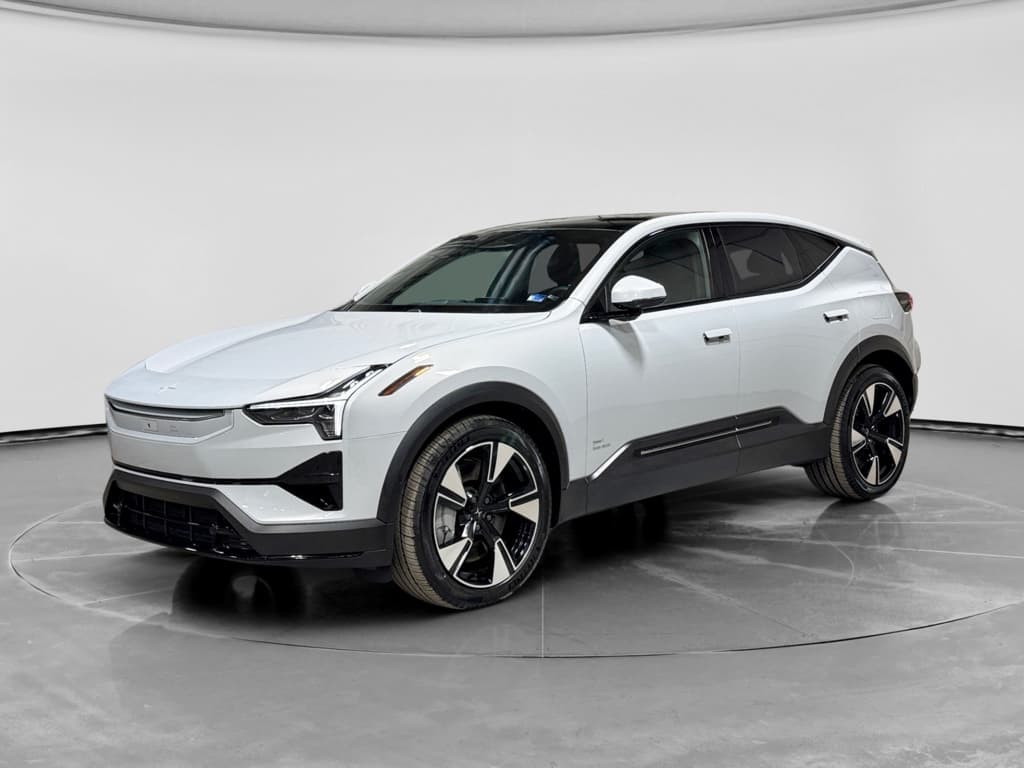
If you’ve been waiting for a luxury electric SUV that feels genuinely built around the driver, the 2025 Polestar 3 deserves a long look. It doesn’t try to out-spec Tesla on paper or smother you in screens like some German rivals. Instead, it focuses on a confident chassis, clean Scandinavian design, and Google-powered tech wrapped in a genuinely premium package.
Where the Polestar 3 fits
2025 Polestar 3 overview
The 2025 Polestar 3 is the brand’s first SUV, riding on a platform shared with the Volvo EX90. In the U.S., it launches as a long-range, dual-motor all-wheel-drive SUV with up to 517 hp and an EPA-estimated range between about 279 and 315 miles, depending on configuration. A rear-drive single-motor model with up to 350 miles of range is joining the lineup as production ramps up.
2025 Polestar 3 at a glance
On paper, those numbers put the Polestar 3 squarely in luxury territory. Pricing starts around the mid-$60,000s for the single-motor and climbs into the $80,000s for a dual-motor with the Performance pack and options, right in the mix with BMW and Mercedes and noticeably above a Tesla Model Y.
The fine print on availability
Key specs: range, battery, and charging
Every 2025 Polestar 3 uses a large 111 kWh (usable) lithium-ion battery and 400-volt architecture. That big pack delivers solid range, but it also means the 3 is a heavy SUV, with curb weights north of 5,600 pounds in most dual-motor trims.
2025 Polestar 3 core specs
Key powertrain, range, and charging numbers for the main U.S. variants.
| Trim | Drivetrain | Power | EPA range (est.) | 0–60 mph (est.) | Battery | Fast-charge peak |
|---|---|---|---|---|---|---|
| Long Range Single Motor | RWD | ~299 hp | Up to 350 mi | ~7.5 s | 111 kWh, 400V | Up to ~250 kW DC |
| Long Range Dual Motor | AWD | 489 hp | Up to 315 mi | 4.8 s | 111 kWh, 400V | Up to ~250 kW DC |
| Long Range Dual Motor Perf. Pack | AWD | 517 hp | 279 mi | 4.5 s | 111 kWh, 400V | Up to ~250 kW DC |
Official EPA figures may vary slightly by wheel size and options, especially the Performance pack.
Real-world range expectations
For daily commuting, any Polestar 3 has more range than most drivers will use in a day. Where the big battery becomes relevant is on road trips: it enables long stints between stops but takes more energy to move, which is why efficiency figures trail some rivals.
On the road: driving impressions
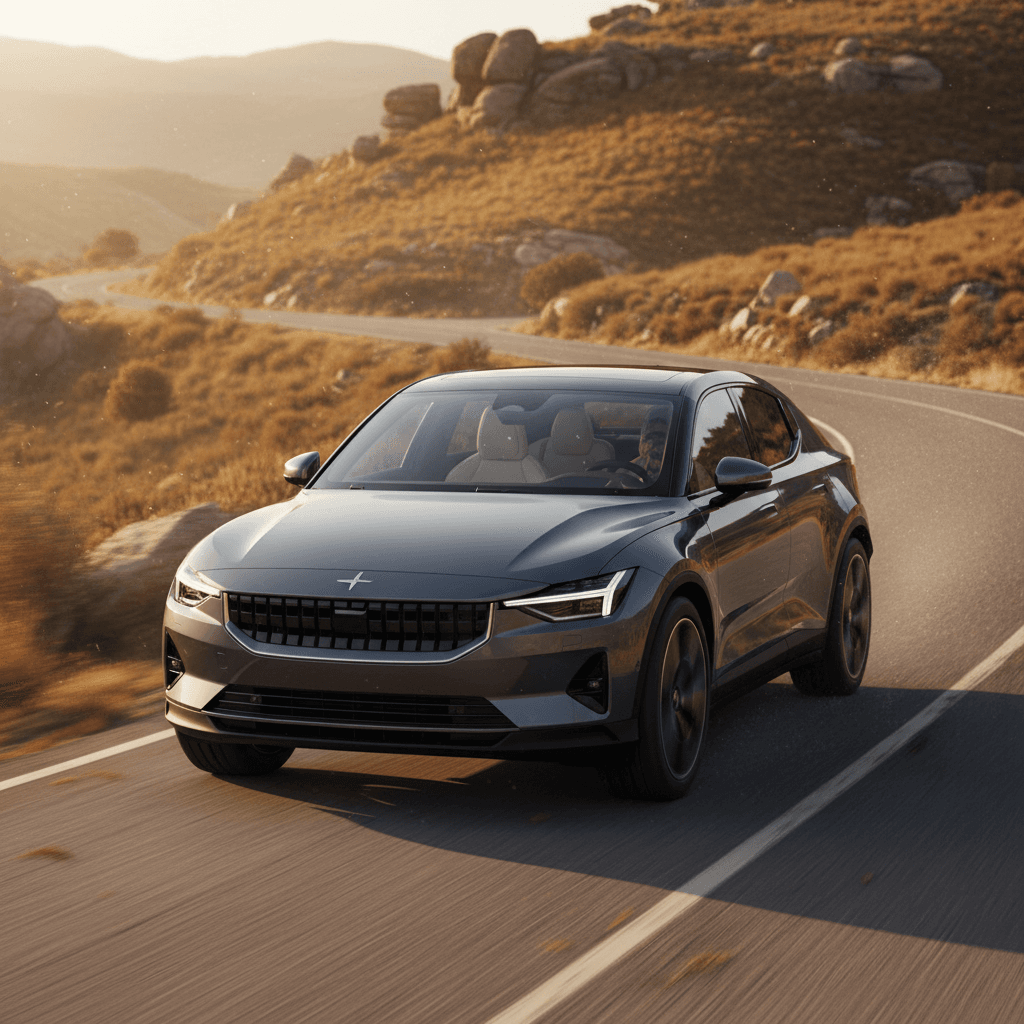
Polestar’s marketing line is that the Polestar 3 is an SUV that drives like a sports car. That’s overselling it a bit, but this is one of the more engaging large EV SUVs on a winding road. Dual-motor models use adaptive air suspension and sophisticated dampers that can pivot between plush and playful.
What it does well
- Steering feel: Weight and response are nicely judged, especially in the firmer drive modes.
- Body control: The 3 stays flat and composed in fast sweepers; it feels smaller than it is.
- Quiet cabin: Wind and road noise are well suppressed even on big 21- and 22-inch wheels.
Where it falls short
- Weight: You always sense the mass when braking hard or tossing it into tight corners.
- Ride on big wheels: Performance pack and 22-inch wheels can feel busy over broken pavement.
- One-pedal feel: Some testers find the brake-by-wire blending a bit artificial at first.
“The 3 has one of the cleanest designs I’ve seen in a production vehicle… and the cabin is impressively roomy, with plenty of space for both front and rear passengers.”
From behind the wheel, the Polestar 3 feels more like a sleek wagon on stilts than a traditional SUV. The dual-motor setup delivers immediate punch off the line, and passing power is effortless. It won’t out-drag a performance Tesla or a Porsche Macan EV, but it doesn’t need to. The charm here is composure and confidence, not TikTok drag races.
Interior, technology, and practicality
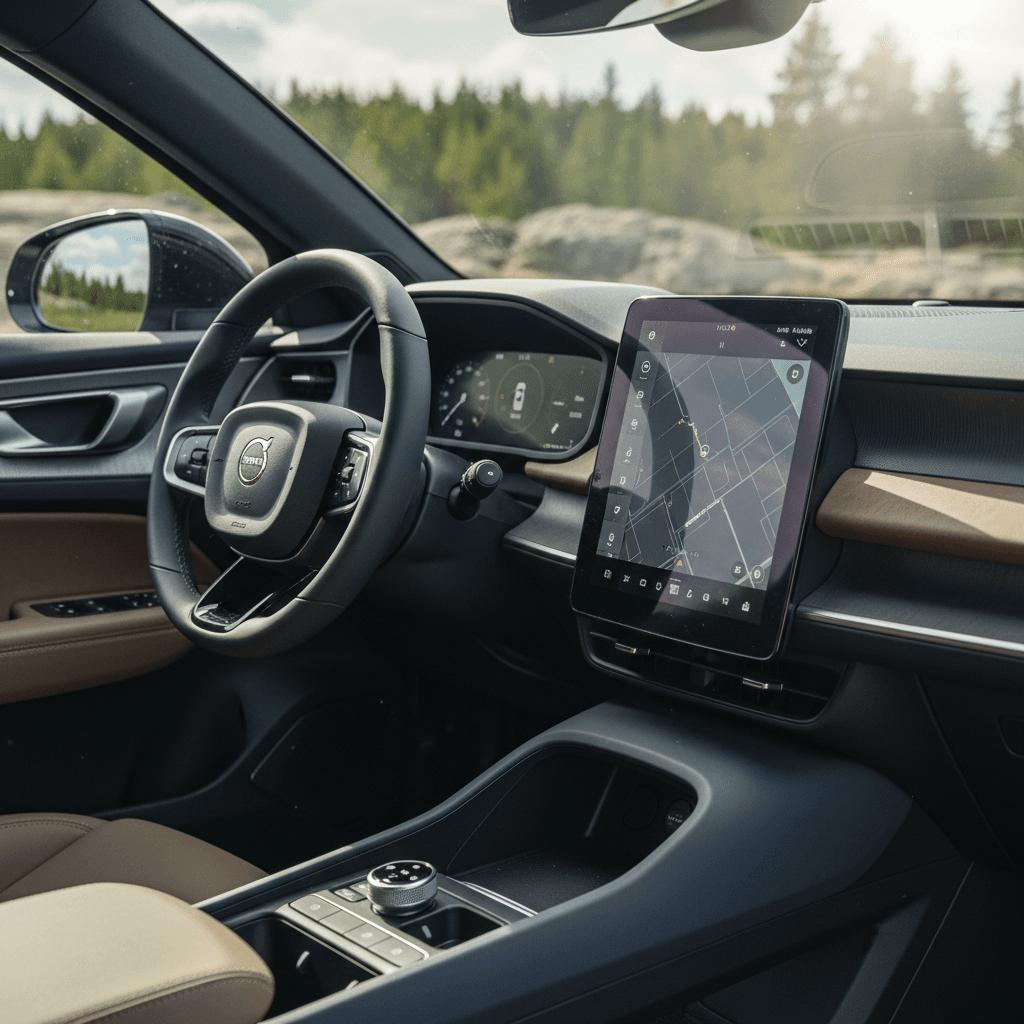
Step inside the Polestar 3 and you get a masterclass in Scandinavian minimalism. The dash is wide and uncluttered, vent lines are nearly invisible, and the materials feel properly premium, especially with the optional Nappa leather and open-pore wood. There’s a real sense of light and space, helped by a big glass roof and a floating center console.
Inside the Polestar 3: highlights and headaches
A cabin that’s gorgeous to look at and mostly great to live with.
Google built-in
A 14.5-inch touchscreen runs Google Automotive OS with Google Maps, Assistant, and Play Store apps baked in.
It’s intuitive if you already live in the Google ecosystem.
Driver display on column
A 9-inch digital cluster is mounted to the steering column, so it moves with the wheel.
It keeps your eyes closer to the road and frees up dash space.
Few physical controls
Almost everything, from climate to mirror adjustment, runs through the touchscreen.
It looks clean, but there’s a learning curve and some will miss real buttons.
Space is generous for four adults, and five will be comfortable on shorter trips. Cargo space sits in the low 20-cubic-foot range behind the rear seats, with a bit of extra storage in a small front trunk and under the cargo floor. It’s not a cargo king like a three-row SUV, but it’s plenty for family duty or a weekend away.
Sustainable materials story
Charging experience and road-trip usability
The Polestar 3 uses the CCS fast-charging standard in 2025, with future model years expected to pick up NACS (Tesla-style) hardware. On a capable DC fast charger, the big pack can go from about 10% to 80% in roughly the mid-20-minute range under ideal conditions.
- Peak DC charge power up to roughly the 250–300 kW ballpark on the latest hardware, tapering as the pack fills.
- Fast-charge performance in the real world is solid, though rivals like Porsche’s new Macan EV can add 100 miles of range noticeably quicker.
- At home, an 11 kW Level 2 onboard charger means a full overnight refill from a 240V wall box.
Planning road trips in a Polestar 3
Compared with the best in class, the Polestar 3’s charging is good rather than groundbreaking. The pack is large and the efficiency modest, so you’ll stop a bit more often than in a smaller, more efficient crossover, but the stops themselves won’t feel painfully long if you stick to high-power stations.
Pricing, trims, and value
Polestar priced the 3 directly into the heart of the luxury EV SUV segment. As of early 2026, you’re generally looking at mid-$60,000s to mid-$80,000s before destination and incentives, depending on motor count, options packages, and whether you go for the Performance pack.
2025 Polestar 3 U.S. pricing snapshot
Approximate MSRPs for key configurations; check your local Polestar retailer for current offers and lease programs.
| Configuration | Approx. MSRP | Target buyer |
|---|---|---|
| Long Range Single Motor RWD | ~$67,500 | Range-focused drivers who don’t need AWD. |
| Long Range Dual Motor AWD | ~$73,000–$75,000 | Balanced choice for mixed weather and spirited driving. |
| Long Range Dual Motor + Performance Pack | ~$79,000–$85,000+ | Shoppers who want maximum power and high-spec trim. |
Destination, dealer fees, and local incentives not included.
Leasing and future used value
Ready to find your next EV?
Browse VehiclesIn pure dollars-per-mile-of-range, the Polestar 3 doesn’t undercut Tesla or some Korean rivals, but it does line up well with European luxury competitors once you equalize equipment. You’re paying for design, refinement, and driving character rather than headline range numbers.
Polestar 3 vs rival EV SUVs
Cross-shopping is where the Polestar 3 story gets interesting. In many ways it’s a tweener: more special-feeling inside than a Tesla Model Y or Kia EV9, less overtly performance-obsessed than a Porsche Macan EV, and more nimble than some cushy German luxo-barges.
How the 2025 Polestar 3 stacks up
High-level comparison with three common alternatives.
Vs Tesla Model Y / Model X
- Polestar: richer materials, quieter cabin, more traditional luxury feel.
- Tesla: better charging network today and generally higher efficiency.
- If you value design and refinement over maximum range, Polestar 3 feels more special inside.
Vs BMW iX & Mercedes EQE SUV
- Polestar: cleaner design, simpler Google-based infotainment, tauter handling.
- Germans: more brand cachet and, in some trims, longer range or more outright power.
- Polestar often undercuts a similarly equipped iX on price while feeling just as premium.
Vs Porsche Macan EV & sporty rivals
- Polestar: quick and composed but tuned more for grand touring than track days.
- Porsche: sharper steering and faster DC charging, but usually higher prices.
- Choose Polestar if you want 90% of the fun without the full Porsche budget.
Service network reality check
Ownership considerations: new and future used
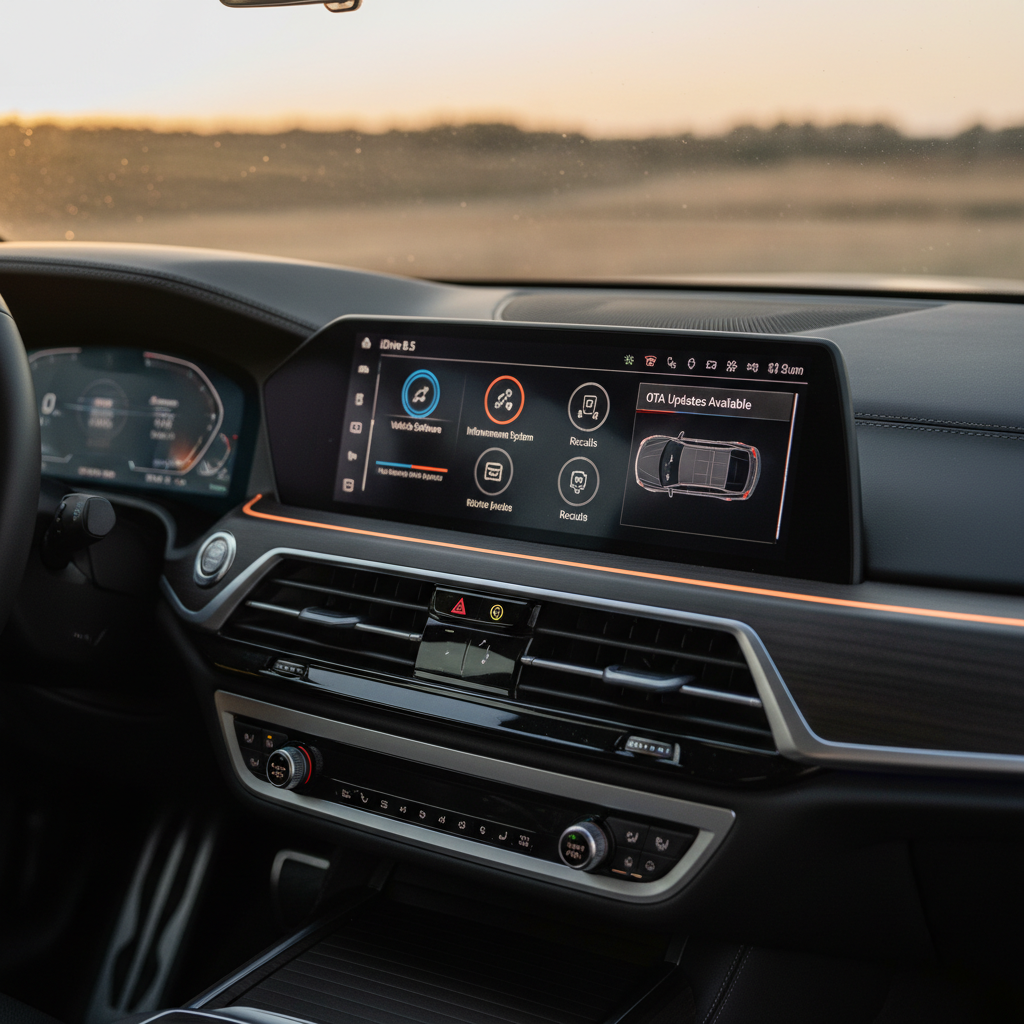
With any new EV platform, especially from a young brand, you’re buying more than a spec sheet. You’re betting on software maturity, service support, and long-term battery health. Early Polestar models (like the 2) launched with a few software quirks that were largely ironed out with over-the-air updates, and the 3 will likely follow a similar path.
- Over-the-air (OTA) updates mean Polestar can tweak range, charging behavior, and driver-assistance systems after you buy.
- Battery thermal management and a large pack should help minimize degradation if the car is charged sensibly and not fast-charged to 100% every week.
- As a relatively low-volume luxury SUV, parts availability and collision repair networks may lag behind mass-market EVs for a while.
What to watch on a used Polestar 3
This is exactly where a platform like Recharged can help. Every used EV we sell, including future Polestar 3 listings, gets a Recharged Score Report with verified battery diagnostics, fair-market pricing analysis, and expert guidance. If you’re trading out of another EV, you can get an instant offer or consign your car while you shop, all with EV-specialist support and nationwide delivery.
Checklist: is the Polestar 3 right for you?
Key questions to ask yourself
1. Do you prioritize design and cabin feel?
If you care deeply about how a car looks and feels more than raw range numbers, the Polestar 3’s exterior and interior design will probably charm you.
2. Is a strong service location nearby?
Confirm that you have a Polestar or Polestar-authorized Volvo service center within a distance you’re comfortable with, especially if this is your only vehicle.
3. How often do you road-trip?
If you road-trip several times a month, look closely at charging infrastructure on your usual routes. Occasional trips? The Polestar 3’s range and charging will be totally workable.
4. Do you really need the Performance pack?
The Performance pack adds power and sharper handling, but also cost and range penalties. For most drivers, the regular dual-motor is already plenty quick.
5. Are you flexible on budget?
The Polestar 3 lives in premium territory. If your budget is tight, you might be happier in a well-equipped used EV SUV, which is where <strong>Recharged</strong> can open up more options.
6. How important is charging simplicity?
Today’s Polestar 3 uses CCS in the U.S., while many new EVs are shifting to NACS and deeper Tesla Supercharger access. It’s not a deal-breaker, but it’s worth factoring into long-term plans.
FAQ: 2025 Polestar 3
Frequently asked questions about the 2025 Polestar 3
Bottom line: 2025 Polestar 3 review
The 2025 Polestar 3 doesn’t win every spec-sheet comparison, and it doesn’t have the charging-network dominance of Tesla. What it does have is character: a beautifully resolved design, a calm, modern cabin, confident road manners, and enough range and performance to make every trip feel easy rather than anxious.
If you’re the kind of driver who cares as much about how a car feels as how far it can go, the Polestar 3 belongs on your short list. Just go in with clear eyes about the price, the still-growing service network, and the realities of CCS charging in a NACS-obsessed future.
And if you’re reading this from the perspective of a future used buyer, keep Recharged on your radar. As Polestar 3s start hitting the used market, we’ll be here with verified battery health reports, fair pricing, EV-savvy financing, trade-in or consignment options, and nationwide delivery, so you can enjoy Scandinavian luxury with fewer unknowns.