If you’re hunting for tips for selling a Rivian R1S, you’re in an interesting spot. The R1S is one of the few electric SUVs that still turns heads in a Whole Foods parking lot, but it’s also a six‑figure science project on wheels. Selling one well isn’t like offloading a used CR‑V; the stakes are higher, the buyers are savvier, and the margin for error is a couple thousand dollars either way.
Quick context: the R1S used market in 2026
Why Selling a Rivian R1S in 2026 Is Different
The R1S isn’t just another three‑row SUV; it’s a rolling thesis statement about adventure, software, and battery engineering. Buyers cross‑shopping your used R1S are thinking about range, charging access, OTA updates, and long‑term battery health, sometimes more than leather color or wheel size. If you ignore that, you leave money on the table.
What Makes an R1S Sale Different from a Regular SUV
Know what buyers obsess over before you list
Battery & Range
Prospective buyers want proof your R1S still delivers real‑world range close to original specs. Showing battery health and typical trip consumption reassures them they’re not buying a science experiment on its last legs.
Charging Reality
Many buyers are first‑time EV owners. They’ll ask where you charge, what networks you use, and whether home charging is easy. Be ready with clear, calm answers instead of hand‑waving.
Software & Features
Rivian keeps shipping over‑the‑air updates that change ride feel, efficiency, even UI. Buyers want to know your R1S is on current firmware and that nothing weird is happening with driver‑assist or infotainment.
Seller advantage
Understand What Your Rivian R1S Is Really Worth
Before you write a single word of your listing, you need a realistic value range. The R1S has seen some price whiplash, early high MSRPs, later discounts, and a used market that was briefly upside‑down. To avoid either underpricing or wishful thinking, triangulate from multiple sources and then adjust for what makes your particular truck special, or not.
Rivian R1S Value Snapshot (Early 2026, Big Picture)
- Check at least two pricing guides (KBB, Edmunds, etc.) for your exact year, trim, and mileage, and note both trade‑in and private party values.
- Search used listings for similar R1S builds (battery pack, Dual vs Quad, wheel size) within roughly 500 miles of your ZIP code.
- Look at what’s actually selling, not just asking prices. Closed‑auction sites and recently sold local listings tell you more than optimistic classifieds.
- Adjust for your individual factors: accident history, tire wear, region (snow belt vs Sun Belt), and whether your R1S has desirable options like Adventure package, Off‑Road, or Max pack.
Don’t anchor on what you paid
Time Your Rivian R1S Sale Strategically
You can’t control the stock market or federal policy, but timing your sale still matters. With Rivian’s smaller, cheaper R2 on the horizon and EV incentives evolving, the used R1S market in 2026 is a moving target.
When selling sooner helps
- Before a major Rivian refresh: New motor or battery tech can make older builds look dated overnight.
- While under bumper‑to‑bumper warranty: Shoppers love knowing they have factory coverage if anything hiccups.
- Before R2 is everywhere: Once Rivian’s cheaper SUV floods the streets, some budget‑minded families may shift away from used R1S.
When waiting can make sense
- Right after a big OTA feature drop: A high‑impact software update that improves range or UI can make your R1S feel “newer.”
- Seasonality: Adventure SUVs tend to photograph, and sell, better heading into spring and early summer than in February slush.
- Local incentives: Some states and utilities still run used‑EV rebates. If one is about to launch or increase, waiting can expand your buyer pool.
Seasonal sweet spot
Prep Your R1S So It Actually Stands Out
The R1S has presence even dirty, but online shoppers are making snap judgments off a vertical phone screen. Mechanical condition matters, but so do the photos, the smell, and whether your cabin looks like a family of raccoons lived in it.
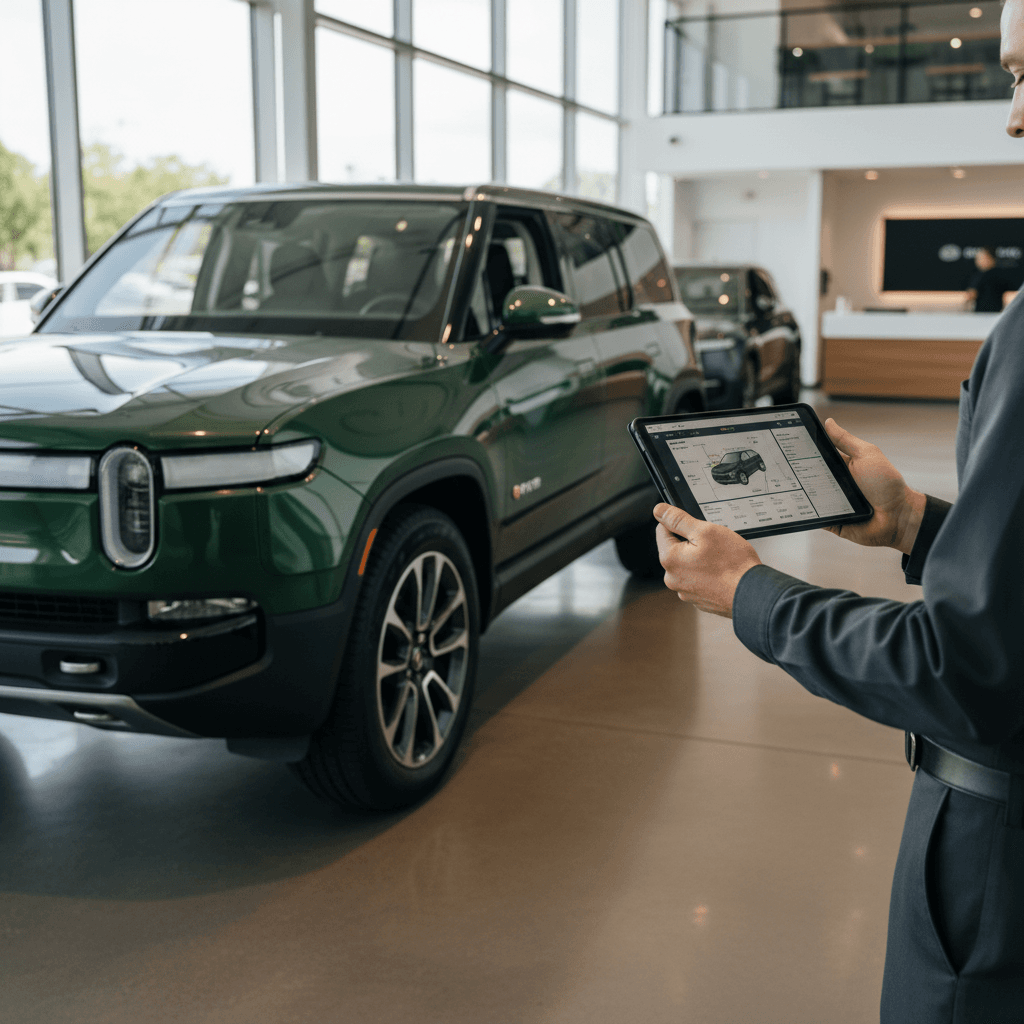
Pre‑Listing Prep Checklist for Your R1S
Deep clean inside and out
Steam‑clean carpets, wipe down seat bolsters, clean glass, and treat any visible stains. Pay special attention to the light‑colored interior options that photograph every scuff.
Address obvious minor fixes
Take care of easy wins: windshield chips, curb‑rashed wheels, worn wiper blades, and burned‑out bulbs. A $200 detail and a wheel touch‑up can support a $1,000 stronger price.
Document tire and brake life
Buyers know EVs are heavy. Show tread depth and any recent brake service. If your R1S is on nearly new tires, call that out; rubber is expensive at this size.
Update software and clear alerts
Install pending Rivian OTA updates, then take photos of a warning‑light‑free driver display. A lit TPMS or random alert is an instant confidence killer in the listing photos.
Set charge level around 60–70%
When buyers come for a test drive, you want enough state of charge to demonstrate realistic range without stressing the battery at 0% or 100%.
Gather both key fobs and accessories
Nothing says “well‑cared‑for” like two working key fobs, original manuals, cargo accessories, and a neatly wrapped portable charger in the frunk.
Prepped cars sell quicker
Battery Health: The Make-or-Break Factor for R1S Buyers
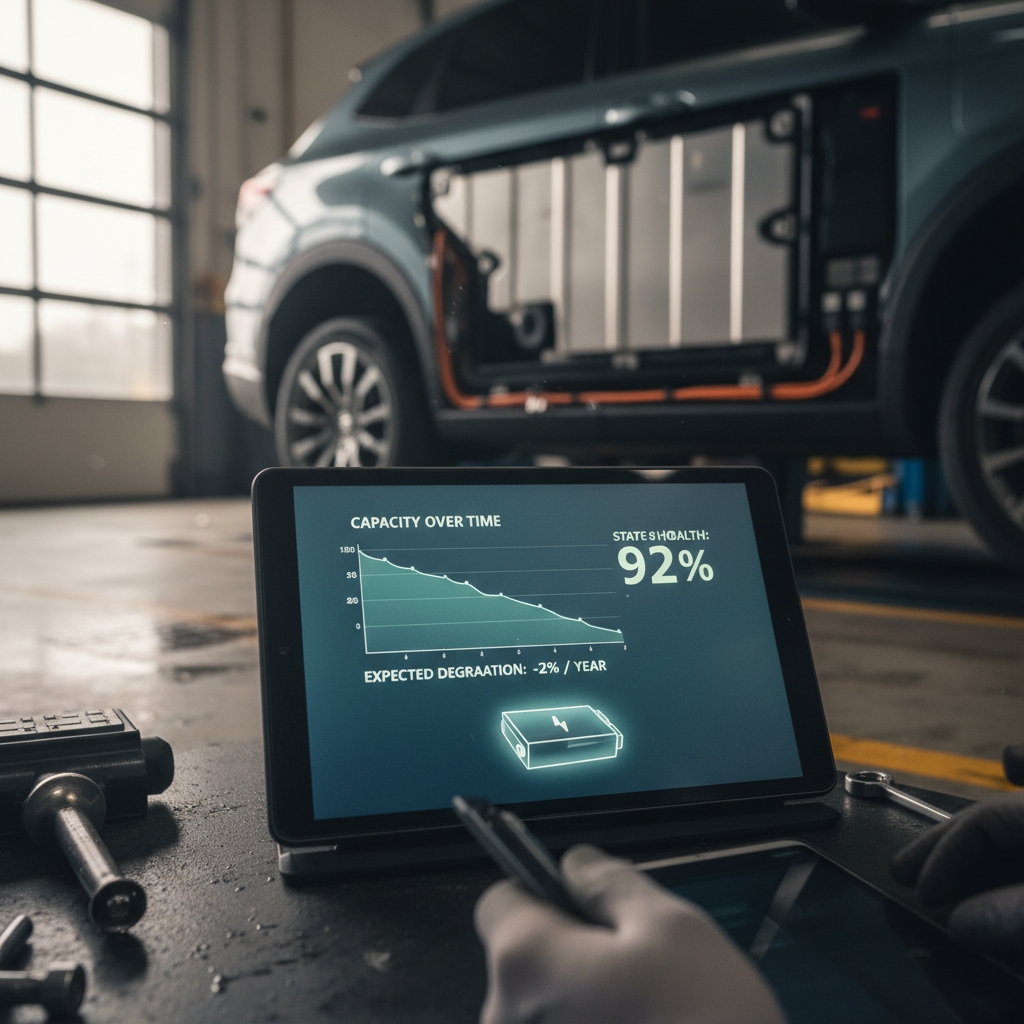
In the used‑EV world, battery state of health is the new odometer. Many R1S owners report low degradation in the first 50,000–100,000 miles when charged mostly at home and not constantly DC‑fast‑charged. But buyers don’t want anecdotes; they want evidence.
How to document your battery
- Take a screenshot of the Rivian app at a known state of charge showing estimated range.
- Explain your typical charging routine (e.g., 70–80% daily, DC fast only on trips).
- Mention any high‑mileage road trips and how the truck behaved (no sudden drop‑offs, etc.).
Why third‑party diagnostics help
A structured battery report can turn vague reassurance into data. On Recharged, every vehicle gets a Recharged Score with verified battery health and usage history, so buyers can see how your R1S compares to peers. That transparency can add real dollars to your eventual sale price.
If your battery story is good, tell it loudly
Craft a Listing That Sells, Not Just Tells
Scroll any classifieds site and you’ll see the same lazy pattern: “2023 Rivian R1S, low miles, great condition.” That says nothing. A good R1S listing reads like a conversation with the kind of person who actually shops for one: outdoorsy, tech‑curious, mildly terrified of range anxiety, and trying to justify a big purchase.
Anatomy of a High‑Converting R1S Listing
Hit both the rational and emotional notes
1. Clear, specific title
Example: “2023 Rivian R1S Adventure Dual Large – 24k mi, 20” All‑Terrain, Clean History”. Year, trim, battery, mileage, and one hero option all in one line.
2. Story‑driven opening
In 2–3 sentences, explain how you used it: family road‑trip rig, mountain‑bike shuttle, daily commuter. This helps buyers picture their own life in the truck.
3. Skimmable bullet points
Break out the key facts: range, charging habits, warranty status, tire age, major options. Don’t bury this in a wall of text.
Essential Photos to Include When Selling a Rivian R1S
Buyers are judging your R1S, and you, through these images.
| Category | Key Shots to Capture | Pro Tip |
|---|---|---|
| Exterior | Front 3/4, rear 3/4, both sides, wheels close‑up, roof and glass, under tailgate | Shoot at golden hour for softer light and less reflection on the glass. |
| Interior | Driver’s seat, 2nd & 3rd rows folded and upright, cargo area, carpets, screens on and off | Show seats from both front doors; buyers want to see bolsters and stitching. |
| Tech & Details | Center screen with UI, driver display, driving modes, VIN sticker, tire tread close‑ups | Include a photo of the range screen at a moderate state of charge (60–80%). |
| Flaws | Any curb rash, scratches, rock chips, interior blemishes | Photograph flaws honestly; buyers forgive what they can see better than what they discover later. |
Poor photos are the easiest way to make an expensive EV feel sketchy online.
Don’t hide cosmetic flaws
Choose How to Sell: Trade-In vs Private Party vs EV Marketplace
Your Rivian R1S has at least three realistic exit ramps: trade it to a dealer (possibly Rivian), sell it yourself, or use a dedicated EV marketplace. Each path trades off price, hassle, and risk.
Trade-In (Rivian or other dealer)
- Pros: Fast, low hassle, sales tax savings in many states when you roll equity into another vehicle.
- Cons: Typically the lowest dollar outcome; offers may not fully reflect your options or battery health.
- Best for: Busy sellers who are already buying another vehicle and value time over squeezing the last $3k out of the deal.
Private Party Sale
- Pros: Highest potential price if you market well and are patient.
- Cons: You handle calls, test drives, payment security, and paperwork. Many buyers are nervous wiring $70k+ to a stranger.
- Best for: Experienced private‑sale sellers or those in EV‑savvy markets with lots of Rivians on the road.
EV Marketplace (like Recharged)
- Pros: EV‑specific audience, digital process, professional photos and listings, battery health verification via tools like the Recharged Score.
- Cons: May charge a fee or margin. Availability can vary by region.
- Best for: Sellers who want nationwide reach and expert help pricing and marketing a high‑end EV.
Where Recharged fits in
Documents, Software, and Charging Accessories
A surprising number of high‑dollar EV listings are vague on paperwork and accessories. That’s a mistake. In a six‑figure transaction, the boring details, titles, receipts, cords, are precisely what make the deal feel safe.
- Clean, lien‑free title (or clear payoff letter if there’s still a loan or lease).
- Printed or PDF service history, including tire rotations, alignments, and any warranty work.
- Proof of any paint protection film, ceramic coating, or interior protection you’ve added.
- Both key fobs, plus any key cards or app‑based access instructions.
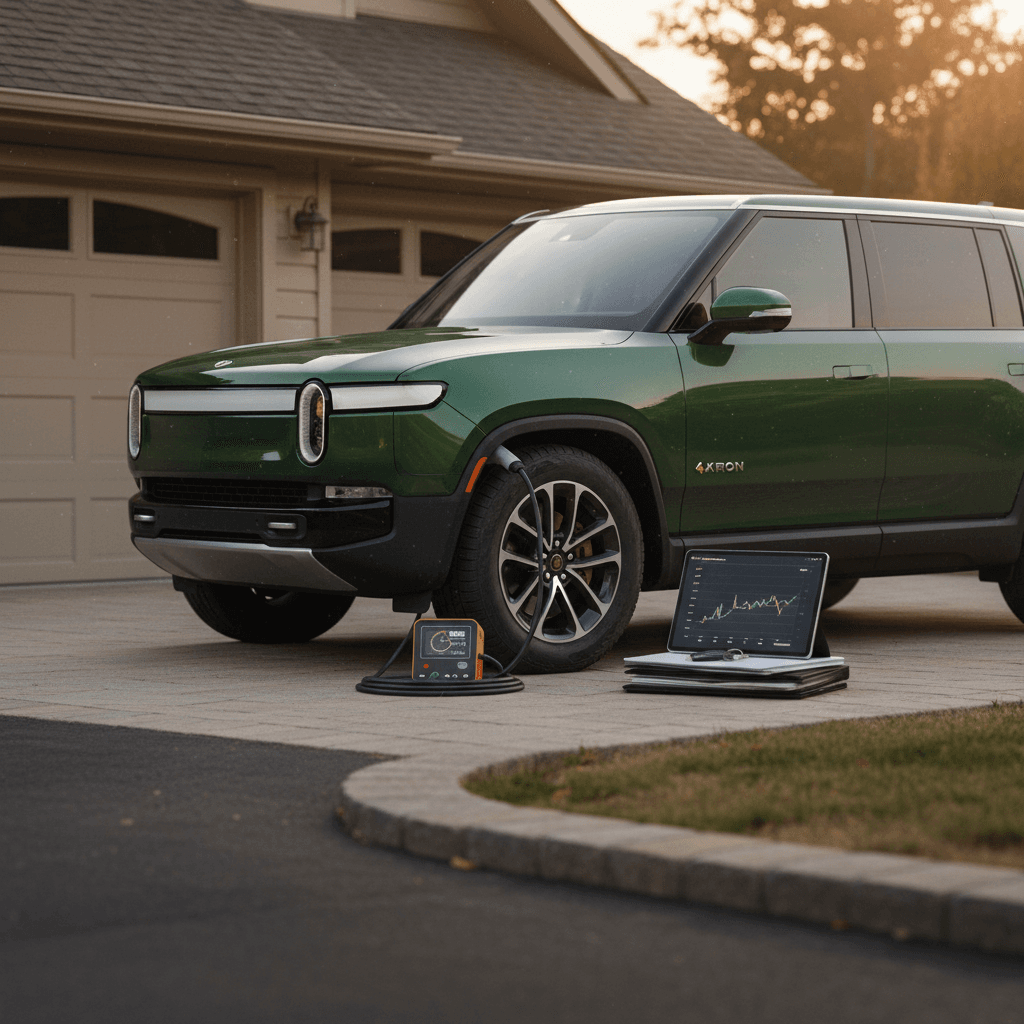
- Home charging equipment you’re including (Level 1 cord, wallbox, NACS/CCS adapters if you won’t use them).
- Current software version noted in the listing, with a brief mention of any recent meaningful OTA updates.
Charging gear can close the deal
Common Mistakes Rivian R1S Sellers Make
Selling a Rivian R1S is partly about avoiding unforced errors. Many of the listings that languish for weeks have the same problems: unrealistic pricing, poor communication, and a faint whiff of chaos.
Avoid These R1S Selling Pitfalls
Overpricing by anchoring to MSRP
Don’t list your R1S at or above what new trucks are transacting for, then act surprised when nobody calls. Price off the <em>current</em> used market, not your original window sticker.
Under‑sharing about battery and charging
“Great range” is meaningless. Give buyers specifics: typical highway range, charging habits, and how often you DC fast‑charge.
Ignoring regional realities
In a cold‑weather state with lots of snow, a set of winter wheels and tires is worth more, and so is rust‑free underbody photography.
Being slow or vague in messages
Rivian shoppers tend to be research‑heavy and detail‑oriented. Slow, one‑line replies signal that you’re either hiding something or not serious about selling.
Making test drives awkward or risky
Screen buyers politely, meet in a public place, and have a clear route and rules. Nervous, chaotic test drives don’t sell confidence, or a six‑figure EV.
Skipping a professional evaluation
If a buyer asks for an independent inspection or battery check, consider it. Or sidestep that dance entirely by listing through a marketplace like <strong>Recharged</strong> that already provides third‑party diagnostics.
Never rush title and payment
FAQ: Selling a Rivian R1S
Frequently Asked Questions About Selling a Rivian R1S
The Bottom Line on Selling Your Rivian R1S
Selling a Rivian R1S in 2026 isn’t about finding the one person willing to overpay; it’s about making your particular truck the obvious, low‑risk choice among a half‑dozen similar listings. That means nailing the fundamentals: realistic pricing, clean presentation, honest battery and charging info, and a sales channel that matches your appetite for hassle.
If you’d rather not become a one‑person marketing department, Recharged exists for exactly this moment. We specialize in used EVs, offer financing, trade‑in and consignment options, and back every vehicle with a Recharged Score battery health report and fair‑market pricing. Whether you want an instant offer or help presenting your R1S to a nationwide audience, we can make the process simpler, and help you keep more of the value you’ve already paid for.