If you’re looking at the new electric Honda Prologue, especially as a long-term or future used buy, you’re probably wondering how much battery degradation per year you should expect and what that does to real-world range. The short answer: the Prologue’s Ultium-based pack is engineered to lose capacity slowly, but your habits and climate still matter a lot.
Key takeaway on Prologue battery life
Overview: Honda Prologue battery degradation per year
Because the Honda Prologue is new, we don’t yet have 10 years of model‑specific field data. But the SUV rides on GM’s Ultium EV platform, so we can lean on real‑world results from related vehicles plus what we know about modern EV batteries. That gives us a reasonable forecast of yearly Honda Prologue battery degradation and what that means for you as an owner or used‑EV shopper.
- Most Prologue drivers can expect single‑digit percentage degradation over the first several years.
- A well‑cared‑for pack will likely retain 70–80%+ of its original capacity at the end of the 8‑year/100,000‑mile warranty window (or better in mild climates).
- Aggressive DC fast‑charging, extreme heat, or high mileage can move you toward the higher end of that range.
- Used buyers should focus on measured battery health, not just odometer miles or model year.
One caveat
How EV battery degradation actually works
To understand Honda Prologue battery degradation per year, it helps to know what’s happening inside the pack. The Prologue uses a large lithium‑ion battery, and like all EVs, it gradually loses usable capacity over time, similar to how a phone battery slowly stops holding a full charge.
Two main types of battery aging in your Prologue
Both are normal, but you can influence one more than the other.
Calendar aging
Capacity loss that happens with time, even if you don’t drive much.
- Faster when the pack sits fully charged
- Faster in high heat
- Slower in cool, moderate climates
Cycle aging
Capacity loss from use, charging and discharging.
- More miles = more cycles
- Deep discharges (0–100%) stress the cells more
- Gentle 20–80% use is easier on the pack
Honda and GM manage both types of aging with software and hardware: a liquid‑cooled pack, conservative charging buffers you never see, and smart charge management. That’s how the Prologue can deliver a long warranty while still offering competitive range.
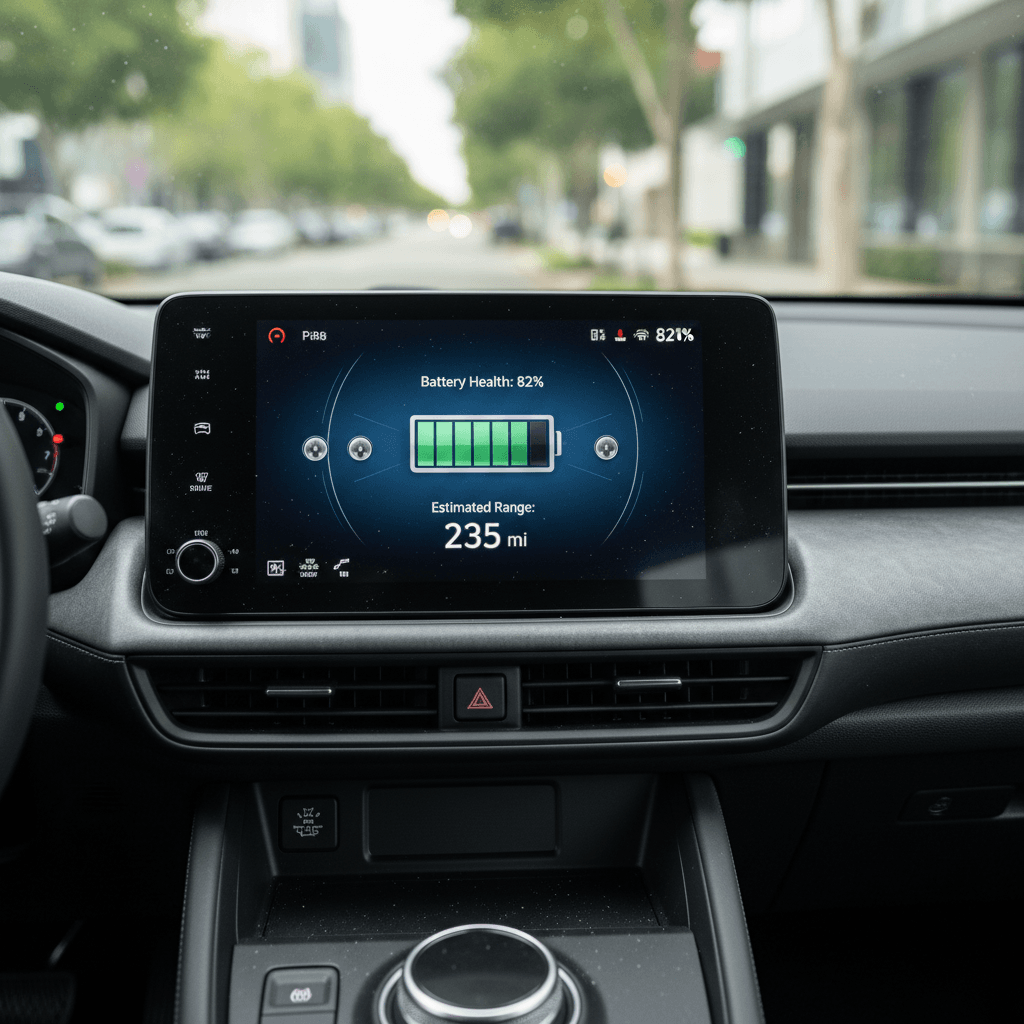
Expected yearly battery degradation on the Honda Prologue
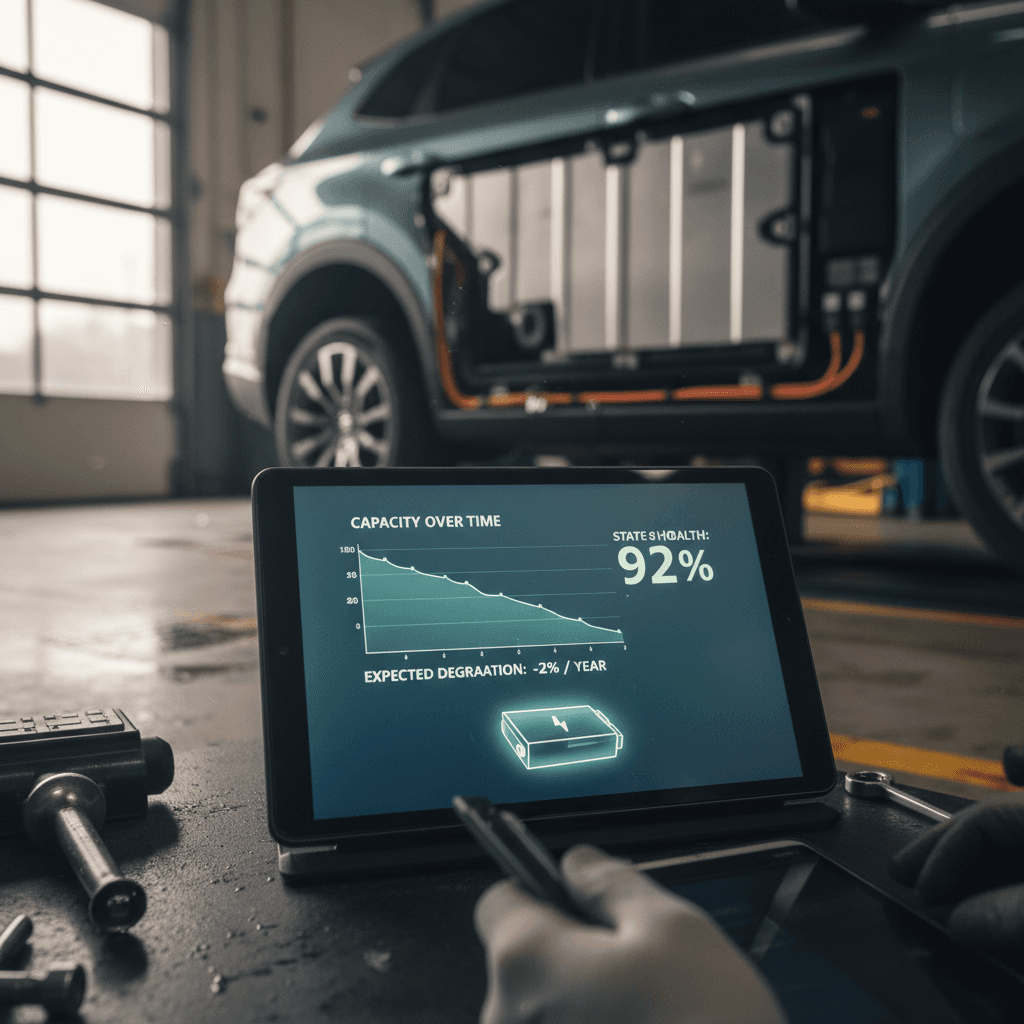
Because the Prologue is built on Ultium hardware, the fairest way to estimate yearly degradation is to look at similar modern EVs and Ultium‑based crossovers, then adjust for typical U.S. climate and usage. For a Prologue driven around 10,000–12,000 miles per year and not abused with charging, here’s a reasonable expectation curve:
Honda Prologue: illustrative battery degradation over time
Approximate capacity loss under average U.S. conditions and moderate charging habits. Actual results will vary by climate and usage.
| Vehicle age | Typical total degradation | What that means for range* |
|---|---|---|
| 1 year | ~2–3% | A Prologue rated at 296 miles might feel like ~285–290 miles |
| 3 years | ~5–7% | 296 miles becomes roughly 275–285 miles |
| 5 years | ~8–12% | Expect something in the 260–275 mile range |
| 8 years | ~15–25% | You might see 220–250 miles depending on climate and care |
| 10+ years | ~20–30%+ | Some high‑mileage or hot‑climate vehicles could be closer to 70–80% capacity |
These are directional estimates, not guarantees, but they line up with what we’re seeing from other modern long‑range EVs.
Why the range hit feels smaller than the percentage
Keep in mind: these are averages. A Prologue that lives in Phoenix, sits fully charged outside, and DC fast‑charges every day will almost certainly degrade faster than one garaged in Seattle, kept between 30–80%, and mostly Level 2 charged at home.
What Honda’s battery warranty really covers
Honda backs the Prologue’s high‑voltage pack with a long‑term warranty, typically 8 years or 100,000 miles in the U.S. (longer in some CARB states). But it’s important to understand what that does and doesn’t mean for yearly degradation.
- The warranty covers defects and excessive loss of capacity, not every bit of normal degradation.
- Most modern EV warranties define a failure as capacity dropping below around 70% of the original value within the warranty period.
- Gradual loss from everyday use, say 10–20% over 8 years, is considered normal wear and usually not covered.
- Software updates may improve efficiency or charging behavior, but they won’t magically restore lost capacity.
Pro tip: check the fine print
6 factors that can speed up Honda Prologue battery degradation
You can’t control time, but you can control a lot of what makes your Honda Prologue’s battery age faster or slower. Here are the biggest accelerators of yearly degradation:
Main drivers of faster Prologue battery degradation
1. High average state of charge
Keeping the pack near 100%, especially in heat, puts extra stress on the chemistry. Daily charging to 70–80% is generally easier on the battery than parking at 100% every night.
2. Frequent DC fast charging
Occasional fast charging on road trips is fine. Making 200 kW DC fast charging your everyday habit, especially from very low to 100%, can increase wear over time.
3. Extreme heat
Sustained high temperatures are tough on any lithium‑ion pack. A Prologue that lives in a hot, sun‑baked parking lot will typically lose capacity faster than one garaged in a mild climate.
4. Deep discharges and 0% runs
Regularly running the battery very low (below ~10%) or to 0% before charging can be harder on the cells than staying in a mid‑range band.
5. Very high annual mileage
If you’re driving 25,000–30,000 miles per year, the pack simply cycles more. That doesn’t make the Prologue a bad choice; it just means more total degradation over the same calendar time.
6. Poor thermal management opportunities
Never preconditioning before DC fast charging, skipping software updates, or storing the car for months at a high charge can all work against the pack’s built‑in protections.
How to slow Honda Prologue battery degradation in daily use
You don’t have to baby your Prologue, but a few smart habits can materially reduce yearly degradation and keep range strong well into the vehicle’s second decade.
Practical ways to protect your Prologue battery
Small changes in habits can pay off years from now.
Use a daily charge limit
Set a daily limit around 70–80% for routine commuting.
Only charge to 100% when you actually need the full range for a trip.
Favor Level 2 over DC fast
Do most of your charging at home or at slower public Level 2 stations.
Save DC fast charging for long drives or genuine time crunches.
Protect the car from heat
Whenever possible, park in a garage or shaded spot.
In hot climates, avoid leaving the car at 100% in full sun for hours.
Use preconditioning smartly
Pre‑heat or pre‑cool the cabin while plugged in.
That pulls energy from the grid instead of the battery, reducing stress.
Keep software up to date
Over‑the‑air updates can improve thermal management and charging logic.
Those tweaks can add up to slower degradation over the life of the car.
Avoid long-term high‑SOC storage
If storing the Prologue for weeks, aim for ~40–60% charge.
Check on it periodically rather than leaving it near 0% or 100% for months.
Good news for normal drivers
Battery health when buying a used Honda Prologue
As early Prologues hit the used market, battery health will be a bigger part of the conversation than trim level or paint color. Two similar‑looking SUVs on a dealer lot can have very different long‑term value depending on how much the battery has aged.
What you should look at
- State of health (SoH): An objective measurement of remaining capacity, far better than guessing from range estimates alone.
- Charging history: Vehicles that lived on home Level 2 chargers and did only occasional DC fast charging are often in better shape.
- Climate history: A Prologue that spent its life in a hot, desert climate may show more degradation than one from a mild coastal region.
- Remaining battery warranty: Check years and miles left, and whether you’re in a CARB state with extended coverage.
How Recharged can help
Every used EV sold through Recharged includes a Recharged Score Report, our battery‑health and value assessment that goes far beyond a quick road test.
- Verified battery health, not just guesses from a dashboard readout
- Fair market pricing that accounts for remaining capacity
- Expert EV specialists who can explain what the numbers mean for your daily range
That transparency is critical as more Prologues and other Ultium‑based SUVs enter the used market.
Don’t rely on a quick test drive
Realistic range-loss examples over 5–12 years
To make Honda Prologue battery degradation per year more concrete, let’s walk through a few realistic scenarios. We’ll assume a Prologue with an EPA rating around 296 miles of range when new (exact numbers vary by trim and wheels).
How Prologue range might change as the battery ages
Mild climate, careful owner
Drives ~10,000 miles per year, mostly suburban.
Charges at home on Level 2, daily limit around 80%.
Garage‑kept in a moderate climate like the Pacific Northwest.
After 5 years: perhaps ~8–10% loss, usable range ~265–275 miles.
After 10 years: maybe ~18–22% loss, usable range ~230–245 miles.
Hot climate, heavy DC fast charging
Lives in a hot region and often parked outside.
Relies on DC fast charging several times per week.
Frequently charges to 100% and runs to very low state of charge.
After 5 years: could be closer to ~12–18% loss, range ~240–260 miles.
After 10 years: 25–30%+ loss isn’t out of the question, range closer to ~205–225 miles.
High-mileage commuter
Drives 25,000+ miles per year, mixed highway and city.
Mostly uses Level 2 charging but cycles the pack more due to miles.
Lives in an average U.S. climate and garages the car.
After 5 years (~125,000 miles): perhaps ~15–20% loss, range ~235–250 miles.
After 8 years (~200,000 miles): could be in the ~25–30% loss range, down to ~205–225 miles.
Low-mileage city driver
Drives 6,000–8,000 miles per year in stop‑and‑go city traffic.
Rarely needs more than 60–70% charge.
Keeps the car garaged and seldom uses DC fast charging.
After 5 years: maybe only ~5–8% loss, range still ~270–280 miles.
After 10+ years: could still be above ~80% capacity, range ~235–250 miles.
Quick numbers for Honda Prologue battery life expectations
FAQ: Honda Prologue battery degradation and range loss
Frequently asked questions about Honda Prologue battery degradation per year
Bottom line: Is Honda Prologue battery degradation a deal-breaker?
For most shoppers, Honda Prologue battery degradation per year isn’t a deal‑breaker, it’s simply a reality to understand and plan around. Modern EV batteries are far more robust than early skeptics predicted, and the Ultium hardware under the Prologue is designed to deliver a long, useful life, especially if you avoid the worst‑case habits and climates.
If you buy new and keep the SUV for 8–10 years, you’re likely to end up with a Prologue that still has well over 200 miles of practical range, even with normal degradation. If you’re shopping used, the key is making sure you’re paying a fair price for the capacity that’s left, and that means looking at battery health data, not just mileage and model year.
That’s where a platform like Recharged can take the guesswork out of EV ownership. Every vehicle we sell comes with a Recharged Score Report that surfaces real battery health, fair market pricing, and expert support so you can move into a Prologue, or any used EV, knowing exactly what to expect from the pack on day one and years down the road.