Selling a Mercedes EQB in 2026 isn’t quite like selling a gas SUV. You’re not just handing over leather seats and a three‑pointed star, you’re selling range, software updates, warranty coverage, and a battery pack the next owner is betting their commute on. The right tips for selling a Mercedes EQB can be the difference between a lowball offer and a deal you feel good about for years.
A quick word on today’s EQB market
Why selling a Mercedes EQB feels tricky right now
If you’ve poked around valuation tools or classifieds, you’ve probably noticed EQB prices all over the map. That’s because EV shoppers are still learning how to value used electric SUVs, and the EQB has a few extra wrinkles: recent battery‑related recalls, evolving software, and different warranty terms depending on model year and region. The result is a market where two seemingly similar EQBs can be thousands of dollars apart.
- Battery anxiety: Buyers want proof your EQB’s pack is healthy and protected by remaining factory coverage.
- Recall headlines: Battery management and fire‑risk recalls have made some shoppers cautious. Handling this head‑on actually builds trust.
- Rapid early depreciation: Like many luxury EVs, the first three years take the biggest hit, so presentation and pricing matter more than ever.
- Complex options: AMG Line, third row, driver‑assist packages, heat pump, and wheel choices all affect perceived value and range.
Think like an EV shopper, not just a Mercedes shopper
Know what your Mercedes EQB is worth before you list
Before you spend a weekend detailing the car, you need a realistic price range. The EQB’s resale value varies with trim (EQB 250+, EQB 300, EQB 350), mileage, battery warranty, recall status, and even wheel size. Start with a broad picture, then narrow it down to your specific SUV.
3 ways to sanity‑check your EQB’s value
Use multiple sources, then adjust for condition and battery coverage.
Online valuation tools
Check a few mainstream tools for your model year, trim, mileage, and ZIP code. Look at both trade‑in and private‑party values.
Use these as guardrails, not gospel. EV values move faster than their databases sometimes do.
Real‑world listings
Search for similar EQBs (same year, trim, options) within a few hundred miles. Note:
- Asking vs. sold prices
- Mileage bands (under 20k, 20–40k, etc.)
- How long the listing has been up
EV‑specific guides
Look for EQB‑specific depreciation or value guides and used‑EV market reports. These often explain why one trim or option set holds value better than another.
Don’t anchor to your original MSRP
Example pricing bands for used Mercedes EQB (illustrative only)
Use this as a framework, then plug in real numbers from valuation tools and current listings in your area.
| Condition | Mileage | Battery warranty remaining | Typical position within market |
|---|---|---|---|
| Excellent | Under 20,000 mi | 5–7 years left | Top of the range |
| Good | 20,000–40,000 mi | 3–5 years left | Mid to high |
| Fair | 40,000–70,000 mi | 1–3 years left | Midrange or slightly below |
| High mileage | 70,000+ mi | Little or no coverage | Bottom of private‑party range; often trade‑in territory |
Battery warranty and recall status can move you up or down within each band.
Get your EQB ready: detail, service, and documents
You only get one chance at a first impression, and with the EQB you’re selling more than sheetmetal. You’re also selling the story that this car has been looked after by someone who understands EVs. That story starts in three places: what buyers see, what they drive, and what you can prove on paper.
Pre‑sale checklist for your Mercedes EQB
1. Deep clean inside and out
Go beyond a quick wash. Clean door jambs, charge port, wheel faces, and the glass roof. Shampoo mats, wipe down the MBUX screen, and remove personal items. A tidy EQB reads as a cared‑for EQB.
2. Fix obvious, inexpensive flaws
Touch up small paint chips, replace missing wheel center caps, and address cracked license‑plate frames. You don’t need to chase every door ding, but buyers shouldn’t see a to‑do list.
3. Address routine service
If you’re close to a scheduled service interval, consider getting it done and keep the receipt. EVs need less maintenance than gas cars, but fresh brake fluid or cabin filters read as peace of mind.
4. Gather all keys, manuals, and accessories
Two key fobs, charging cable(s), cargo cover, floor mats, roof‑rack tools, and the original window sticker if you have it. Missing items give buyers reasons to chip away at your price.
5. Organize service and recall records
Print or download a clean timeline: in‑service date, maintenance visits, warranty repairs, and recall documentation. Clear paperwork can nudge a cautious buyer into a confident one.
6. Reset personal data and profiles
Before test drives, remove garage door codes, home addresses, and personal profiles from the infotainment system. You can do this in the MBUX settings menu in a few minutes.
Battery health and warranty: your biggest selling asset
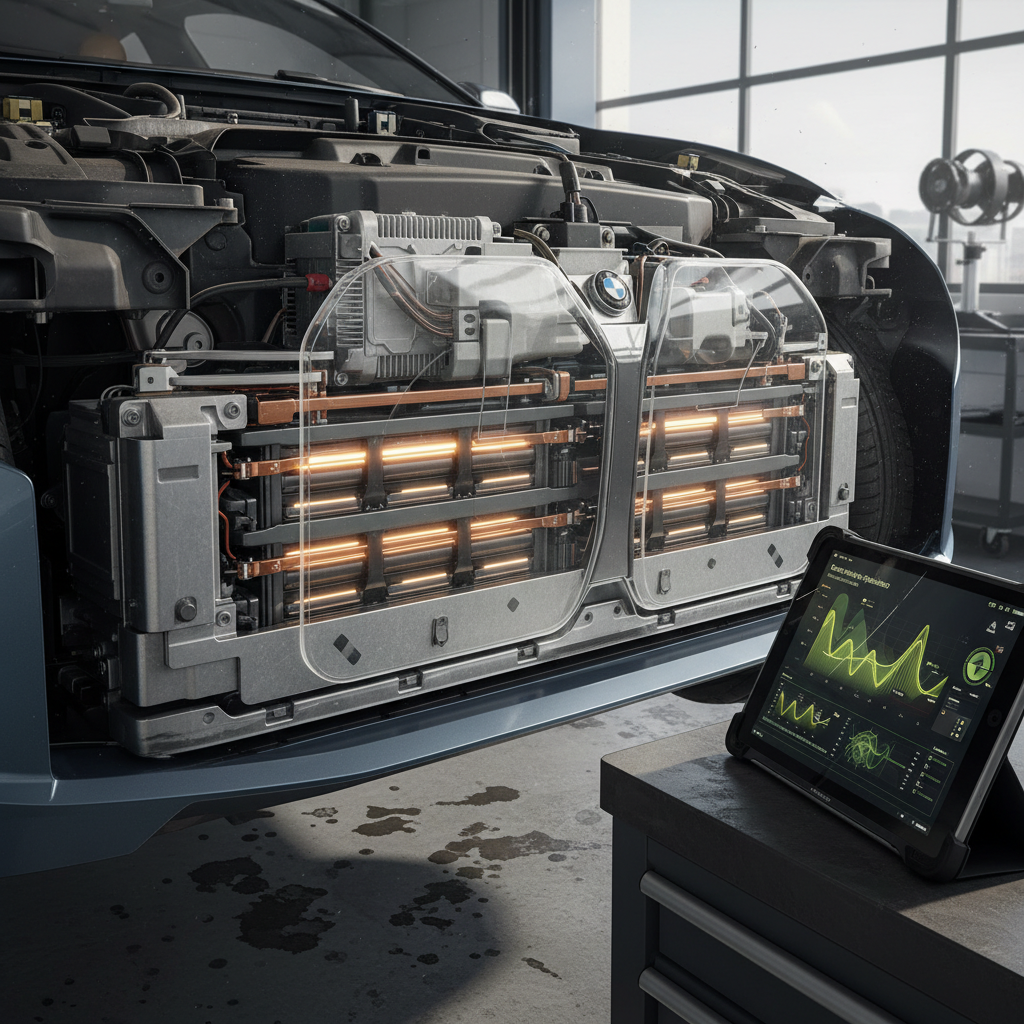
For most EQB buyers, the high‑voltage battery is the whole ballgame. They’ll happily overlook a curbed wheel if they’re confident the pack is healthy and protected. The more you can quantify this, the easier it is to justify a strong price.
Mercedes EQB battery coverage at a glance
Battery warranties can be confusing, so spell it out clearly in your listing. Note the original in‑service date, current mileage, and the date or mileage where high‑voltage coverage ends. Buyers love lines like: “High‑voltage battery under factory warranty until March 2031 or 100,000 miles.”
Ways to prove your EQB’s battery is healthy
The more independent and transparent the data, the better.
Use onboard data & trip logs
Show recent photos of the EQB’s range estimates at typical states of charge, along with your usual driving mix. If you’ve tracked range over time, summarize it in one or two simple sentences.
Share a third‑party battery report
Services like the Recharged Score use EV‑specific diagnostics to assess pack health and charging history. Including a recent battery health report in your listing helps buyers compare your EQB with others confidently.
Make your battery warranty the hero of the ad
Handle recalls and software updates upfront
If you own an EQB, you already know there have been high‑voltage battery and battery‑management software recalls. Buyers have seen the same headlines. Hiding from that reality just makes you look evasive; tackling it openly makes you look responsible.
1. Check your VIN for open recalls
Before you list the car, plug your VIN into the official recall lookup on Mercedes‑Benz’s website or through NHTSA. If anything is open, schedule the work and keep the documentation. Many updates are software‑only but still matter hugely to buyers.
2. Explain updates in plain English
Some EQB software updates can slightly change displayed range over time. Frame this clearly: the update is about safety and pack longevity, not a secret defect you’re trying to sneak past the buyer. A short, honest explanation in your listing builds trust.
Don’t dodge recall questions
Photos and listing writing: make your EQB stand out
Scroll any classifieds page and you’ll see the same pattern: dim garage photos, crooked cell‑phone shots, and one‑line descriptions. That’s your opportunity. Great photos and a clear, EV‑savvy description make shoppers slow down and actually read your ad.
Essential photo shot list for your Mercedes EQB
1. Clean, well‑lit exterior walkaround
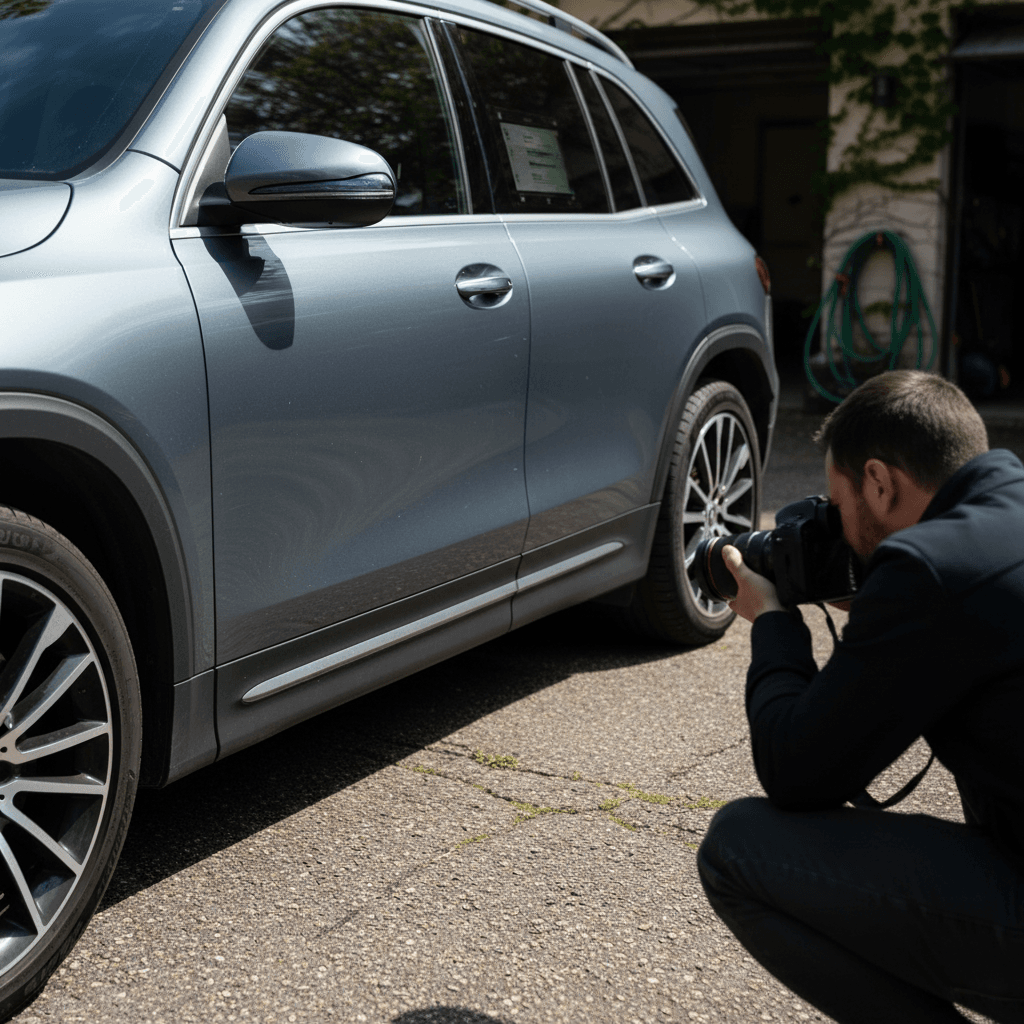
Shoot front three‑quarter, rear three‑quarter, both sides, and a straight‑on front. Park in an open space, avoid harsh midday sun, and keep the horizon level.
2. Wheels, tires, and charge port
Buyers zoom in on curb rash and tread depth. Include a close‑up of the charge port door open and the EQB plugged in to emphasize EV readiness.
3. Interior and tech
Photograph the front seats, rear seats, cargo area (with and without the third row up, if equipped), the MBUX screen, and the digital cluster with the car powered on.
4. Odometer and VIN
Include a clear shot of the odometer and, if possible, a photo of the VIN tag. This signals you’re not hiding anything.
5. Flaws, not just highlights
If there’s a noticeable scratch or wheel scuff, photograph it. It’s better for buyers to discover it in your listing than in person, where it becomes leverage.
For the written part of your listing, skip the clichés and focus on what an EV‑curious buyer actually cares about.
- Start strong: “2023 Mercedes EQB 300 4MATIC with remaining battery warranty to 2031, single‑owner, clean recall history” beats “Great car, must sell.”
- Bullet the EV‑specific info: typical range you see, charging habits (mostly home Level 2 vs. DC fast charging), and any long‑trip experience.
- Call out options that matter: heat pump, driver‑assist packages, wheel size (for range), and seating configuration.
- Be upfront about flaws: “Minor curb rash on right‑rear wheel, small scratch on rear bumper; both shown in photos.”
Copy‑and‑tweak formula for your ad opening
Where to sell your Mercedes EQB: online vs. local
The best place to sell your EQB depends on your tolerance for hassle and how quickly you need the cash. Because it’s an EV with a luxury badge and some recall nuance, the buyer pool is narrower, and that makes your sales channel choice even more important.
Common ways to sell a Mercedes EQB
Match the channel to your priorities: speed, price, or simplicity.
Local dealer trade‑in
Pros: Fast, low‑friction, you can roll equity into your next vehicle.
Cons: Usually the lowest dollar amount; many franchised dealers are still learning how to price used EVs, and they may be extra conservative on an EQB.
General online classifieds
Think mainstream listing sites or local marketplaces.
Pros: Big audience, flexible pricing.
Cons: Lots of tire‑kickers, EV tire‑kickers doubly so; you’ll spend more time filtering shoppers who don’t really understand what an EQB is.
EV‑focused marketplaces
Platforms like Recharged specialize in used EVs.
Pros: Shoppers are actively looking for electric vehicles; battery health, range, and warranty can be showcased with tools like a Recharged Score report. You can often choose between instant‑offer, consignment, or trade‑in.
Cons: You’ll follow their process and timing, which may feel more structured than listing on your own.
National audience vs. neighborhood driveway
Test drives, screening, and safety
Once the listing is live, the next hurdle is sorting real buyers from dreamers, and keeping yourself and your EQB safe in the process. The car looks like any compact Mercedes SUV; the value locked up in that battery pack does not.
Safe, sane test‑drive practices for EQB sellers
1. Pre‑screen by message or phone
Ask simple, direct questions: How familiar are they with EVs? Do they have a charger at home or nearby? Are they pre‑approved for financing or paying cash? Serious buyers don’t mind a quick conversation.
2. Meet in public, well‑lit places
Arrange test drives in daylight at a public spot, mall parking lot, bank, or police‑station safe‑exchange zone. Bring a friend if possible and avoid sharing your home address until you’re comfortable.
3. Check ID before handing over the key
Confirm a valid driver’s license and match the name to your messages. Ride along on the test drive; this is your chance to demonstrate features and answer EV questions in real time.
4. Plan a route that shows off the EQB
Include a mix of city and highway driving, a quick demo of regenerative braking, and a stop to show how you plug in at home or at a public charger.
5. Protect your data
Before the meeting, log out of personal accounts, remove stored home addresses, and delete garage door codes from the car. After the test drive, confirm that the buyer hasn’t paired their phone permanently.
Negotiating like a pro with EV buyers
Negotiating on a used EV feels different because shoppers have more unknowns in their head: battery life, future software updates, and where technology is headed. The more uncertainty you remove, the less pressure you’ll feel to discount just to keep the conversation moving.
Set your range before you list
Decide on three numbers: your ideal price, your target price, and your walk‑away price. Price the listing a bit above your target, assuming you’ll negotiate down. Having these in mind makes it easier to say “no” to offers that don’t make sense.
Use facts, not feelings
When a buyer points to a cheaper EQB across town, walk them through the differences: mileage, battery warranty remaining, recall status, third‑row seating, or wheel size that affects range. Lean on your documentation, photos, and (if you have one) a recent battery health report rather than “I just know it’s worth more.”
Turn EV questions into closing tools
When to consider a marketplace like Recharged
If the idea of fielding messages, scheduling test drives, and explaining EV basics to half the county makes your shoulders tense, you’re not alone. That’s why EV‑specialist marketplaces exist, and why they can be especially helpful for a model like the EQB with its mix of luxury expectations and battery‑specific questions.
How Recharged can simplify selling your Mercedes EQB
Built for used EVs, from battery reports to nationwide buyers.
Recharged Score battery report
Every vehicle on Recharged comes with a Recharged Score Report that includes verified battery health and usage insights. That takes the awkward battery interrogation off your shoulders and gives buyers an objective view of your EQB.
Nationwide EV‑savvy buyers
Recharged markets your EQB to shoppers across the country who are already looking for used EVs. That broader, better‑informed audience is especially important for a compact luxury SUV like the EQB.
Flexible ways to sell
Depending on your priorities, you can explore instant offers, trade‑in, or consignment. Recharged handles the digital paperwork and, if needed, nationwide delivery, so you’re not standing in a parking lot juggling cashier’s checks.
Ready to find your next EV?
Browse VehiclesGood fit if…
FAQ: selling a Mercedes EQB
Frequently asked questions about selling a Mercedes EQB
Bottom line: how to sell your Mercedes EQB with confidence
A used Mercedes EQB is more than a stylish electric family hauler, it’s a rolling bundle of software, warranty terms, and kilowatt‑hours that buyers are still learning how to judge. If you price it based on current data, present it honestly, highlight battery health and remaining coverage, and tackle recalls and questions head‑on, you’re already doing more than most sellers.
Whether you decide to sell it yourself or let an EV‑focused marketplace like Recharged handle the heavy lifting, the goal is the same: hand your EQB to its next owner with clear paperwork, a clean conscience, and a price that makes sense for both of you. Do that, and this chapter of your electric‑ownership story ends on a high note, with money in your pocket and your old EQB in good hands.