If you own, or are thinking about buying, a Tesla Model Y, you’ve probably heard that EVs lose range in cold weather. The natural follow-up is, “What’s the real Tesla Model Y winter range loss percentage, and will it ruin my commute or road trips?” This guide breaks down the numbers, explains why range drops in winter, and shows you how to keep the impact manageable, especially if you’re shopping the used Model Y market.
Key takeaway on Model Y winter range
How much range does a Tesla Model Y lose in winter?
Let’s get straight to the point: the official EPA range on a Tesla Model Y, whether it’s a Long Range or Performance trim, is based on mild test conditions, not a February morning in Minnesota. In real-world winter driving, you should assume a **meaningful drop from that sticker number**, not because your battery is “bad,” but because physics and comfort are working against you.
Typical Tesla Model Y Winter Range Loss
Those percentages are broad, but they line up with independent winter range tests from EV testers and owner reports. For a **Model Y Long Range rated around 310–330 miles**, a **25–30% winter hit** means practical highway range might fall into the **210–240 mile** window on a typical cold day, still usable, but something you need to plan around.
EPA range vs. winter reality
Why EVs lose range in cold weather
Your Tesla isn’t broken; it’s battling thermodynamics. Winter range loss has **two main components**: the battery itself becomes less efficient when cold, and the car burns extra energy to keep you and the pack warm.
Four main reasons your Model Y loses range in winter
Most of what you notice is temporary efficiency loss, not permanent battery damage.
1. Cold batteries are less efficient
At low temperatures, the **electrochemical reactions** inside the lithium-ion cells slow down, and internal resistance goes up. Your Model Y responds by limiting power (you may see a **dotted line on the power gauge**) and needs more energy to deliver the same miles.
2. Cabin heating is energy-hungry
Unlike gas cars that use waste engine heat, an EV must **generate cabin heat from the battery**. Running the HVAC at 70–72°F in a 20°F environment can draw several kilowatts, especially during warm-up, eating into your available range.
3. Battery and drive-unit heating
Teslas use **battery and motor heaters** to bring the pack into its optimal temperature zone. This is critical for performance and longevity, but in very cold weather it can temporarily add a noticeable load, particularly on short drives.
4. Short trips and frequent stops
Starting with a cold-soaked car and driving 5–10 minutes at a time is brutal on efficiency. The car has to repeatedly **warm the cabin and pack**, but you don’t drive long enough to spread that energy use over many miles.
Think in energy, not just miles
Factors that change your Model Y winter range loss
Not every Tesla Model Y driver sees the same winter penalties. Two owners with identical cars and temperatures can experience wildly different range, depending on how and where they drive.
Key variables that swing your winter range loss up or down
Trip length and driving pattern
Long, continuous drives after the car is warmed up are much more efficient than a day of 10-minute errands. If your Model Y stays warm, you’re not paying the energy penalty over and over.
Average speed and highway use
Aerodynamic drag climbs quickly with speed. A Model Y doing **75–80 mph** in cold air will use far more energy than one cruising at **60–65 mph**, especially into a headwind.
Cabin temperature and seat heaters
Cranking the cabin to 74–76°F in single-digit weather uses more energy than keeping it closer to 68–70°F and leaning on the **seat and steering-wheel heaters**, which are far more efficient.
Preconditioning habits
Using **preconditioning while plugged in**, warming the cabin and battery before you drive, can dramatically cut early-trip losses. Skipping it often leads to worse Wh/mi in the first 15–20 minutes of driving.
Tire type and pressure
Winter tires and low tire pressure increase rolling resistance. Great for grip, not for range. Make sure your tire pressures are at spec in cold weather; they can drop several PSI from summer levels.
Wind, elevation, and road conditions
Strong headwinds, slushy roads, and constant elevation gain can quietly add **10–20%** to your consumption in winter, even with the same temperature and speed.
Watch the difference between displayed and usable range
Real-world scenarios: Model Y winter range examples
To make those percentages more tangible, here’s how winter can change the **usable range** on a Tesla Model Y Long Range with an EPA rating around 310–330 miles, depending on model year.
Example Tesla Model Y Winter Range Scenarios
Illustrative scenarios to show how conditions and driving style change effective winter range. Numbers are approximate, not guarantees.
| Scenario | Temp & Conditions | Driving Style | Estimated Loss | Approx. Usable Range |
|---|---|---|---|---|
| Mild winter commute | 40°F, dry roads | Mix of city/suburban, 45–55 mph, some stop‑and‑go | ~10–15% | 265–290 miles |
| Typical cold highway trip | 25°F, light wind | 70–75 mph highway, steady cruise, cabin at 70°F | ~20–30% | 215–250 miles |
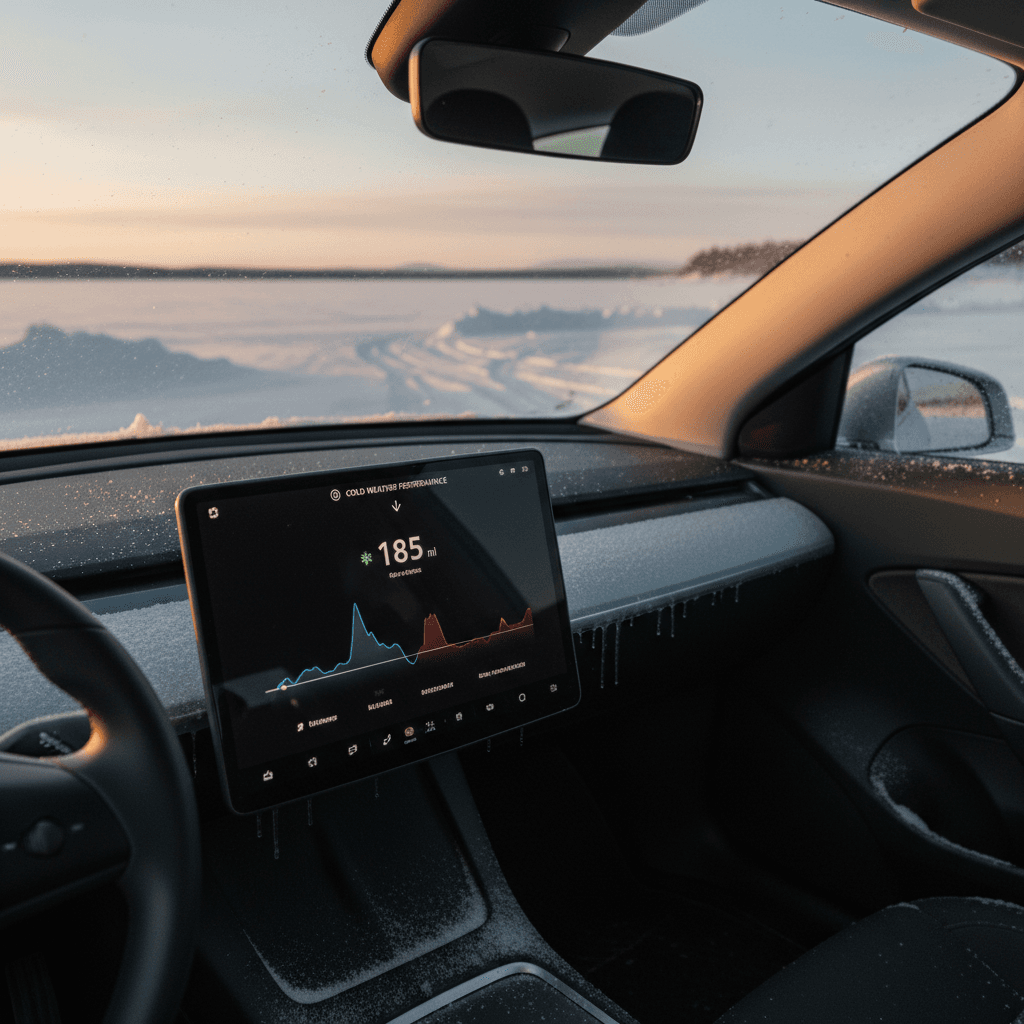
| Harsh winter, mixed driving | 10–15°F, some wind | Highway + city, frequent short stops, heated seats and cabin high | ~30–40% | 185–225 miles |
| Brutal cold snap, short hops | 0 to 5°F, snow/slush | Multiple 5–10 mile errands, no preconditioning, cabin warm | Up to 40–45% | 170–200 miles |
Use these as planning baselines, then adjust based on your own driving and regional climate.
City and suburban driving
In city and suburban settings, especially if you can precondition while plugged in, your **Tesla Model Y winter range loss percentage** may stay at the **low end of the spectrum**. Regenerative braking, lower speeds, and less aero drag all help, even when the heater is running.
Highway-heavy trips
On cold interstate runs at 70–80 mph, you’ll generally see **higher losses**, often **25–35%** compared with rated range. That’s why winter road‑trip planning should lean on **DC fast charging stops** every 120–180 miles instead of stretching to the edge of the EPA number.
How to reduce Tesla Model Y winter range loss
You can’t negotiate with physics, but you can work with your Model Y to **cut winter losses significantly**. The goal isn’t to baby the car; it’s to use Tesla’s tools so you spend more time driving and less time worrying about the percentage on the screen.
Practical ways to reduce Tesla Model Y winter range loss
Use preconditioning while plugged in
Before your morning drive, schedule departure in the Tesla app or manually start preconditioning while the car is still charging. This warms the battery and cabin using **grid power instead of your stored energy**, and improves initial efficiency.
Start drives right after charging
If you can, time your charging so the car finishes **close to your departure time**. A warm battery accepts regen better and is more efficient than one that’s cold‑soaked overnight.
Rely on seat and wheel heaters
Cabin air heat is energy‑intensive. You can often stay comfortable at a lower cabin setpoint (say 67–69°F) by using the **seat and steering‑wheel heaters**, which sip power compared with the HVAC.
Moderate your highway speed
Dropping from 78 mph to **68–70 mph** can make a surprisingly large difference in Wh/mi, especially in dense cold air. Over a long leg between Superchargers, that can be the difference between arriving at 15% versus in the single digits.
Keep tires properly inflated
Cold weather drops tire pressures, sometimes by several PSI. Under‑inflated tires increase rolling resistance and hurt efficiency. Check and adjust pressure regularly during winter to your door‑jamb spec.
Avoid back‑to‑back short trips when possible
If your schedule allows, combine errands into **longer continuous drives** so the cabin and battery warm up once. That spreads the heating penalty over more miles and improves average efficiency.
Good news: winter losses are mostly temporary
Battery health vs. temporary winter range loss
One of the biggest points of confusion for Tesla owners, especially those shopping used, is the difference between **seasonal range swings** and **long-term battery degradation**. Both show up as lower range, but they mean very different things.
Temporary winter efficiency loss
- Shows up mostly in **cold months**, then improves in spring and summer.
- Often larger on **short trips** and in very low temperatures.
- Can swing **20–40%** compared with EPA range without indicating damage.
- Strongly affected by your **settings and driving style** (speed, heat, preconditioning).
Long-term battery degradation
- Slow, gradual drop in **full‑charge range** over years and total mileage.
- Persists in all seasons; you’ll notice lower % even on mild days.
- Typically **single‑digit percent** in the first few years on most Teslas, not 30–40% overnight.
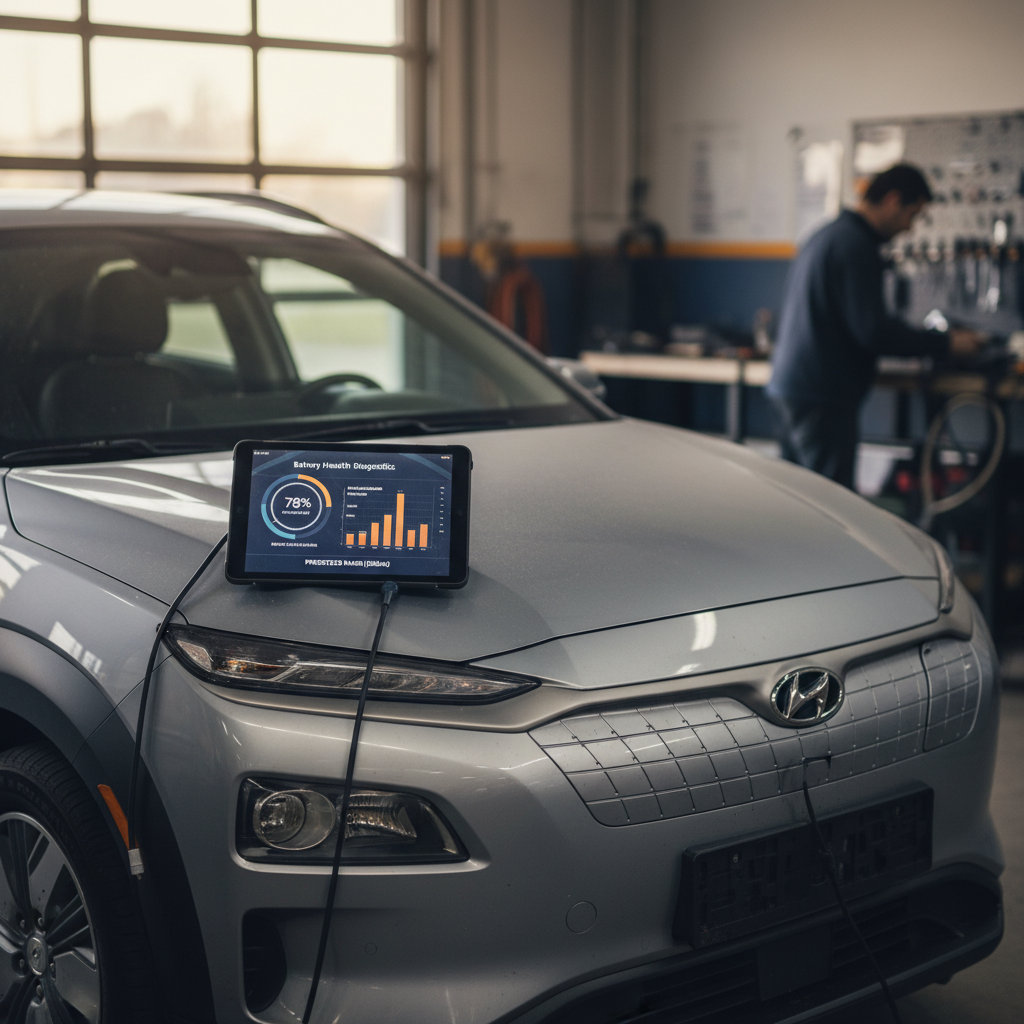
- Best evaluated with **battery health diagnostics**, not just winter range impressions.
How Recharged evaluates battery health
Used Tesla Model Y: What winter range means for buyers
If you’re shopping for a used Tesla Model Y, winter can actually be a **valuable time** to evaluate a car, as long as you know what you’re looking at. A cold‑weather test drive reveals how the vehicle behaves when conditions are toughest, but you need context so temporary winter losses don’t spook you unnecessarily.
How to think about winter range when buying a used Model Y
Separate normal winter behavior from real red flags.
Ask about recent temperatures and trip types
If the seller says, “It only gets 200 miles on a full charge,” ask **what the rated range shows at 100%** and what conditions they’re driving in. A 310‑mile car doing 200 miles on a 10°F day at 75 mph may be completely normal.
Look at % over a full day, not a single short trip
Try to judge winter range over **a longer mixed‑driving day**, not just a quick spin around the block. Short, cold starts exaggerate losses and don’t reflect typical commuting or road‑trip behavior.
Use battery health data, not anecdotes
A proper battery health check, like the **Recharged Score report**, can show **usable capacity and fast‑charge behavior**, which matter far more than one person’s story about a rough winter drive.
If you’re buying remotely, a platform like Recharged can help fill in those blanks. Our EV‑specialist team interprets winter range behavior alongside **diagnostic data, usage history, and pricing trends**, so you’re not overpaying because you’re nervous about numbers that are actually typical for that climate.
Leverage winter to negotiate, but reasonably
Frequently asked questions: Model Y winter range loss
Tesla Model Y Winter Range FAQ
Bottom line on Tesla Model Y winter range loss
You should absolutely expect your Tesla Model Y to lose range in winter, but that doesn’t mean the car is flawed or the battery is failing. In most parts of the U.S., a **20–35% winter range reduction** is a realistic planning assumption, with harsher climates and driving styles pushing that higher. What matters is how you adapt: preconditioning, smarter use of heat, moderate highway speeds, and thoughtful trip planning all make a real difference.
If you’re already an owner, use winter as a chance to **learn your car’s true cold‑weather personality** so you’re not surprised on that first long trip. And if you’re shopping for a used Tesla Model Y, don’t let a chilly test drive scare you off. With a **Recharged Score battery health report**, fair‑market pricing, and EV‑specialist support, Recharged helps you separate **normal winter behavior** from genuine red flags, so you can buy with confidence and enjoy the Model Y’s strengths year‑round.