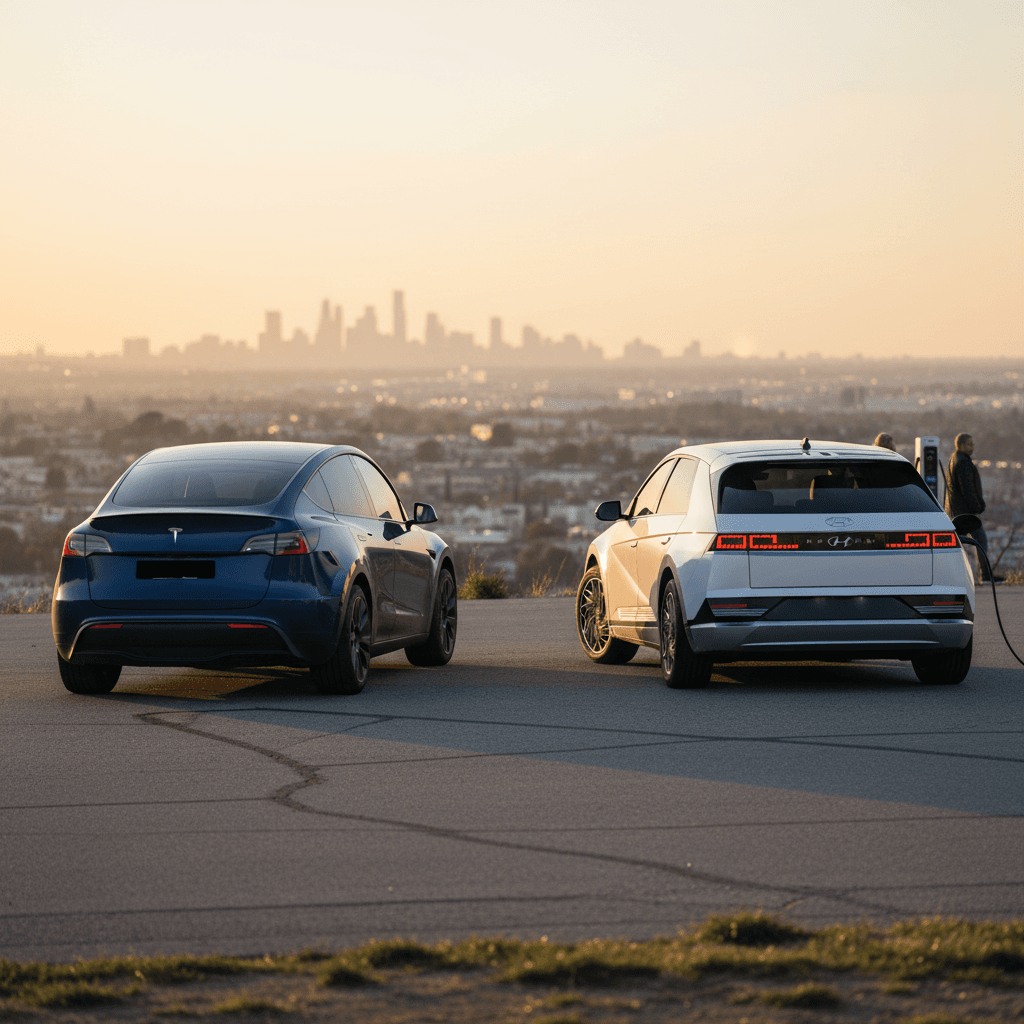
Shopping for an electric SUV and torn between the Tesla Model Y and the Hyundai IONIQ 5? You’re not alone. These two compact crossovers sit at the heart of today’s EV market, and on paper they look frustratingly similar. But once you dig into range, charging speed, space, tech, and real‑world ownership costs, especially in the used market, the differences get a lot clearer.
Two Great Choices, Different Personalities
Overview: Tesla Model Y vs Hyundai IONIQ 5
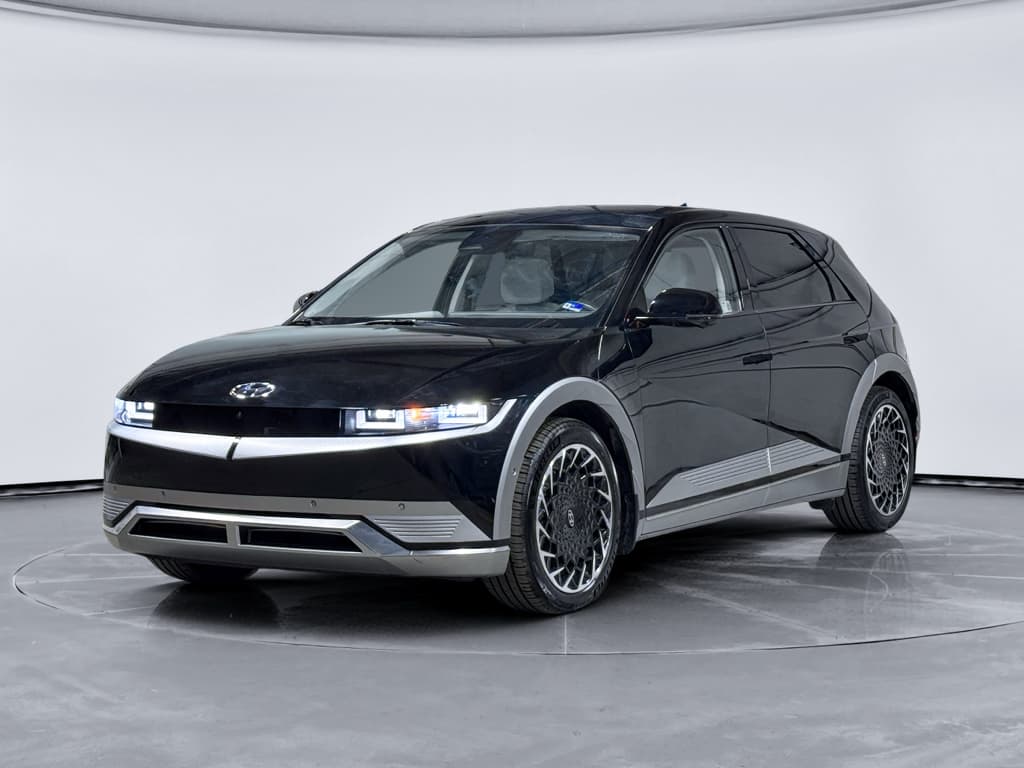
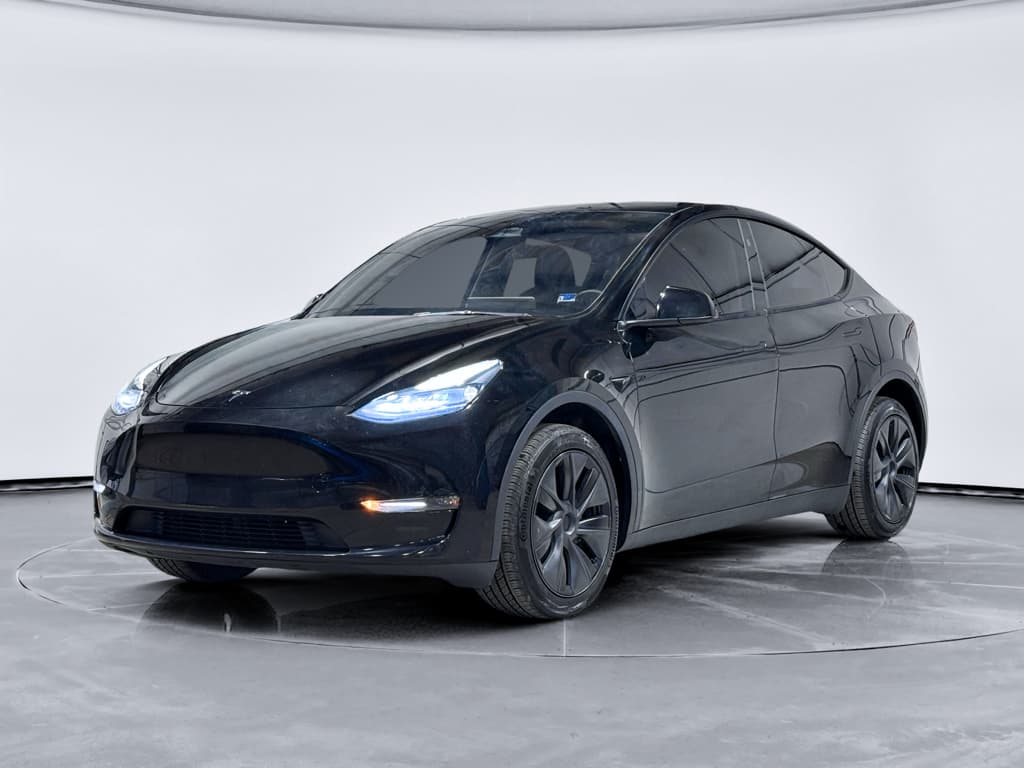
Both the Model Y and IONIQ 5 are compact electric crossovers with hatchback practicality, available in rear‑wheel drive (RWD) and all‑wheel drive (AWD) configurations, and with EPA ranges comfortably over 250 miles in many trims. The Tesla leans into efficiency, software, and its Supercharger network. The Hyundai counters with ultra‑fast 800‑volt charging, a more traditional control layout, and a roomy, lounge‑like interior.
If you’re looking at used examples, you’ll see a wide spread of prices and specs: earlier Model Ys with slightly shorter range but access to more Superchargers, and earlier IONIQ 5s with CCS fast‑charging only versus newer ones that support Tesla’s North American Charging Standard (NACS) with an adapter. That’s exactly where tools like the Recharged Score battery health report matter, so you know whether the range on the window sticker still matches reality.
Headline Numbers at a Glance
Quick Specs: Model Y vs IONIQ 5
Core Specs Comparison (Typical U.S. Trims)
Approximate specs for common mid‑ and upper‑trim configurations you’re likely to see new or used. Always verify exact numbers for the specific VIN you’re considering.
| Spec | Tesla Model Y (Long Range / AWD) | Hyundai IONIQ 5 (Long‑range RWD / AWD) |
|---|---|---|
| EPA range | ~330–357 miles (RWD higher, AWD slightly lower) | ~303–318 miles (RWD), ~260–280 miles (AWD) |
| Battery capacity | ~80 kWh usable | 77–84 kWh depending on year/trim |
| Drivetrain | RWD or Dual‑motor AWD | RWD or Dual‑motor AWD |
| 0–60 mph | ~4.4–4.8 sec (AWD), ~5.4 sec (RWD) | ~4.4 sec (AWD), ~7+ sec (RWD) |
| Max DC fast‑charge rate | Up to ~250 kW on Supercharger | Up to 239–350 kW on 800‑V DC fast chargers |
| Home AC charging | Up to 11 kW (48‑amp Level 2) | Up to 10–11 kW (40–48‑amp Level 2) |
| Cargo volume (behind 2nd row) | About 30 cu ft + useful frunk | About 26 cu ft + small frunk |
| Seating | 5 seats standard, optional 3rd row | 5 seats only |
| Notable perk | Deep integration with Tesla Supercharger network | Ultra‑fast 800‑V charging + vehicle‑to‑load power (V2L) |
Specs vary by model year and trim. Treat these as ballpark figures, not promises.
Specs Don’t Tell the Whole Story
Range and Efficiency
If you live with a long commute or love road trips, you’re probably looking hard at range. Here, the Tesla Model Y generally leads. Recent Long Range models can be rated well north of 330 miles, and some newer rear‑drive versions stretch even farther. Thanks to Tesla’s obsessive focus on efficiency, the Model Y often beats the IONIQ 5 on miles per kWh, even though the Hyundai can carry a slightly larger battery.
The Hyundai IONIQ 5 still offers plenty of range for most drivers. Long‑range RWD trims typically land around 300+ miles, and dual‑motor AWD versions are often in the mid‑200s. In independent highway tests, the IONIQ 5 tends to come closer to its ratings than many rivals, but the Model Y still tends to travel farther on the same amount of energy.
Used EV Range Reality Check
Charging and Road‑Trip Use
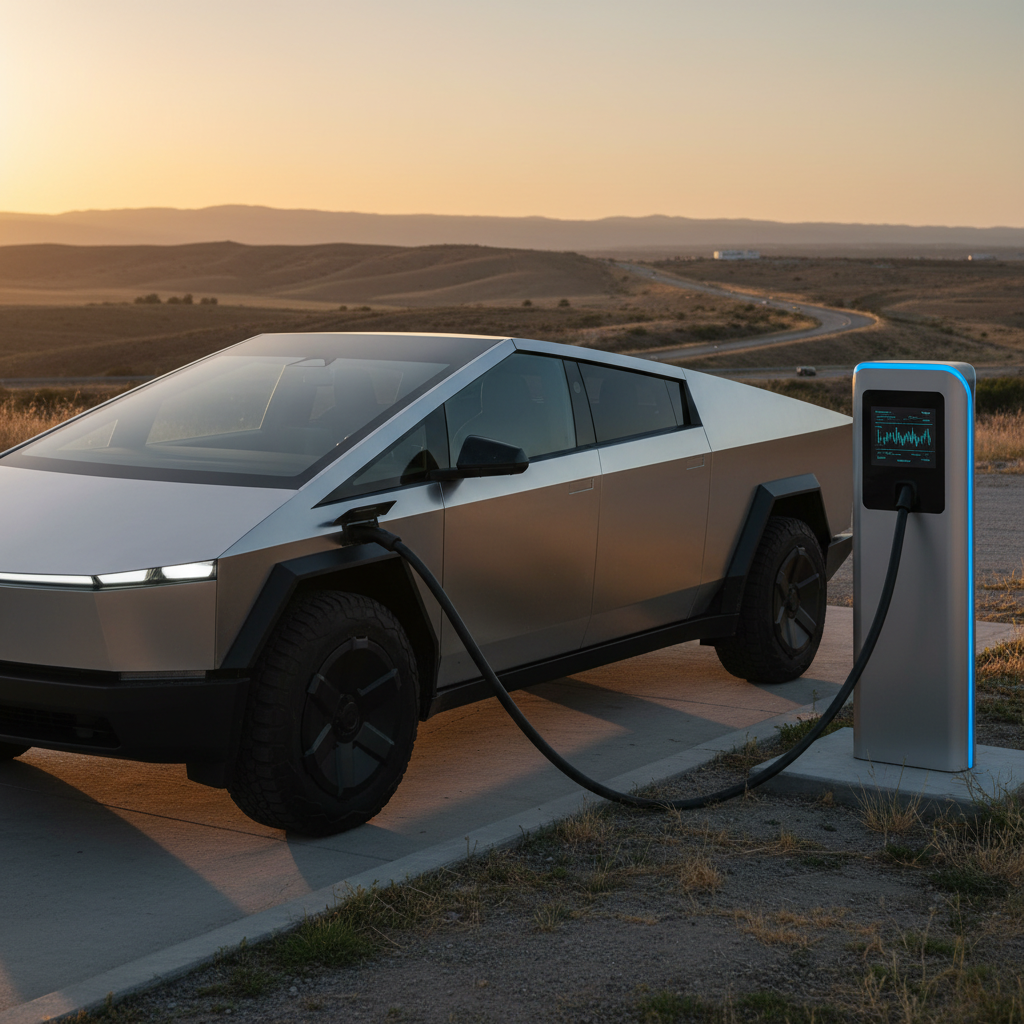
Both crossovers can be excellent road‑trip partners, but they take different paths to get there. The Model Y combines long range with seamless access to Tesla’s vast Supercharger network. You punch your destination into the big center screen, and the car routes you through Superchargers with arrival‑state‑of‑charge estimates baked in. For many owners, that point‑and‑go simplicity is the biggest reason they choose Tesla.
The IONIQ 5 counters with one of the quickest charging systems on the market. Its 800‑volt architecture lets it gobble power on a 250–350 kW DC fast charger, adding roughly 175+ miles in about 15 minutes in ideal conditions. That means it can arrive at the charger with less remaining range yet still catch up quickly while you grab coffee.
Model Y: Network & Simplicity
- Tight integration with Tesla Superchargers; plug in and billing happens automatically.
- Newer non‑Tesla EVs are joining the network using NACS, but Teslas still get the smoothest experience.
- Supercharger coverage is especially strong along major U.S. highways and in suburban corridors.
- Charge curve isn’t the absolute quickest, but strong efficiency means you stop less often.
IONIQ 5: Sheer Speed & Flexibility
- 800‑V system enables very fast charging on high‑power DC fast chargers.
- Access to growing networks like Electrify America, EVgo, and, on newer models, Tesla stations via NACS.
- Excellent vehicle‑to‑load (V2L) feature lets you power tools, camping gear, or even another EV.
- More planning needed: charger reliability and station density vary more outside Tesla’s network.
Home Charging: Essentially a Tie
Space, Comfort, and Practicality
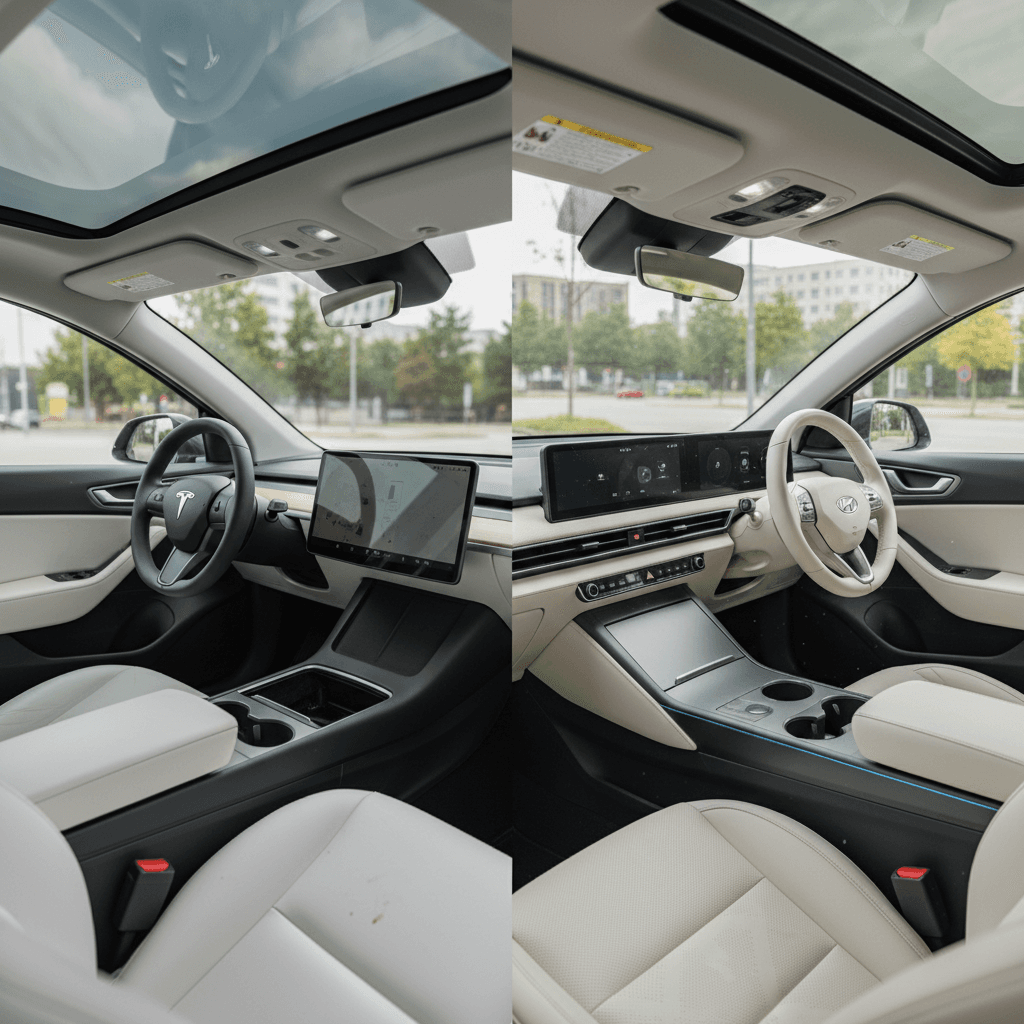
The first thing you notice sitting in these two is how differently they handle space. The Tesla Model Y is shaped like a taller Model 3: a sloping roofline, deep cargo well, and a genuine hatch. It offers more cargo volume than the IONIQ 5, especially with the rear seats folded, and it adds a useful frunk. If you’re juggling strollers, sports gear, and warehouse‑club runs, that extra room matters.
The Hyundai IONIQ 5 doesn’t chase maximum cubic feet as aggressively, but the space it has is delightful. The long wheelbase, flat floor, and sliding rear seat give rear passengers limo‑like legroom, and the available reclining rear seats with footrests make this feel more like a lounge than an SUV. The cargo area is a bit smaller than the Model Y’s, and the frunk is tiny, but for most families it’s still plenty of space for daily life.
Everyday Practicality Highlights
How each EV SUV makes your weekly routine easier
Model Y Utility
- More overall cargo space than IONIQ 5.
- Available third row (kids or emergency use only).
- Large hatch opening and deep under‑floor storage.
IONIQ 5 Comfort
- Super‑roomy rear seat with sliding base.
- Optional reclining second‑row with ottoman‑style support.
- Flat floor makes it easy to get kids in and out.
Cold‑Weather Details
- Both offer heated seats and available heat pumps in many trims.
- Pre‑conditioning via app so you’re not scraping ice in the driveway.
- Range drops in winter; bigger pack in the Model Y gives more buffer.
Performance and Driving Feel
In a straight‑line sprint, both of these crossovers are quick enough to make old‑school performance sedans nervous. Dual‑motor versions of each can launch you from 0–60 mph in the mid‑4‑second range, and even the slower single‑motor trims feel strong in city driving thanks to instant electric torque.
The Model Y generally feels more eager and direct. The steering is quick, the body motions are buttoned‑down, and acceleration in the quicker trims can be startling if you’re new to EVs. The tradeoff is ride quality: on rough pavement or with larger wheels, the Y can feel firmer, especially compared to the Hyundai.
The IONIQ 5 takes a more relaxed approach. It’s still brisk, but the tuning emphasizes comfort and quiet over razor‑sharp reflexes. Around town, it feels light and easy, with a soft ride that soaks up broken pavement better than most compact SUVs, electric or not.
Performance Verdict
Tech, Safety, and Driver Assistance
Both vehicles are safety overachievers, with strong crash‑test results and a full suite of driver‑assistance technology standard or widely available. What’s different is how they present all that tech to you.
Tesla Model Y Tech
- 15‑inch central touchscreen runs everything, HVAC, wipers, drive‑mode settings, navigation, games, and more.
- No traditional gauge cluster; your speed and basic info live in the top corner of the center screen.
- Over‑the‑air updates regularly add features or tweak behavior, often for the better.
- Autopilot standard; optional "Full Self‑Driving (Supervised)" adds more automated‑driving features, though it still requires your full attention.
Hyundai IONIQ 5 Tech
- Two 12.3‑inch screens, one for gauges, one for infotainment, plus a real head‑up display in many trims.
- Mix of physical buttons and touch controls, so basics like temperature don’t require digging through menus.
- Android Auto and Apple CarPlay are available (projection may be wired or wireless depending on model year and updates).
- Hyundai’s Highway Driving Assist blends adaptive cruise and lane‑centering in a way that feels natural and confidence‑inspiring.
About "Self‑Driving" Claims
Pricing, Value, and Incentives
New‑car pricing on both models has bounced around in the last couple of years as automakers chase EV demand and incentives shift. Broadly, similarly equipped versions of the Model Y and IONIQ 5 often end up in the same ballpark when you factor in destination and typical options, with the Hyundai sometimes undercutting Tesla on a feature‑for‑feature basis and Tesla occasionally running aggressive price cuts.
On the used market, there’s now a healthy supply of both. Early Model Ys started arriving in 2020, so you’ll see plenty of 3–5‑year‑old examples with significant depreciation already baked in. The IONIQ 5 reached U.S. buyers later, so the used pool is smaller but growing. Because both are high‑demand EVs, condition and battery health have a big impact on price, two similar‑looking SUVs can differ by thousands of dollars depending on how they’ve been driven and charged.
How to Compare Value on a Used Model Y vs IONIQ 5
1. Look beyond sticker range
Two cars with the same original EPA range can have very different real‑world range after several years. Prior daily fast‑charging, hot climates, and high mileage all matter.
2. Compare included charging access
A used Tesla might include premium connectivity or free Supercharging on older cars. A newer IONIQ 5 may come with promo fast‑charging credits from public networks.
3. Factor in home charging costs
If you’ll need a new 240‑V circuit or panel upgrade, budget that alongside the purchase price. Recharged can help you understand realistic installation scenarios.
4. Check driver‑assist and safety features
Options like Highway Driving Assist on Hyundai or advanced Autopilot/FSD packages on Tesla can significantly change how the car feels on long drives, and what it’s worth to you.
5. Consider warranty coverage
Hyundai’s warranty is one of the longest in the business, including battery coverage. Tesla’s coverage is shorter on time but still strong; check what’s left on any used VIN.
Used EV Ownership and Battery Health
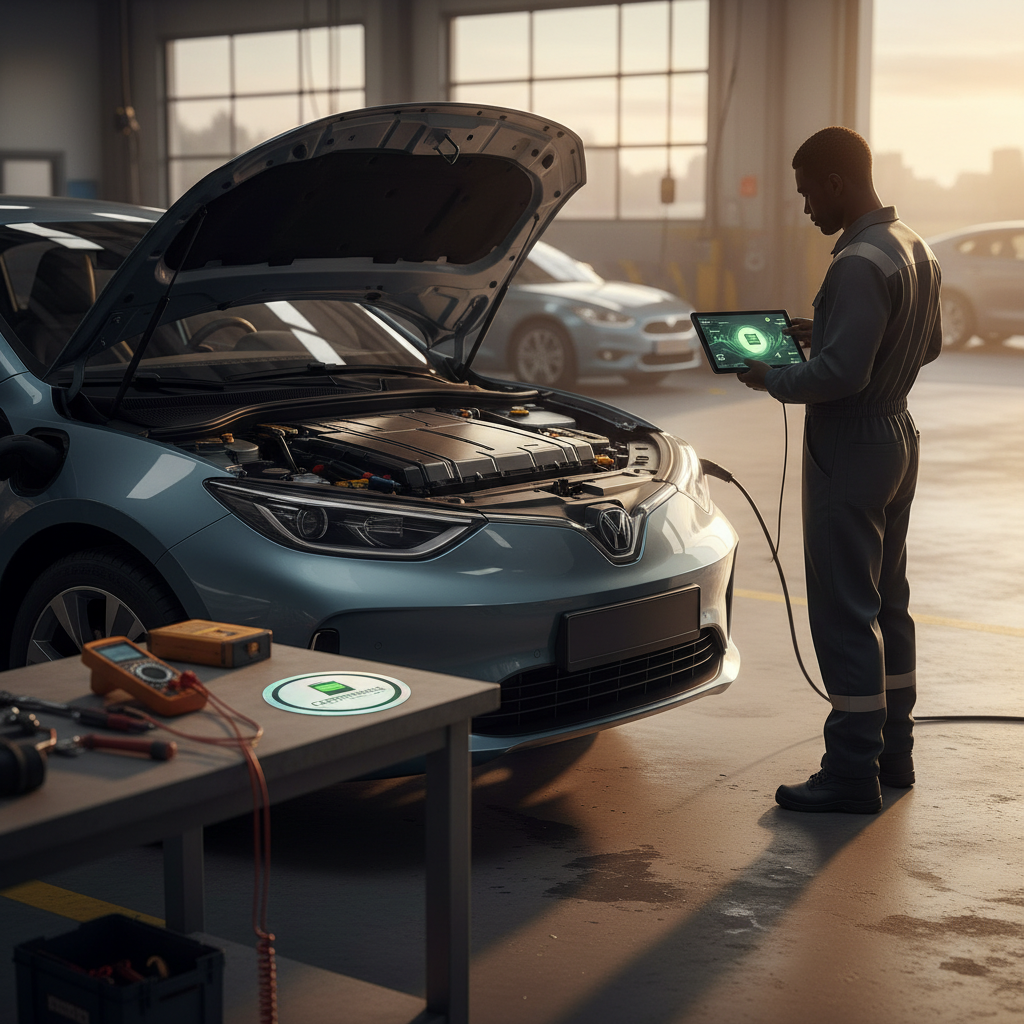
With gas cars, you can smell burnt transmission fluid or spot an oil leak. With EVs, the most expensive component, the high‑voltage battery, is hidden under the floor. That’s why buying a used Model Y or IONIQ 5 is all about understanding how that pack has aged.
Both Tesla and Hyundai warrant their batteries for many years and miles, and both have generally held up well in the real world. But not every car lives an easy life. A Model Y that did daily 0–100% Supercharging on a rideshare schedule is not the same as the one‑owner highway commuter that charged to 70% every night. The same is true for IONIQ 5s that spent lots of time on 350 kW chargers versus mostly Level 2 at home.
How Recharged Helps You See the Invisible
Ownership Experience: What You’ll Notice After Year 1
Both are excellent; they just shine in different ways as daily companions.
Living with a Model Y
- Excellent road‑trip experience thanks to integrated trip planning and Supercharger access.
- Software‑first design means the car often feels newer over time as updates roll in.
- Firm ride and minimalist interior controls aren’t for everyone, but fans love the clean look.
Living with an IONIQ 5
- Calmer, quieter cabin with easy‑to‑reach physical controls for daily tasks.
- V2L power turns the car into a giant battery for camping, tailgating, and emergencies.
- Ultra‑fast charging shrinks road‑trip downtime if you have reliable high‑power stations nearby.
Which One Is Right for You?
Model Y vs IONIQ 5: Choose Your Best‑Fit Path
Choose the Tesla Model Y if…
You road‑trip often and want the simplest possible charging experience using Tesla’s Supercharger network and in‑car trip planner.
Maximum range per charge is a top priority and you’d rather stop less often, even if each stop is a bit slower than the Hyundai’s quickest sessions.
You like a minimalist, tech‑forward cabin and don’t mind living mostly on one big touchscreen.
You want stronger cargo capacity, the option of a third row for kids, and lots of hidden storage.
You value Tesla’s fast‑moving software ecosystem and regular over‑the‑air feature updates.
Choose the Hyundai IONIQ 5 if…
Comfort and interior design matter more than ultimate cargo numbers, you want a bright, airy space that feels like a living room on wheels.
You’ll use public DC fast charging regularly and want some of the quickest 10–80% charge times available today.
You prefer a mix of screens and physical buttons so simple tasks don’t require diving into menus.
You love the idea of vehicle‑to‑load power for camping, job sites, or backup power in a pinch.
You’re drawn to Hyundai’s long warranty coverage and strong value story on both new and used examples.
Next Step: Compare Real Cars, Not Just Brochures
Ready to find your next EV?
Browse VehiclesFAQ: Tesla Model Y vs Hyundai IONIQ 5
Frequently Asked Questions
The good news is you can’t really make a bad choice between the Tesla Model Y and the Hyundai IONIQ 5. One leans toward range, network, and software; the other leans toward comfort, design, and lightning‑quick charging. The right answer is the one that best fits how, and where, you actually drive.
When you’re ready to move from research to reality, explore used Model Y and IONIQ 5 listings on Recharged. Every vehicle includes a Recharged Score battery health report, fair‑market pricing, financing options, trade‑in support, and the option to complete the whole process online or visit our Experience Center in Richmond, VA. That way, whichever EV SUV you choose, you’ll know it’s the right one for the long haul.