You don’t buy a Tesla Cybertruck because you’re shy. It’s huge, angular, and about as subtle as a stainless-steel sledgehammer. But when the spotlight fades and the utility bill shows up, one quiet question remains: what does it really cost per mile to charge a Cybertruck? With a big battery and bluff aerodynamics, this thing moves a lot of electrons. In 2026, with higher U.S. electricity prices, understanding your Tesla Cybertruck charging cost per mile is the difference between smug satisfaction and bill shock.
Context: 2026 electricity prices
Quick answer: Cybertruck charging cost per mile
Typical Cybertruck charging cost per mile (2026)
Put simply, if you charge mostly at home on U.S. average rates, your Tesla Cybertruck charging cost per mile will usually land around 8–12 cents per mile. Live somewhere with cheap power and drive gently and you can dip into the high single digits; hammer it on oversized tires and live in a high-rate coastal city, and you’ll see numbers closer to 15–20 cents per mile, especially on Superchargers.
Rule-of-thumb shortcut
Why Cybertruck charging cost per mile matters
The Cybertruck is a statement piece, but it’s also a work tool, road-trip rig, and daily driver. Cost per mile matters because it rolls up into three big questions: Can I afford to run this every day? How does it stack up against a gas F-150 or Silverado? And if you’re eyeing a used Cybertruck, does its efficiency history make it a smart buy or an energy hog in stainless clothing?
- Budgeting reality: At 12,000 miles a year, the difference between $0.08/mi and $0.18/mi is nearly $1,200 annually.
- Gas comparison: A V8 truck can easily cost 2–3× more per mile in fuel than a reasonably driven Cybertruck.
- Used value: Trucks with poor efficiency histories or lots of fast‑charge miles can hint at harder use and higher long‑term running costs.
Where Recharged fits in
Key factors that control Cybertruck cost per mile
Four levers that move Cybertruck cost per mile
You control more of this than you might think.
1. Energy use (Wh per mile)
The Cybertruck’s giant battery doesn’t determine cost per mile by itself, efficiency does. Real-world owners routinely report anywhere from the low 300s to 600+ Wh/mi, depending on speed, climate, load, and driving style. That swing can literally double your cost per mile.
2. Your electricity price
In 2026, many U.S. households pay around 17–20¢/kWh, but some states are well under 15¢ and others are far above 25¢. Your local rate is the single biggest input to Cybertruck cost per mile.
3. Where you charge
Home charging is usually cheapest. Superchargers and other DC fast chargers often cost more per kWh, and they include demand and infrastructure costs. Occasional public fast charging is fine; living on it will raise your average cost per mile.
4. Conditions & setup
Big all‑terrain tires, roof racks, cold weather, headwinds, towing, and 80+ mph cruising all push Wh/mi up. A clean aero setup, moderate speeds, and preconditioning on shore power push it down.
Cybertruck efficiency (Wh per mile) explained
Tesla, and the Cybertruck’s own energy screen, measure consumption in Wh/mi (watt‑hours per mile). Think of this as how much “electric fuel” it takes to move the truck one mile. Owners and early testing paint a fairly consistent picture: Cybertruck is not a sipping economy car, but it’s not catastrophically inefficient either given the size and performance.
Real-world Cybertruck Wh/mi scenarios
Approximate ranges based on owner reports and typical EV behavior. Your numbers will vary, but this gives a solid ballpark.
| Use case | Typical Wh/mi | Notes |
|---|---|---|
| Gentle city / suburban | 300–360 | Short hops, light throttle, 35–50 mph, mild weather. |
| Mixed commuting | 360–420 | Blend of city and 65–75 mph freeway, no towing. |
| Highway 75–80 mph | 420–500+ | Aerodynamic drag rises fast at speed; tall tires make it worse. |
| Cold weather or heavy A/C | 450–550 | Cabin heating, battery conditioning, and accessories add overhead. |
| Towing or max payload | 550–700+ | Big frontal area trailers or heavy bed loads hammer efficiency. |
These are not lab numbers, they’re the kind of efficiency you should actually expect to see on the dash.
Don’t anchor to the lowest Wh/mi you’ve ever seen
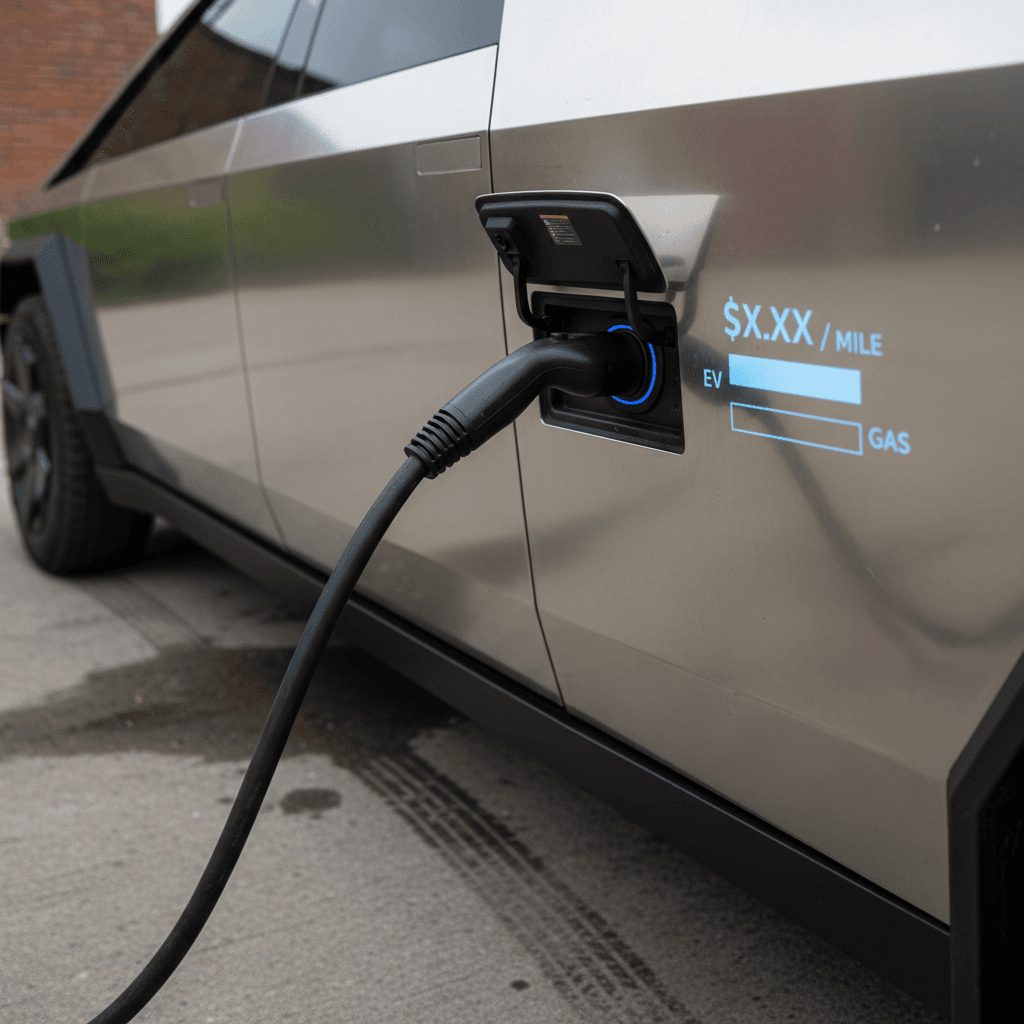
Home charging cost per mile examples
Let’s turn all this into simple math. For home charging, cost per mile is: Cost per mile = (Wh per mile ÷ 1,000) × electricity price per kWh We’ll use round numbers that match what many U.S. owners see in 2026.
Cybertruck home charging cost per mile
Three sample efficiency levels at three sample residential electricity rates.
| Scenario | Assumed Wh/mi | 15¢/kWh | 20¢/kWh | 30¢/kWh |
|---|---|---|---|---|
| Careful driver, mild weather | 350 | $0.05/mi | $0.07/mi | $0.11/mi |
| Typical mixed driving | 400 | $0.06/mi | $0.08/mi | $0.12/mi |
| Aggressive or cold climate | 450 | $0.07/mi | $0.09/mi | $0.14/mi |
Use the row closest to your own driving style, and the column closest to your local rate, to eyeball your real cost per mile.
How to plug in your own numbers
Supercharger cost per mile examples
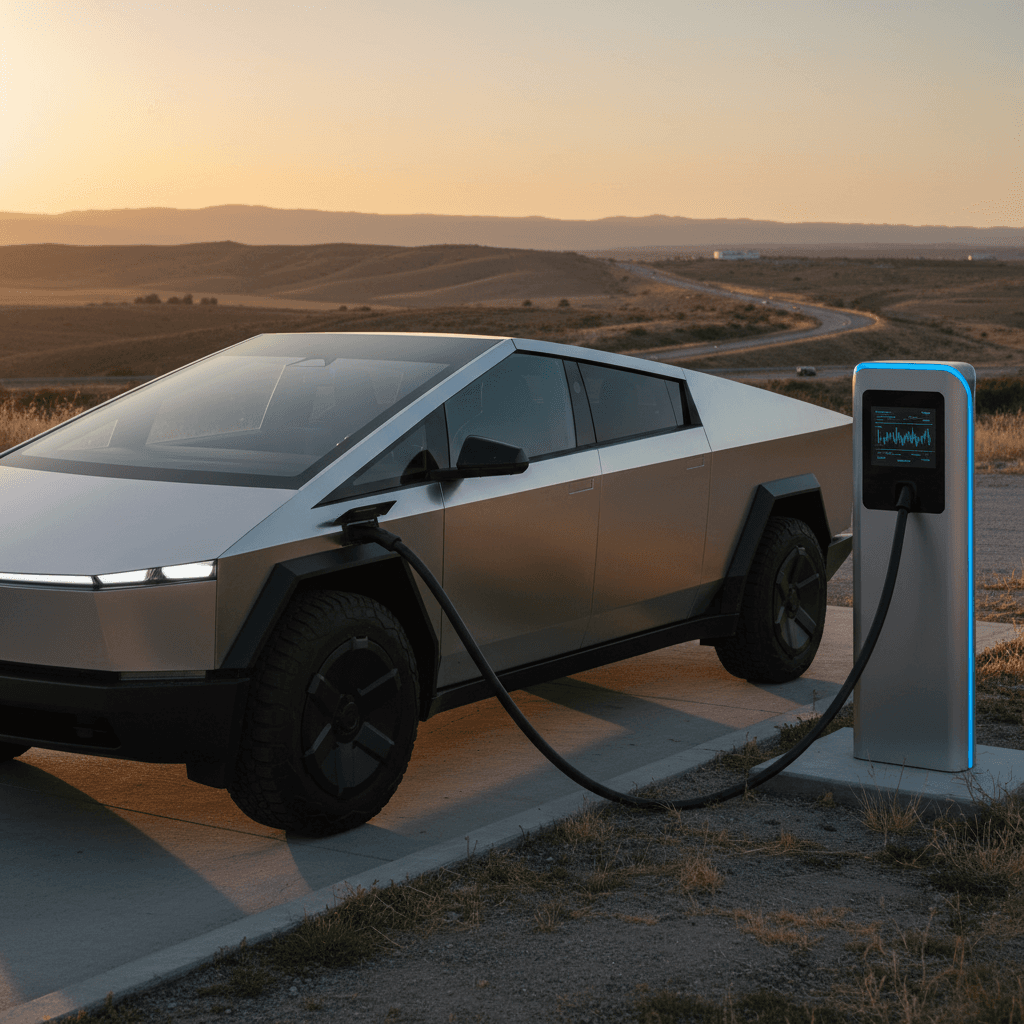
Tesla Supercharger pricing varies by location, time of day, and whether you’re billed per kWh or per minute. In much of the U.S., you’ll see Superchargers clustered somewhere in the high‑teens to 30‑something cents per kWh, with off‑peak pricing on the lower end and busy urban corridors on the higher end.
Moderate‑price Supercharger
Assume $0.25/kWh and a realistic Cybertruck highway efficiency of 450 Wh/mi on a road trip:
- 450 Wh/mi ÷ 1,000 = 0.45 kWh/mi
- 0.45 × $0.25 ≈ $0.11 per mile
At this pricing, a 300‑mile highway day costs about $33 in electricity.
Expensive urban Supercharger
Now assume a busy metro station at $0.40/kWh and 480 Wh/mi (fast traffic, HVAC on):
- 0.48 kWh/mi × $0.40 = $0.19 per mile
Run a 300‑mile day that way and you’re at about $57. Still often cheaper than gas for a similar truck, but not by the huge margin you might expect.
Living on Superchargers is a bad plan
Cybertruck vs gas truck: cost per mile
The point of all this math is comparison. If you’re cross‑shopping a Cybertruck with a traditional half‑ton pickup, cost per mile is where EVs usually win by a wide margin, especially if you charge at home.
Cybertruck vs gas truck fuel cost per mile
Approximate fuel costs using realistic real‑world MPG and electricity prices.
| Vehicle | Assumptions | Fuel/energy cost | Cost per mile |
|---|---|---|---|
| Tesla Cybertruck (home charging) | 400 Wh/mi, $0.18/kWh | $0.072/mi × 12,000 = $864/yr | ≈ $0.07 |
| Tesla Cybertruck (mostly Superchargers) | 450 Wh/mi, $0.32/kWh | $0.144/mi × 12,000 = $1,728/yr | ≈ $0.14 |
| Gas 1/2‑ton truck, conservative | 18 mpg, $3.75/gal | $0.21/mi × 12,000 = $2,500/yr | ≈ $0.21 |
| Gas 1/2‑ton, real‑world mixed | 15 mpg, $4.25/gal | $0.28/mi × 12,000 = $3,360/yr | ≈ $0.28 |
Assumes 12,000 miles per year. Taxes and maintenance not included, this is fuel/energy only.
Where the Cybertruck clearly wins
How to lower your Cybertruck charging costs
Practical ways to cut Cybertruck cost per mile
1. Maximize home charging
If possible, install a Level 2 charger at home and use it as your main fuel source. Even if Superchargers feel “fast and futuristic,” your wall outlet almost always beats them on cost per kWh.
2. Use off‑peak or EV‑friendly rates
Many utilities now offer <strong>time‑of‑use</strong> plans or EV‑specific tariffs. Schedule charging for late night hours when rates are lowest. Your Cybertruck’s charging scheduler and app notifications make this easy to automate.
3. Tame highway speeds
Above ~65 mph, aerodynamic drag ramps quickly. Dropping from 80 to 70 mph can shave <strong>50–100 Wh/mi</strong>, which is a massive percentage swing in energy use and cost per mile, especially over thousands of highway miles.
4. Mind tires and accessories
Aggressive off‑road tires, lift kits, roof racks, and unnecessary cargo all fight range. If you don’t need the look or the capability every day, keep the truck as close to stock height and rolling resistance as your use case allows.
5. Precondition while plugged in
In both winter and summer, let the truck heat or cool the cabin while it’s still on shore power. That keeps HVAC overhead out of your battery and improves Wh/mi once you hit the road.
6. Plan smarter road trips
Use the Tesla trip planner or third‑party apps to hit reasonably priced Superchargers at off‑peak times, rather than just “next exit now.” A little planning smooths both your costs and your state‑of‑charge anxiety.
Thinking about a home charger?
Used Cybertruck ownership: what cost per mile reveals
On the used market, Cybertruck buyers face a new kind of due diligence. Two trucks with identical odometer readings can have very different histories, and very different future cost profiles.
What to look at on a used Cybertruck
Cost per mile isn’t just about fuel, it’s about how the truck was treated.
Lifetime Wh/mi
A very high lifetime Wh/mi figure can mean lots of high‑speed driving, big tires, heavy towing, or all three. That’s not automatically bad, but it suggests the truck lived a harder life and may have more wear on brakes, tires, and suspension.
Battery health & fast‑charge share
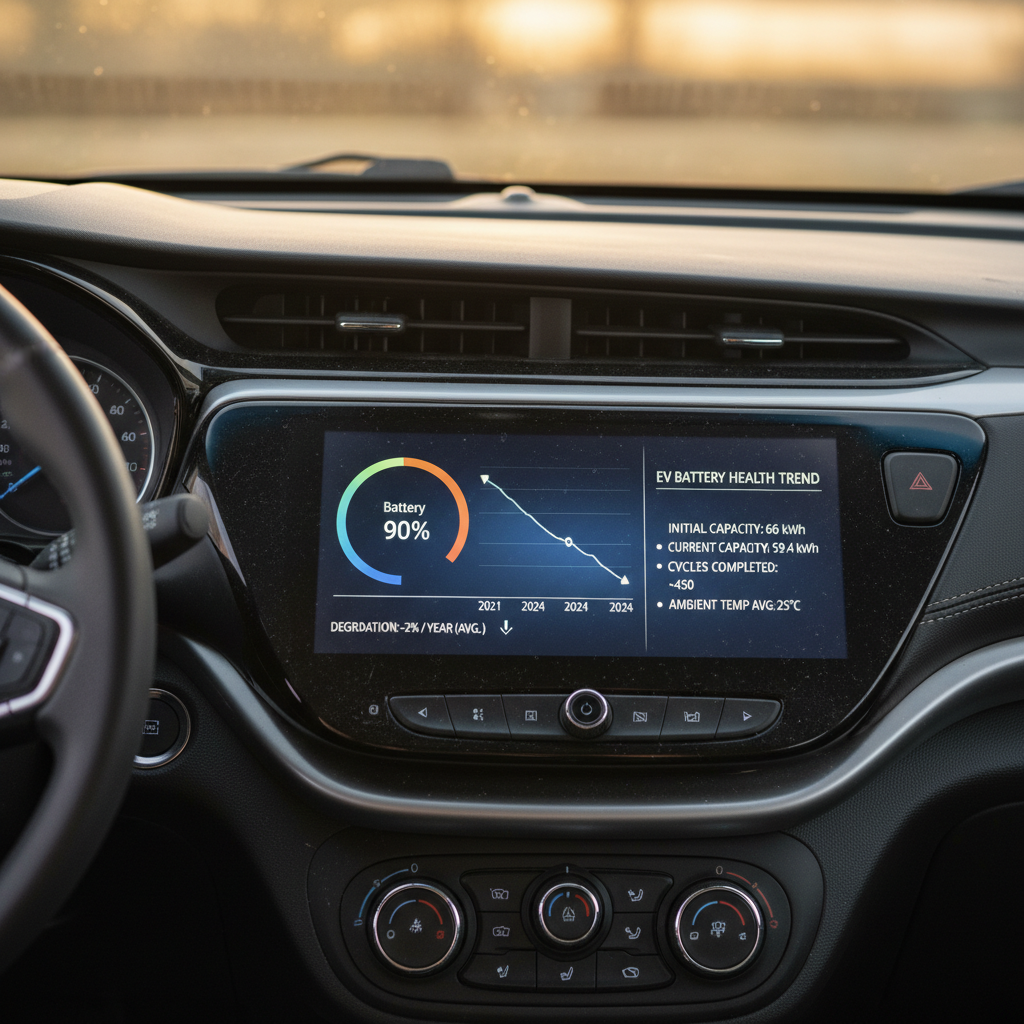
Heavy reliance on DC fast charging ages packs faster than mostly Level 2 use. A good battery health report, and a reasonable mix of home vs fast charging, points to a truck that should keep its range (and predictable cost per mile) longer.
Transparent history
Service records, accident history, tire replacement frequency, all of these color in the story behind the cost per mile. Recharged’s Score Report pulls these threads together so you don’t have to guess from a few screenshots.
“With EV trucks like Cybertruck, the ‘fuel bill’ is only half the story. How the previous owner drove and charged the vehicle can quietly shape your next five years of ownership costs.”
FAQ: Tesla Cybertruck charging cost per mile
Frequently asked questions about Cybertruck charging cost per mile
Bottom line on Cybertruck charging costs
The Tesla Cybertruck is not a delicate flower. It’s heavy, brutally quick, and about as aerodynamic as a stainless-door refrigerator tipped on its side. And yet, if you play to the EV’s strengths, home charging, reasonable speeds, smart rate plans, your Tesla Cybertruck charging cost per mile usually lands in the single‑digit to low‑teens cents. That undercuts comparable gas trucks by a comfortable margin almost everywhere in the U.S.
From there, it’s about matching the truck to your life. If you live on Superchargers at premium urban rates and drive as if every on‑ramp is a drag strip, you’ll erode the economic advantage. If you’re thoughtful about where and how you charge, the Cybertruck becomes a genuinely cost‑effective workhorse, particularly when bought smart on the used market with transparent battery and charging history.
If you’re considering a Cybertruck, or any used EV, and want a clear view of battery health, charging history, and real‑world running costs, a marketplace like Recharged can shorten the learning curve. Every vehicle comes with a Recharged Score Report, EV‑specialist support, and flexible financing and trade‑in options, so you can focus on the miles ahead, not the math behind them.