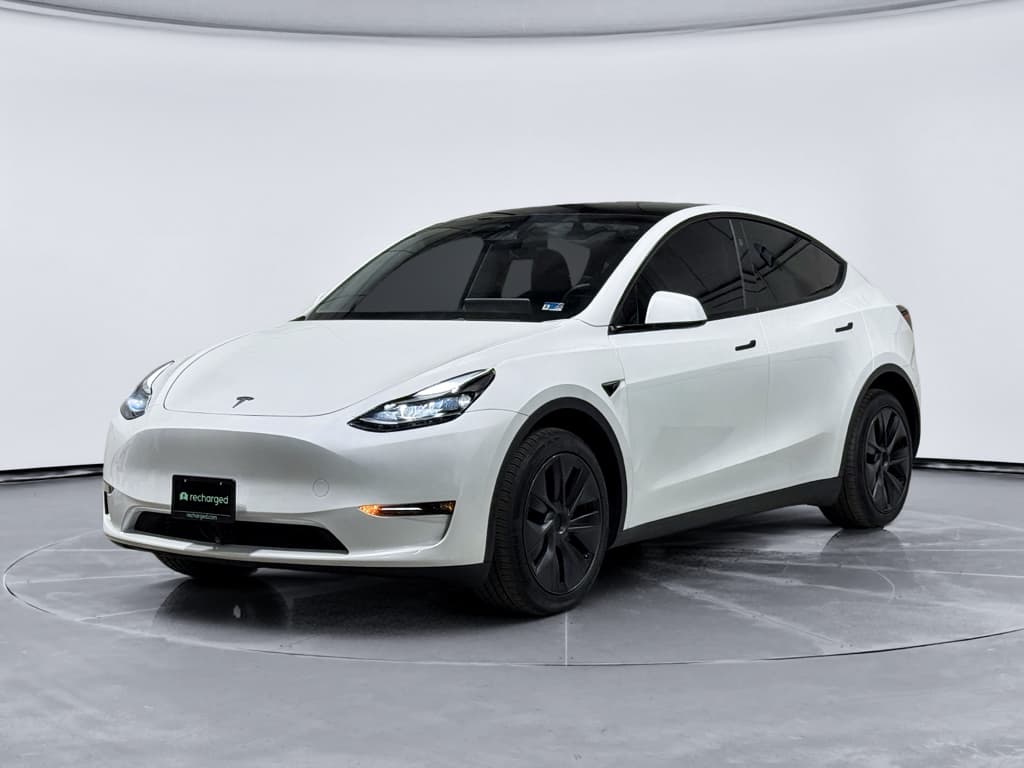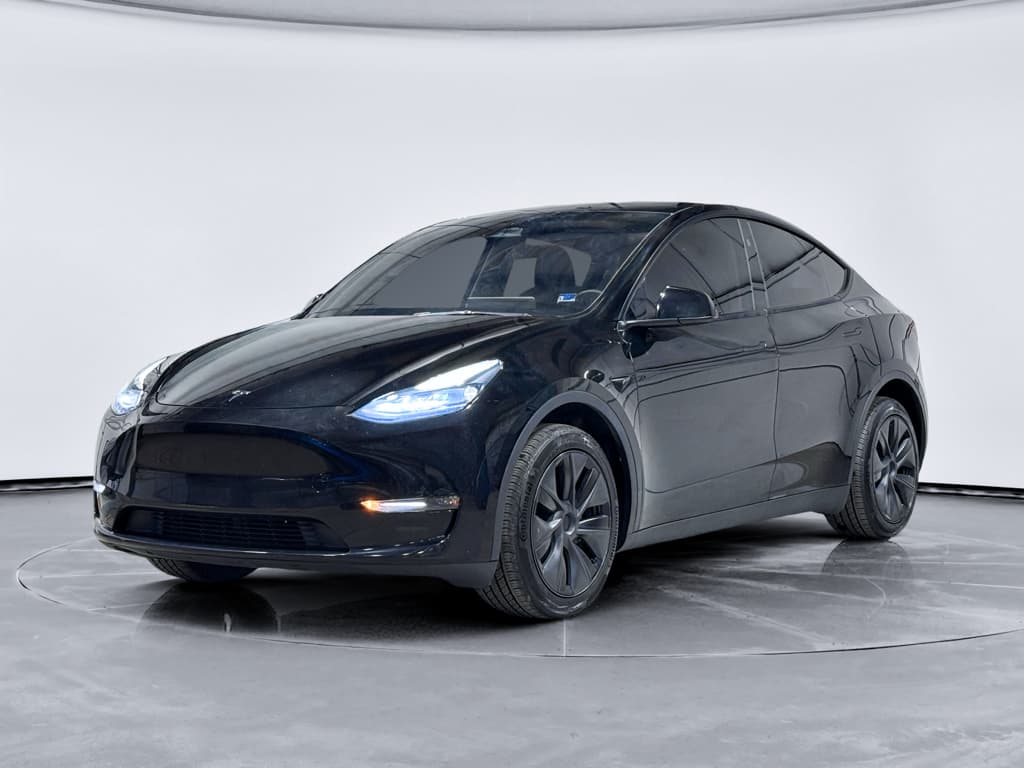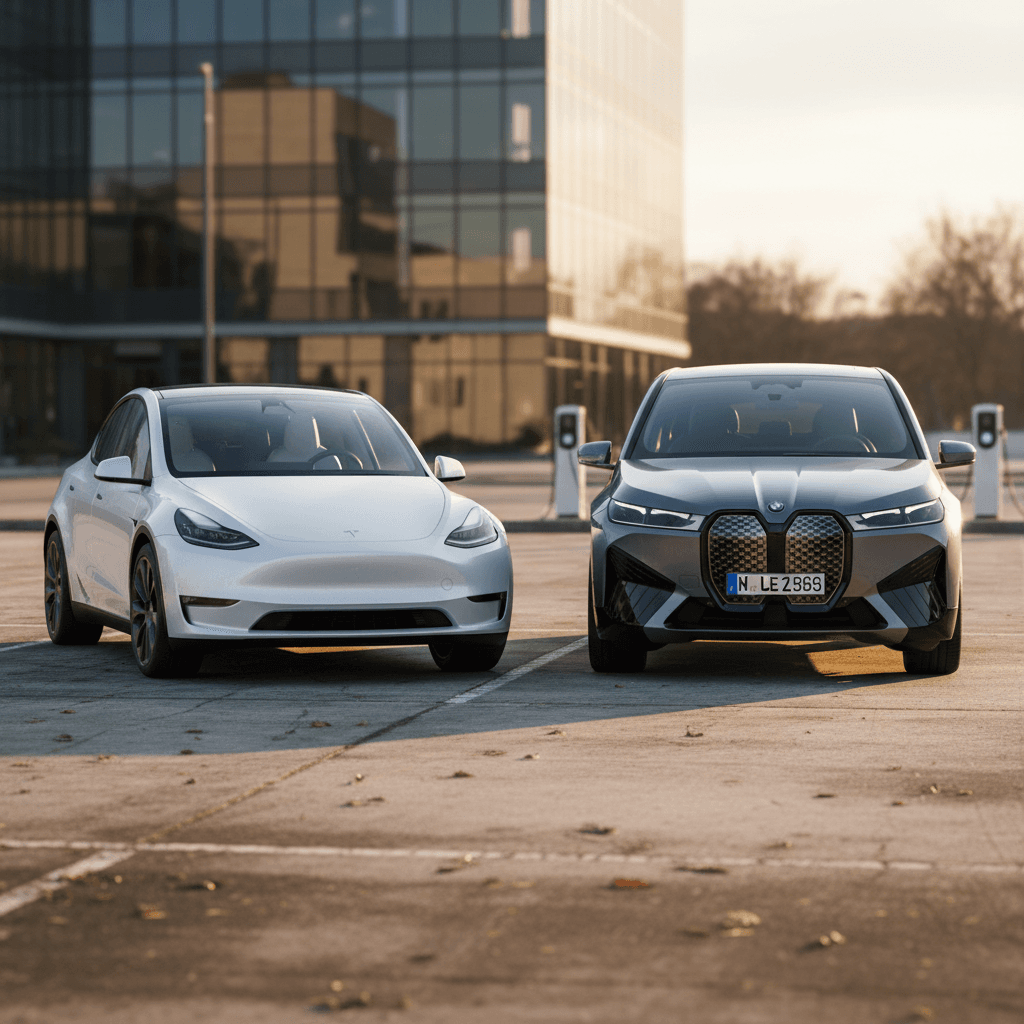
If you’re cross-shopping the Tesla Model Y vs BMW iX and wondering which is better, you’re really choosing between two very different ideas of what a luxury electric SUV should be. The Model Y is the pragmatic tech star and sales leader; the BMW iX is the cushy, high-end flagship that happens to be electric. Your answer depends less on 0–60 times and more on what you want to live with every single day.
Two very different takes on an electric SUV
Tesla Model Y vs BMW iX: quick overview
Model Y vs iX at a glance (2024–2025 US market)
Core strengths: Tesla Model Y vs BMW iX
Where each electric SUV clearly pulls ahead
Where the Tesla Model Y wins
- Lower price to buy, especially used.
- Excellent efficiency and strong real‑world range.
- Massive Supercharger network that just works.
- Plenty of cargo space with clever storage solutions.
- Simpler trims and over‑the‑air updates that add features over time.
Where the BMW iX wins
- Far quieter and more comfortable ride, especially with air suspension.
- Beautiful, high‑end interior with real materials and excellent seats.
- Strong performance and big‑battery range in xDrive50 and M60.
- Traditional luxury feel with BMW’s service network and dealer support.
- More premium noise isolation and refinement on long trips.
First big decision: budget and expectations
Price and value: new vs used
In the U.S., the Tesla Model Y and BMW iX don’t really compete head‑to‑head on sticker price. New, a Model Y generally lands in mainstream luxury‑SUV territory, while an iX prices like a full‑blown flagship.
Typical U.S. pricing: Tesla Model Y vs BMW iX
Approximate new MSRPs and real‑world used asking prices for 2022–2025 models as of early 2026. Always check current listings in your area.
| Model | New MSRP (typical) | Used price range (lightly used) | Federal EV tax credit eligible? |
|---|---|---|---|
| Tesla Model Y RWD / Long Range | ≈$45,000–$52,000 | ≈$38,000–$50,000 | Often yes (depending on final price and IRS rules at time of purchase) |
| Tesla Model Y Performance | ≈$53,000–$58,000 | ≈$45,000–$55,000 | Sometimes (price cap can be a factor) |
| BMW iX xDrive50 | ≈$88,000–$92,000 when new | ≈$55,000–$75,000 | No (MSRP above federal price cap) |
| BMW iX M60 | ≈$110,000+ when new | ≈$75,000–$95,000+ | No (too expensive for federal credit) |
Use this as a directional guide; local market conditions, mileage, and options will move numbers up or down.
On the used market, the gap is still huge. You can often find a clean, low‑mile Model Y Long Range for what higher‑mileage iX xDrive50s are just starting to approach. The BMW does take a big depreciation hit from its six‑figure new pricing, which can make a used iX feel like a bargain, if you were already comfortable spending that kind of money.
Value snapshot
Buying used? This is exactly where Recharged comes in. Every EV we sell includes a Recharged Score Report with verified battery health and a fair‑market pricing analysis, so you can compare a used Model Y and a used iX on more than just odometer miles and photos.
Range, performance, and battery tech
Both of these SUVs are quick, and both deliver genuinely road‑trip‑worthy range. The big difference is how they balance power, efficiency, and battery size.
Key range & performance specs (popular trims)
Representative EPA ranges and factory 0–60 mph ratings for common U.S. configurations.
| Model / trim | Battery (usable, approx.) | EPA range (mi) | 0–60 mph (sec) | Drive |
|---|---|---|---|---|
| Tesla Model Y RWD (newer Long Range RWD) | ≈75 kWh | ≈320 mi | ≈5.9 s | RWD |
| Tesla Model Y Long Range AWD | ≈75 kWh | ≈310–330 mi | ≈4.8 s | AWD |
| Tesla Model Y Performance | ≈75 kWh | ≈279–303 mi | ≈3.5 s | AWD |
| BMW iX xDrive50 | ≈106 kWh usable | ≈300–324 mi (wheel‑dependent) | ≈4.4 s | AWD |
| BMW iX M60 | ≈106 kWh usable | ≈280–296 mi | ≈3.6 s | AWD |
Exact numbers vary by wheel size, options, software, and model year; check the window sticker or EPA label on the specific vehicle you’re considering.
- Efficiency: The Model Y squeezes similar range out of a much smaller battery, so you’ll generally use less energy per mile and pay a bit less to drive, especially if you’re paying per kWh at public DC fast chargers.
- Raw power: In the mid‑trims (Long Range vs xDrive50), they’re closer than you’d expect. Step up to iX M60 and you’re in truly wild torque territory, but that’s a different price class.
- Real‑world range: Driven the same way, expect Model Y Long Range and iX xDrive50 to feel broadly similar on highway trips. Tall, heavy SUVs always take a range hit at 75 mph, no matter whose badge is on the hood.
- Handling feel: Model Y feels lighter and more nimble; iX feels heavier, more planted, and more insulated from the road. Which you prefer is a personality test as much as a spec-sheet comparison.
Wheel size matters more than you think
Space, comfort, and interior feel
This is where their personalities really separate. On paper, both are two‑row electric SUVs with generous cargo space. In reality, the Model Y feels like a very efficient, modern family crossover, while the iX feels like a rolling boutique hotel.
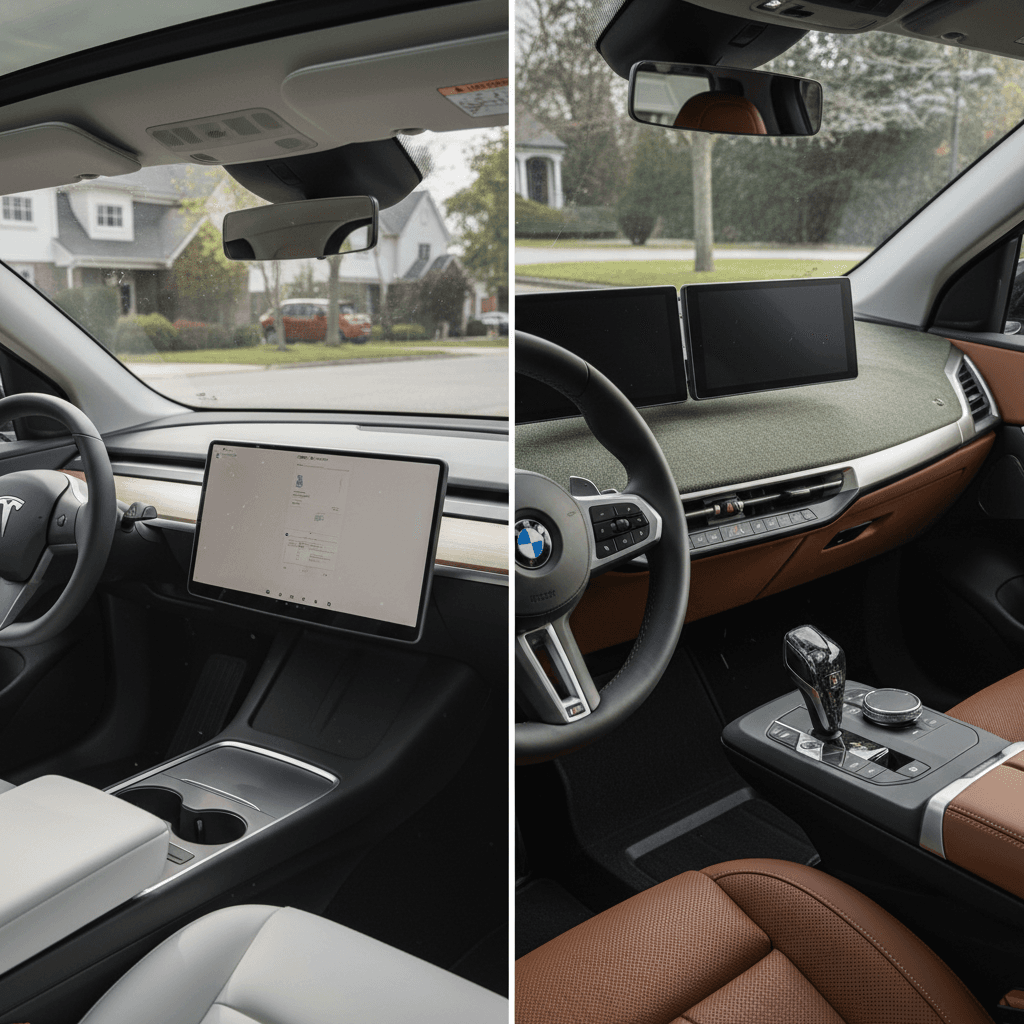
Tesla Model Y: practical and minimalist
- Seating: 5 seats standard, available 7‑seat configuration in many model years.
- Cargo: Around 30 cu ft behind the second row and over 70 cu ft with seats folded, plus a front trunk and deep underfloor storage.
- Interior design: Clean, minimalist dash with a single 15-inch touchscreen and almost no physical buttons.
- Ride quality: Can feel firm and busy on rough pavement, especially on larger wheels; some drivers call it "too stiff," others like the sporty feel.
BMW iX: quiet, plush, and premium
- Seating: 5 seats with exceptionally comfortable front chairs and generous rear legroom.
- Cargo: Similar hatchback practicality, but slightly less outright cargo volume than Model Y when you measure every nook.
- Interior design: Warm materials, ambient lighting, crystal‑style controls on many trims, and a big curved dual‑screen display.
- Ride quality: With the available air suspension, the iX is one of the most comfortable EV SUVs on sale, quiet, soft‑riding, and very refined.
Family-hauler reality check
Tech, driver assistance, and infotainment
Tesla has set the tone for in‑car software for years, but BMW has been catching up fast. The Model Y still wins for simplicity and update cadence; the iX counters with richer graphics, better audio, and more traditional controls around the steering wheel.
How the tech experience differs
Both are modern; they just speak different dialects of "high tech"
Tesla Model Y tech experience
- Interface: Nearly everything runs through a central 15-inch touchscreen: climate, navigation, wipers, glovebox, you name it.
- Software feel: Clean, fast, and updated often over the air. New features and tweaks show up regularly.
- Driver assistance: Autopilot is standard; Enhanced Autopilot and Full Self-Driving Capability are paid add‑ons that vary in usefulness by driver and region.
- Infotainment perks: Built‑in streaming services, games, and a very good sound system in many trims.
BMW iX tech experience
- Interface: Curved dual display with a traditional instrument cluster and central touchscreen, plus a rotary iDrive controller.
- Software feel: Rich graphics, deep menus, and strong voice control. Less minimalist, more like a high‑end German luxury car.
- Driver assistance: Adaptive cruise and lane‑keeping are typically well‑tuned; optional Highway Assistant can be very polished.
- Infotainment perks: Excellent premium audio options, augmented‑reality navigation in some trims, and a more conventional app ecosystem.
Try both UIs before you buy
Charging experience and road trips
Today, charging can matter just as much as range. The Model Y’s trump card is simple: the Supercharger network. The BMW iX can use the same DC fast‑charging hardware as any other CCS‑equipped EV and is beginning to get access to NACS as adapters and ports roll out, but the experience isn’t yet as seamless as "plug in and walk away" in a Tesla.
Charging comparison: what you’ll feel day to day
Home charging setup
Both SUVs are happiest plugged into a Level 2 home charger overnight. A 48‑amp unit will refill either battery from low to full well before morning. If you’re new to home charging, start with an <a href="/articles/home-ev-charger-installation">installation plan</a> before you choose your EV.
Public DC fast charging
Model Y drivers can lean heavily on Tesla’s Supercharger network, which remains one of the most reliable options in the U.S. iX drivers rely primarily on CCS networks like Electrify America, EVgo, and others, which can be spottier by location.
Charging speed
On DC fast chargers, both vehicles can comfortably take high power. In the real world, you’ll see the fastest speeds between about 10% and 60–70% charge; topping off to 100% for a road trip leg will slow down no matter which SUV you own.
Route planning
Tesla’s built‑in trip planner automatically routes you through Superchargers with realistic charging stops. BMW’s system is improving, but many iX owners still lean on third‑party apps like A Better Routeplanner and PlugShare for planning.
Charging costs
Because the Model Y is more efficient, it typically uses fewer kWh for the same trip, especially at highway speeds. If you pay per kWh at public stations, the Y often wins on cost to travel the same distance.
Where Recharged fits in
Ready to find your next EV?
Browse VehiclesOwnership costs, reliability, and resale
Neither of these SUVs is a cheap car. But once you get past the purchase price, running costs can look surprisingly reasonable compared with gas‑powered luxury crossovers, especially if you mostly charge at home on a good electricity rate.
- Energy costs: Model Y’s efficiency advantage means fewer kWh per mile. If you do big highway miles, this adds up over years of ownership.
- Maintenance: As pure EVs, both skip oil changes and have fewer moving parts than gas SUVs. Budget for tires, cabin filters, brake fluid, and, on the BMW, potentially pricier wear items as it ages.
- Reliability: Both brands have had software gremlins and fit‑and‑finish complaints, but the iX’s underlying BMW engineering and dealer network are comforting to some buyers. Tesla’s service model is more app‑based and region‑dependent. Look at owner forums for the model years you’re considering.
- Resale value: The Model Y’s huge sales volume and popularity support strong resale, but also mean plenty of competition when you go to sell. The iX starts from a higher MSRP and drops harder early; a smart used purchase can let you flatten that curve in your favor.
Don’t ignore battery health
Who should choose Tesla Model Y vs BMW iX?
Best fit: which SUV suits which driver?
Match your priorities to the right electric SUV
Tesla Model Y is better if…
- You want maximum value and a lower entry price, especially under $50,000.
- You care a lot about charging convenience and plan to road‑trip often.
- You like minimalist interiors and tablet‑style controls.
- You need every last cubic foot of cargo space for family gear, pets, or DIY projects.
- You want strong performance but don’t need a six‑figure flagship SUV.
BMW iX is better if…
- You’re shopping in the $60,000–$90,000 used price band and want every bit of luxury that buys.
- You prioritize quietness, ride comfort, and interior quality above all.
- You prefer a more traditional luxury driving experience with a BMW dealer network behind it.
- You’re okay giving up a little efficiency and cargo room for a much more refined cabin.
- You want an EV that feels distinctly "premium" every time you get in.
How to decide in 3 short test drives
If you’re coming from a mainstream SUV
Test drive a Tesla Model Y Long Range on the same loop you drive every day.
Drive a BMW iX xDrive50 over the same bumps, potholes, and highway expansion joints.
Ask yourself: Which one would you rather sit in for a five‑hour holiday drive with your family?
If you’re coming from a German luxury brand
Start in the BMW iX; note the noise level, seat comfort, and steering feel.
Then drive the Model Y; focus on simplicity, acceleration, and tech, not just materials.
Imagine living with each infotainment system for 5–10 years, which feels more natural to you?
FAQ: Tesla Model Y vs BMW iX
Frequently asked questions
Bottom line: which is better for you?
If you strip away the badges and the online arguments, the answer to “Tesla Model Y vs BMW iX: which is better?” comes down to what you value more once the new‑car smell fades. The Model Y is the smarter buy for most shoppers: it’s quick, efficient, versatile, and supported by a charging ecosystem that makes EV life easy. The BMW iX, on the other hand, is the emotional choice: a genuinely luxurious, serene place to spend time that happens to be electric and seriously quick.
If your heart says "luxury SUV" and your budget agrees, a well‑bought used iX xDrive50 can be a joy every time you pull the door closed. If your priority is stretching your dollars, simplifying charging, and getting into EV life with the least friction, the Model Y is hard to argue against.
When you’re ready to compare real cars instead of spec sheets, browse used Tesla Model Y and BMW iX listings on Recharged. Every vehicle comes with a Recharged Score battery health report, fair‑market pricing, and EV‑specialist support to help you pick the right electric SUV for the way you actually live and drive.