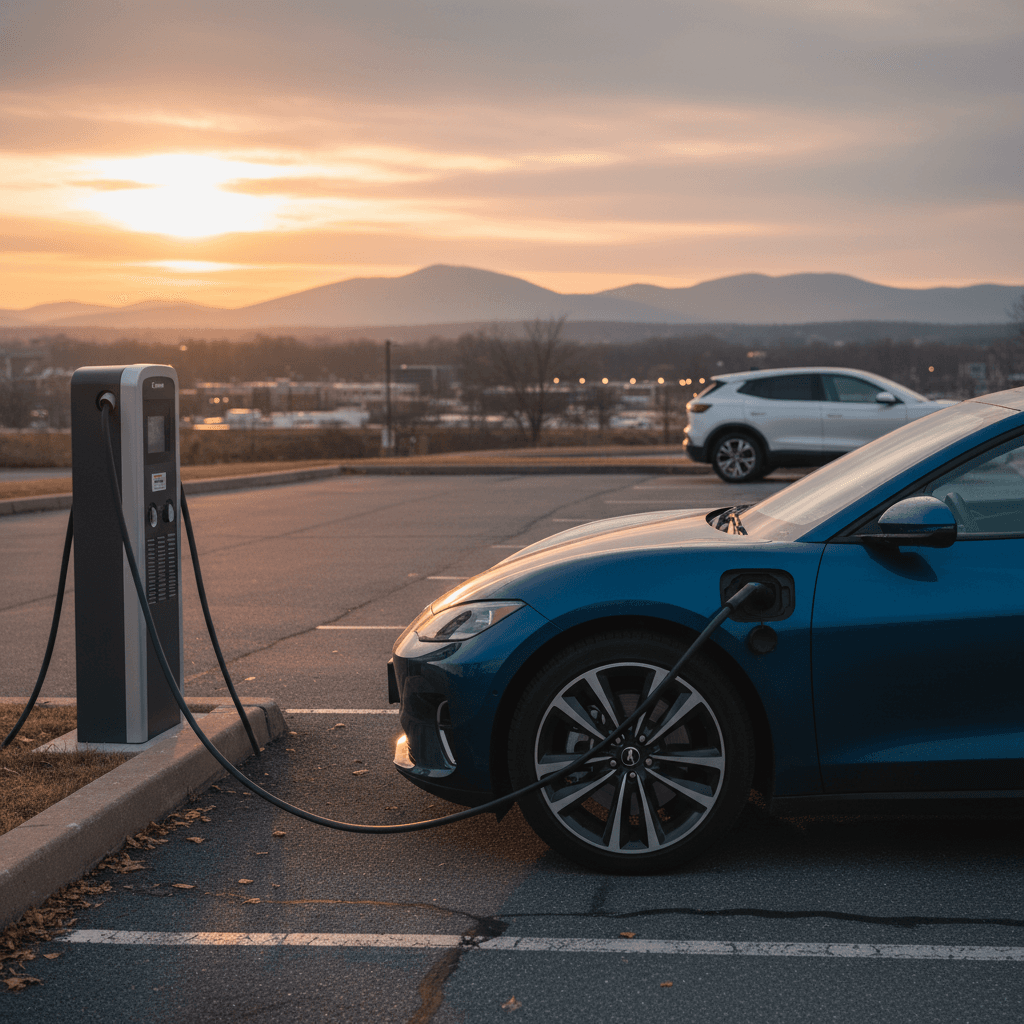
If you drive an electric vehicle in southwest Virginia, knowing where to find reliable EV charging stations in Roanoke is just as important as knowing your favorite route over Mill Mountain. Whether you’re commuting daily, topping up while you shop downtown, or passing through on I‑81, Roanoke now has a surprisingly robust mix of Level 2 and DC fast chargers, if you know where to look and how to use them.
At a glance: Roanoke EV charging
Why Roanoke is a solid place to own an EV
Roanoke EV charging by the numbers
For a mid‑sized metro area, Roanoke punches above its weight. A recent national analysis put the Roanoke–Lynchburg area at more than 300 public chargers and improving quickly, with a roughly 35% jump in the number of chargers year‑over‑year. That translates to more coverage across neighborhoods, shopping areas, and highway corridors, so you’re less likely to feel “range boxed” than drivers in similar‑size cities.
Tip for new Roanoke EV owners
How many EV charging stations are in Roanoke?
Exact counts vary depending on how you draw the map, but most public charging directories now show 20–25 station locations within the city limits and roughly 58–74 individual charging ports when you include nearby suburbs and the 15 km surrounding area. Here’s what that means for you as a driver:
- You’re rarely more than 5–10 minutes from some form of public charging within city limits.
- Coverage is concentrated along key corridors like I‑81, US‑220, and near major shopping districts and dealers.
- A meaningful share of ports are free or low‑cost Level 2 chargers ideal for topping up while you work, eat, or shop.
Station lists aren’t always identical
Types of EV chargers you’ll find in Roanoke
Level 2 vs. DC fast charging in Roanoke
Understanding what each charger can (and can’t) do for you
Level 2 (AC)
These 240‑volt chargers are the workhorses of Roanoke’s public network.
- Common at parking garages, workplaces, hotels, and dealerships.
- Adds roughly 20–35 miles of range per hour depending on your EV.
- Best for stays of 1–4 hours or overnight parking.
DC fast charging
Often called Level 3, these stations are your road‑trip friend.
- Located near I‑81, US‑220, and major arterials.
- Can take many EVs from 10–80% in about 30–45 minutes.
- Great for quick top‑ups on longer drives or when you’re low.
Tesla Supercharger & Destination
Tesla has both Superchargers (DC fast) and Destination (Level 2) sites nearby.
- Supercharger near Roanoke along I‑81 for road‑trippers.
- Destination chargers at hotels, attractions, and dealers.
- Many non‑Tesla EVs can use some sites with a NACS port or adapter.
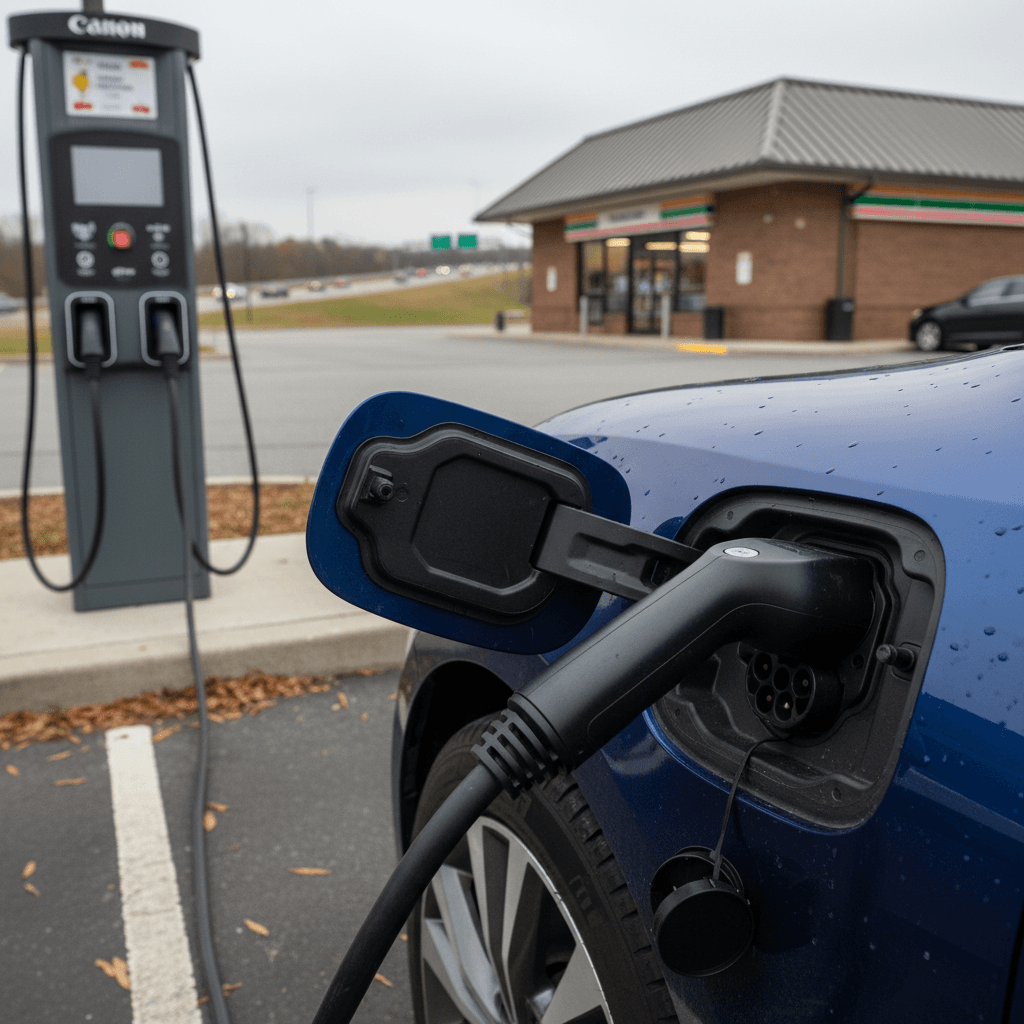
Watch your connector type
Major EV charging networks in Roanoke
Roanoke’s public charging scene is a patchwork of national networks and independent sites. That’s good news: if one network has issues, you typically have alternatives close by.
Top charging networks serving Roanoke
The mix of networks changes over time, but these are the names you’ll see most often when you search for EV charging stations in Roanoke.
| Network | Typical Locations | Charger Types in Area | Good For |
|---|---|---|---|
| ChargePoint | Workplaces, garages, dealers, city lots | Level 2, some DC fast | Daily top‑offs while you work or shop |
| Tesla Supercharger/Destination | I‑81 corridor, hotels, attractions | DC fast & Level 2 (NACS/Tesla connector) | Tesla drivers and NACS‑equipped or adapter‑equipped EVs |
| EVgo | Shopping centers and busy arterials | DC fast, some Level 2 | Quick highway‑adjacent charging |
| Blink | Museums, attractions, some parking | Mostly Level 2 | Longer visits and destination charging |
| Non‑networked / free | Municipal lots, hotels, some dealers | Primarily Level 2 | Budget‑friendly charging if you don’t mind slower speeds |
Always confirm pricing and availability in the network’s app or your preferred EV charging map before you drive to a station.
Set up apps before you need them
Notable EV charging locations around Roanoke
Downtown & city core
- City garages and lots: Several downtown parking facilities have Level 2 chargers you can use while working, dining, or visiting the market.
- Virginia Museum of Transportation area: Often hosts Level 2 chargers through networks like Blink or non‑networked stations.
- Municipal and library lots: Check your favorite map app, Roanoke and surrounding municipalities continue to add ports in public lots.
Highway & suburban corridors
- I‑81 corridor: DC fast charging, including a Tesla Supercharger site and other fast‑charge locations, supports long‑distance travel.
- US‑220 & Cave Spring area: An EVgo fast‑charging site at a shopping center like Cave Spring Corners gives you quick top‑ups around errands.
- Dealership clusters: Stores such as Nissan, Ford, and others often provide Level 2 charging for customers, and sometimes for the public during business hours.
How to actually find these stations
What it costs to charge in Roanoke
Charging costs vary by network, charger speed, and whether the station is operated by a business offering it as a perk. Expect three general price tiers in the Roanoke area:
Typical EV charging costs in Roanoke
Your exact rate depends on the network, time of day, and whether the site owner subsidizes charging.
Free charging
Some Roanoke locations, especially municipal lots, hotels, and auto dealers, offer Level 2 charging at no cost.
Great when you can leave the car for a few hours and don’t mind slower speeds.
Paid Level 2
Paid public Level 2 charging commonly runs around $1–$3 per hour in similar Virginia markets, or a per‑kWh rate that works out similarly.
Cheaper than gasoline on a cost‑per‑mile basis for most EVs.
DC fast charging
Fast chargers are usually priced per kWh and often fall in the $0.25–$0.50 per kWh range.
You pay more for speed, but it’s worth it when you’re short on time.
Watch for idle fees
Planning an EV road trip through Roanoke and the I‑81 corridor
Roanoke sits in a key spot for EV drivers using I‑81 between Tennessee and northern Virginia. With a mix of Tesla Superchargers and multi‑brand DC fast chargers, the region works well as a meal stop or an overnight waypoint.
Checklist for stress‑free EV trips through Roanoke
1. Map chargers along your route
Use your car’s native route planner plus PlugShare or your favorite app to identify at least two fast‑charging options near the point where you’ll want to stop.
2. Confirm connector compatibility
If you drive a non‑Tesla EV, confirm whether the fast‑charging sites near Roanoke use CCS, NACS, or CHAdeMO, and whether you need an adapter. Many new models increasingly support NACS directly.
3. Aim to arrive with buffer
Try to reach Roanoke with at least 10–20% battery so you can comfortably detour if a particular charger is busy or down for maintenance.
4. Pair charging with meals
Choose fast‑charging stops at plazas with restrooms and food. That way, the 30–45 minutes you spend plugged in doesn’t feel like waiting, it feels like a normal break.
5. Check station status day‑of
On the morning you travel, quickly review recent check‑ins and status reports for your planned chargers to catch any outages before you’re committed.
6. Have a Plan B (and C)
Long‑distance EV driving is about redundancy. Save backup stations in your navigation so you’re not scrambling at low state of charge.
Think in segments, not full battery
Home charging vs. public charging in Roanoke
Public stations get all the attention, but if you live in Roanoke and have a driveway or garage, your best “station” is at home. Think of public chargers as your safety net and road‑trip enabler, not your primary source of energy.
Home charging advantages
- Convenience: Plug in at night, wake up full, no detours around town.
- Lower cost per mile: Residential electricity rates are typically cheaper than public fast charging.
- Battery health: Relying on Level 2 instead of daily fast charging is generally easier on your battery over the long run.
If you’re shopping for a used EV, ask whether the previous owner primarily charged at home or lived on fast chargers. It’s not the only factor in battery health, but it’s useful context.
When public charging makes sense
- Apartment or condo living: If you can’t install a home charger, you’ll likely lean on a mix of workplace and public Level 2 plus some DC fast charging.
- Road trips: Fast chargers near Roanoke and along I‑81 handle the big miles.
- Unexpected detours: Sudden errands, weather, or extra passengers can shrink real‑world range; public chargers give you flexibility.
Safety first on home charging
Virginia incentives that support EV charging
State‑level support in Virginia has focused more on building public charging infrastructure and helping businesses install chargers than on subsidizing individual home stations. That still benefits you as a driver, especially if you rely on public charging around Roanoke.
Programs that help expand charging in and around Roanoke
Most of these programs run through the state or utilities rather than directly to consumers, but they shape where chargers appear.
NEVI corridor build‑out
Virginia has been awarded over $100 million in federal NEVI funds to build fast chargers along interstates and major highways, including I‑81 and routes serving southwest Virginia.
Roanoke benefits from new high‑power sites spaced roughly every 50 miles along key corridors.
Virginia EVCAP grants
The state’s Electric Vehicle Charging Assistance Program (EVCAP) funds new chargers in underserved and rural communities.
That can mean more Level 2 and DC fast chargers in smaller towns around Roanoke over time.
Business & panel incentives
Virginia offers tax credits for businesses that install EV chargers, and federal credits can offset a portion of electrical panel upgrades when they support EV charging through at least 2025.
Good news if your employer or landlord is considering adding chargers.
Incentives change, check before you buy
How Recharged helps Roanoke EV drivers
Charging access is only half the equation; the other half is knowing that the used EV you’re buying will deliver the range you expect on Roanoke’s hills and highways. That’s where Recharged comes in.
Making EV ownership simpler for southwest Virginia drivers
If you’re considering a used EV in the Roanoke area, Recharged is built to remove the guesswork.
Verified battery health
Every vehicle on Recharged comes with a Recharged Score Report that includes independent battery health diagnostics.
You get a clear picture of real‑world range before you ever plug into a Roanoke charger.
Flexible ways to buy or sell
Shop, finance, trade in, or consign your EV with a fully digital process, plus an Experience Center in Richmond, VA if you prefer in‑person support.
That’s an easy day trip from Roanoke for a hands‑on look.
Charging‑savvy guidance
Recharged’s EV specialists can talk you through how Roanoke’s charging network fits your lifestyle, from daily commuting to Blue Ridge Parkway weekends.
That’s advice you rarely get on a traditional dealer lot.
Buying with charging in mind
Ready to find your next EV?
Browse VehiclesRoanoke EV charging FAQ
Common questions about EV charging in Roanoke
Bottom line: EV charging in Roanoke
Roanoke may not have the wall‑to‑wall charging coverage of a big coastal metro, but for most EV owners it doesn’t need to. With dozens of public ports, a growing mix of DC fast chargers, and a solid share of free Level 2 options, the city is already practical territory for daily electric driving and I‑81 road trips, especially if you can charge at home overnight.
If you’re considering your first EV, or your first used EV, the key is to match the car’s range and charging capabilities to Roanoke’s growing infrastructure. That’s exactly what Recharged is built to do: we pair verified battery health, clear pricing, and EV‑savvy guidance so you can pick an electric vehicle that fits your life in southwest Virginia today and where charging is headed over the next few years.