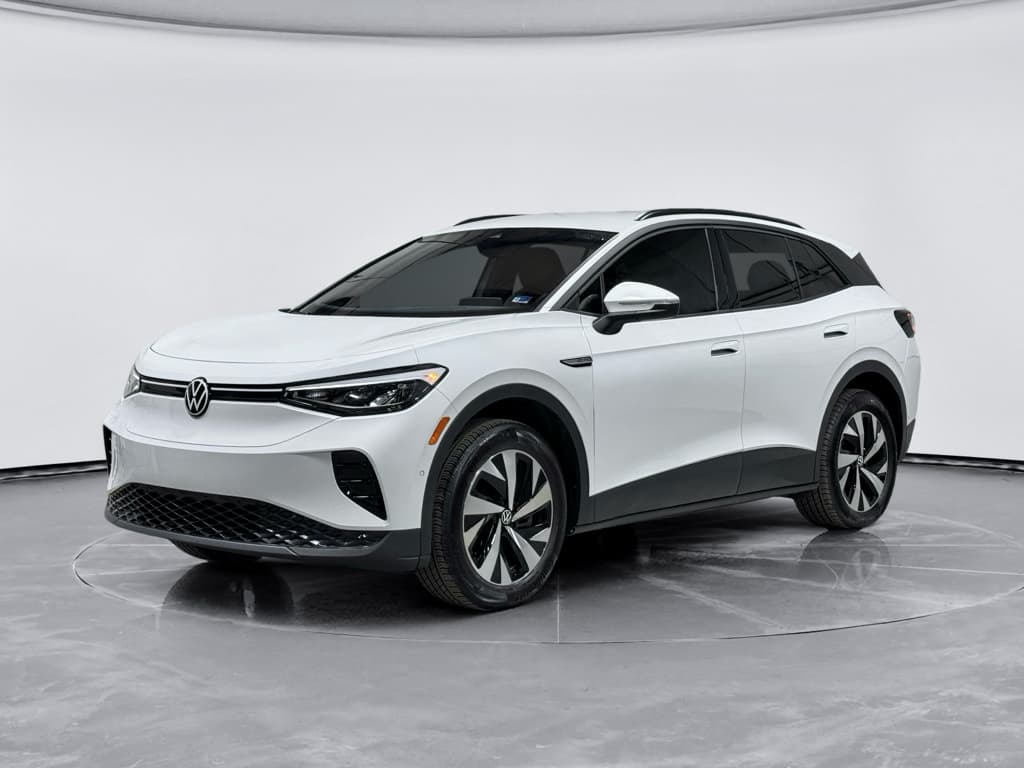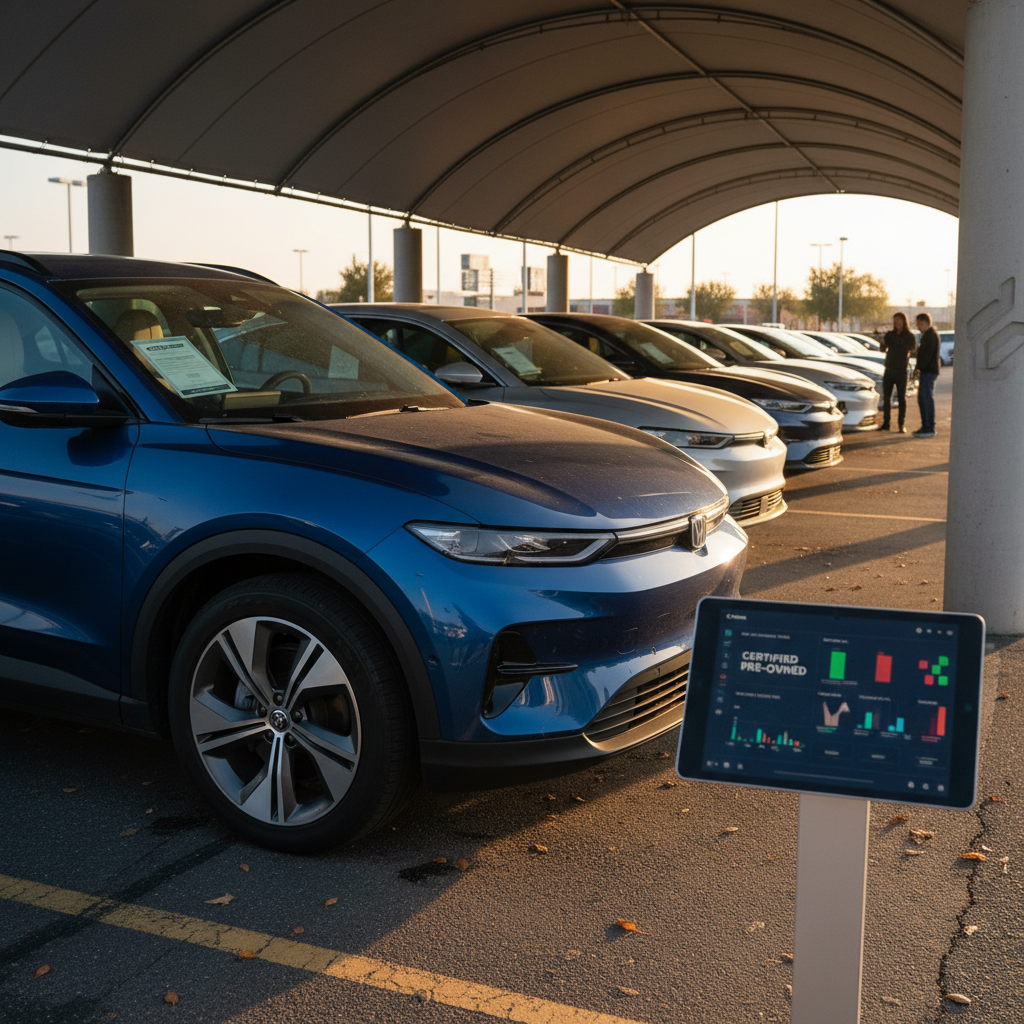
If you’re researching VW ID.4 common problems and fixes, you’ve probably heard mixed things. On paper, Volkswagen’s electric SUV offers solid range, a roomy cabin, and an 8‑year battery warranty. In practice, owners report a pattern of software bugs, charging hiccups, and a handful of serious recalls, especially on early 2021–2024 models. This guide walks you through the issues that actually show up, how to fix or prevent them, and what to look for if you’re buying a used ID.4.
Quick take
VW ID.4 reliability at a glance
VW ID.4 reliability snapshot (through 2025)
Reliability varies by model year. Early 2021–2022 builds were hit hardest by infotainment bugs and charging quirks. 2023–2024 models gained hardware and software updates, but also brought new problems, like faulty on‑board chargers that could strand cars and trigger recalls. When you look at an ID.4 today, you’re really evaluating three things: software stability, charging hardware reliability, and whether all recall work has been completed.
Key warranty and recall basics for the ID.4
What Volkswagen actually covers on the ID.4
Know your coverage before you chase a fix
High‑voltage battery
VW backs the ID.4’s main battery for 8 years / 100,000 miles (whichever comes first) against defects and excessive capacity loss, typically below about 70% of original capacity.
New vehicle warranty
Most 2021+ ID.4s include a 4‑year / 50,000‑mile new‑vehicle limited warranty plus 2 years/20,000 miles of scheduled maintenance and roadside assistance in early years.
Recalls & campaigns
Software updates, door handle fixes, on‑board charger replacements, and some battery repairs are covered as recall or service campaigns at no cost, regardless of ownership changes.
How to check an ID.4 for open recalls
Common VW ID.4 charging and battery problems
Most of the headlines around the ID.4 center on its charging and battery behavior. Here it’s important to separate three different layers: (1) the big high‑voltage battery pack, (2) the on‑board charger electronics, and (3) the software that controls everything and talks to charging stations.
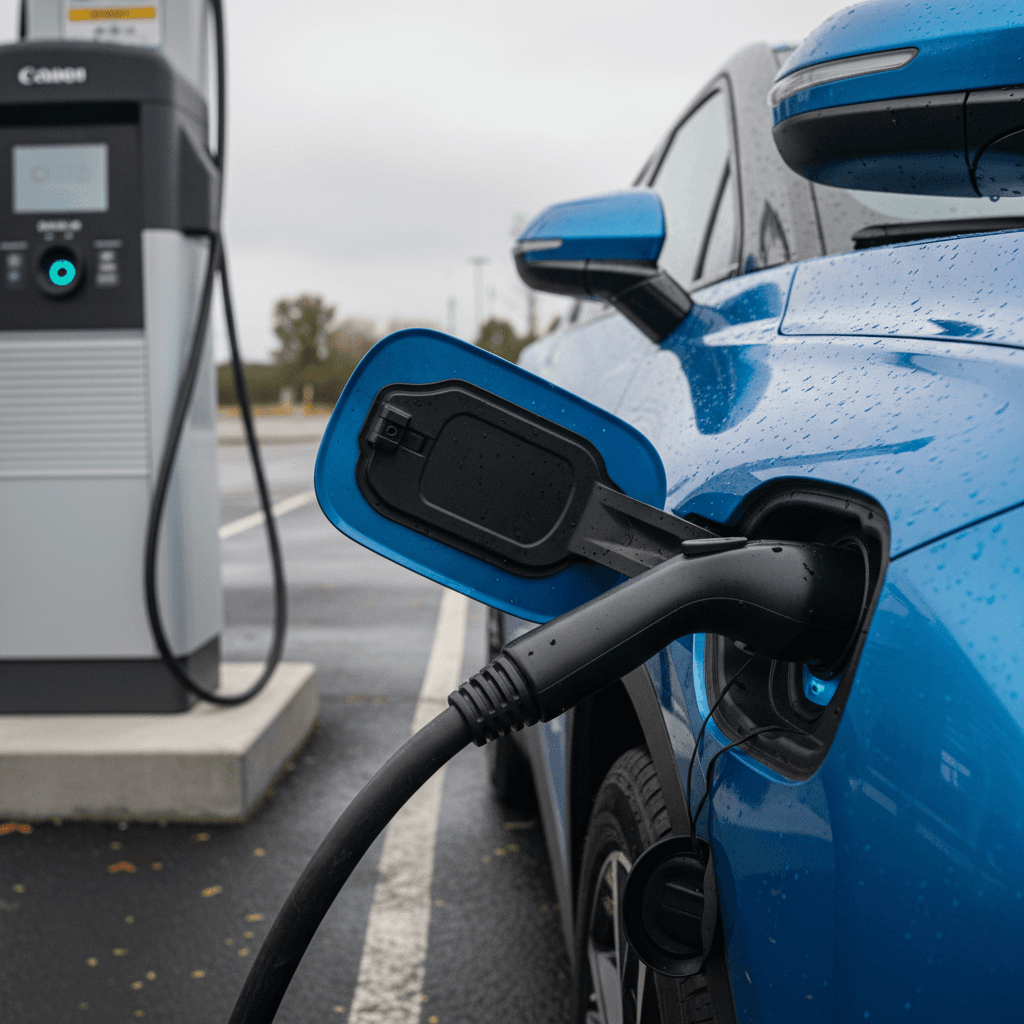
1. Failure to charge or sudden charging interruptions
Owners of 2021–2024 ID.4s commonly report situations where the car:
- Refuses to start a DC fast‑charge session
- Starts charging, then stops after a few minutes
- Shows battery or charging error messages on the dash
Sometimes this is a charging‑network problem (Electrify America in particular has had uptime issues), but in other cases the car’s on‑board charger or software is at fault.
Practical fixes and workarounds
- Try another stall or network: If DC fast charging fails, move to another stall or a different brand of charger to rule out station issues.
- Reboot the car’s systems: Power the car off completely, lock it, walk away for a few minutes, then retry. Many minor software hiccups clear after a "sleep" cycle.
- Capture photos of error messages: Dealers take intermittent problems more seriously when you can show exact warning codes and timestamps.
- Ask specifically about on‑board charger recalls: 2024 ID.4s and sibling models have been recalled for faulty on‑board chargers that fail to properly manage the 12V system and can cause loss of power. Those parts are replaced under recall at no charge.
Red‑flag charging behavior
The good news: so far, when the main pack is healthy, ID.4 battery degradation rates look modest. Real‑world data from high‑mileage owners suggests roughly 5% capacity loss after about 60,000–70,000 miles, which tracks with VW’s own projections. The bad news is that when something in the charging chain goes wrong, you may face lengthy wait times for diagnosis and parts, because EV‑trained technicians and components are still in short supply in some markets.
- Keep your regular charge limit around 70–80% for daily use to reduce stress on the pack.
- Avoid frequent DC fast charging from near‑zero to 100%; use it for trips, not daily commuting.
- In very cold weather, expect slower charging speeds and higher consumption, pre‑condition the car and battery when possible.
- If range suddenly drops 15–20% with no clear explanation, schedule a dealer battery test under warranty.
Software and infotainment glitches
If there’s a single theme across ID.4 owner forums, it’s this: the software can be flaky. Volkswagen has pushed multiple over‑the‑air and dealer‑installed updates to fix bugs, but problems still crop up, especially on 2021–2023 cars running older software builds.
Most common ID.4 software and infotainment complaints
What owners report, and what usually fixes it
Frozen or black infotainment screen
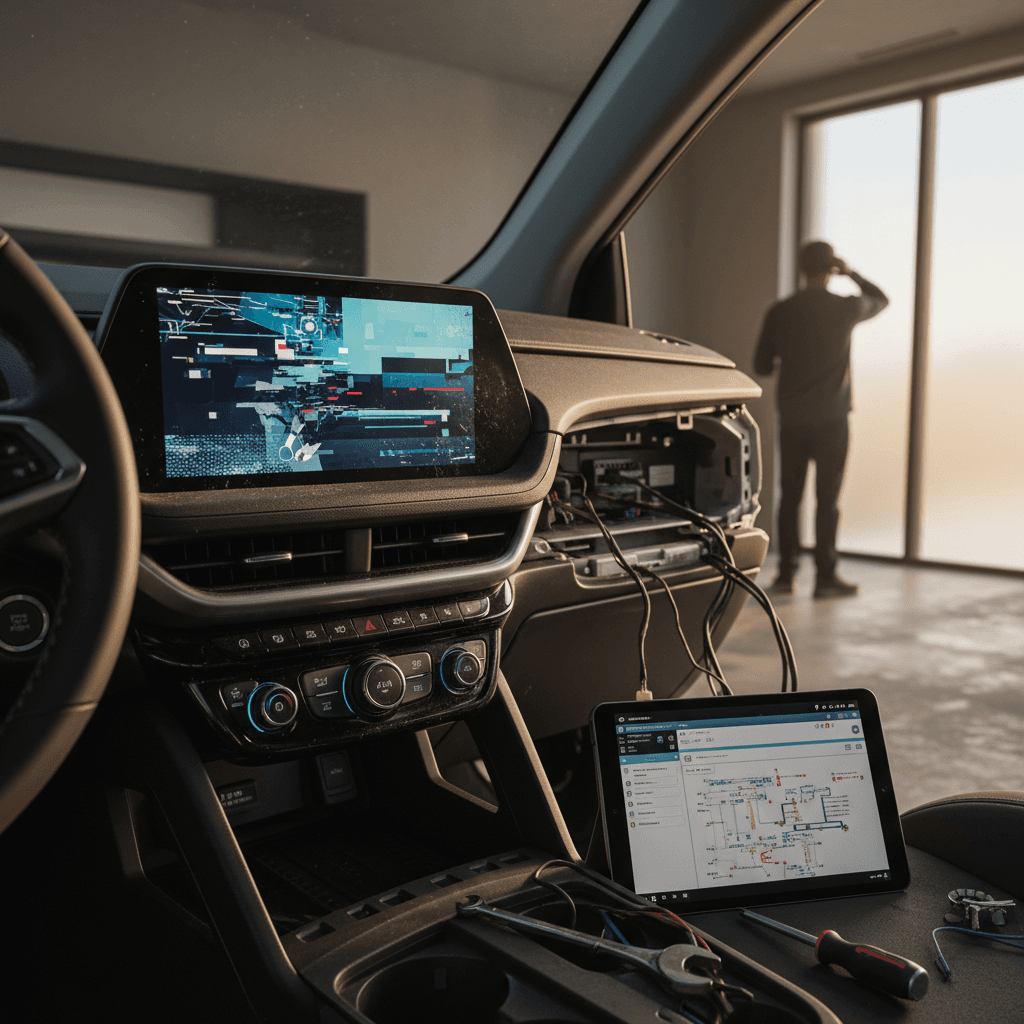
Owners report the center screen going blank or freezing while driving, sometimes taking the digital gauge cluster with it. In recall cases, this can even knock out the speedometer and backup camera until the system reboots.
Fix: Try a soft reset (hold the power/volume knob until the VW logo appears). If the problem repeats, push the dealer for the latest software update or recall campaign; some issues require a full software reflash at the dealership.
VW app and remote services not updating
The MyVW app often shows stale charging data or loses connection, especially after software updates on the car or phone.
Fix: Check privacy and data‑sharing settings in the car’s menu, ensure "online services" and data sharing are enabled, then power‑cycle both the vehicle and your phone. If that fails, uninstall and reinstall the app. Persistent issues may be back‑end server problems that only VW can resolve.
Navigation and GPS glitches
Some owners describe incorrect vehicle location, wrong speed limits, or a dead SOS/telematics function tied to the nav module.
Fix: Dealers may replace or reprogram the navigation/telematics control unit under warranty. Document symptoms and frequency carefully, and reference existing complaints when opening a case.
User profiles and feature access bugs
It’s not unusual for ID.4s to mis‑identify the "Primary User," blocking features such as Plug & Charge or storing inconsistent settings.
Fix: Deleting user profiles, performing a factory reset of the infotainment system, and re‑pairing the MyVW app often clears this. If not, a dealer software update may be needed.
When a software bug becomes a safety issue
Electrical and 12V issues
Beyond the high‑voltage pack, the ID.4 still relies on a conventional 12‑volt battery to wake up computers, run accessories, and close contactors. If that small battery fails or isn’t kept charged properly, you can wind up with a "dead" EV that won’t boot, even though the main battery is full.
Typical electrical issues ID.4 owners encounter
What it looks like, what might be happening, and how it’s usually fixed.
| Symptom | Likely area | Owner‑level checks | Typical dealer fix |
|---|---|---|---|
| Car won’t start / random 12V errors | 12V battery / on‑board charger | Check for lights left on, try jump‑start if safe, note temperature conditions | Test and replace 12V battery; in some recalls, replace faulty on‑board charger module |
| Multiple warning lights with no obvious problem | Body control modules / sensors | Inspect for dirt or ice on cameras and radar sensors; wash car | Reprogram or replace affected control module, update software |
| Random exterior lighting issues (e.g., dim DRL) | Lighting modules / LEDs | Visually inspect lights, note when issue appears (cold, wet, etc.) | Replace LED module or harness under warranty |
| Accessory glitches (heater, wipers, steering wheel heat) | Electrical accessories / BCM | Toggle feature off/on; try vehicle reboot | Replace faulty switches or modules, apply software patches |
Most electrical complaints are fixable under warranty, but intermittent issues require good documentation.
Don’t ignore the little 12V battery
Safety recalls: doors, gear display, fire risk
By 2025, VW had launched several high‑profile recall campaigns on the ID.4. A few are annoying software updates; others are serious enough to warrant do‑not‑drive or park‑outside warnings. If you’re buying used, assume nothing, verify every recall has been done.
Major ID.4 recall themes to understand
1. Doors that can open while driving
Water intrusion into door handle electronics prompted a recall and even a production halt at VW’s Chattanooga plant. Affected vehicles require <strong>new door handles and a software update</strong> to ensure doors stay latched properly.
2. Gear indicator software issues
A software bug in some ID.4s and sibling EVs caused the gear position to display incorrectly, raising the risk of roll‑away if the parking brake wasn’t applied. VW’s fix is a <strong>dealer software update</strong> under recall.
3. Infotainment failures affecting speedometer and camera
Roughly 80,000 ID.4s from 2021–2023 were recalled for infotainment crashes that could knock out the speedometer and backup camera. Dealers install <strong>updated software</strong> to stabilize the system.
4. High‑voltage battery cell fire risk
A smaller recall covers certain 2023–2024 ID.4s with high‑voltage battery modules that may have misaligned electrodes and an elevated fire risk, especially while charging. VW is replacing affected modules and instructs owners to <strong>limit fast charging and park outdoors</strong> until repairs are complete.
Buying used? Make recall proof part of the deal
Everyday annoyances vs deal‑breaking faults
Not every complaint you see on owner forums is a catastrophe. Some are quirks you can live with; others justify walking away from a used example or pressing VW for a buyback under your state’s lemon law. It helps to sort them into buckets.
Annoyances many owners just live with
- Slow or occasionally buggy infotainment, especially when cold
- Rain‑sensing wipers that don’t behave as expected
- Minor app connectivity issues that require periodic logouts or reinstalls
- Over‑sensitive driver‑assist warnings that improve after a good wash of cameras and sensors
These can be frustrating, but they rarely leave you stranded.
Problems that should trigger serious action
- Repeated failure to charge on multiple networks or at home
- Loss of propulsion or unexpected shutdown while driving
- Persistent warning lights for battery, powertrain, or braking systems
- Doors popping open, gear indicator confusion, or total loss of speedometer/visibility systems
For these, document everything, work closely with the dealer, and, if repairs drag on without resolution, explore lemon‑law options with a qualified attorney in your state.
Preventive maintenance and best practices
The ID.4 doesn’t need oil changes, but it does benefit from a little planned attention. A few habits can dramatically reduce your odds of getting stuck in the service lane, or on the side of the road.
Simple habits to keep your ID.4 out of trouble
1. Keep software and maps current
Schedule dealer visits for major software campaigns and accept over‑the‑air updates when you can. Many bugs, infotainment crashes, navigation problems, driver‑assist quirks, are fixable with the latest builds.
2. Baby the battery
Use a daily charge limit of 70–80%, avoid sitting at 100% or near‑zero for long periods, and reserve DC fast charging for trips. These habits protect range and reduce stress on the pack.
3. Watch the 12V battery
Ask your service advisor to load‑test the 12V battery at least annually once the car is 3–4 years old, and consider proactive replacement in harsh climates.
4. Treat sensor errors like maintenance reminders
If you see repeated warnings for front assist, lane‑keep, or parking sensors, clean cameras and radar areas thoroughly. If issues persist, schedule a calibration or inspection before they escalate.
5. Document everything early
When the first glitch pops up, charging error, screen blackout, or strange noises, take photos or video and note mileage and conditions. This record is gold if you later need warranty or lemon‑law support.
Buying a used VW ID.4: checklist
Used ID.4 prices have become attractive compared with new EVs. That makes them tempting, especially if you’re cross‑shopping against compact crossovers from Hyundai, Kia, Tesla, or Ford. But this is one model where doing your homework up front absolutely pays off.
Smart used‑ID.4 shopping game plan
What to verify before you sign
1. Verify model year and build origin
Early 2021–2022 German‑built cars and later Chattanooga‑built cars have different software and hardware mixes. Ask the seller for the build date and plant, then research which recalls and TSBs apply to that combination.
2. Get a battery and charging health snapshot
During a pre‑purchase inspection, review recent DC fast‑charging behavior and home charging history. Look for error messages, abrupt charge‑rate drops, or big unexplained range swings.
At Recharged, every vehicle comes with a Recharged Score Report that includes independent battery health diagnostics and real‑world range estimates, far more informative than a generic "good battery" claim in a listing.
3. Demand service and recall records
Ask for dealer printouts showing completed recalls and major warranty work, especially for door handles, infotainment software, on‑board chargers, and any high‑voltage battery repairs.
Hands‑on checks during your test drive
1. Cold start and boot‑up behavior
With the car sitting overnight or several hours, power it up and see how long the screen and gauges take to wake. Watch for error lights or blacked‑out displays.
2. Infotainment stress test
Connect your phone, run navigation, stream audio, and toggle driver‑assist features. The system should stay responsive without freezing or rebooting mid‑drive.
3. Charging test, if possible
At minimum, plug into a Level 2 station to confirm the car charges cleanly. Ideally, add a short DC fast‑charge test to see if it ramps to expected power without errors.
4. Door and window operation
Cycle all doors and windows, then drive slowly over uneven pavement while someone watches for warning lights or unlatching. Verify any door‑handle recall work on the paperwork.
5. Sensor and safety tech check
Try adaptive cruise, lane‑keep assist, and parking sensors. False warnings or inoperative systems can point to calibration issues or upcoming repair bills.
How Recharged can help with a used ID.4
Ready to find your next EV?
Browse VehiclesFrequently asked questions about VW ID.4 problems
VW ID.4 problem & reliability FAQ
Bottom line: Is the VW ID.4 a bad buy?
The VW ID.4 isn’t a disaster, but it’s not a trouble‑free appliance either. The most serious issues, doors that may open unexpectedly, faulty gear displays, fire‑risk battery modules, and crashing infotainment that blanks out critical information, are exactly why Volkswagen and regulators have pushed out multiple recalls. Those repairs are fixable, but only if they’re actually done on the car you’re driving or planning to buy.
If you’re willing to stay on top of software updates, keep good records, and insist on thorough inspections, the ID.4 can still deliver comfortable, quiet EV miles and manageable running costs. Your best move is to treat "VW ID.4 common problems and fixes" as a checklist: confirm the recalls, test the charging behavior, and verify the battery’s health before you commit. Work with sellers and platforms, like Recharged, that are transparent about battery diagnostics and service history, and you’ll tilt the odds of a positive ID.4 ownership experience much more in your favor.