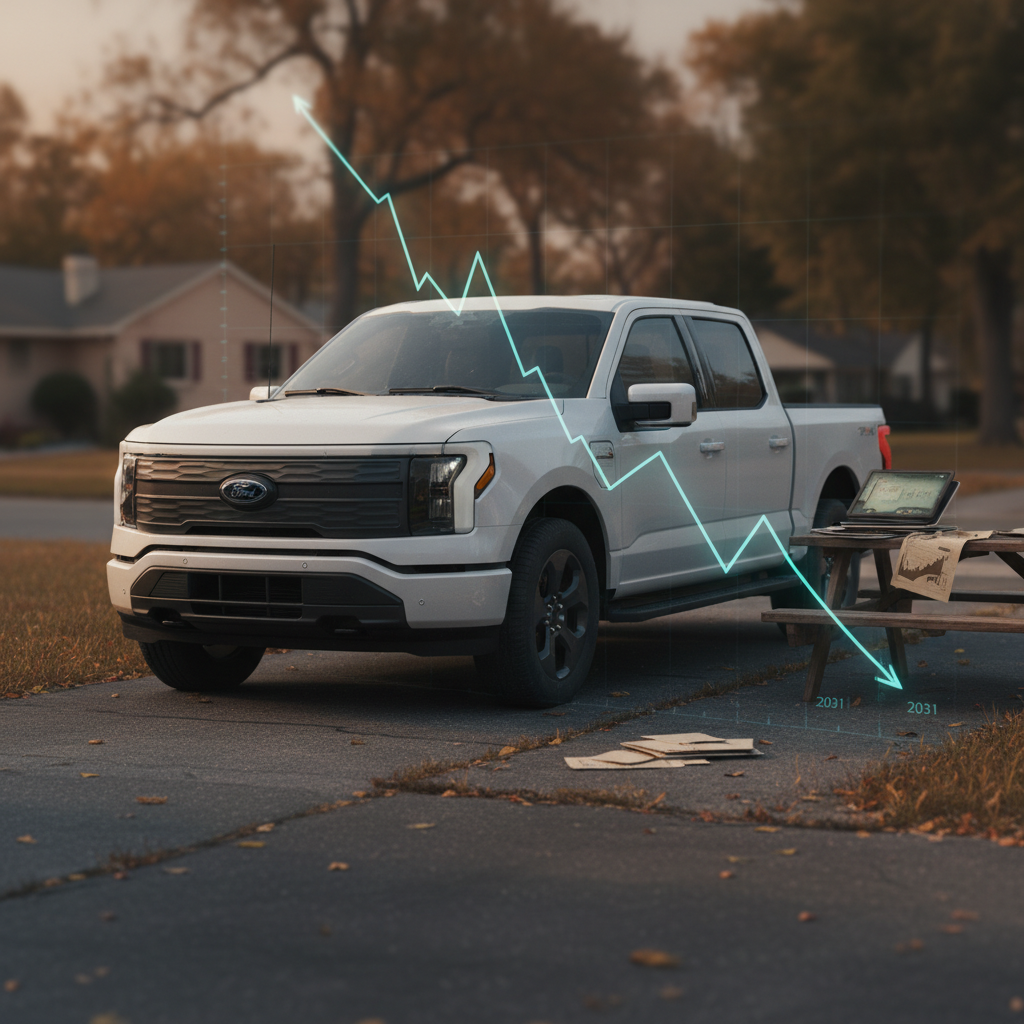
A new Tesla Model X is a six‑figure electric peacock: falcon‑wing doors, three rows, instant torque. Five years later, the same SUV can be sitting on a used lot for half the money. Understanding the Tesla Model X depreciation curve over 5 years is the difference between overpaying for an ego trip and landing one of the best value plays in the EV world.
Luxury EVs drop harder than average
Why the Tesla Model X depreciation curve matters
- Your real cost of ownership once the new‑car smell fades.
- Your leverage when you’re buying used and deciding what “fair” looks like.
- Your downside risk if you’re stretching on financing and plan to sell or trade in within a few years.
How the Model X compares after 5 years
Sticker shock goes both ways
How fast does a Tesla Model X depreciate in 5 years?
Exact numbers vary by year, trim, and market conditions, but across multiple data sources and real‑world listings, a reasonable baseline for the Tesla Model X 5‑year depreciation curve in the U.S. looks like this for a vehicle bought new and driven around 12,000–15,000 miles per year:
Illustrative 5‑year Tesla Model X depreciation curve
Example using a $100,000 new MSRP to make the percentages easy to see. Actual prices vary, but the shape of the curve is similar.
| Ownership year | Approx. value vs. original MSRP | Approx. market value on $100k MSRP | What it feels like in the real world |
|---|---|---|---|
| New (Year 0) | 100% | $100,000 | You paid full freight and bragged about the doors. |
| End of Year 1 | ≈75–80% | $75,000–$80,000 | Early discount as new‑car supply, incentives and tax credits shift. |
| End of Year 2 | ≈60–65% | $60,000–$65,000 | Major options (Plaid, 6‑seat) still command a premium. |
| End of Year 3 | ≈45–50% | $45,000–$50,000 | Studies have pegged the Model X at just over 50% depreciation by this point. |
| End of Year 5 | ≈35–40% | $35,000–$40,000 | Total drop of roughly 60–65%; where many savvy used buyers jump in. |
The Model X takes its biggest hit in the first three years; the curve then starts to flatten between years four and six.
Think in bands, not absolutes
Model X 5‑year depreciation curve, year by year
Years 0–2: The cliff
This is when the Model X falls hardest. You’re stacking three forces:
- New‑car price cuts and incentives from Tesla that instantly drag used values down.
- Rapid tech updates (hardware revisions, interior refreshes, Autopilot hardware changes).
- Front‑loaded depreciation that hits all new cars, amplified by the X’s high MSRP.
If you buy new and sell in year two, you’ve paid almost the maximum price for the minimum ownership period. Financially, it’s the worst of both worlds.
Years 3–5: The sweet‑spot slide
By year three, that same Model X is usually down around half of its original value. By year five, it has typically lost about 60–63% of MSRP.
From the buyer’s side, this is where the curve gets attractive:
- Big dollars already written off by the first owner.
- Plenty of useful life left, especially on the battery and drivetrain.
- Interior materials and software age more gracefully than most luxury SUVs.
From the seller’s side, this is where you need to be realistic. The market simply doesn’t value five‑year‑old luxury EVs the way it values new ones.

Factors that bend the Model X depreciation curve
What makes one Model X worth more than another?
Same year and mileage can still mean very different resale values.
Mileage & usage
Like any vehicle, miles matter. A five‑year‑old X with 35,000 miles will sit on a higher part of the curve than one with 90,000 miles.
Short‑trip urban use with many DC fast‑charges can hurt long‑term range compared with steady highway miles.
Battery health & pack size
Buyers pay more when they see strong real‑world range. Larger‑pack variants (90D, 100D, Long Range) generally retain value better than early, smaller‑battery cars.
A documented battery health report can move a car up the curve.
Trim, seats & options
Six‑seat interiors, towing packages, premium audio, and Plaid/Performance trims all influence resale.
The trick: some options cost more new than the used market is willing to repay. That gap is your opportunity as a buyer.
Condition & history
Panel gaps and paint issues might be Tesla forum jokes, but major accident history is not. Clean Carfax, no structural repairs, and well‑documented service keep a Model X at the top of its value range.
Region & climate
Cold‑weather states can show a bit more cosmetic wear, while hot‑sun markets can fade interiors.
Heavy snowbelt use also means you should pay closer attention to underbody and suspension wear.
Software, Autopilot & charging
Access to fast charging, current software, and desirable Autopilot/FSD packages can all nudge values higher.
Just don’t overpay for FSD; the used market often discounts it heavily versus Tesla’s list price.
How Recharged normalizes all this
Battery health, range and resale value
With a Model X, battery health is the quiet hand steering the depreciation curve. Two examples can have the same year and mileage yet be thousands of dollars apart simply because one still delivers most of its original range and the other doesn’t.
Battery checks that directly affect value
1. Real‑world range vs. original EPA
Compare current full‑charge range to the original EPA rating for that trim. A healthy pack that has lost only ~5–10% in five years supports the higher end of the value range.
2. DC fast‑charging history
Frequent DC fast charging, especially on road‑trip duty in hot climates, can accelerate degradation. Fewer fast charges and more gentle home Level 2 charging usually mean a healthier pack.
3. Thermal management & software updates
Tesla’s over‑the‑air updates and robust thermal management help, but you still want to see that the car has stayed current on software and hasn’t been running with persistent battery or charging faults.
4. Battery warranty remaining
Most Teslas carry an 8‑year battery and drivetrain warranty. A five‑year‑old Model X with three years of battery coverage left is simply worth more than one that’s already aged out.
Why buyers love 4–6‑year‑old Teslas
Real‑world price examples for used Model X
So what does all of this look like in actual asking prices? Used‑car platforms and auction results in late 2025 and early 2026 show a fairly consistent pattern for clean‑title U.S. Model Xs:
- 3‑year‑old Model X (≈36k–45k miles): commonly listed in the mid‑$50,000s to low‑$60,000s depending on trim and options.
- 5‑year‑old Model X (≈60k–75k miles): often advertised around the high‑$30,000s to mid‑$40,000s for well‑kept Long Range and 100D‑type trims.
- Older pre‑refresh or high‑mileage examples: can dip into the low‑$30,000s, but you should be uncompromising on battery health and service history at those prices.
Be wary of outliers, both cheap and expensive
When in the curve to buy a used Tesla Model X
Best Model X buying windows by depreciation stage
Value‑focused families
Target <strong>4–6 years old</strong>, ideally 50k–70k miles.
Look for Long Range or 100D‑size packs with strong battery health.
Skip ultra‑expensive options like FSD if they don’t meaningfully change your use case.
Use a battery health report, like the Recharged Score, to decide whether a specific example deserves top‑of‑market pricing.
Performance‑minded drivers
A <strong>3–4‑year‑old Performance or Plaid</strong> model sits in the steepest drop but still feels very new.
Expect to pay more in dollars, but you’re still saving heavily versus buying the same trim new.
Be extra picky about tire, brake, and suspension wear; these cars get driven hard.
Budget‑conscious shoppers
A <strong>6–8‑year‑old</strong> Model X can be priced like a new mainstream crossover.
Here, condition and battery health dwarf model year as predictors of cost of ownership.
Avoid cars that are already out of battery warranty unless the price truly compensates for that risk.
Let someone else pay for the doors
Selling or trading in your Tesla Model X
If you already own a Model X, the same 5‑year depreciation curve can help you time a sale and set expectations. In the first three years you’re upside‑down against that steep slope; by years four and five, values are lower but more predictable.
1. Know where you sit on the curve
Start with age and mileage, then adjust for spec and condition:
- Up‑market trims (Plaid, Performance, six‑seat) sit higher on the curve.
- High mileage, accident history, and obvious wear pull you down it.
- A documented battery health check anchors you in the best possible band.
2. Compare private sale vs. instant offer
Private sale may net you more, but it takes time and patience. An instant offer or consignment option, like Recharged provides, trades a bit of top‑line price for certainty, speed, and a curated buyer pool specifically shopping for used EVs.
Either way, the 5‑year depreciation curve gives you a sanity check: if a quote is wildly below what similar‑age Xs are fetching, ask why.
Steps to maximize your Model X’s resale value
Get a fresh battery and health report
A third‑party battery diagnostic or a Recharged Score Report showing strong pack health is one of the best value‑add documents you can offer. It reassures buyers and supports a price at the upper end of the depreciation band.
Document software, service and recalls
Keep records of major software updates, recall work, and routine service. Buyers of used Teslas care that the car has been kept current and cared for, not just washed before photos.
Detail the interior and fix the obvious stuff
Curb‑rashed wheels, scuffed interior trim, and cloudy headlights don’t just look bad; they signal neglect. Cleaning these up nudges your car back up the curve relative to other listings.
Collect comparable listings, not wishful thinking
Pull asking prices for same‑year, similar‑mileage Model Xs in your region. Filter out obvious outliers and use the rest to triangulate a realistic range.
How Recharged can help you sell
FAQ: Tesla Model X depreciation and resale
Frequently asked questions about Model X depreciation
Bottom line: How to use the depreciation curve to your advantage
The Tesla Model X is a rare bird: a genuinely futuristic family hauler that behaves, financially, like a traditional big‑ticket luxury car. Over five years, it typically gives back around 60% of its original price. That sounds grim until you realize it’s an invitation: let someone else buy the new‑car dream, then you buy the reality once the curve has done its worst.
If you’re shopping, focus on 4–6‑year‑old examples with strong battery health, clean history, and the options you’ll actually use. If you’re selling, be realistic about where your Model X sits on the curve and use solid data, battery diagnostics, service records, comparable listings, to justify your price.
Recharged exists to make that whole process less of a guessing game. Every used EV on our marketplace comes with a Recharged Score Report, fair market pricing, EV‑specialist support, and nationwide delivery. Whether you’re buying a used Model X or deciding if it’s time to let yours go, understanding the 5‑year depreciation curve turns a daunting luxury EV into a smart, transparent financial decision.