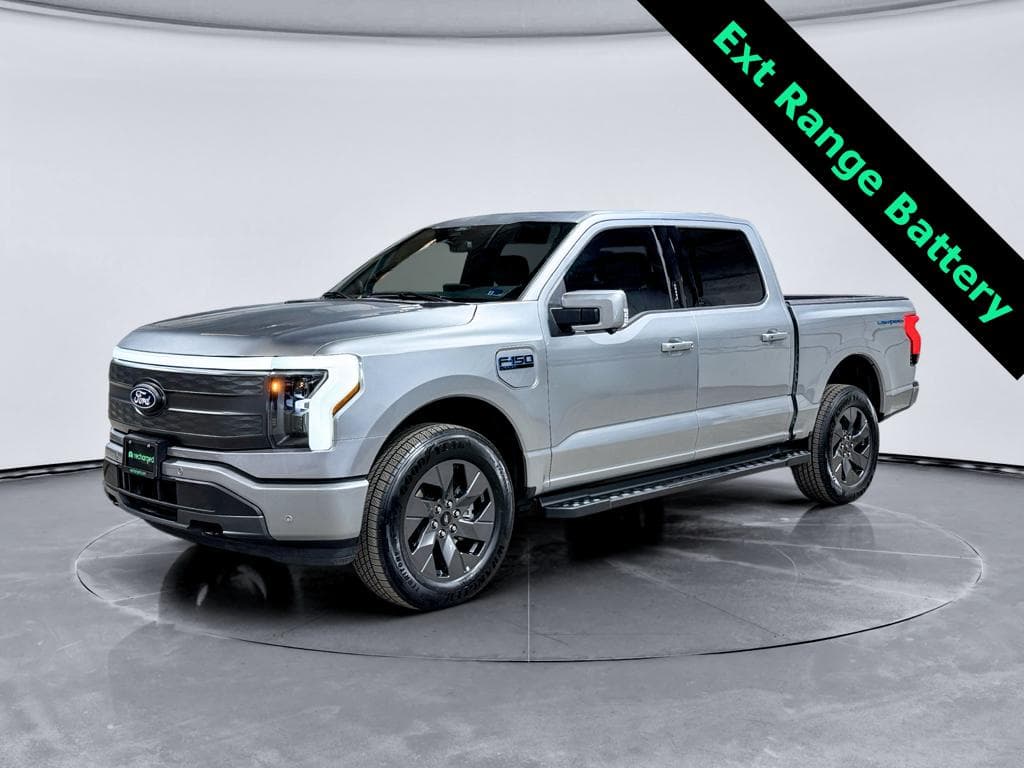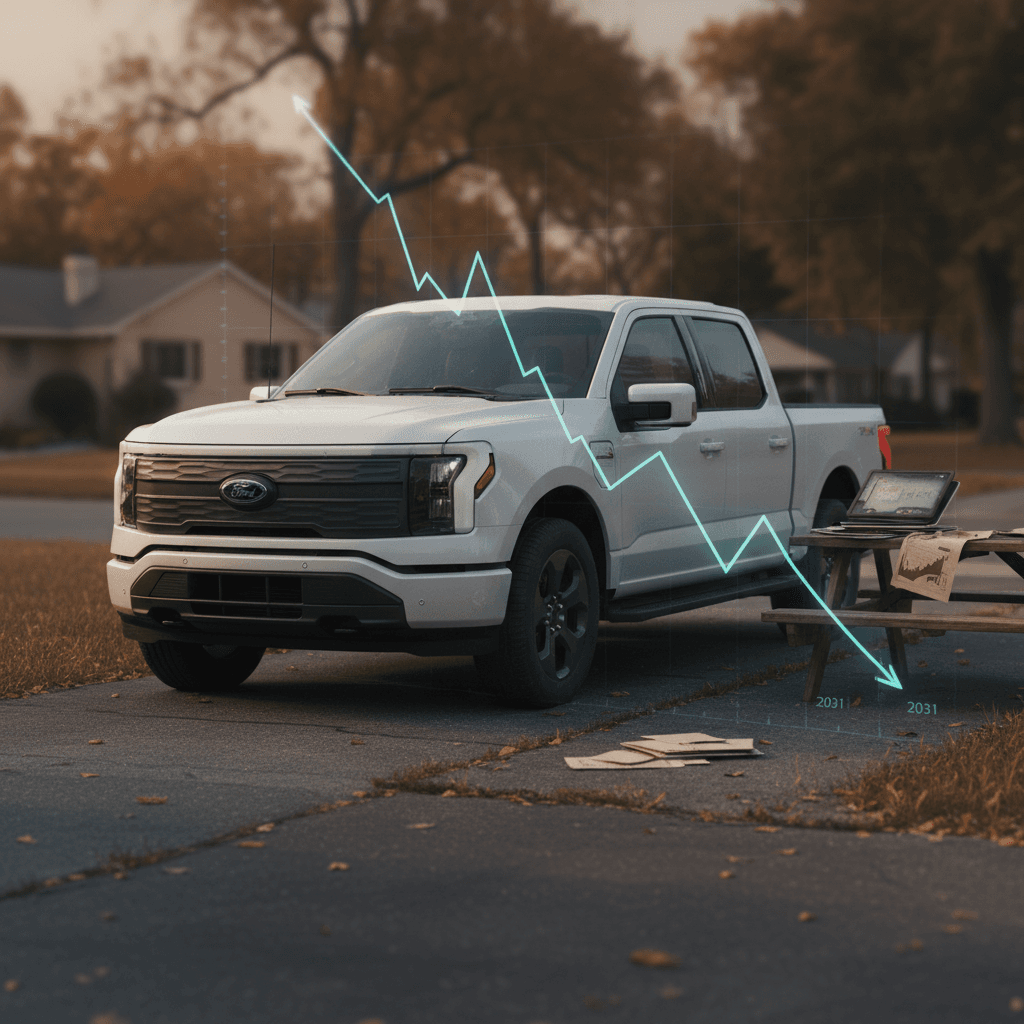
If you’re trying to understand the Ford F-150 Lightning depreciation curve over 5 years, you’re not alone. Early buyers paid new‑truck money for a groundbreaking EV, only to watch used prices fall hard. The good news: that volatility is finally settling into a clearer 5‑year pattern you can plan around, whether you want to buy a used Lightning or decide when to sell yours.
Key 5‑year takeaway
Why the F-150 Lightning’s depreciation curve matters
Depreciation is more than an abstract percentage. It dictates your total cost of ownership, your loan‑to‑value position, and how much flexibility you have to swap into your next truck. With the Lightning, there are three extra wrinkles compared with a gas F‑150: a higher starting MSRP, rapid EV price resets across the industry, and Ford’s late‑2025 decision to discontinue the current all‑electric Lightning in favor of an extended‑range successor. All three shape what its 5‑year curve looks like, and how you should read it.
F-150 Lightning depreciation at a glance
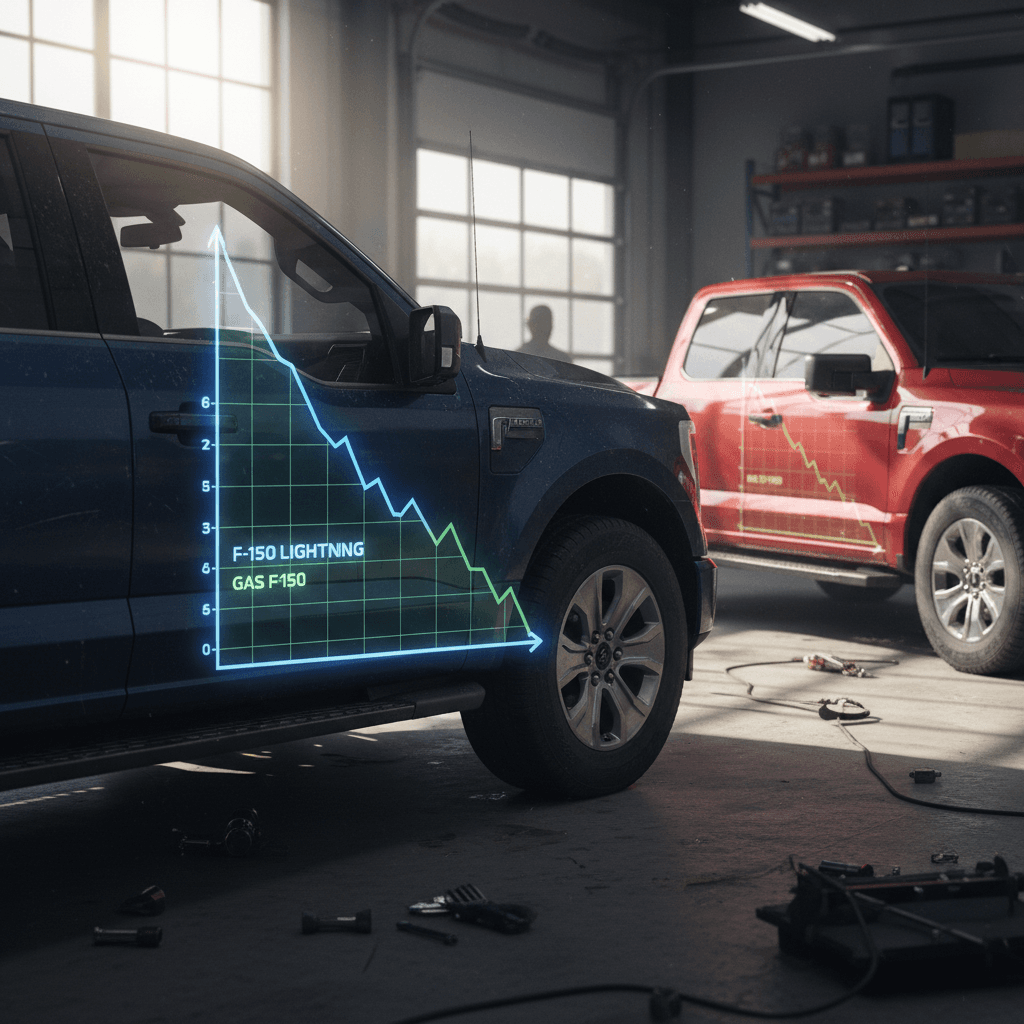
How the F-150 Lightning’s 5‑year depreciation compares to a gas F-150
Typical gas F‑150 5‑year curve
- High residuals: Full‑size pickups are resale champs; many 5‑year‑old F‑150s still fetch around 60–65% of original MSRP in normal markets.
- Smoother curve: Depreciation is front‑loaded in years 1–3, then flattens as the truck ages and finds a second or third owner.
- Market familiarity: Buyers and lenders understand maintenance and long‑term costs well, which supports values.
F-150 Lightning 5‑year curve
- Steeper early drop: Many Lightnings lost close to half their value in the first 2–3 years as EV prices reset and incentives grew.
- Lower 5‑year retention: Public tools and analyses put 5‑year value closer to 40–45% of original MSRP.
- Higher uncertainty: Battery health, charging access, and Ford’s pivot away from the current Lightning generation all create extra risk, priced in as steeper depreciation.
Depreciation gap to watch
Year‑by‑year Ford F-150 Lightning depreciation curve (first 5 years)
No two trucks depreciate exactly the same way, but based on pricing tools, auction data, and current listings, you can sketch a working 5‑year curve for an average‑spec Lightning (think XLT or Lariat, mid‑$70,000s MSRP when new). Numbers below are directional, not promises, and they assume typical mileage and solid battery health.
Approximate 5‑year depreciation curve for a typical F-150 Lightning
Example curve for a mid‑trim Lightning with about $75,000 original MSRP. Real values will vary by trim, options, mileage, region, incentives, and condition.
| Year in service | Age description | Est. value range | Approx. % of original MSRP | Notes |
|---|---|---|---|---|
| Year 0 | New | $70,000–$80,000 | 100% | Transaction price when new (after options, before tax). |
| Year 1 | Lightly used | $50,000–$58,000 | 65–75% | Early drop driven by rebates, price cuts, and fast‑changing EV incentives. |
| Year 2 | Early used | $42,000–$50,000 | 55–65% | First real used‑market equilibrium; many 2‑year‑old trucks sit here today. |
| Year 3 | Sweet‑spot used | $35,000–$45,000 | 45–60% | Multiple tools show the Lightning around the low‑50% retention mark by year three. |
| Year 4 | Maturing used | $30,000–$38,000 | 40–50% | Curve begins to flatten; condition and battery health start to matter more than age alone. |
| Year 5 | Established used | $28,000–$35,000 | 38–47% | Most projections for early Lightnings put 5‑year values in the low‑40% retention band. |
Illustrative 5‑year depreciation curve for a Ford F-150 Lightning based on current market behavior.
How this compares with generic estimates
What’s driving Ford F-150 Lightning depreciation?
Five big forces shaping the Lightning’s 5‑year curve
Understanding these helps you predict where values go next.
Rapid price swings
Battery & tech risk
Incentives & tax credits
Gas vs. electricity costs
Ford’s strategy shift
Narrower buyer pool
Real‑world used F-150 Lightning prices today
As of early 2026, used‑market behavior roughly matches the curve above. Auction data, dealer listings, and valuation tools all point to a pattern: first‑wave 2022s and 2023s are selling for barely half of what early adopters paid, while newer 2024–2025 trucks are already taking hits that would surprise most pickup buyers but look familiar to seasoned EV shoppers.
- Entry‑level Pro and fleet spec: many early Pro trucks that once stickered in the $50,000s can show up in the mid‑$30,000s after several years, especially with higher mileage or limited options.
- Mid‑trim XLT and Lariat: it’s now common to see nice, mid‑spec trucks that sold new in the $70,000s trade in the mid‑$40,000s to low‑$50,000s after just 2–3 years.
- High‑trim Platinum: fully loaded trucks that easily cleared $90,000 new can dip into the low‑$50,000s or below by year three in some markets, especially if they were heavily discounted new.
Opportunity for used buyers
Projected 5‑year values by trim and MSRP band
Because original MSRPs ranged from work‑truck Pro models in the $50,000s to Platinums near or above $90,000, it’s useful to think in bands. The table below sketches what 5‑year values could look like if current trends hold and the overall used‑EV market continues to stabilize rather than collapse.
Illustrative 5‑year value projections by original MSRP band
These ranges assume average mileage and condition in a balanced 2029 used‑vehicle market. Real‑world numbers will move with incentives, fuel prices, and economic conditions.
| Original MSRP band | Typical trims | Est. 5‑year value range | Approx. 5‑year retention | Who this favors |
|---|---|---|---|---|
| $50k–$60k | Pro / lower XLT | $22,000–$28,000 | ≈40–45% | Budget‑focused used buyers and fleets; easier to pencil the math. |
| $60k–$75k | Volume XLT / Lariat | $26,000–$34,000 | ≈38–45% | Mainstream used shoppers who want good equipment at a big discount. |
| $75k–$90k+ | High Lariat / Platinum / special editions | $30,000–$40,000 | ≈35–45% | Value hunters willing to let the first owner absorb the worst of the depreciation. |
Directional 5‑year projections for different F-150 Lightning price bands.
Don’t over‑interpret precision
How battery health changes the Lightning’s depreciation curve
For the F-150 Lightning, battery health is the single biggest swing factor that can push a 5‑year truck up or down thousands of dollars versus a simple mileage‑based estimate. Two trucks with the same trim and odometer reading can sit far apart in the real market if one shows stronger range and better fast‑charging behavior.
Battery‑driven value scenarios at year five
Same model year, same trim, very different outcomes.
Strong battery, clean history
Average, as‑expected battery
Weak or unknown battery
Where Recharged fits in
Ready to find your next EV?
Browse VehiclesBest time in the 5‑year curve to buy or sell a Lightning
The curve isn’t just an academic exercise; it tells you when the trade‑offs are most attractive. Here’s how the first five years of a Lightning’s life typically look from both sides of the transaction.
If you’re buying
- Years 2–4 are the value sweet spot. The first owner has likely eaten the sharpest depreciation. You still get modern tech, plenty of battery warranty, and much lower capital cost.
- Year 1 can still make sense if you’re grabbing a nearly new truck with a big discount off its original sticker, especially if it includes transferable incentives or dealer‑installed accessories.
- Year 5+ favors long‑term keepers. If you plan to drive it into the ground and are comfortable managing an older EV, you can often buy well below replacement cost.
If you’re selling or trading
- Selling in years 2–3 often maximizes equity. The truck is still fresh, mileage is moderate, and you may be ahead of the steepest later‑life EV price compression.
- Holding past year 5 flattens the curve. You give up some value, but annual depreciation slows, helpful if you like the truck and don’t need to move.
- Watch major policy changes. New incentives or Ford program announcements can shift used values quickly; timing a sale 3–6 months ahead of big changes can protect your position.
Buyer checklist: Evaluating a used F-150 Lightning
Used F-150 Lightning due‑diligence checklist
1. Understand original MSRP and options
Ask for the original window sticker or build sheet. A truck that stickered at $90,000 depreciates differently than one that was $55,000, even if today’s asking prices look similar.
2. Pull multiple value estimates
Compare appraisal tools, dealer offers, and vehicles listed on marketplaces like Recharged. You’re looking for where this specific truck sits relative to the typical 5‑year curve.
3. Get objective battery diagnostics
Don’t rely on a dash‑display range guess alone. Ask for a third‑party battery‑health report, Recharged provides this automatically via the Recharged Score, including usable capacity and observed range.
4. Review usage pattern and charging history
Heavy DC fast‑charging, frequent max‑towing, and extreme‑climate use can all stress a pack. Ask how the truck was used, where it lived, and how often it fast‑charged.
5. Inspect for truck‑specific wear
Like any pickup, look for bed abuse, hitch wear, suspension damage, and underbody corrosion. EVs can hide hard use as effectively as gas trucks.
6. Confirm warranty coverage and recalls
Verify remaining basic, powertrain, and battery warranties and check for completed safety recalls or software updates that might affect resale or performance.
Leaning on experts
Smart strategy if you’re selling or trading your Lightning
Owners staring at a steep depreciation chart often assume they’re stuck. In practice, you have levers, timing, channel, and presentation, that can move you closer to the top of the value band for your year and trim.
Ways to defend value when exiting your Lightning
You can’t erase the curve, but you can position yourself well on it.
Pick your timing carefully
Detail and document
Get offers from multiple channels
Highlight battery and tech positives
Using Recharged to exit cleanly
Frequently asked questions about F-150 Lightning depreciation
F-150 Lightning depreciation FAQ
Bottom line on the F-150 Lightning’s 5‑year depreciation curve
Over its first five years, the Ford F-150 Lightning gives you something the average gas pickup can’t: a nearly silent, torque‑rich work truck with dramatically lower fuel and maintenance bills. The trade‑off is clear on the depreciation chart: instead of keeping 60‑plus percent of its value like many gas F‑150s, the Lightning is tracking closer to the low‑40% range at year five.
If you understand that curve, you can make it work for you. Buying a 2‑ to 4‑year‑old Lightning with verified battery health lets you sidestep the worst of the early value drop and still enjoy most of the benefits. Selling, trading, or consigning at the right moment, and with the right data in hand, helps you capture more than a simple one‑number estimate might suggest.
Whether you’re shopping for a used Lightning or weighing your exit options, Recharged is built for this moment in the market: transparent battery diagnostics, a clear Recharged Score Report, fair‑market pricing, and EV‑savvy support from first click to final signature.