You don’t buy a Tesla Model X because you love waiting around. If you’re eyeing this big, theatrical SUV, especially on the used market, you want to know what a **Tesla Model X charging speed test** looks like in the real world: How long does 10–80% actually take at a Supercharger? What can you expect at home on Level 2? And does battery age change the story?
The short version
Tesla Model X charging speed: quick overview
Tesla Model X charging speed benchmarks
Most current Model X variants (Long Range and Plaid from 2021 onward) use a ~100 kWh battery pack with around **95 kWh usable capacity**. That big reservoir of energy helps the X cruise for hours, but it also means even a “fast” charging session is moving a lot of electrons. Your experience will swing dramatically based on connector type, charger power, battery temperature, and your starting state of charge (SoC).
How we’d test Tesla Model X charging speed
When you see a **Tesla Model X charging speed test** online, the fairest ones follow a repeatable protocol. If we were instrumenting a car for Recharged, we’d do something like this:
Model X charging speed test protocol
1. Use a recent‑generation Model X
Choose a 2021+ Long Range or Plaid with the 100 kWh pack and Tesla’s latest charging hardware. Note odometer, software version, and tire/wheel setup.
2. Standardize the starting conditions
Pre‑condition the battery by navigating to a Supercharger in the Tesla navigation for at least 20–30 minutes and arrive between **5–10% SoC** so we capture the full high‑power window.
3. Use a 250 kW V3/V4 Supercharger
Test on a known‑good, lightly used V3 or V4 site so the car, not the station, is the limiting factor. Avoid sharing power cabinets when possible.
4. Log power and SoC continuously
Record SoC, kW, voltage, and ambient temperature every 30 seconds from 5% to at least 90% SoC. That gives a clean charging curve and an accurate 10–80% snapshot.
5. Repeat in cold and warm conditions
At minimum, run the same test once in mild weather (~70°F) and once in colder temps (<40°F) to show how much winter punishes charge speed.
Battery temperature is everything
Model X DC fast charging speed test results
Let’s talk numbers. Several independent databases now publish detailed charging curves for the Model X on high‑power DC chargers. A typical modern Model X (100 kWh pack) looks roughly like this in ideal conditions:
Model X DC fast charging performance snapshot
Approximate real‑world results for a healthy, newer Model X battery on a 250 kW Supercharger in mild weather.
| Metric | Result | What it means in real life |
|---|---|---|
| Peak DC power | ≈250 kW (10–30% SoC) | You’ll only see this headline number for a few minutes on a warm, low‑SoC battery. |
| Average 10–80% power | ~120–130 kW | The average over the whole session is what really matters for trip time, not the brief peak. |
| Time 10–80% | ≈30–31 minutes | Plan on about half an hour under good conditions. |
| Energy added 10–80% | ~65–70 kWh | Enough for roughly 200–230 miles of real highway range in a newer X. |
| Time 0–100% | ≈80 minutes | Topping to 100% more than doubles time versus stopping at 80%, thanks to tapering. |
Figures are rounded and will vary slightly by wheel size, software version, elevation, and temperature.
Compared with other big‑battery SUVs, that’s competitive if not class‑leading. The Model X’s **C‑rate**, a way of normalizing charging speed versus battery size, sits around **1.4 C** in the 10–80% window, meaning you could theoretically fill the pack in about 45 minutes at that rate. In reality, tapering above ~50–60% drags the average down, and you end up with that roughly 30‑minute, 10–80% experience.
Best‑case Supercharger session
- Arrive at ~10% with a warm pack.
- Plug into a V3/V4 cabinet that isn’t power‑sharing.
- See the car briefly spike near 230–250 kW.
- By ~50% SoC you’re closer to 130–150 kW.
- By ~80% SoC you’re down under 80–90 kW and it’s time to leave.
On a road trip, this is the rhythm you’re chasing: arrive low, leave by ~70–80%.
Real‑world slower session
- Arrive at ~40% after a short drive.
- Battery is cool, especially in winter.
- Peak power might only touch 120–150 kW.
- By 70% SoC you’re already down around 60–80 kW.
- 10–80% can stretch closer to 40–45 minutes.
Same car, same station, different prep. This is why your friend’s “30 minutes” can turn into your “45 minutes.”
Use miles‑per‑hour of charge, not just kW
Home charging speed: Level 1 vs Level 2
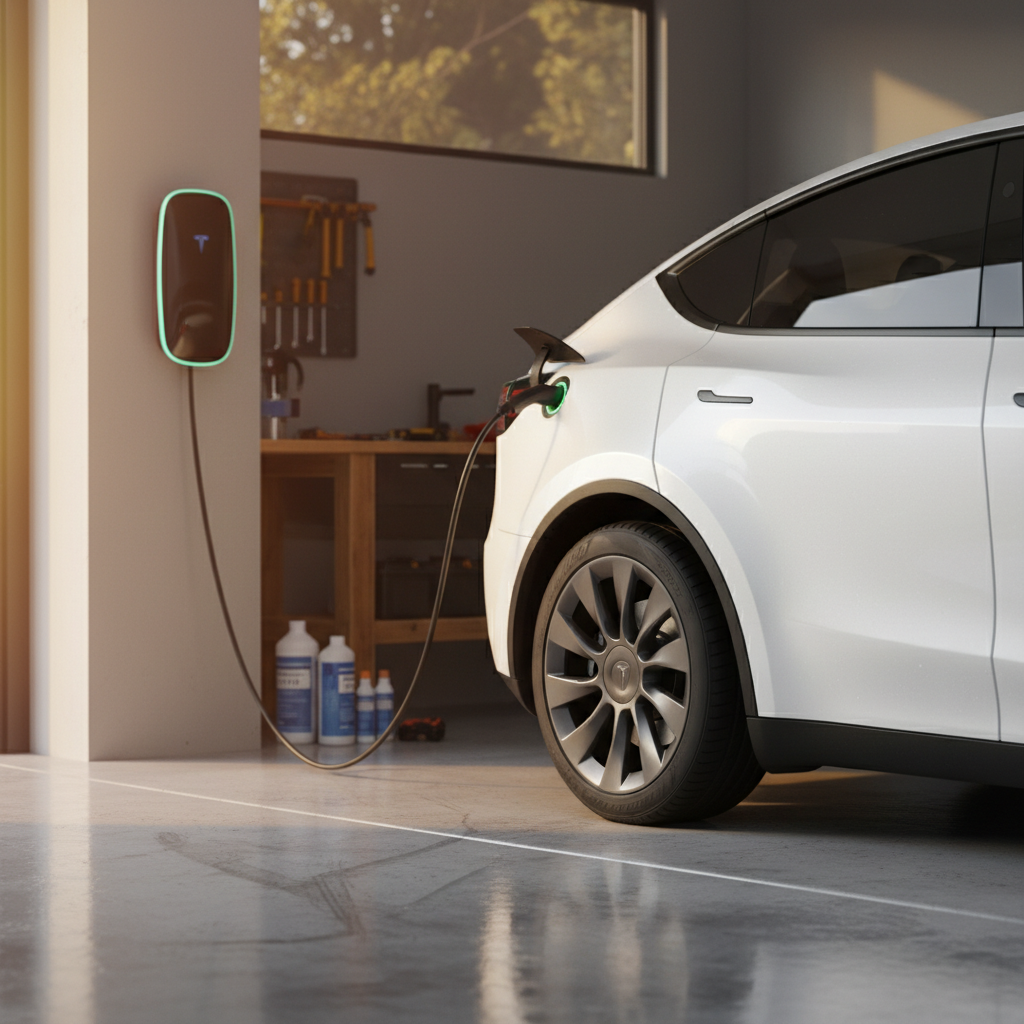
DC fast charging is the sizzle; home charging is the steak. The Model X accepts up to **11 kW AC** through its onboard charger. That’s standard for modern Teslas and roughly what you’ll see on a properly wired 240 V Level 2 setup in a U.S. garage.
Model X home charging speed comparison
What different setups actually feel like in daily life
Standard 120 V outlet (Level 1)
Think of this as your emergency parachute.
- Power: ~1.4 kW (12 A at 120 V)
- Rate: ~3–4 miles of range/hour
- 0–100% on X: 2+ days
Fine for topping up a few miles overnight, not suited to regularly refilling a 100 kWh pack.
240 V, 30–40 A Level 2
The reasonable middle ground in older homes.
- Power: ~7.2–9.6 kW
- Rate: ~20–30 miles of range/hour
- 0–100% on X: ~11–13 hours
Plenty for overnight charging if you don’t arrive home nearly empty every night.
240 V, 48 A Level 2 (11 kW)
What most Tesla wall connectors are sized for.
- Power: Up to 11 kW
- Rate: ~30–35 miles of range/hour
- 0–100% on X: ~10–10.5 hours
For many owners, this feels like “I wake up full every morning,” which is the EV superpower.
Don’t oversize your home charger blindly
7 factors that change your real‑world charging speed
The spec sheet says 250 kW DC and 11 kW AC. In practice, your **Model X charging speed test** lives and dies by context. These are the big variables that explain why one owner raves about 25‑minute stops while another posts about 50‑minute marathons.
- State of charge when you plug in. The lower you arrive, the faster the car can pull power. 10–20% is ideal for fast charging; starting at 50% chops off the high‑power part of the curve.
- Battery temperature. Cold battery, slow charging. Use the Tesla navigation to a Supercharger so the car can pre‑heat the pack on the way.
- Charger capability. A 150 kW DC unit will cap your speed even if your Model X can take 250 kW. On AC, a 32 A wall box will limit you to ~7.7 kW even though the car can accept 11 kW.
- Shared power cabinets. At some Supercharger sites, two stalls share one cabinet. If your neighbor is also pulling hard, each of you may see less than the advertised top speed.
- Weather and HVAC use. Heavy cabin heat or A/C during a DC session can peel a few kW away from charging and into creature comforts, especially in extreme temps.
- Wheel/tire setup and efficiency. Big 22‑inch wheels and aggressive tires inflate consumption, which means each kWh adds fewer miles of usable range, even if the raw charging power is the same.
- Battery age and health. A well‑cared‑for older Model X can still charge quickly, but a pack that’s been repeatedly fast‑charged to 100% or stored at high SoC may taper earlier and show slightly slower effective speeds. This is exactly the kind of nuance the Recharged Score digs into when we evaluate used Teslas.
Where Recharged fits in
Ready to find your next EV?
Browse VehiclesWhat charging speed means if you’re buying a used Model X
On the used market, a Model X’s charging behavior is a kind of truth serum. It tells you not just how big the battery is, but how kindly past owners treated it. You can’t undo thousands of max‑power, 0–100% DC sessions any more than you can un‑tow a boat from a transmission.
Questions to ask about a used Model X’s charging
These clues say more than a pretty paint job ever will
Does it reach expected peak power?
On a warm battery at low SoC on a V3 Supercharger, a healthy newer Model X should briefly climb toward 200–250 kW.
If it tops out at, say, 90–100 kW and tapers early, something in the battery’s history or current condition may be limiting it.
How long does 10–80% actually take?
If you can, time a session from ~10% to 80%. A result much beyond ~40 minutes at a 250 kW site, on a mild day, deserves scrutiny.
Sometimes the culprit is simply a cold pack; sometimes it’s deeper degradation.
What’s the usable capacity now?
Displayed 100% range and tools that estimate usable kWh give context to your charging tests.
A pack that’s lost 10–15% capacity will add fewer miles per minute even if the kW numbers look good.
Is there a third‑party health report?
Most private sellers can’t tell you much more than “it charges fine.”
Recharged listings include a **Recharged Score Report** with professional diagnostics, so you’re not gambling on guesswork.
Test drive the charger, not just the car
Road‑trip strategies to keep Model X charging fast
The Model X is a natural road‑trip machine: enormous glass, quiet cabin, and more torque than a freight elevator. But to keep your charging stops short, you need to work with the battery, not against it.
Model X fast‑charging playbook
Arrive around 10–20% SoC
Don’t panic‑charge at 45%. Navigate to the Supercharger early, trust the car’s planning, and let the pack dip into that efficient, low‑SoC window.
Leave around 70–80% SoC
The last 20% is where time goes to die. Unless the next leg is truly long or the weather brutal, you’ll shorten total trip time by doing more, shorter stops.
Use the built‑in trip planner
Tesla’s route planner not only chooses Superchargers but also pre‑conditions the battery. That pre‑heat is essentially “free” time while you’re already driving.
Favor higher‑power sites
Given the choice, prefer V3 or V4 Superchargers over older hardware, and avoid stalls that are sharing a cabinet with someone pulling heavy power.
Dial back speed when needed
Hammering along at 85 mph with a roof box looks cinematic but destroys efficiency. Slowing to the realistic flow of traffic can save you a full stop over a long day.
Keep an eye on weather
In winter, expect both range and charge speed to sag. Plan shorter hops between chargers and consider an extra buffer when heading into remote stretches.
Don’t test new software on a big trip
Tesla Model X charging speed test: FAQ
Common questions about Model X charging speed
Is the Tesla Model X “fast” to charge?
By the stopwatch, the Tesla Model X is not the quickest‑charging EV on earth, but it’s very much in the top tier for a gigantic three‑row SUV hauling around a 100 kWh battery. A clean **10–80% Tesla Model X charging speed test** on a modern Supercharger, landing in the low‑30‑minute range, is a solid result and more than enough to keep coffee stops short and kids semi‑civilized.
Where the story gets interesting is in the used market. Two outwardly identical Model Xs can behave very differently on a charger depending on their history. If you want the drama of falcon‑wing doors without the suspense of mystery battery health, look for hard data: fast‑charge times, usable capacity, and an honest report on how the pack is aging.
That’s exactly what Recharged was built for. Every vehicle on the platform includes a **Recharged Score Report** with verified battery health, fair market pricing, and EV‑specialist support. So when you shop for a used Model X, you’re not just buying a spectacularly over‑the‑top family SUV, you’re buying predictable, repeatable charging performance that matches your life, not just the brochure.