If you’re wondering about your Tesla Model S trade-in value in 2026, you’re not alone. The Model S has seen wild price swings, big depreciation for early cars, and a recent bump in used Tesla values. The good news: if you understand how depreciation, battery health, and trim differences work, you can go into any trade-in conversation with a clear number in mind, and avoid leaving thousands of dollars on the table.
Quick takeaway for 2026
Overview: The 2026 Tesla Model S Trade-In Market
The 2026 used EV market looks very different from the peak-price era of 2022. EV values fell sharply through 2024 and 2025 as new-car prices dropped and incentives changed, then began to stabilize. Recent data shows used Tesla prices, including the Model S, have started to recover modestly while many other luxury EVs continue to slide in value. At the same time, multiple studies put five‑year EV depreciation near or above 60%, with the Model S among the harder‑hit luxury EVs in percentage terms.
Tesla Model S Resale Snapshot for 2026
Important context
What Is My Tesla Model S Worth in 2026?
Every Model S is different, but most 2026 U.S. trade-in values fall in broad bands. Think of these as ballpark ranges, not quotes:
- Early cars (2012–2014): often $12,000–$16,000, depending on miles, battery health, and option content.
- Pre-refresh AP1/AP2 cars (2015–2016): roughly $15,000–$20,000 for clean examples.
- 2017–2018 “sweet spot” cars: often $18,000–$25,000 with reasonable mileage.
- 2019–2020 cars: think in the low‑ to mid‑$20,000s for trade-ins, higher if range and condition are excellent.
- 2021+ refresh and Plaid models: $35,000–$55,000+ depending on trim, mileage, and equipment.
Trade-in vs. private sale values
How Tesla and Dealers Calculate Model S Trade-In Value
Whether you get an offer from Tesla or a local dealer, the math behind your Model S trade-in value is surprisingly similar. Everyone starts with wholesale data and then adjusts for risk. Tesla’s own trade-in process is now highly automated: you submit your VIN, mileage, photos, and answer basic condition questions; the system returns an estimate that’s later confirmed at drop-off.
What Goes Into a 2026 Model S Trade-In Offer?
The basic ingredients don’t change, only how aggressively each buyer prices your car.
1. Auction & Book Data
Both Tesla and dealers lean heavily on live auction data and valuation tools to see what similar Model S vehicles are actually bringing at auction, not just what people are asking online.
Because the Model S is a high‑dollar, fast‑depreciating EV, they’ll often price your trade at or even below expected auction value to protect themselves.
2. Condition & Risk Adjustments
After the baseline value, they layer in risk:
- Visible wear, cosmetic damage, and wheels
- Tires and brakes
- Warning lights or open recalls
- Market risk (will it sit?)
With EVs, they also worry about battery health, even if they don’t measure it directly.
How Tesla Handles Trade-Ins in 2026
Tesla’s official trade-in program is built for speed and simplicity. You can get an online estimate in minutes by entering your VIN and uploading photos. Tesla’s support documentation makes it clear the final price is based on vehicle condition, history, and market data, and it’s applied directly to your new purchase paperwork.
Many owners report that Tesla’s offers tend to be on the conservative side, often close to what the car might net at auction, because Tesla doesn’t retail every older Model S and doesn’t want to hold aging inventory.
How Non-Tesla Dealers Look at a Model S
Franchise dealers and independent lots typically view a used Model S as a specialty unit. If they’re not confident they can retail it quickly, they’ll price your trade as if they will have to dump it at auction, and subtract margin for reconditioning and uncertainty.
That’s why you might see a spread of several thousand dollars between offers, especially from outlets that don’t specialize in EVs.
Pro tip: Use multiple offers as leverage
Key Factors That Move Your Model S Value Up or Down
If you want to understand your Tesla Model S trade-in value in 2026, start with these levers. Some you can control, some you can’t, but all of them affect how much you’re offered.
Six Big Drivers of Model S Trade-In Value
The same car can swing thousands of dollars based on these details.
Model Year & Refresh
Later years and the 2021+ refresh (with the updated interior and Plaid powertrains) command significantly more money. Early cars without Autopilot or with first‑generation hardware are valued more as curiosities than cutting‑edge tech.
Mileage & Usage
A low‑mileage Model S is worth a premium, but EV buyers also care about how those miles were accumulated. A car that lived on DC fast charging and rideshare duty will be viewed more skeptically than a commuter with mostly gentle home charging.
Battery Health & Range
For EVs, useful range is everything. A Model S that has lost 15–20% of original range will still find buyers, but you’ll feel it in the trade-in number. Verified battery diagnostics, like a Recharged Score report, can be a powerful trust signal when you sell.
Options & Software
Features like Dual Motor AWD, Long Range packs, premium interiors, and transferable Full Self-Driving capability can all lift value. On the other hand, Tesla’s habit of adjusting software features over time means some options don’t add as much value as their original price tags suggest.
Condition & Maintenance
Wheel rash, interior wear, cracked glass, and overdue tires or brakes are easy line‑items for an appraiser to use against you. Because Tesla service and collision repairs can be costly, obvious flaws create outsized fear for buyers who don’t know the car.
Market & Timing
Luxury EV sedans sell better in some regions and seasons than others. If your local market is saturated with older Teslas, or if interest rates spike again, you may see softer offers. Conversely, tight inventory can push trade-in numbers up quickly.
Watch out for this EV-specific hit
Model S Depreciation in 2026: What the Data Says
Looking beyond individual cars, the bigger story is how the Model S depreciates versus other vehicles. Multiple 2024–2026 analyses show that battery‑electric vehicles and luxury models are among the fastest-depreciating vehicles on the road. The Model S regularly appears near the top of “biggest value losers” lists, with five‑year depreciation in the 60–65% range and average dollar losses north of $50,000 in that window.
Why so steep? Because the Model S started life as a high‑MSRP luxury sedan and has been through several styling, hardware, and software generations. Each refresh makes older cars feel dated more quickly than a typical gas sedan. At the same time, aggressive cuts in new‑Tesla pricing during 2023–2025 reset used values downward, even for well‑kept cars.
The silver lining for 2026
Realistic 2026 Trade-In Ranges by Model Year
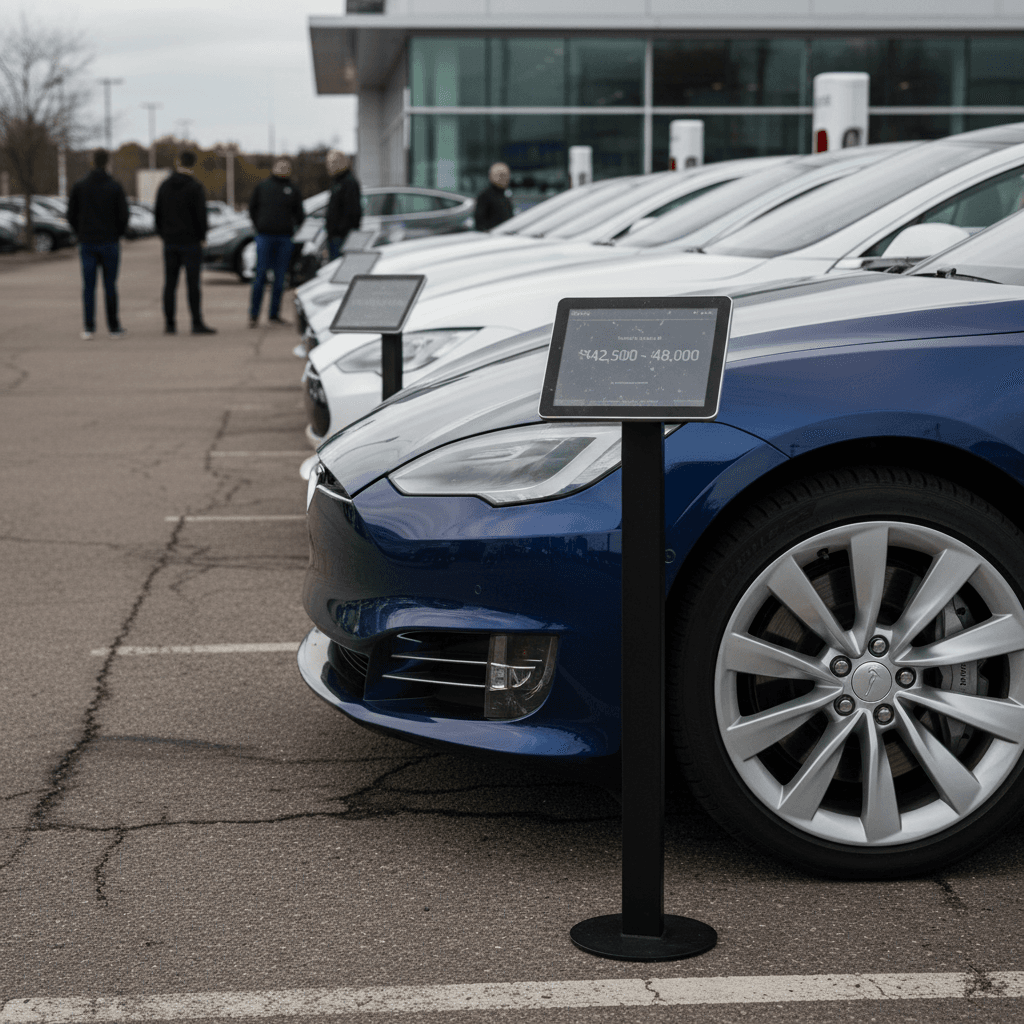
The following table pulls together current used‑asking data, depreciation studies, and real‑world marketplace experience to sketch typical 2026 trade-in ranges for U.S. Tesla Model S vehicles. These are directional estimates for clean, average‑mileage cars, your specific battery health, options, and market can move you above or below these bands.
Approximate 2026 Tesla Model S Trade-In Ranges (U.S.)
Rounded estimates for well‑maintained, average‑mileage cars. High mileage, heavy wear, weak batteries, or accident history will push values lower; exceptional condition or rare trims can push higher.
| Model Year | Typical 2026 Trade-In Range* | Notes |
|---|---|---|
| 2012–2014 | $12,000–$16,000 | Earliest cars; range loss, older tech, and wear matter a lot. |
| 2015–2016 | $15,000–$20,000 | First Autopilot hardware years; value hinges on mileage and options. |
| 2017–2018 | $18,000–$25,000 | Often the sweet spot for buyers; good balance of price and features. |
| 2019–2020 | $22,000–$28,000 | Longer‑range variants with more modern tech; still depreciating quickly. |
| 2021–2022 (refresh) | $32,000–$45,000 | Updated interior and hardware; strong demand for clean, lower‑mile cars. |
| 2023–2024 Plaid/Long Range | $40,000–$55,000+ | High‑performance and high‑spec models hold the most value; wide spread. |
| 2025–2026 | Too new for firm patterns | Early trade-ins often suffer heavy first‑owner depreciation but look strong next to new MSRP. |
Use this as a starting point, then refine with live offers and an EV-specific valuation tool.
About these ranges
Tesla Trade-In vs. Selling Through a Marketplace
You now have more ways than ever to unlock your Tesla Model S trade-in value in 2026. The best choice depends on how much you value convenience versus top‑dollar pricing.
Three Main Ways to Cash Out of a Model S in 2026
Each path balances speed, price, and effort differently.
1. Trade Directly to Tesla
Pros: Extremely convenient if you’re buying another Tesla; offer applies seamlessly to your paperwork; potential sales‑tax savings in many states.
Cons: Often not the highest dollar amount; Tesla may be particularly conservative on older, higher‑risk Model S inventory.
2. Trade or Sell to a Dealer
Pros: Simple one‑stop transaction; you can cross‑shop offers quickly; some dealers will over‑allow on trades to make a new‑car deal happen.
Cons: Many dealers are uncomfortable appraising EVs and price in extra risk, especially on out‑of‑warranty luxury models.
3. Sell via EV Marketplace (like Recharged)
Pros: Built for EVs; buyers see battery health, pricing data, and history, which can justify higher prices; options like instant offers, consignment, and nationwide reach.
Cons: Can take a bit longer than a same‑day dealer trade; you’ll spend a little more time providing photos and information up front.
Remember the tax angle
How to Maximize Your Tesla Model S Trade-In Offer
You can’t rewrite the depreciation curve on a luxury EV, but you have more control than you think over the final number you’re offered in 2026. The key is to show buyers that your car is easy to retail and low‑risk.
Smart Moves Before You Ask for a 2026 Trade-In Offer
1. Pull valuation baselines first
Check up‑to‑date pricing guides and live listings for similar Model S vehicles. This gives you a realistic expectation range and helps you spot truly lowball offers.
2. Get an EV-specific battery health report
Battery condition is the big unknown for many buyers. A third‑party battery health diagnostic, such as the <strong>Recharged Score</strong>, can give buyers hard data instead of guesswork, which often translates into stronger offers.
3. Fix affordable, visible issues
Small investments, cleaning, paintless dent repair, wheel touch‑ups, a fresh windshield, or new wiper blades, can have an outsized impact on perceived value and the story the appraiser writes down.
4. Gather service and charging history
Receipts for tires, brakes, and software or hardware fixes, plus documentation of mostly home Level 2 charging, help show that the car has been <strong>cared for like a long‑term keeper</strong>, not abused as a fleet workhorse.
5. Time your sale strategically
Trading out of a Model S just before a major new-refresh announcement, or in the dead of winter in a weak EV market, can cost you. When values are stabilizing or climbing, and financing is reasonable, buyers are more confident paying real money for used EVs.
6. Collect multiple real offers
Online trade‑in tools are useful, but you need <strong>firm written offers</strong> from at least two or three buyers. Use the strongest one as your benchmark, and be prepared to walk if no one is close.
Don’t overspend on last-minute repairs
Using Recharged to Sell or Trade Your Model S
Recharged exists for exactly the situation you’re in: a driver sitting on a valuable used EV who wants to transition into their next vehicle without drama. Because we focus solely on electric vehicles, we understand where the Tesla Model S sits in today’s market better than most generalist dealers, and we build that insight into every offer and listing.
What Recharged does differently for Model S owners
- Recharged Score battery diagnostics on every vehicle we list, so buyers see verified battery health instead of guessing.
- Fair market pricing grounded in late‑breaking EV data, not just generic book values that lag the real market.
- Flexible selling paths: instant offer, trade‑in, or consignment, so you can prioritize either speed or maximum value.
- EV‑specialist support to explain Autopilot hardware, FSD transfer questions, and charging history to prospective buyers.
How a Model S sale works with Recharged
- You share your VIN, trim, mileage, and basic condition details online.
- We review battery health and market data to generate a transparent value range.
- You choose between an instant offer or a marketplace listing with our team managing photos, copy, and buyer inquiries.
- Once it sells, we coordinate paperwork, payoff, and nationwide delivery, and you can apply the proceeds toward your next EV, including one purchased through Recharged.
Why this matters in 2026
Ready to find your next EV?
Browse VehiclesFrequently Asked Questions: Tesla Model S Trade-Ins in 2026
Common 2026 Questions from Model S Owners
Bottom Line: Should You Trade In Your Model S in 2026?
The Tesla Model S has always been a fascinating car to own, and a complicated one to value. By 2026, most examples have shed a huge portion of their original sticker price, yet a good Model S is still a fast, comfortable, long‑range EV that many buyers actively seek out. That tension is exactly why you shouldn’t accept the first number that appears on your screen.
If you’re serious about understanding your Tesla Model S trade-in value in 2026, start with the basics: year, miles, battery health, and options, then sanity‑check them against current market data. From there, compare offers from Tesla, local dealers, and an EV-focused marketplace like Recharged. When you put a verified battery report and a clear pricing story behind your car, you’re far more likely to land on the high side of the range, and step into your next EV with confidence instead of regret.