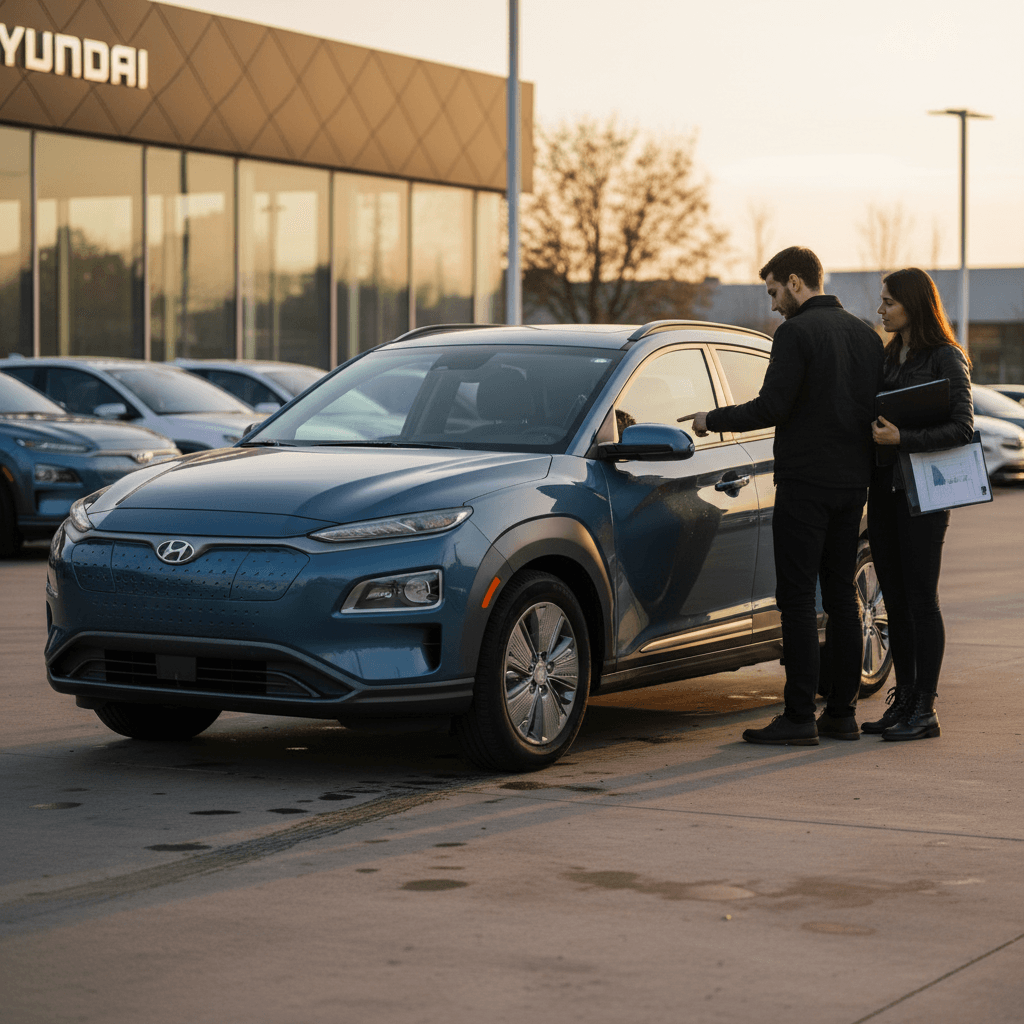
If you want an affordable, genuinely useful electric crossover, a certified pre-owned Hyundai Kona EV is going to cross your path sooner or later. It’s small but not cramped, quick enough to be fun, and, when you buy the right example, backed by one of the strongest EV battery warranties on the market. The trick is separating the gems from the abused ex-commuters and rental refugees.
Quick take
Why the Hyundai Kona EV is a hot used buy
Kona Electric by the numbers
On the used market, the Kona Electric sits in a sweet spot. It’s more efficient and easier to park than most compact SUVs, yet it offers grown-up range and usable cargo space. Compared to a used Tesla Model 3, you’re usually paying less money for similar daily usability and, thanks to Hyundai’s aggressive battery warranty, a lot of peace of mind.
Who the Kona EV fits best
What “certified pre-owned” Kona EV actually means
“Certified pre-owned” sounds reassuring, but the details live in the fine print, and they vary by brand and dealer. With a Hyundai, certification typically means the vehicle meets Hyundai’s CPO criteria: it’s within a certain age and mileage cap, has a clean title, and passes a multi-point inspection. Hyundai-branded CPO cars usually come with extended limited warranties layered on top of whatever factory coverage remains.
- Age and mileage caps (often around 5 model years and under a specific mileage, which many Kona EVs still meet).
- Clean, non-branded title (no lemon buybacks, salvage, or flood titles).
- Inspection checklist that covers safety items, basic mechanicals, and cosmetic condition.
- Some combination of added warranty coverage, roadside assistance, and sometimes free maintenance.
CPO label vs. CPO reality
When CPO is worth paying for
- You’re a first-time EV buyer and want the simplest, least-risky path into ownership.
- You plan to keep the car 4–6 years and want warranty coverage for most of that time.
- You don’t have the appetite to vet battery health and service history on your own.
When CPO is optional
- You deeply understand EVs and are comfortable judging battery health using tools and reports.
- You can pay out of pocket if something fails outside of the remaining factory warranty.
- You find a non‑CPO Kona EV with great history and a meaningful price discount.
Certified Kona EV vs regular used: what’s different?
CPO Hyundai Kona EV vs regular used Kona EV
You’re really choosing between extra structure or extra savings.
Certified pre-owned Kona EV
- Factory-backed inspection and standardized criteria.
- Extra warranty layers on top of remaining factory coverage.
- Higher upfront price, but potentially better long-term cost predictability.
- Limited inventory; colors and trims may be constrained.
Regular used Kona EV
- Usually lower purchase price for the same year/miles.
- Condition and history vary wildly by seller.
- Warranty may be limited to whatever factory coverage is left.
- More room to negotiate, but more work to vet the car.
A third path: curated used
Warranty & battery coverage on a CPO Kona EV
Hyundai’s warranty is a big part of why a used or certified pre-owned Hyundai Kona EV is appealing. On new vehicles, Hyundai backs the EV battery and hybrid system components for up to 10 years or 100,000 miles. That coverage is unusually strong in the industry and, importantly, is designed so that the battery should not drop below roughly 70% of its original capacity during the warranty period.
Typical Hyundai coverage that matters on a used Kona EV
Exact coverage varies by model year and program, but these are the core pieces to ask about.
| Coverage type | Typical term on new Kona EV | Applies to CPO?* | What it means for you |
|---|---|---|---|
| Hybrid/EV battery & components | 10 years / 100,000 miles | Yes, if within time & miles | Protects you from major battery-pack defects and excessive degradation. |
| Powertrain limited warranty | 10 years / 100,000 miles (original owner), may differ for later owners | Partially, depending on CPO terms | Covers major drive components like the motor and reduction gear. |
| New vehicle limited warranty | 5 years / 60,000 miles | Remaining balance transfers | Covers a broad list of non-wear items; many used Kona EVs still have some of this left. |
| CPO added coverage | Varies by Hyundai CPO tier and dealer | Ask for written terms | May add years of limited warranty beyond the original 5‑year term. |
Always confirm the in-service date and current mileage; that’s what drives how much warranty you have left.
Get the warranty in writing
Battery health on a certified Kona EV: what to look for
On an EV, the battery pack is the story. Hyundai’s generous warranty softens the risk, but you should still treat state of health (SoH) as your north star. A Kona EV with a strong battery will feel lively and deliver near‑rated range; a tired pack can turn a great deal into a daily compromise.
Battery-health checklist for a Kona EV
1. Ask for a recent battery health report
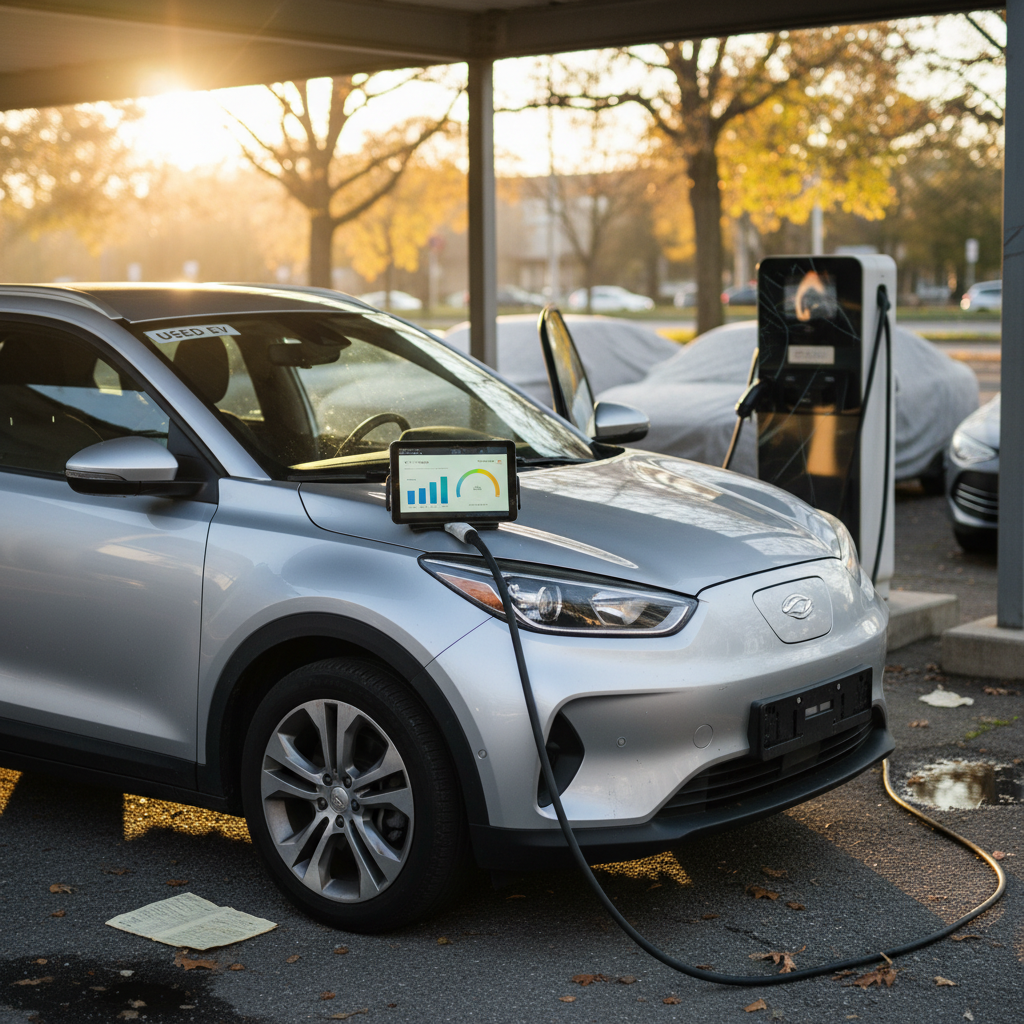
A serious seller, CPO or not, should be able to show pack health from a scan tool or dealer report. Look for clear SoH percentages rather than vague “it’s fine” assurances.
2. Look at real-world range, not just EPA numbers
During a test drive, check projected range at a given state of charge. If the car shows 150 miles at 80% on a large‑battery Kona EV, you have questions to ask.
3. Review fast-charging history
Heavy DC fast‑charging isn’t an automatic red flag, but a pack that lived on road‑trip duty and is now showing reduced range deserves extra scrutiny.
4. Check for software updates & recalls
Some early Kona EVs had battery‑related recalls and software updates. Make sure these have been applied, and verify with documentation where possible.
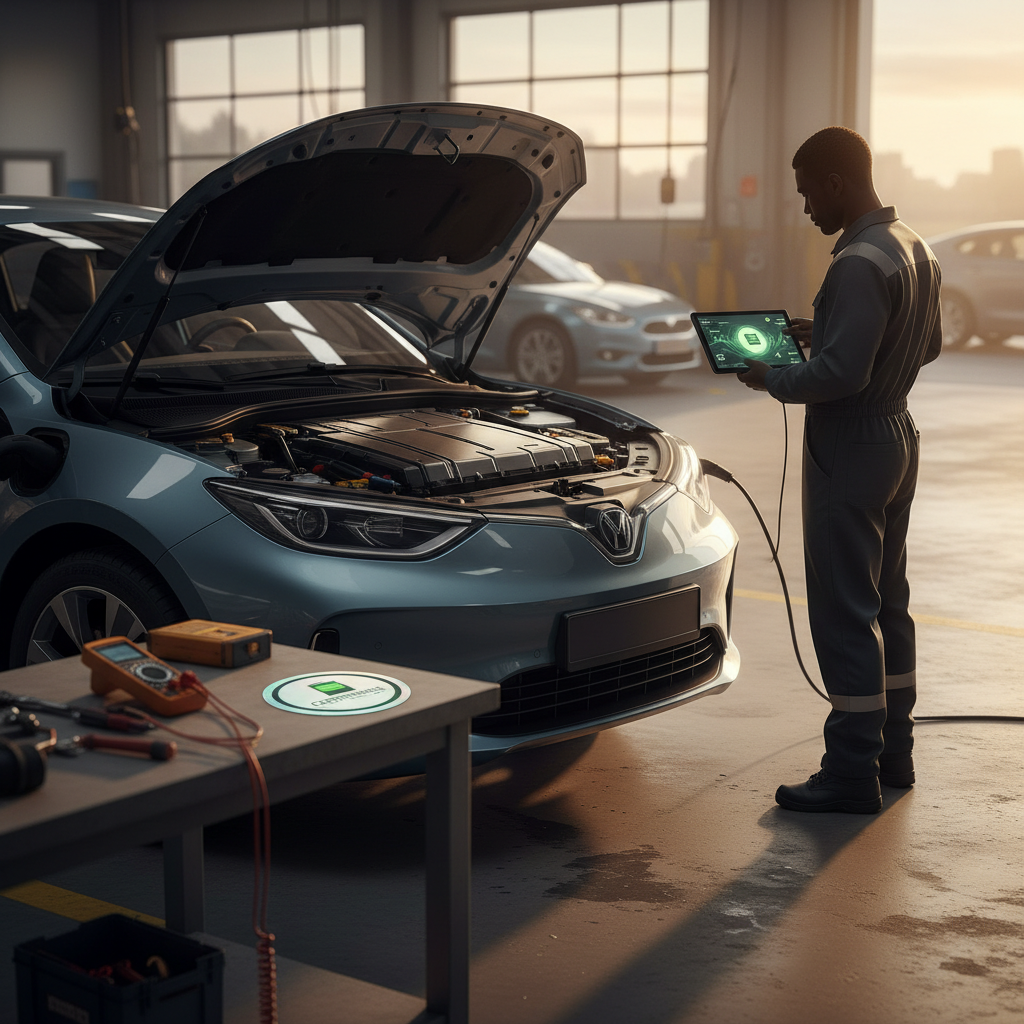
5. Inspect charging behavior
Plug into Level 2 and, if possible, a DC fast charger. The car should start charging reliably, not throw errors, and reach a normal peak rate for its generation.
Walk-away signs
Key Kona EV model years, range & specs
The Kona Electric has evolved in quiet, sensible steps rather than headline‑grabbing revolutions. That’s good news when you’re shopping used: the fundamentals are solid across the range, and you’re mostly choosing between styling, tech, and incremental efficiency improvements.
Hyundai Kona EV model-year cheat sheet (U.S.-market overview)
Approximate specs; always confirm the exact configuration of the car you’re looking at.
| Model years | Battery size | Approx. EPA range | Notes |
|---|---|---|---|
| 2019–2021 | ~64 kWh | Around mid‑250s (mi) | Original formula: strong range, relatively simple tech, feels quick around town. |
| 2022–2023 | ~64 kWh | Similar to earlier years | Mild refresh with cosmetic tweaks and feature updates; sweet spot for many used buyers. |
| 2024+ redesign | Updated pack & platform | Tuned for efficiency; EPA range varies by trim | More interior space, updated infotainment, and modern driver‑assistance tech, with early owner reviews still shaking out. |
EPA ranges assume the larger battery pack and can vary slightly by trim and wheel choice.
Real‑world range is a band, not a number
Pricing, depreciation and value sweet spots
EVs depreciate quickly in the first few years, which is awful news for the first owner and terrific news for the second. The Kona EV is no exception. By the time one is old enough to be a certified pre-owned candidate, a big chunk of that initial depreciation is already behind you.
Where the value usually lives
Broad guidance, local supply, tax incentives, and trim levels can move the needle.
3–4 years old
Often the best balance of price, remaining warranty, and modern features. Many CPO‑eligible Kona EVs fall here.
30k–60k miles
Lightly used, but not so low‑mileage that you’re paying a collector’s premium for a commuter car.
CPO premium vs. private party
Expect a real Hyundai CPO Kona EV to cost more than a private‑party sale of the same year and miles. The question: are you buying peace of mind or just a logo on the window sticker?
Use total cost, not just price, to compare
Shopping checklist for a certified or used Kona EV
Step-by-step checklist before you sign anything
1. Decode the certification
Confirm whether the car is <strong>Hyundai factory CPO</strong>, a dealer’s in‑house program, or simply a used car that’s being marketed as “certified.” Get the program name and documentation.
2. Pull the full history
Ask for a vehicle history report and actual service invoices when possible. Look for battery-related work, software updates, accident repairs, and repeated visits for charging issues.
3. Inspect the charging hardware
Check the charge port door, port condition, and cables. Verify that the included Level 1 or Level 2 charger is in good shape and that locking tabs work smoothly.
4. Test both Level 2 and fast charging
If the seller allows it, plug into a public or home Level 2 charger and at least one DC fast charger. Make sure the car charges consistently and reaches expected power levels for its model year.
5. Assess tires, brakes, and suspension
EVs are heavy; cheap tires or worn suspension can make a Kona EV feel older than it is. Uneven tire wear can hint at alignment or suspension issues.
6. Drive it like you’ll own it
Take a meaningful test drive: highway speeds, stop‑and‑go traffic, parking maneuvers. Listen for wind or tire noise, check ride comfort, and play with the regen settings.
Mind the advertised price traps
How Recharged is different from traditional CPO programs
Traditional CPO is built around the brand. Recharged is built around you as an EV shopper. Instead of selling only Hyundai or only Kona EVs, Recharged curates used electric vehicles from multiple brands, including the Kona Electric, and applies the same transparent standards to each one.
Recharged vs a single-brand CPO lot
Same idea, peace of mind, but with more flexibility and more EV-specific detail.
Recharged Score Report
Every vehicle gets a detailed Recharged Score with verified battery health diagnostics, fair‑market pricing, and condition notes you can actually understand.
Fully digital experience
Browse, finance, and complete paperwork online, with nationwide delivery and an EV‑savvy team on chat or phone if you have questions.
Trade‑in & instant offers
Get an instant offer or choose consignment for your current car, gas or electric, and roll that value into your Kona EV purchase.
Want to touch and feel before you buy?
Certified pre-owned Hyundai Kona EV: FAQ
Your Kona EV CPO questions, answered
Bottom line: who should buy a CPO Kona EV?
A certified pre-owned Hyundai Kona EV makes the most sense if you want a compact, efficient EV with real‑world range, you value warranty coverage, and you prefer a structured program over hunting for one‑off bargains. If you’re more price‑sensitive or EV‑savvy, a carefully vetted non‑CPO Kona EV can be just as smart, provided you do the homework on battery health, charging behavior, and history.
Recharged sits neatly between those worlds. You get the transparency and battery‑focused inspection you’d hope for from CPO, plus the flexibility to compare the Kona EV against other used electric crossovers without hopping from dealer to dealer. However you decide to shop, go in with eyes open and questions ready, and don’t be afraid to walk away from the wrong car so you can say yes to the right one.