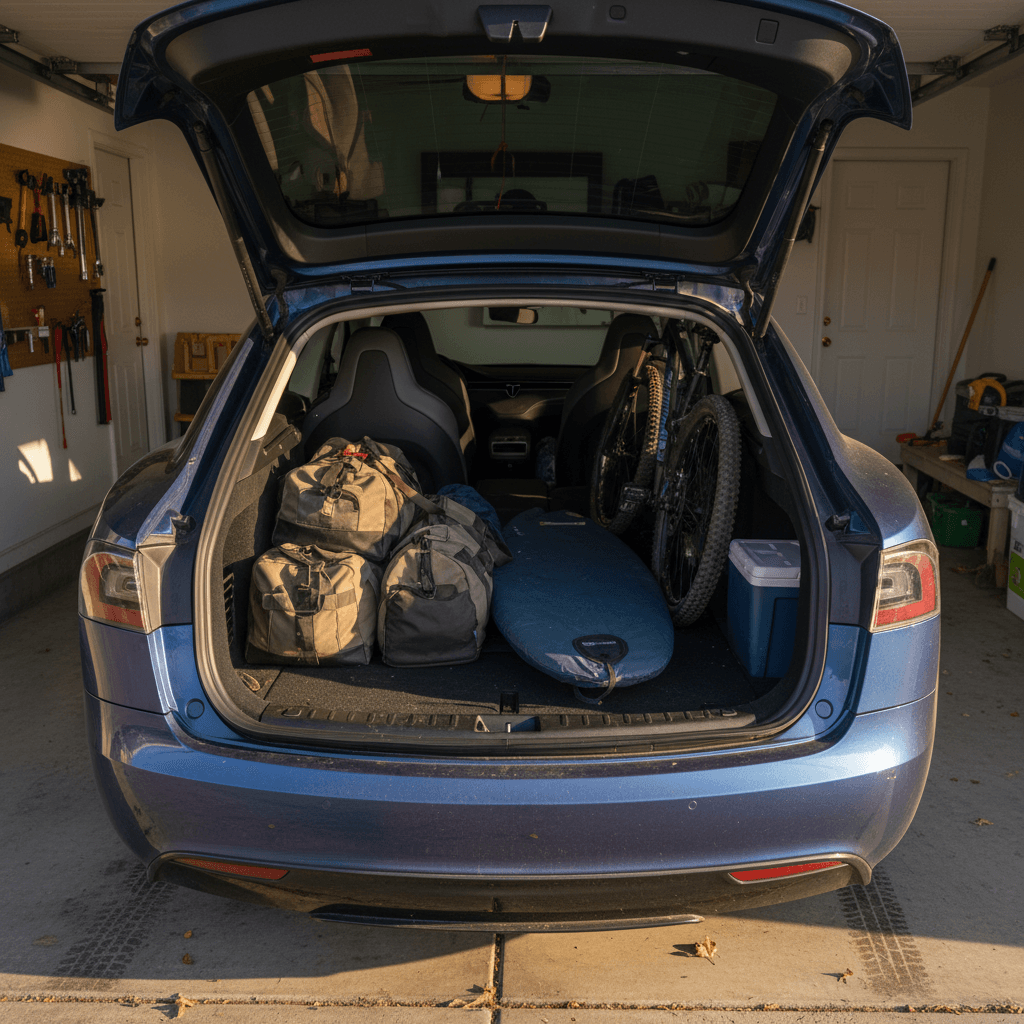
You don’t buy a Tesla Model S just for the numbers, but one number keeps surprising people: how much cargo space it has with the rear seats down. This sleek fastback sedan can quietly out‑haul a lot of crossovers and even some electric SUVs. If you’re wondering whether a Model S can handle bikes, a Costco siege, a stroller armada, or a weekend of car camping, you’re in the right place.
Quick answer
Overview: How big is Tesla Model S cargo space with seats down?
Tesla’s own manuals and independent tests give us two key figures for Model S cargo space with the rear seats folded:
- Most pre‑refresh and early refreshed cars (roughly 2012–2023): about 58.1 cu ft behind the front seats with the rear seatbacks folded flat.
- Recent manuals for 2024–2025 Model S list roughly 61.4 cu ft "behind the first row, second row folded flat," plus a 3.1 cu ft front trunk.
- Tesla also quotes a maximum total cargo volume of ~64.6 cu ft when you count every nook and cranny, including under‑floor storage and the frunk.
Translated from spec‑sheet Latin: when you drop the 60/40 split rear seatbacks, you get a long, deep space that behaves much more like a wagon than a traditional sedan trunk. The low floor and huge hatch opening make it useable space, not just bragging rights.
Tesla Model S cargo space at a glance
Think wagon, not sedan
Official Tesla Model S cargo specs (with seats down)
Specs vary slightly across model years, but for shopping or planning a road trip you can treat the Model S as one of the roomiest EVs that doesn’t have sliding doors.
Tesla Model S cargo volume by configuration
Approximate cargo figures for recent generations of the Model S. Exact numbers can vary slightly by market and test standard, but this is the right ballpark for U.S. cars.
| Configuration | Behind rear seats | Rear seats folded | Frunk (front trunk) | Notes |
|---|---|---|---|---|
| Early Model S (2012–2020) | ~26 cu ft | ~58.1 cu ft | ~3 cu ft | Original body; hatchback layout already very generous |
| Refreshed Model S (2021–2023) | ~26–27 cu ft | ~58 cu ft | ~3 cu ft | New interior, similar cargo envelope |
| Latest Model S / Plaid (2024–2025) | ~25–27 cu ft | ~61.4 cu ft | 3.1 cu ft | Tesla manual lists 1,739 L behind first row with seats flat |
| Maximum quoted total (2024+ manuals) | N/A | 64.6 cu ft (all areas) | Included | Adds under‑floor compartments plus frunk with only front seats occupied |
Cargo volumes are manufacturer‑quoted or widely reported industry figures and are intended as a practical reference, not engineering blueprints.
Spec sheet vs tape measure
Real‑world: What actually fits with the seats folded?
Numbers are nice, but you live in three dimensions. Here’s what Tesla Model S cargo space with seats down looks like in everyday objects.
What you can haul in a Model S with seats down
From IKEA days to ski trips, the long hatchback pays off.
Flat‑packed furniture
Think full IKEA runs: bookshelves, dressers, TV stands, even a flat‑packed dining table.
- Long boxes can slide between the front seats.
- Height is limited by the sloping roof near the hatch, but length is generous.
Bikes and outdoor gear
With the rear seats down:
- Most full‑size bikes fit with front wheel off.
- Skis and snowboards slot down the middle easily.
- Camping totes plus a cooler are no drama.
Big grocery or Costco runs
The Model S will shrug at warehouse‑club loads:
- Bulk paper goods, cases of drinks.
- Pet food bags, storage bins, strollers.
- You’ll run out of budget before you run out of space.
Family luggage
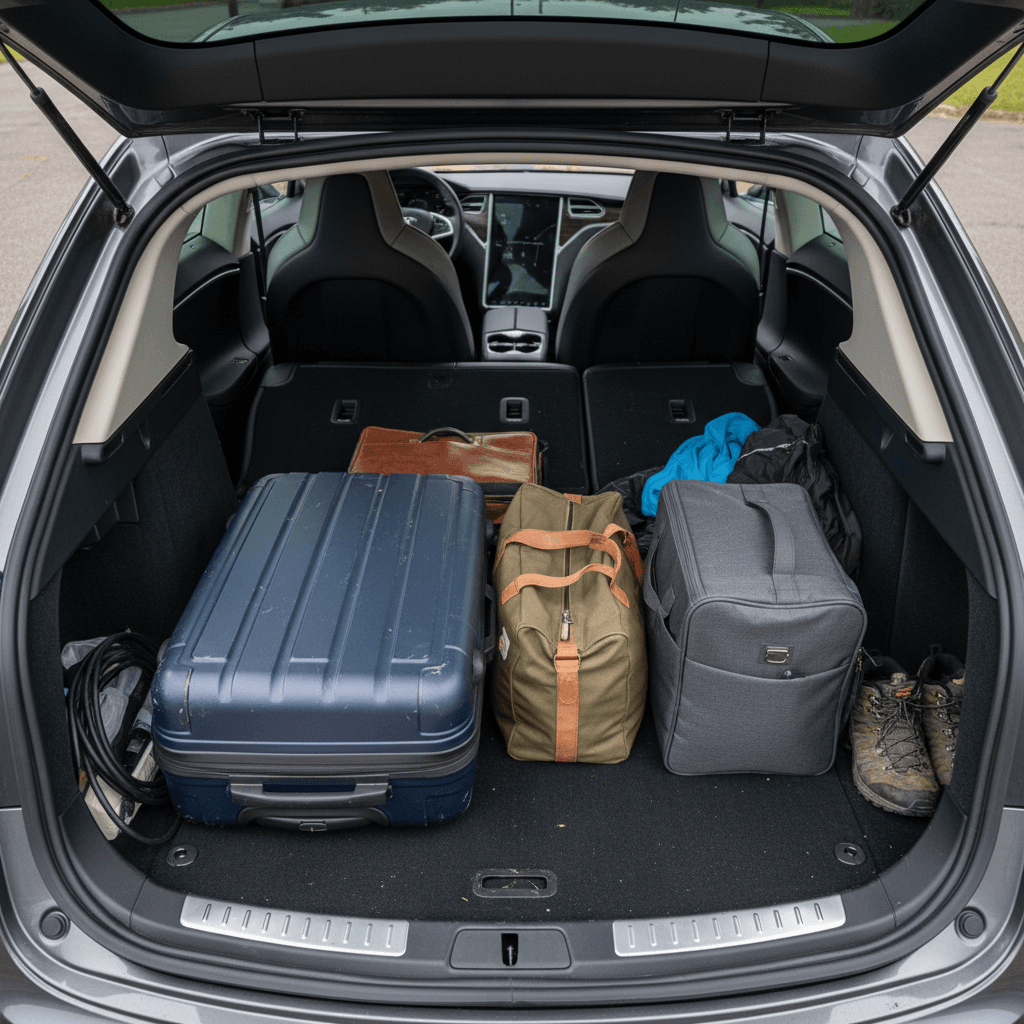
For road‑trip duty, a Model S with the rear seats folded can swallow:
- 4–5 full‑size suitcases plus soft duffels in the rear.
- A couple of carry‑ons or backpacks in the under‑floor well.
- Extra bags or valuables tucked in the frunk, away from view.
Keep in mind you can always leave a portion of the 60/40 seatback up for a child seat and still have a long pass‑through for skis or a stroller.
Long and awkward cargo
Because there’s no trunk wall, you can run long items into the cabin:
- Lumber and trim, especially narrow boards.
- Floor lamps, rolled rugs, or boxed TVs.
- Musical gear like keyboards or PA stands.
The limiting factors are ultimate length, the angle of the hatch, and how much you’re willing to slide past the front seats.
Pro move: use the frunk as a closet
Key dimensions: Loading floor, length and opening
Exact dimensions vary slightly by model year and suspension height, but from owner measurements and Tesla’s interior charts you can work with these ballpark figures when the rear seats are down:
- Length from hatch latch to back of front seats: roughly 72–76 inches depending on how far forward the front seats are.
- Maximum diagonal length (front passenger seat slid forward and reclined) can reach about 80 inches for long, narrow objects.
- Width between the rear wheel wells: about 41–43 inches.
- Widest point just behind the seatbacks: roughly 54–55 inches.
- Load floor height at the rear bumper: low for an EV, making it easier to lift heavy items compared with many SUVs.
- Hatch opening: tall enough for most suitcases and storage bins; the roof slopes down, so very tall objects may need to lie on their side.
DIY measuring matters
Usability: Folding seats, floor shape and quirks
Cargo space isn’t just volume; it’s the way that volume behaves when you’re wrestling a bike in the rain. The Model S has a few useful touches and a couple of oddities you should know about.
How the Model S cargo area actually works
Strengths and quirks that don’t show up on a spec sheet.
60/40 split rear seatbacks
You can fold the 60/40 rear bench from the hatch area using release switches (on newer cars) or by flipping them from the side doors.
That lets you carry a long item and still keep one or two rear seating positions.
Mostly flat load floor
With the rear seats down the floor is almost flat, though many owners note a small ridge or subtle angle where the seatbacks meet the trunk floor.
It’s not a deal‑breaker, but you’ll feel it when sliding heavy boxes or lying down to sleep.
Under‑floor storage wells
Lift the rear cargo floor and you’ll find deep storage wells that are gold for:
- Charging cables and adapters
- Emergency kits and tools
- Dirty or wet gear you don’t want in the main cabin
Mind the weight limits
Another practical quirk: in some model years, the rear seat releases in the cargo area only unlatch the seatbacks; they don’t power‑fold. You still have to lean in and push the seatbacks down manually. It’s one of the rare times the Model S feels more analog than its software suggests.
Model S vs SUVs and other EVs for cargo
If you’re trying to justify a Model S over an SUV, or over another big electric sedan, this is where the hatchback design quietly earns its keep.
How Tesla Model S cargo space compares
Approximate cargo volumes for popular EVs and crossovers with rear seats down.
| Vehicle | Body style | Cargo with seats down (approx.) | Behind rear seats | Notes |
|---|---|---|---|---|
| Tesla Model S | Fastback sedan / hatch | 58–61 cu ft | ~26 cu ft | Low roof but long floor; includes under‑floor wells |
| Tesla Model Y | Compact SUV | ~68 cu ft | ~30 cu ft | Taller load area, similar footprint |
| Hyundai Ioniq 5 | Compact crossover | ~59–60 cu ft | ~27 cu ft | Boxier shape, shorter overall length |
| Ford Mustang Mach‑E | Crossover | ~60 cu ft | ~30 cu ft | Similar total volume, higher roof |
| Lucid Air | Luxury sedan | ~32 cu ft (est.) | ~22 cu ft | Traditional trunk opening limits real‑world utility |
| Typical midsize gas SUV | Crossover SUV | 60–75 cu ft | 30–40 cu ft | More height, but often similar floor length to Model S |
Figures are rounded and can vary slightly by trim and test standard, but this shows why the Model S is often described as an "SUV replacement" for space‑conscious buyers.
When a sedan is secretly an SUV
Can you camp or sleep in a Tesla Model S?
Short answer: yes, within reason. Owners have been using Model S for car camping since the earliest cars, helped by Tesla’s built‑in Camp Mode and that long, flat(‑ish) cargo area.
- With the rear seats down and the front seats moved forward, most adults up to about 6 feet can lie flat diagonally or with knees slightly bent.
- The cargo floor from hatch to front seats is around 6 feet or a bit more, depending on seat position. It’s better suited to a camping pad or custom inflatable mattress than a rigid framed bed.
- The rear well and frunk give you separate storage for shoes, food, and gear so the sleeping area stays clear.
- Camp Mode can maintain cabin temperature overnight using the main battery, so you’re not waking up in a frosty greenhouse.
Basic Model S camping setup checklist
1. Choose a low‑profile mattress or pad
A <strong>3–4 inch camping mattress</strong> or inflatable pad works better than a tall air mattress, which can put you up too close to the roofline.
2. Protect the seatbacks and trim
Lay down a <strong>folding cargo liner</strong> or moving blankets before adding bedding. This protects the fabric from dirt, pet claws, and spill drama.
3. Use the wells for clutter
Stash shoes, kitchen kits, power banks, and cables in the under‑floor wells and frunk so the sleeping surface stays clean and flat.
4. Mind condensation and privacy
Window shades or reflective inserts give privacy and help manage condensation. Remember that the large glass roof can radiate cold in winter.
5. Pre‑condition before you sleep
Use Camp Mode, set a comfortable temp, and pre‑condition while plugged into a charger when possible to save battery for the night and the drive out.
Safety note for overnighting
Tips for hauling gear without beating up the interior
The Model S can haul like an SUV, but it’s still a premium interior. A few small habits will keep it from looking like the back room of a hardware store.
Protect your Model S while using all that space
Small investments, big difference in long‑term wear.
Add a fitted cargo liner
Look for a two‑piece liner that covers both the main floor and the seatbacks when folded. It’s the best defense against mud, pet hair, and spilled coffee beans.
Use bins instead of loose items
Stack rigid storage bins to contain smaller cargo. They’re easier to strap down with cargo nets and far less likely to go airborne in hard braking.
Know the load rating
Before loading tools, tile, or gym plates, review the maximum allowable weight on the tire and loading label and in the owner’s manual. High‑density weight is worse than bulky light cargo.
If you plan to use your car like a delivery van, multiple times a week, always loaded, consider a used Model S that’s already seen some life. Through Recharged, every used EV comes with a Recharged Score battery health report and expert guidance, so you’re not trading cargo capability for hidden degradation.
Buying a used Model S? Practicality checklist
When you’re shopping used, everyone stares at the screen and the Plaid numbers. You should also be looking at how the cargo area has lived, and how you plan to use it.
Used Model S cargo & practicality inspection
Inspect seatbacks and hinges
Fold the rear seats and look for <strong>impressions, tears, or broken latch mechanisms</strong>. A car that’s been a workhorse may show it here first.
Check for water or odor in wells
Lift the under‑floor panels and make sure the <strong>storage wells are dry, clean, and odor‑free</strong>. Persistent dampness is a red flag.
Test the hatch operation
Open and close the power hatch several times, checking that it <strong>lifts smoothly, seals correctly, and doesn’t rub</strong> on your garage ceiling. Adjust the opening height if needed.
Verify frunk seals and latches
Open the frunk and check <strong>seal condition and latch alignment</strong>. A misaligned frunk can squeak, leak, or be harder to close properly.
Confirm load floor integrity
Step gently on the cargo floor with seats folded to be sure it feels <strong>solid with no soft spots or cracks</strong>, especially on high‑mileage cars that hauled heavy items.
Review range vs your use case
If your plan involves <strong>long road trips with the car packed</strong>, understand how range, DC fast‑charging habits, and past use have affected the battery. A <strong>Recharged Score</strong> report will spell this out clearly.
Leverage a curated used inventory
FAQ: Tesla Model S cargo space questions answered
Frequently asked questions about Model S cargo space
In a world where crossovers are the default answer to every question, the Tesla Model S quietly cheats. With the rear seats down, it behaves like the long‑roof wagon the U.S. never quite learned to appreciate: low, slippery, fast, and shockingly capable of swallowing bikes, boxes, and camping gear. If you’re weighing a new or used Model S against a taller EV, don’t stop at the spec sheet. Sit in it, drop the seats, and start loading imaginary luggage. When you’re ready to find one that fits your life, and your cargo, Recharged can help you compare used Model S options, understand true battery health, and have your next long‑roof electric spaceship delivered to your driveway.