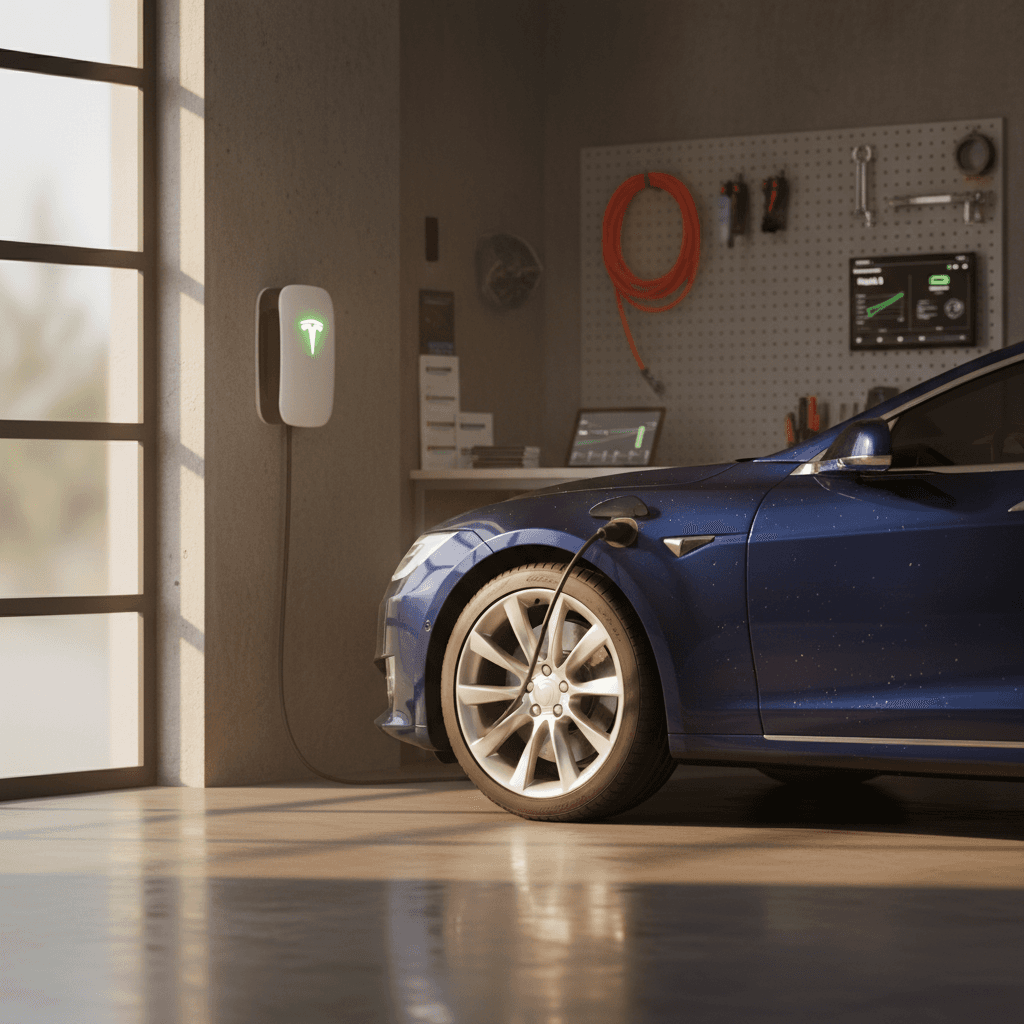
If you own a Tesla Model S, the **best home charger** is the difference between waking up every morning with a full battery and fighting for public plugs. The good news: your Model S is one of the easiest EVs to charge at home, and you have excellent options, from Tesla’s own Wall Connectors to smart third‑party Level 2 units that work with almost any EV you might own next.
Quick answer
Why home charging matters for your Tesla Model S
Tesla loves to say the best place to recharge is at home, overnight, and they’re right. With a properly sized **Level 2 home charger**, your Model S quietly adds 30–45 miles of range per hour while you sleep. That means you rarely need a Supercharger unless you’re on a road trip, and you aren’t planning life around public charging queues or broken stations.
- Convenience: Plug in at night, wake up to the range you set, no detours required.
- Battery comfort: You can keep daily charging in the 40–80% window, which most experts agree is gentler on long‑term battery health than frequent fast charging.
- Cost control: Home electricity, especially on off‑peak or EV‑specific rates, is usually cheaper than DC fast charging.
- Resale story: Being able to show a buyer that the car lived on predictable home charging is a quiet but meaningful signal of careful ownership.
Think ahead to your next EV
How fast can a Tesla Model S charge at home?
Before you pick a charger, you need to know **what your Model S can actually accept** on AC power. That “bottleneck” is the car’s onboard charger, not the wall box. Most recent U.S. Model S variants can take up to **48 amps at 240V** (about **11.5 kW**) on Level 2, while some older cars were limited to 40A or ordered with a higher‑capacity onboard charger.
Typical home charging speeds for Tesla Model S
Approximate real‑world numbers for U.S. Model S variants on Level 1 vs. Level 2 charging. Exact speeds vary with voltage, temperature, and state of charge.
| Setup | Breaker / Amps to Car | Approx. Power | Typical Miles of Range per Hour* |
|---|---|---|---|
| Standard 120V outlet (Level 1) | 15A / 12A | ~1.4 kW | 3–4 mi/hr |
| NEMA 14‑50 outlet + mobile connector (Level 2) | 50A / 32A | ~7.7 kW | 20–25 mi/hr |
| Wall‑mounted Level 2 at 40A | 50A / 40A | ~9.6 kW | 25–30 mi/hr |
| Wall‑mounted Level 2 at 48A (Tesla Wall Connector) | 60A / 48A | ~11.5 kW | 30–45 mi/hr |
Use this table to sanity‑check what you should see on your charging screen at home.
Don’t overspend on amps you can’t use
Tesla Model S best home charger: quick picks
Best home chargers for Tesla Model S in 2026
Three excellent starting points depending on how you use (and share) your garage.
Best overall: Tesla Wall Connector (NACS)
Best for: Most Tesla‑only or Tesla‑heavy households.
- Up to 48A (≈11.5 kW) Level 2 charging.
- Clean integration with the Tesla app and car’s charging screen.
- 24‑ft cable is ideal for most garages.
- Well‑priced versus other premium smart chargers.
Most flexible: Tesla Universal Wall Connector
Best for: Mixed garages with Tesla + non‑Tesla EVs.
- Built‑in **NACS and J1772** in one unit.
- Same 48A capability as the standard Wall Connector.
- Lets guests and future non‑Tesla EVs charge without extra adapters.
Top third‑party smart charger
Best for: Homes that want brand‑agnostic, app‑heavy charging.
- Popular picks include ChargePoint Home Flex, Emporia, Wallbox Pulsar Plus, and others.
- Usually J1772 plug; use the small Tesla adapter included with your car.
- Great if you already run a specific energy‑monitoring ecosystem at home.
Home charging by the numbers
Tesla Wall Connector vs. Universal Wall Connector
Tesla’s own hardware is the obvious place to start, and in 2026, you now have **two flavors** of Wall Connector to consider for your Model S: the standard **Tesla Wall Connector (NACS only)** and the **Tesla Universal Wall Connector (NACS + J1772)**.
Standard Tesla Wall Connector (NACS)
- Connector: NACS (Tesla plug).
- Output: Up to 48A / ≈11.5 kW.
- Mounting: Hard‑wired or (on some versions) plug‑in via 14‑50.
- Smart features: Wi‑Fi, load sharing between multiple units, scheduled charging via Tesla app.
- Best for: Households where every EV has a NACS port or uses a NACS adapter daily.
Tesla Universal Wall Connector
- Connector: NACS plug with an integrated swing‑out J1772 adapter.
- Output: Also up to 48A / ≈11.5 kW.
- Convenience: Non‑Tesla drivers don’t need to bring their own adapter, just grab the J1772 handle.
- Best for: Households that already mix brands or plan to, plus anyone who hosts EV‑driving friends and family.
Which is "best" for a Model S?
Best third‑party home chargers for a Model S
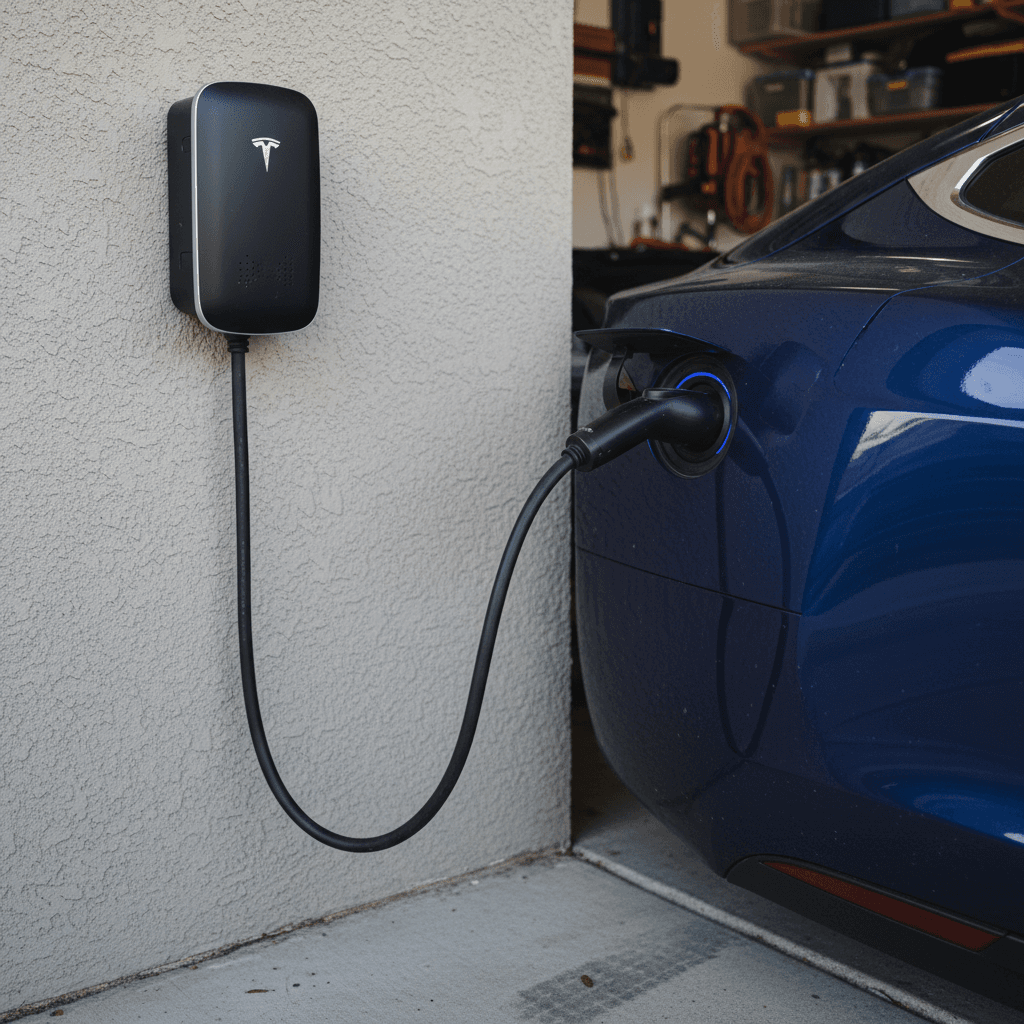
Tesla makes excellent hardware, but it’s not the only game in town. High‑quality third‑party Level 2 chargers can be the **best choice** if you want a particular app ecosystem, advanced energy monitoring, or a charger you’ll happily leave behind if you move.
Popular third‑party home chargers that pair well with a Model S
All of these are 40–48A‑class Level 2 chargers widely recommended in 2024–2026 tests. Exact models and pricing change fast, so think in categories.
ChargePoint Home Flex
Why owners like it: Polished app, flexible amperage (up to 50A output on a 60A circuit), and good utility‑program support.
Great if: You already use ChargePoint publicly and want one account for everything.
Emporia / similar energy‑monitoring chargers
Why owners like it: Deep integration with home energy monitoring. Friendly for solar households or people who like graphs.
Great if: You care as much about your panel and bill as you do about the car.
Heavy‑duty, no‑nonsense units
Examples: Grizzl‑E, Autel MaxiCharger, Siemens VersiCharge and similar NEMA 4 outdoor‑rated boxes.
Great if: You want rugged hardware on an exterior wall or pole and are happy using the Tesla in‑car screen instead of a fancy app.
Using a J1772 charger with a Model S
NACS vs. J1772 and adapters for a Model S
In North America, your Model S uses **NACS**, the compact Tesla charging connector that many automakers are now adopting. Most non‑Tesla home chargers still ship with the older **J1772** plug, but functionally they deliver the same AC power. The question is: do you want NACS built into the charger, or are you happy to use the adapter?
Reasons to choose a NACS charger
- You hate dongles. A native NACS plug feels cleaner and easier one‑handed.
- Your household is mostly Tesla, now and in the future.
- You like the way Tesla’s own handle and cable holster feel and look in the garage.
Reasons to choose a J1772 charger
- You already own non‑Tesla EVs, or you swap cars often.
- You want the broadest selection of third‑party brands and smart‑charger features.
- You’re comfortable with a J1772 handle plus the small Tesla adapter clipped on.
Future‑proofing your plug
Installation, amps, and electrical panel basics
The best charger on paper doesn’t help if your electrical service can’t support it. This is where a licensed electrician earns their keep, and where many Model S owners discover that **40A vs. 48A** is a practical question, not a theoretical one.
Home installation checklist for a Model S charger
1. Confirm your panel capacity
Have an electrician look at your main service (often 100A, 150A, or 200A) and existing large loads, HVAC, electric range, dryer, hot tub. You want enough headroom that the car isn’t the straw that breaks the breaker.
2. Pick your target charging current
For most Model S owners, a **40A or 48A** setting is the sweet spot. On a 50A breaker you’ll run the charger at 40A; on a 60A breaker you can set a Tesla or similar EVSE to the full 48A that the car can use.
3. Decide on hard‑wired vs. plug‑in
Hard‑wiring is a little more permanent and often preferred outdoors. A NEMA 14‑50 plug‑in setup is slightly more flexible if you think you’ll move the charger or you’re in a rental where the outlet can remain when you go.
4. Choose cable length and mounting location
Mock‑park your Model S and measure. A 24‑ft cable reaches most driveways and garages, but it’s cheaper and tidier to mount the charger within a few feet of the charge port.
5. Pull permits and schedule inspection
In many U.S. jurisdictions, a permit is required for a new 240V circuit. A good electrician will handle the paper chase; you just need to make sure it’s part of the quote.
6. Set the charger’s amperage limit
Modern chargers, including Tesla’s, let you set a max current during setup. Your installer should match this to the breaker size so the system is safe and code‑compliant.
Safety first: don’t DIY what you’re not qualified to do
How to choose the right home charger for your Model S
There isn’t one universal “best” charger, but there is a best charger for **how you drive, where you park, and what you plan to own next**. Here’s how to narrow it down.
Match your driving pattern to a charger
Use your daily mileage and garage situation as the starting point.
Low to moderate daily miles (under 60 mi/day)
- A 32–40A Level 2 charger is plenty; your car will easily recover daily driving overnight.
- If panel capacity is tight, it’s perfectly reasonable to cap the charger at 32A.
- In many suburban garages, a standard Tesla Wall Connector set between 32–40A is the ideal blend of cost and speed.
High daily miles or frequent road trips
- Go for a charger that can deliver the full **48A** your Model S can accept.
- This shortens “top‑up” time between back‑to‑back long days.
- Consider a unit with good load‑sharing if you’ll eventually add a second EV on the same service.
If your garage is Tesla‑only
- Recommended: Tesla Wall Connector (NACS).
- Leans into the Tesla ecosystem you already use daily.
- Simplifies life for less tech‑obsessed drivers in the household.
If you mix brands or expect to
- Recommended: Tesla Universal Wall Connector, or a high‑quality J1772 charger left with the Tesla adapter installed.
- Makes guests’ and future EVs’ lives easier, not harder.
A simple rule of thumb
Costs, warranties, and smart‑charger features
By 2026, home Level 2 chargers have settled into a fairly predictable price band. Hardware typically runs from the **low‑$400s into the $700s**, with some premium or high‑amperage models above that. Installation can match or exceed the hardware cost if your panel is far from where the car parks or needs upgrading.
What to compare when shopping for a Model S home charger
Use this table as a shopping checklist when you’re comparing Tesla’s options to third‑party chargers.
| Factor | Tesla Wall Connector | Tesla Universal Wall Connector | Quality third‑party Level 2 |
|---|---|---|---|
| Typical hardware price | Competitive with mid‑range smart chargers | Slight premium for dual‑connector convenience | Wide spread; budget to premium |
| Max output | 48A | 48A | Usually 40–48A |
| Connectivity | Wi‑Fi, Tesla app | Wi‑Fi, Tesla app | Wi‑Fi / Ethernet / cellular, brand apps |
| Outdoor rating | Weather‑resistant when correctly installed | Weather‑resistant when correctly installed | Many offer robust NEMA 3R or 4 enclosures |
| Warranty | Brand‑backed, competitive term | Brand‑backed, competitive term | Ranges widely; 3–5 years common |
| Energy monitoring | Via Tesla app & car | Via Tesla app & car | Often more detailed energy and cost tracking |
Price ranges are approximate and change quickly, so focus on the categories rather than exact dollar amounts.
Do you really need a "smart" charger?
Charging habits, battery health, and used Model S shopping
The charger you choose is one piece of the puzzle. **How** you use it is just as important, for both your ownership experience and, if you ever sell, the story you can tell the next owner.
- For daily driving, many owners set their charge limit between **60–80%**, only going higher before a road trip.
- Use home Level 2, not fast charging, as your default. Superchargers are fantastic for covering distance, less ideal as your daily fuel stop.
- Don’t obsess over speed. If your car fully recovers overnight, you’ve already won.
- If you’re buying a used Model S, ask how the previous owner charged the car and whether it lived on home Level 2 most of its life. It’s a small but meaningful data point alongside a professional battery‑health check.
Where Recharged fits in
Ready to find your next EV?
Browse VehiclesFAQ: Tesla Model S best home charger questions
Frequently asked questions about Tesla Model S home charging
Bottom line: best home charger for your Tesla Model S
For most Tesla Model S owners in 2026, the **Tesla Wall Connector** hits the bull’s‑eye: fast enough to refill big batteries overnight, elegant in daily use, and tightly integrated into the Tesla ecosystem you already live in. If your driveway is more of a United Nations of EV brands, the **Universal Wall Connector** or a well‑chosen third‑party Level 2 charger plus Tesla adapter gives you the flexibility you need without giving up much, if anything, in performance.
Get the electrical work right, size the charger to your real‑world driving, and you’ll stop thinking about kilowatts and connectors. You’ll just plug in your Model S when you get home, close the garage door, and wake up every morning ready to drive. And if you’re still hunting for the right used Model S, or another EV altogether, Recharged can help you find a car with verified battery health and the kind of charging story you want to inherit.