If you’re shopping used, a Hyundai IONIQ 5 50,000‑mile review tells you a lot more than any glossy launch article ever could. By this point, real‑world battery health, range, reliability quirks and running costs have had time to show their hand, and that’s exactly what used‑EV shoppers need to know.
Who this review is for
Why a 50,000‑Mile Hyundai IONIQ 5 Review Matters
On paper, the IONIQ 5 still looks like one of the smartest EV buys on the market: ultra‑fast DC charging, roomy cabin, competitive pricing and a 10‑year/100,000‑mile battery warranty on original owners. But once an IONIQ 5 crosses 50,000 miles, questions shift from "Is this cool?" to "What actually wears, breaks, or loses performance?", which is what matters most when you’re buying used.
We’ve combined owner reports from high‑mileage cars, industry data, and Recharged’s own experience inspecting used EVs to answer four key questions: How does the battery hold up? What happens to real‑world range? Are there recurring reliability issues? And is a 50,000‑mile IONIQ 5 still a good value versus other used EVs?
Hyundai IONIQ 5 at 50,000 Miles: Snapshot
Where this EV shines, and where you should look closer
Battery & Range
Mild degradation for most owners at 50k miles, with usable capacity typically still above 90% when charged and cared for reasonably well.
Charging & Road Trips
Still one of the fastest‑charging mass‑market EVs. 10–80% sessions in the 20‑minute range remain realistic when the pack is warm and conditions are right.
Reliability & Costs
Low routine maintenance, but watch for 12‑volt battery failures, ICCU/charging controller campaigns, and normal wear items like tires and brakes.
Quick Take: IONIQ 5 at 50,000 Miles
- Battery health: Many long‑term owners report only modest loss of capacity by 50,000 miles when the car has been charged sensibly.
- Range: Expect a healthy IONIQ 5 with the larger pack to deliver roughly 220–250 miles on the highway at 70 mph and more in city‑heavy driving, depending on climate and wheels.
- Charging: The 800‑V architecture still delivers genuinely fast DC charging, though charge curves can vary with software version, station quality and pack temperature.
- Reliability: Overall solid, but a noticeable minority report 12‑volt battery issues and charging‑system faults addressed by recalls or service campaigns.
- Comfort & usability: Cabin space, ride comfort and tech age well. The IONIQ 5 still feels modern at 50,000 miles compared with many same‑age crossovers.
Used‑shopper shortcut
Battery Health and Degradation at 50,000 Miles
Battery life is the number‑one concern for any used EV shopper, and the IONIQ 5 is no exception. The good news: for cars in the 40,000–60,000‑mile window, most real‑world reports point to single‑digit or low‑teens percentage loss in usable capacity, assuming normal charging habits and no major defects.
Typical IONIQ 5 Battery Health by 50,000 Miles (Observed Range)
Like most modern EVs, the IONIQ 5 uses liquid thermal management and conservative buffers to protect the pack. That’s why outright battery failures are rare. What you are more likely to see at 50,000 miles is a modest drop in available kWh and faster range loss in cold weather compared with the car’s first year.
Watch for outliers
How to Gauge Battery Health on a 50,000‑Mile IONIQ 5
1. Look for service records
Ask specifically about <strong>high‑voltage battery or charging‑system work</strong>. A properly resolved warranty repair isn’t a red flag by itself; a history of repeated failures is.
2. Compare range to spec
On a full charge, compare indicated range to the car’s original EPA rating. A healthy 50,000‑mile pack can sit somewhat below the sticker but shouldn’t be dramatically lower in mild weather.
3. Check DC fast‑charge behavior
On a warm day and low state of charge, a healthy IONIQ 5 should ramp up briskly at a reputable fast charger. If it won’t go much above modest speeds, you may be looking at battery or charging‑system limits.
4. Use a professional battery test
A tool like the <strong>Recharged Score battery health diagnostics</strong> uses data from the car and controlled testing to estimate remaining capacity and flag abnormal behavior.
Real-World Range: How Much Do You Lose?
Hyundai’s official EPA ratings for the IONIQ 5 range from the mid‑200s to over 300 miles depending on battery and drivetrain. In the real world, a 50,000‑mile car on the larger pack typically delivers:
Approximate Real‑World Range for a Healthy IONIQ 5 at 50,000 Miles
These are ballpark figures, not guarantees. Driving style, temperature, terrain and wheel size make a big difference.
| Scenario | Pack/Drivetrain | Estimated Range (mi) | Notes |
|---|---|---|---|
| Mixed driving, mild weather | 77 kWh RWD | 250–270 | City‑heavy routes can see more; aggressive highway speeds less. |
| 70 mph highway, mild weather | 77 kWh RWD | 220–240 | Expect a modest hit versus EPA; crosswinds and elevation matter. |
| Cold winter highway | 77 kWh AWD | 170–210 | Heat use and higher rolling resistance cut range substantially. |
| Urban/suburban use, mild weather | 58 kWh RWD | 180–210 | Smaller pack models are better as commuter cars than road‑trippers. |
Use these numbers as sanity checks when test‑driving a used IONIQ 5, not as promises.
Cold‑weather reality check
Charging Experience: DC Fast and Home
One of the IONIQ 5’s big calling cards is its 800‑V architecture and eye‑catching fast‑charge times. By 50,000 miles, that core advantage is still intact on healthy cars, but how you use it, and how the previous owner used it, matters.
Fast‑Charging at 50,000 Miles
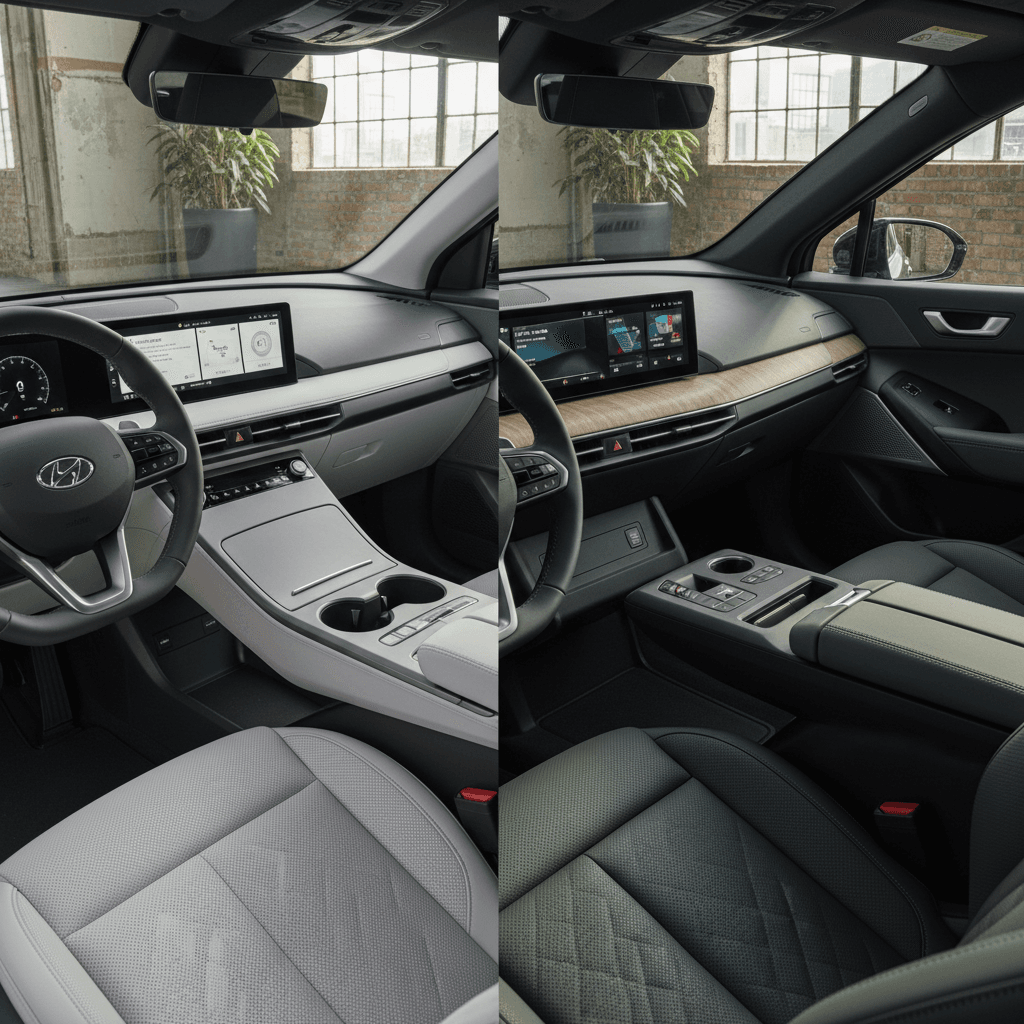
Owners continue to see strong DC performance around 50,000 miles when conditions are right: low state of charge, preconditioned or warm pack, and a capable charger. However, charge curves can flatten more aggressively when the battery is cold, or if software updates have shifted how the car protects the pack.
Occasional fast‑charging is unlikely to hurt a modern pack. That said, a high‑mileage IONIQ 5 that lived almost exclusively on DC fast chargers in very hot climates is more likely to show above‑average degradation.
Home Charging & Daily Use
Most long‑term owners primarily charge at home on Level 2, keeping daily charges in the 60–90% window and reserving 100% charges for trips. This pattern is ideal if you want your IONIQ 5’s battery to age gracefully.
If you buy used, ask how the car was charged. A vehicle that lived on home Level 2 with moderate charge limits is a safer bet than one that regularly sat at 100% or was fast‑charged daily.
Don’t ignore charging warnings
Reliability Issues: What Actually Shows Up
On balance, the IONIQ 5 has been a strong performer in long‑term satisfaction surveys and owner forums. But every high‑volume EV develops patterns, and a few themes do pop up more often around the 20,000–60,000‑mile mark.
Common IONIQ 5 Issues to Watch Around 50,000 Miles
None of these are guaranteed, just patterns worth checking for on a test drive.
12‑Volt Battery Failures
More than a handful of owners report early 12‑volt battery failures, sometimes well under 30,000 miles. By 50,000 miles, many cars have already had the original unit replaced, sometimes more than once.
ICCU / Charging Campaigns
Some IONIQ 5s have had issues linked to the Integrated Charging Control Unit or related components, addressed through recalls or service campaigns. Confirm that any relevant updates and replacements have been done.
Software & Connectivity Gremlins
Like most modern EVs, the IONIQ 5 can have occasional infotainment glitches or app connectivity quirks. These are usually nuisances, not deal‑breakers, but test everything you plan to use daily.
The good news on reliability
Running Costs: Tires, Service and Depreciation
Day‑to‑day operating costs are a big part of any long‑term review. At 50,000 miles, you’re starting to see the first full cycle of wear items and the real‑world impact of depreciation.
Typical Ownership Costs by 50,000 Miles (High‑Level View)
Insurance costs vary by region, but the IONIQ 5 tends to sit near other compact crossovers. Electricity costs depend on local rates and how often you fast‑charge versus plugging in at home. For many owners, total running costs through 50,000 miles compare favorably with similar‑sized gasoline SUVs, especially where home electricity is cheap.
Brake wear bonus
What to Check on a Used IONIQ 5 Around 50,000 Miles
When you’re looking specifically at a 40,000–60,000‑mile IONIQ 5, you’re not buying a science experiment, you’re buying a daily driver. Here’s how to separate a well‑cared‑for car from one that may have a rougher backstory.
10 Checks Before You Buy a 50,000‑Mile IONIQ 5
1. Confirm recall and campaign history
Ask the seller for a printout of <strong>completed recalls and service campaigns</strong>, especially anything related to the ICCU, charging system, or high‑voltage battery.
2. Ask about 12‑volt battery replacements
Find out if and when the <strong>12‑volt battery</strong> was replaced. A recent quality replacement isn’t necessarily bad news, but repeated failures with no clear fix are a concern.
3. Review charging habits
Was the car mainly <strong>home‑charged on Level 2</strong>, or lived on DC fast chargers? Moderate, home‑based charging with charge limits typically correlates with healthier packs.
4. Inspect tires and alignment
Uneven tire wear can point to <strong>alignment issues</strong> or hard use. At 50,000 miles, a car on original tires is due for fresh rubber and a suspension check.
5. Test all charge ports
Plug into both AC and, if possible, a DC fast charger. Make sure sessions start consistently, no error messages pop up, and charge rates look reasonable for state of charge and temperature.
6. Evaluate range on a real drive
On your test drive, reset a trip meter and watch <strong>energy use (kWh/100 mi)</strong> against expected range. Huge discrepancies in mild weather are a yellow flag.
7. Check interior wear
Seat bolsters, steering wheel trim and touchpoints should match mileage. Excessive wear for 50,000 miles can indicate hard use or poor care.
8. Cycle all tech and driver assists
Test infotainment, Bluetooth, navigation, parking cameras and <strong>ADAS features</strong> like adaptive cruise and lane keeping. Tech glitches may need software updates, or reveal deeper issues.
9. Verify warranty transfer details
Hyundai’s battery warranty is generous for original owners; terms for subsequent owners can differ. Make sure you know exactly what’s covered on the specific car you’re considering.
10. Get an independent EV inspection
A general pre‑purchase inspection is good; a <strong>specialist EV inspection</strong> that includes battery diagnostics and charge‑system checks is better.
How Recharged Evaluates Used IONIQ 5s
A 50,000‑mile Hyundai IONIQ 5 can be an excellent value, or an expensive headache in waiting, depending on its history. That’s why Recharged builds every listing around objective data, not just photos and a price tag.
Inside a Recharged IONIQ 5 Evaluation
What we look at before a used IONIQ 5 earns a spot in our inventory.
Recharged Score Battery & Charging Diagnostics
Every EV we sell, including the IONIQ 5, comes with a Recharged Score Report that includes verified battery health, observed range behavior, and charging‑system performance. That gives you hard data on the most expensive component in the car.
Full EV‑Focused Vehicle Inspection
Our EV specialists inspect tires, brakes, suspension, electronics and driver‑assist systems, and they check for open recalls and software updates. You also get transparent pricing, financing options, and trade‑in support, all handled entirely online or via our Experience Center in Richmond, VA.
Why this matters for a 50,000‑mile IONIQ 5
FAQ: Hyundai IONIQ 5 50,000-Mile Ownership
Common Questions About 50,000‑Mile IONIQ 5s
Is a 50,000‑Mile IONIQ 5 a Good Buy?
For many shoppers, a Hyundai IONIQ 5 50,000‑mile review is more relevant than any first‑drive story. At this point in its life, the IONIQ 5 has shown that its combination of ultra‑fast charging, roomy interior and modern tech can age gracefully, as long as the battery, charging hardware and software have been properly looked after.
If you find a car with clean history, sensible charging habits and healthy battery diagnostics, a 50,000‑mile IONIQ 5 can deliver years of low‑maintenance, low‑fuel‑cost driving at a significant discount to new. Just be sure to treat the battery and charging system as the main event, not an afterthought, and lean on tools like the Recharged Score Report and EV‑focused inspections to separate the keepers from the question marks.