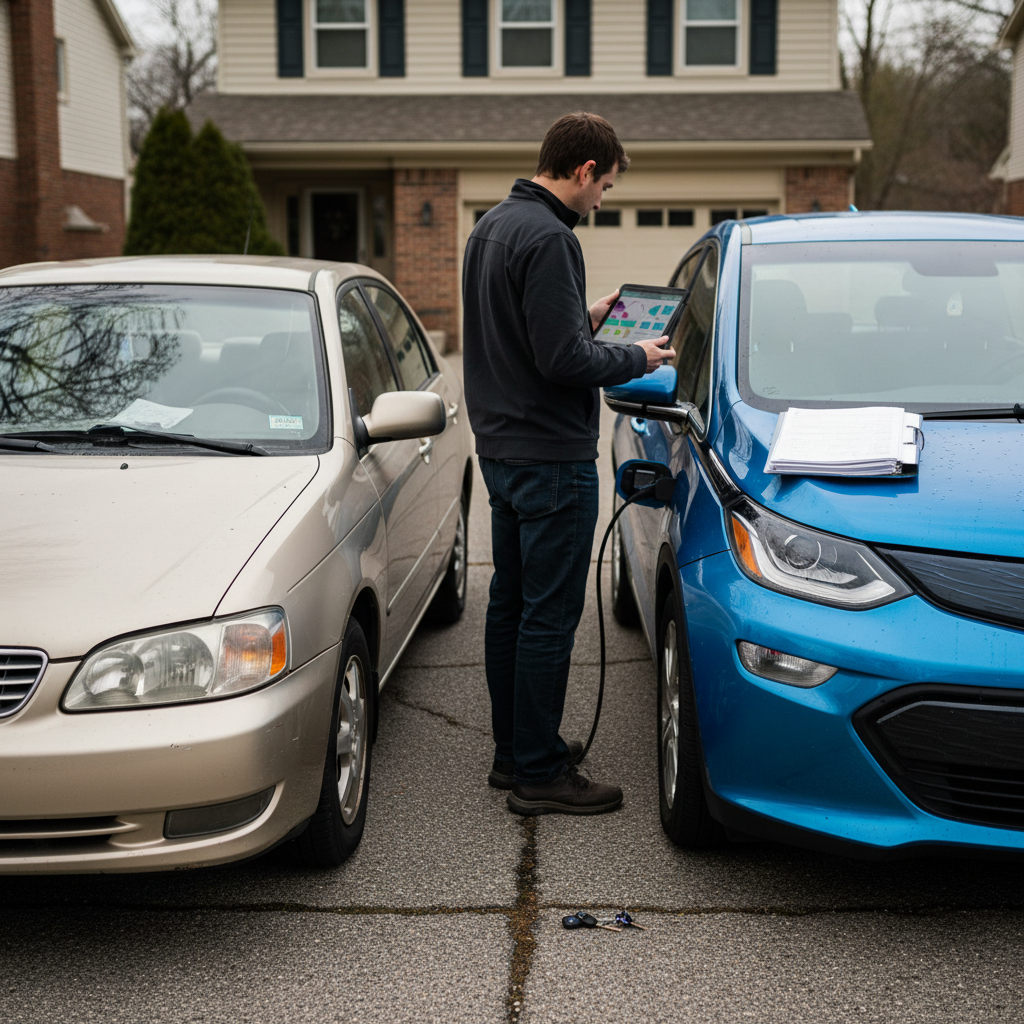
If you’re looking at a Tesla Model S with 100,000 miles on the clock, you’re standing at the intersection of fear and opportunity. On one side: battery‑failure horror stories and four‑figure repair quotes. On the other: a six‑figure luxury EV for the price of a new crossover. This 100,000‑mile Tesla Model S review is here to tell you, in plain English, which side wins.
Quick take
Why 100,000 miles matters on a Tesla Model S
In the gas‑car world, 100,000 miles used to be a funeral. For the Tesla Model S, it’s more like middle age. Tesla’s **battery and drive unit warranty** on the Model S runs 8 years or up to roughly 150,000 miles (trim‑dependent), with a promise that the pack will retain at least 70% of its original capacity over that period. That means the car is engineered to survive well past six figures on the odometer without the battery turning into a pumpkin.
The interesting part, especially if you’re shopping used, is that the Model S doesn’t age like a normal luxury sedan. The motors and single‑speed gearbox aren’t shedding metal shavings into a sump. There’s no 10‑speed transmission plotting its own suicide. The wear and tear shifts from mechanical complexity to **battery health, suspension, and electronics**. That’s what you need to judge at 100,000 miles, because the rest of the car, frankly, is usually game to keep going.
Tesla Model S battery health by the numbers
Battery health at 100k miles: what the data says
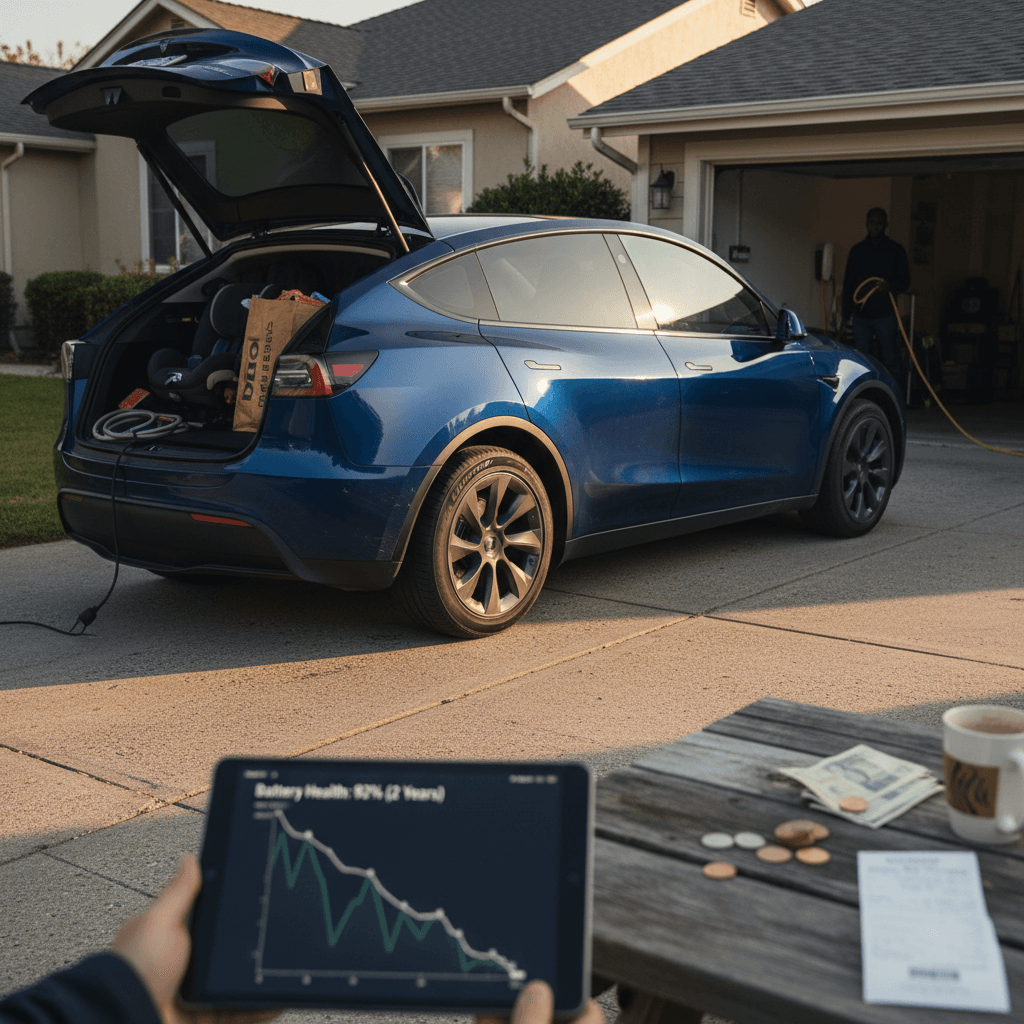
Let’s kill the suspense: a healthy Tesla Model S at 100,000 miles is **not** limping along at half its original range. Large datasets from Tesla’s own impact reports and independent trackers show a familiar pattern: a few percent of loss in the first couple of years, then a very slow slide. By about 100,000 miles, most Model S packs are down roughly 8–12% from new, which lines up with 88–92% capacity remaining.
Put another way, if your car left the factory with about 265 miles of EPA range (early 85 kWh cars) you’d reasonably expect something like 235–245 miles displayed at 100% today, assuming the pack has been treated decently. Later long‑range cars that started closer to 300 miles still commonly show high‑200s after 100k, especially in milder climates and with mostly home Level 2 charging.
Don’t obsess over one number
Typical Tesla Model S degradation vs. mileage
These are ballpark figures for a long‑range Model S in normal use. Individual cars will vary with climate, driving style, and charging habits.
| Odometer | Estimated remaining capacity | Range example (265 mi new) | Driver experience |
|---|---|---|---|
| 0 miles | 100% | 265 mi | What you saw on the window sticker. |
| 50,000 miles | ~94–95% | ~250–252 mi | You’ll barely notice unless you’re watching the numbers. |
| 100,000 miles | ~88–92% | ~233–244 mi | One extra Supercharger stop on a long road trip, that’s about it. |
| 150,000 miles | ~85–90% | ~225–239 mi | Still road‑trip capable; you just charge a bit more often. |
| 200,000 miles | ~85–90% (well‑kept) | ~225–239 mi | High mileage, but nowhere near “dead battery” territory for most cars. |
Think in percentages and range, not just odometer.
When degradation is a red flag
Real-world range: how far a 100k Model S really goes
On paper, 230–250 miles of rated range at 100% might sound fine. The real question is what that looks like at 75% state of charge in January, on real roads, with real traffic and a cabin full of humans.
Best‑case highway scenario
- Temperate weather, 65–70°F.
- Speeds around 65–70 mph.
- Car at ~90% charge when you hit the highway.
- Well‑maintained tires at proper pressure.
In this world, a 100,000‑mile Model S with ~90% capacity can still comfortably deliver 200+ miles between stops without drama.
Real‑life worst case
- Freezing temps, winter tires, crosswinds.
- Driving 75–80 mph.
- Heater, seat warmers, defroster all on.
- Pack only at 70–80% because you left in a hurry.
Now you’re looking at closer to 150–170 usable miles before you’d really prefer to plug in. Still workable, but you plan your stops.
Remember: range is a system, not a single spec
Driving experience after 100,000 miles
Here’s the part that surprises people moving out of German luxury sedans and into high‑mileage Teslas: at 100,000 miles a Model S still drives like it’s been in a long‑term relationship with a freshly paved highway. Electric torque doesn’t get tired. There’s no transmission hunting for gears, no turbo plumbing full of carbon. If the car has been cared for, the **powertrain feels essentially new**.
How a 100k‑mile Model S feels
The good, the tired, and the occasionally squeaky.
Acceleration
Even older dual‑motor cars still feel startlingly quick. Any degradation in performance is more about outdated tires than worn motors.
Ride & noise
On fresh suspension components, ride quality is calm and controlled. On original parts at 100k, expect more thumps and a few creaks over broken pavement.
Steering & brakes
Steering effort tends to stay consistent, and regen braking masks a lot of pad and rotor wear, though corrosion can show up on cars that sit a lot.
Where the Model S ages gracefully
Common Tesla Model S issues that show up around 100k
Every car has a way it grows old. The Model S’s sins are more orthopedic than terminal, bushings, screens, and bits of trim protesting the march of time. If you’re looking at a 100,000‑mile car, these are the problem areas you hunt for first.
- Air suspension wear (if equipped): Leaking air struts or tired control arms manifest as floaty ride, clunks, or uneven ride height. Fixes can run into the low four figures if you’re replacing multiple corners.
- Control arm bushings and links: Heavier EVs are hard on suspension hardware. Clunks over low‑speed bumps, wandering on the highway, or feathered tire wear are all tells.
- MCU and screen issues (early cars): Pre‑refresh Model S cars were known for early touchscreen failures due to worn eMMC memory. Many have been repaired or updated; you want proof.
- Door handles: The retractable handles on older cars are minor celebrities in the failure‑to‑launch department. An inoperable handle is annoying, but usually fixable without trashing the budget.
- HVAC & coolant hardware: Coolant pumps, valves, and the occasional chiller can show up on repair bills as mileage climbs, especially in hot climates.
- 12‑volt battery: A small but crucial component, expect it to have been replaced at least once by 100k, and budget for another in the car’s future.
Walk‑away warnings
Ownership costs: service and repairs by 100k
The Model S famously doesn’t need oil changes or timing belts, but let’s not pretend it runs on vibes and good intentions alone. By 100,000 miles, a responsible owner has usually done tires (probably twice), brake service, cabin filters, coolant system work, and at least some suspension refresh.
Typical 0–100k Tesla Model S expenses (ballpark)
Compared with a gas luxury sedan
Is a 100k‑mile Model S a good buy?
It can be an exceptional buy, if you choose carefully. A high‑mileage Tesla Model S is basically a heavily discounted front‑row seat to the future. The cars that make sense to buy at 100,000 miles share a few traits: **stable battery health, clean service history, and evidence of recent suspension and minor cosmetic care**.
Why a 100k‑mile Model S makes sense
- Huge depreciation already taken; you’re buying the car for a fraction of its original MSRP.
- Battery often still around 90% capacity, with plenty of real‑world range.
- Access to Tesla’s Supercharger network and OTA feature updates.
- Driving experience that still feels modern compared with many new ICE cars.
When it doesn’t pencil out
- Poor battery health, big unexplained range loss, or active high‑voltage warnings.
- Evidence of neglect: mismatched cheap tires, no recent suspension work, spotty service records.
- Early Model S with unresolved MCU or door handle issues priced like a later, cleaner car.
- Seller unwilling to provide or allow a third‑party battery health report.
The sweet‑spot buyer
How to inspect a high‑mileage Model S before you buy
Think of shopping a 100k‑mile Tesla like dating someone who’s already been married: you’re judging how they’ve handled commitment, conflict, and maintenance. Here’s a practical checklist to keep you out of trouble.
100,000‑mile Tesla Model S buyer checklist
1. Verify battery health and range
Ask for recent photos of the car at 90–100% charge, and compare the displayed rated range to the original EPA rating. Ideally, back this up with a formal battery health report (like the Recharged Score) so you’re not guessing based on a single screenshot.
2. Scan for warning lights and error history
On a test drive, the dash should be clean, no persistent battery, drive unit, or cooling system warnings. If the seller mentions “temporary” errors, treat that as a reason for a deeper diagnostic, not a shrug.
3. Inspect suspension and tires
Listen for clunks over low‑speed bumps, and pay attention to how the car tracks on the highway. Uneven tire wear or a nervous steering wheel often point to worn control arms or alignment issues on heavier EVs like the Model S.
4. Test every door handle and lock
Cycle each handle multiple times, lock/unlock the car, and confirm everything works smoothly. Sticky or intermittent handles are common on older cars but should be priced into the deal if not already fixed.
5. Check the touchscreen and electronics
Make sure the center display boots quickly, responds to touch without lag, and doesn’t randomly reboot. Test Bluetooth, HVAC, seat heaters, and the backup camera; these aren’t luxuries, they’re part of living with the car.
6. Review service history and warranty status
Look for documentation of MCU fixes, suspension work, and routine maintenance. Confirm whether any battery or drive unit warranty remains based on the car’s in‑service date and mileage; this can be a huge safety net at 100k.
Where Recharged fits in for used Tesla shoppers
If this all sounds like a lot of homework, that’s because a 100,000‑mile Tesla Model S is a serious machine. The upside: you don’t have to do all the detective work yourself. Every car sold through Recharged comes with a Recharged Score battery health report, so you can see verified pack capacity, charging behavior, and pricing that reflects the car’s actual state, not wishful thinking.
Recharged specializes in used EVs, including plenty of high‑mileage Teslas. You can browse cars online, get EV‑savvy help with choosing between trims and battery sizes, line up financing, value your trade‑in, and even arrange nationwide delivery without setting foot in a traditional dealership. If you’d rather kick the tires in person, you can visit the Recharged Experience Center in Richmond, VA.
Make the battery work for you
Tesla Model S 100k‑mile FAQ
Frequently asked questions about 100k‑mile Model S ownership
Bottom line on the Tesla Model S at 100k miles
A 100,000‑mile Tesla Model S is not a ticking time bomb. In many cases, it’s a discounted luxury EV with a battery that still has most of its life in front of it, a drivetrain that shrugs at mileage, and a few age‑related creaks that are more character than catastrophe, if the previous owner did their part.
The smart move is to treat battery health and suspension like you’d treat engine and transmission on a traditional car: **verify, don’t guess**. With solid documentation, a clean drive, and a price that reflects reality, a high‑mileage Model S can be one of the most compelling used EV buys on the market. And if you’d rather have experts do the worrying, you can let Recharged handle the inspections, the Recharged Score battery diagnostics, and even the delivery; your job is just to enjoy the next 100,000 miles.