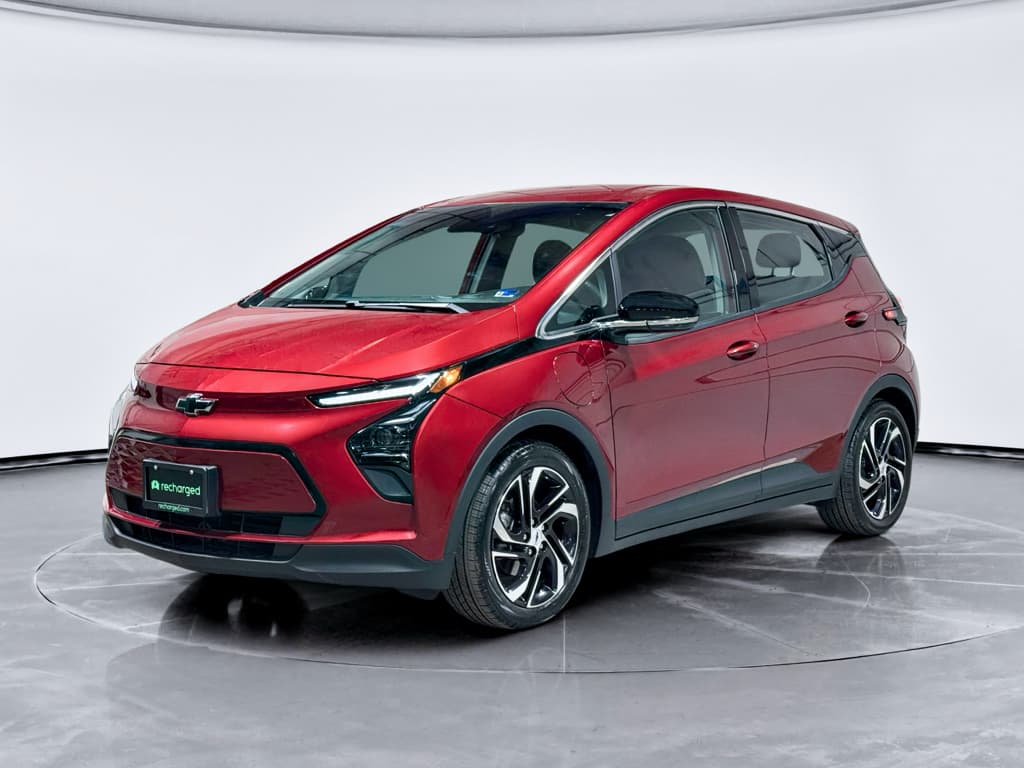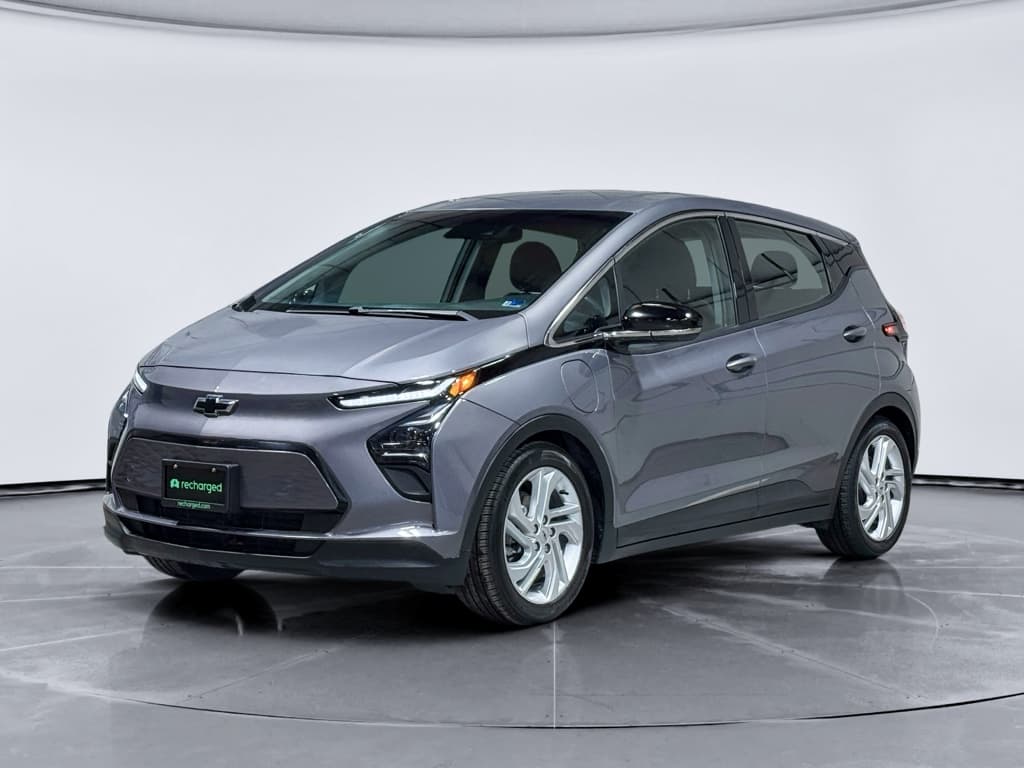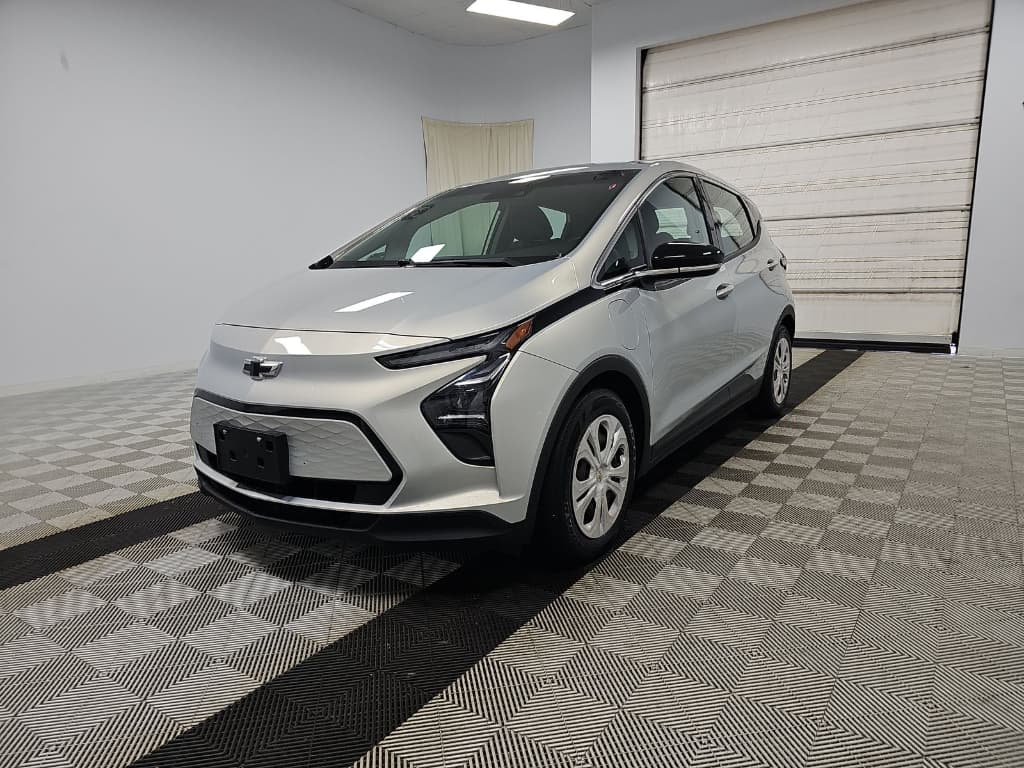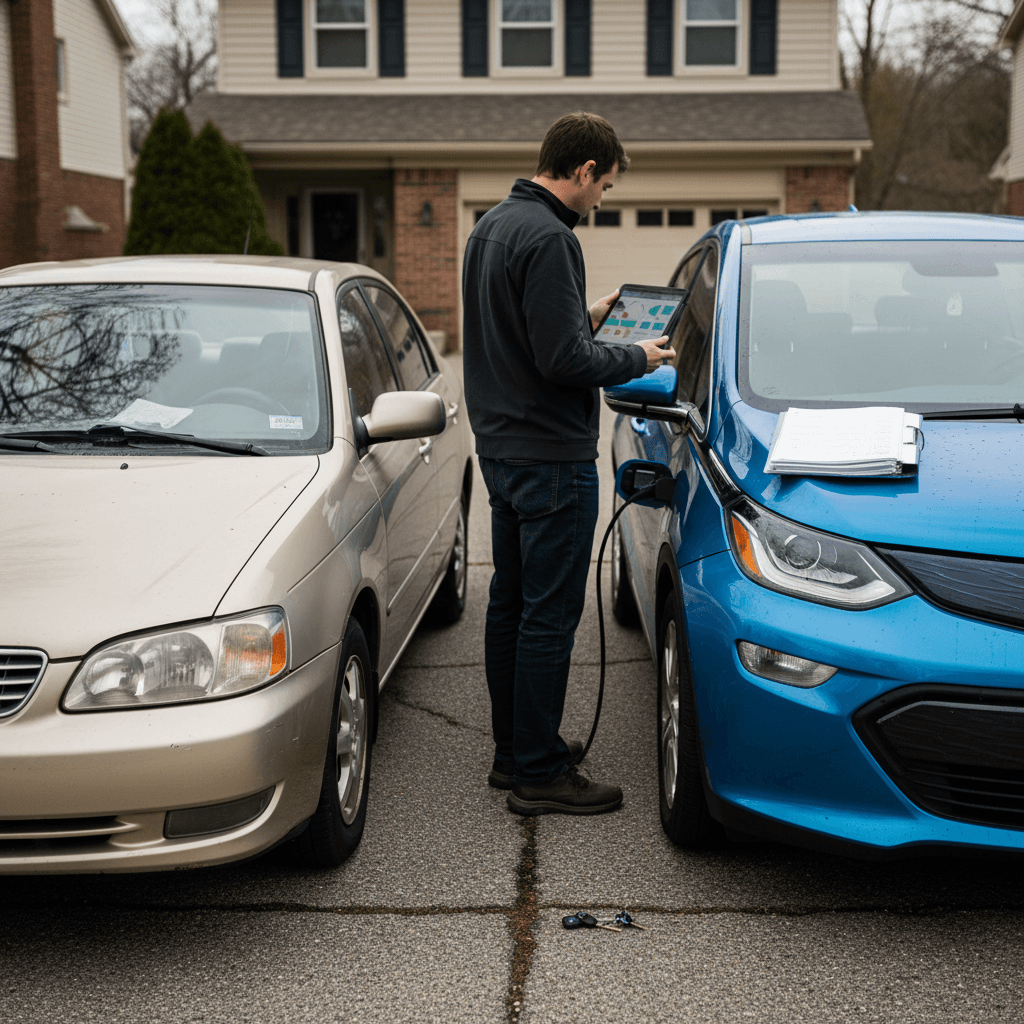
You don’t trade in a Toyota Corolla lightly. The Corolla is the sensible shoes of the car world: cheap to run, hard to kill, and about as dramatic as beige carpeting. So when a Corolla driver crosses the aisle to a Chevrolet Bolt EV, it’s worth paying attention. This review dives into what that switch really feels like, day to day, dollar to dollar, and mile to electric mile.
Who this review is for
Why Corolla Drivers Keep Eyeing the Chevrolet Bolt EV
Bolt EV vs Corolla: Key Numbers at a Glance
On paper, a used Chevrolet Bolt EV looks like a sideways move from a Toyota Corolla: same basic size, same commuter mission, similarly unflashy sheetmetal. The key difference is philosophical. The Corolla tries to sip gas. The Bolt walks away from gasoline entirely and gives you 238–259 miles of EPA‑rated range on electrons alone, depending on model year.
If your daily life is built around a reliable compact that just starts and goes, the Bolt is one of the few EVs that truly fits that mold, only quicker, quieter, and, if you can charge at home, much cheaper to feed. That’s why so many Corolla and Civic owners end up test‑driving one “just to see,” and then find themselves doing math on their phone in the dealership lot.
Meet the Driver: A Corolla Lifer Goes Electric
The Before: Life With a Corolla
- Ten years in various Corollas, latest a 2015 LE with ~150,000 miles.
- Daily commute: ~40–50 miles round trip, mostly highway.
- Fuel bill: roughly $150–$200/month depending on gas prices.
- Maintenance: oil changes, brakes, tires, the occasional minor repair, nothing dramatic.
The After: First Month in a Bolt EV
- Used 2021 Chevrolet Bolt EV Premier, ~40,000 miles, bought certified pre‑owned.
- Home Level 2 charging added to existing 240V dryer circuit.
- Commute cost drops to a handful of dollars in electricity per week.
- No more gas stops; most energy comes from overnight charging at home.
This is the archetypal switch: a high‑mileage Corolla that’s starting to feel tired, traded for a relatively low‑mileage Bolt with plenty of battery warranty left. If that sounds like your situation, you’re the target audience for this review.
Driving Experience: Bolt EV vs Toyota Corolla
How the Bolt EV Actually Drives Compared to a Corolla
Same footprint, very different personality
Acceleration & Power
The Corolla is tuned for thrift, not thrills. The Bolt EV, by contrast, snaps off the line with instant torque. Around town it feels more like a hot hatch than an appliance, especially from 0–40 mph.
Noise & Refinement
No engine, no shifting. The Bolt glides off in near‑silence. Wind and road noise are still there, but many Corolla owners describe the cabin as quieter and less buzzy overall.
Handling & Ride
Both are compact front‑drivers, but the Bolt’s low battery pack plants weight under the floor. It feels stable in corners yet can ride a bit choppier over broken pavement than a softer‑sprung Corolla.
One‑pedal driving is the killer app
If you’re used to the Corolla’s modest 4‑cylinder and conventional automatic, the Bolt EV will feel bizarrely eager. Merging and passing demand less planning; the car just goes. What you lose is the familiar drama of revs and shifts. Some drivers miss that mechanical dialogue. Most commuters do not.
Range and Real-World Commuting
A typical Corolla driver burns through maybe 300–400 miles between gas stops. Depending on model year, a Chevy Bolt EV offers an EPA range between roughly 238 miles (earlier cars) and 259 miles (later, 2020–2023 cars). In real‑world mixed driving, many owners report something in the 220–250‑mile window on a full charge.
- 40–50‑mile daily commute: most Corolla‑to‑Bolt drivers only use 15–25% of the battery in a day.
- Weekend errands: another 20–40 miles barely dents the pack if you charge every night.
- Occasional 150–180‑mile day trips: doable on a single charge in good weather, but you’ll want a DC fast charger at the halfway mark in winter or at highway speeds.
Winter is different
Corolla owners often discover that ranges they thought were “tiny” on paper are absolutely fine in daily life. The car charges every night; you wake up with the equivalent of a full tank. The mental model shifts from “How far can I go on this tank?” to “Will today’s driving fit inside a 200‑ish‑mile budget?” For most commuters, the answer is yes.
Charging Life vs Gas-Station Life
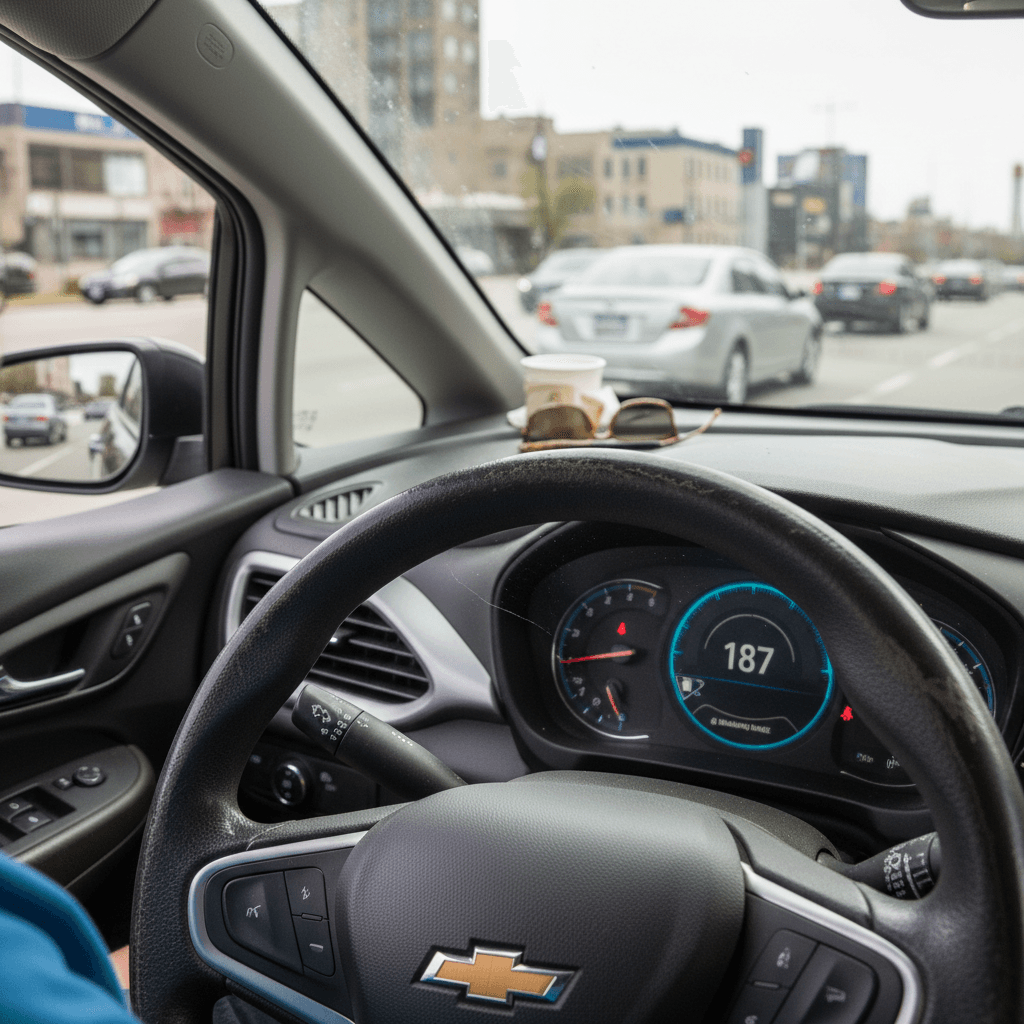
Here’s the biggest lifestyle change moving from a Corolla to a Bolt EV: you stop “filling up” out in the world and start “topping up” at home. For many drivers, that’s an upgrade bordering on luxury; for a few, it’s a deal‑breaker.
Charging a Bolt EV vs Fueling a Corolla
What changes when your driveway becomes your gas station
With Home Charging
- Level 2 (240V) at home adds roughly 25–35 miles of range per hour, refilling a depleted Bolt overnight.
- Daily routine becomes "plug in, go to bed" rather than planning gas stops.
- Electricity is usually cheaper and more stable in price than gasoline.
Relying on Public Charging
- Level 2 public chargers are fine for topping up at work or while shopping, but slow for complete refills.
- DC fast chargers can refuel a Bolt from low to ~80% in under an hour, but networks vary in reliability and pricing.
- Without at least workplace charging, a Bolt can feel less convenient than a Corolla if you live in an apartment with no dedicated parking.
Apartment dwellers, read this twice
For a suburban homeowner with a driveway or garage, the switch is charmingly uneventful: an electrician adds a 240V circuit, a wallbox charger or NEMA 14‑50 outlet appears, and the Bolt becomes a self‑replenishing appliance. Corolla owners often describe this as the moment they realize they never want to stand in the February wind next to a gas pump again.
Costs: Who Really Saves Money, Corolla or Bolt EV?
Five‑Year Cost Snapshot: Used Bolt EV vs Older Corolla
Illustrative example for a U.S. commuter driving ~12,000 miles per year. Actual numbers depend on your utility rates, fuel prices, and local incentives.
| Category | Used Chevy Bolt EV (2021) | Older Toyota Corolla (2015) |
|---|---|---|
| Energy/fuel | ~$500–$650/year in home electricity | ~$1,300–$1,800/year in gasoline |
| Oil changes | None | 2–3 per year |
| Brakes | Less wear thanks to regen; pads may last 100k+ miles | Conventional wear and tear; pads and rotors more frequently |
| Other maintenance | Tires, cabin filter, coolant at long intervals | Tires, filters, fluids, belts, occasional exhaust and fuel‑system work |
| Upfront price | Often mid‑ to high‑teens on the used market | Already owned or cheaper as an older high‑mileage car |
Numbers are rounded estimates, not quotes. Always run your own math with local prices.
When the math really works
A Corolla is notoriously cheap to keep alive, so it’s not as if you’re escaping a money pit. What you are doing, if you buy a used Bolt EV at today’s relatively soft prices, is shifting more of your total cost into the purchase and less into ongoing fuel and maintenance. In a world of volatile gas prices, many drivers like that trade.
Comfort, Space, and Practicality
Bolt EV vs Corolla: Living With the Cabin
Where the Bolt surprises, and where it doesn’t
Seating & Driving Position
The Corolla’s seating is familiar and low‑slung. The Bolt EV perches you a bit higher with a more upright posture, part hatchback, part mini‑crossover. Some love the command view; others find the seats a bit narrow and firm on long drives.
Cargo & Interior Space
Both cars are compact but practical. The Bolt’s tall hatch and split‑folding rear seats swallow bulky items more easily than a traditional sedan trunk, though absolute cargo volume is modest compared to larger crossovers.
Controls & Tech
If you’re coming out of an older Corolla, the Bolt feels like a time jump: digital instrument cluster, big touchscreen, modern driver‑assist options. It’s not luxury‑grade, but it’s far more tech‑forward than most eight‑year‑old econoboxes.
Interior expectations check
For solo commuters or couples, the Bolt is more than enough car. Rear‑seat space is similar to a Corolla’s; adults fit, but it’s not a limo. If you’ve been using your Corolla as a compact family car with car seats and strollers, you’ll want to bring all that hardware to a Bolt test drive and see how it loads.
Used Bolt EV Shopping Guide for Corolla Owners
Here’s where things get candid. The Corolla’s reputation was built on dull bulletproof reliability. The Bolt EV adds asterisks in the form of battery recalls, charging hardware, and software quirks. None of these are reasons to avoid the car outright, but they are reasons to shop intelligently.
What a Corolla Owner Should Check Before Buying a Bolt EV
1. Confirm Battery Recall Status
Every Bolt EV has been subject to high‑voltage battery recalls at some point. Use the VIN to confirm recall work is complete and whether the pack is original or replaced. A replacement pack can be a plus, but only if properly documented.
2. Look at Verified Battery Health
Range is the new reliability. Instead of guessing, look for a <strong>measured state of health</strong> report so you know how much usable capacity remains versus stock. A car that once had 259 miles of EPA range but now delivers 220 in real life is still very usable, as long as you know that going in.
3. Check Charging Hardware & History
Inspect the charge port, cables, and any included home charger. Ask how the previous owner charged: mostly at home Level 2, or frequent DC fast‑charging? The latter isn’t a deal‑breaker, but gentler charging is nicer to batteries over time.
4. Inspect Tires and Brakes
EVs are heavier and can be harder on tires. Make sure tread wear is even and there’s no odd feathering. Brakes on a Bolt often last far longer than on a Corolla thanks to regen, but rust from disuse can be an issue in salty climates.
5. Take a Long Test Drive
Don’t just loop the block. Spend 20–30 minutes in mixed driving. Try one‑pedal mode, highway speeds, and low‑speed parking. Listen for rattles, feel for seat comfort, and pay attention to how much range the car uses over a fixed route.
6. Think Honestly About Your Charging Access
Before you fall in love, picture your charging reality. Garage? Driveway? Street parking? Reliable chargers at work? If the answer to all of that is "no," a hybrid or a different EV solution may fit better than a Bolt right now.
Where a certified used EV helps
How Recharged Helps Make the Switch Safer
If you’re a Corolla owner, you’re probably allergic to drama. You want your first EV to behave like your old Toyota: start every morning, do its job, and not surprise you with five‑figure repairs. That’s exactly the anxiety Recharged tries to defuse in the used‑EV market.
- Recharged Score battery health diagnostics give you a verified picture of the Bolt’s high‑voltage pack, how much capacity it has now, and how it’s trending.
- Fair market pricing grounded in real‑world listings and the car’s actual battery condition, not just the badge on the hatch.
- EV‑specialist support that can walk you through whether a given Bolt fits your commute, your climate, and your charging access.
- Financing, trade‑in, and instant offer options that let you roll your outgoing Corolla’s value into your first EV.
- Nationwide delivery and a digital‑first buying experience, plus an in‑person Experience Center in Richmond, VA if you like to kick tires.
From Corolla keys to Bolt plug
Ready to find your next EV?
Browse VehiclesFAQ: Switching from a Toyota Corolla to a Chevrolet Bolt EV
Common Questions from Corolla Owners
Is the Chevy Bolt EV a Good Upgrade from a Corolla?
If your Corolla has taught you anything, it’s that car ownership doesn’t have to be interesting to be satisfying. The Chevrolet Bolt EV takes that same commuter ethic and runs it on electrons instead of gasoline. You gain instant torque, home "refueling," and far lower day‑to‑day energy use. You trade away the absolute simplicity and long‑proven track record of Toyota’s gas hardware for the higher‑stakes world of batteries, software, and charging infrastructure.
For a driver with predictable miles, a driveway or garage, and a healthy dislike of gas stations, the used Bolt EV is one of the most compelling upgrades you can make from a Corolla, especially at current used prices. The key is to buy with your eyes open: understand battery health, confirm recall work, and be honest about your charging situation.
That’s where a platform like Recharged earns its keep: by surfacing the information that actually matters for a used EV, battery condition, range reality, and fair pricing, so your first electric car can feel as uneventful and trustworthy as the humble Toyota you’re leaving behind, just a lot quieter and a lot quicker off the line.