If you live in a place with real winters, think lake‑effect snow, black ice, and weeks below freezing, the question isn’t just whether the Tesla Model 3 is fun to drive. You want to know how it actually behaves in snow, how much range you’ll lose when it’s 15°F, and whether charging becomes a chore. This Tesla Model 3 winter driving review pulls together owner experiences, test data, and practical tips so you can decide if a new or used Model 3 fits your cold‑weather life.
The short answer
Is the Tesla Model 3 Good in Winter? Quick Take
Tesla Model 3 Winter Report Card
How it stacks up where temperatures drop
Snow traction
Grade: B+ with winter tires, C+ on stock summer/performance tires. Dual‑motor AWD models do an excellent job of putting power down, but tire choice is everything in snow.
Cold-weather range
Grade: B. Like most EVs, you’ll see roughly 20–40% range loss in sustained freezing temps, more in sub‑zero cold, especially on short trips.
Charging & usability
Grade: A-. Preconditioning, heated battery, and the Supercharger network make winter road trips very doable if you plan around slower DC fast charging in the cold.
For everyday winter commuting, 20 to 60 miles per day, with home charging, the Model 3 is close to ideal. Instant torque, low center of gravity, and precise traction control give you confident control on slick roads. The tradeoff is meaningful range loss when temperatures stay below freezing and when you take short, stop‑and‑go trips that don’t give the battery time to warm up.
Where reviews tend to disagree
Cold-Weather Range: What You Can Really Expect
Every EV loses range in winter. In the Model 3, what matters most isn’t the brochure number, it’s how you use the car. Temperature, speed, terrain, trip length, and how often you preheat all play a role. Owners in northern states and Canada consistently report that a Model 3 can lose roughly 20–40% of its usable range in freezing conditions, and even more on very short trips.
Typical Tesla Model 3 Winter Range Loss
As a rule of thumb, take the EPA‑rated range of your Model 3 and multiply by about 0.7 for a conservative winter planning number. So a Long Range model rated around 333 miles is more like 230 real winter miles on a full charge at highway speeds in the low 20s, assuming you want heat and don’t baby the throttle. Around town, with preconditioning and gentler speeds, you may do better than that.
Plan winter range like this
Short trips vs long drives in the cold
Short, stop‑and‑go winter trips
- Heater and seat warmers draw power before the battery is fully warm.
- Energy use per mile can spike, and real‑world range can feel much worse than rated.
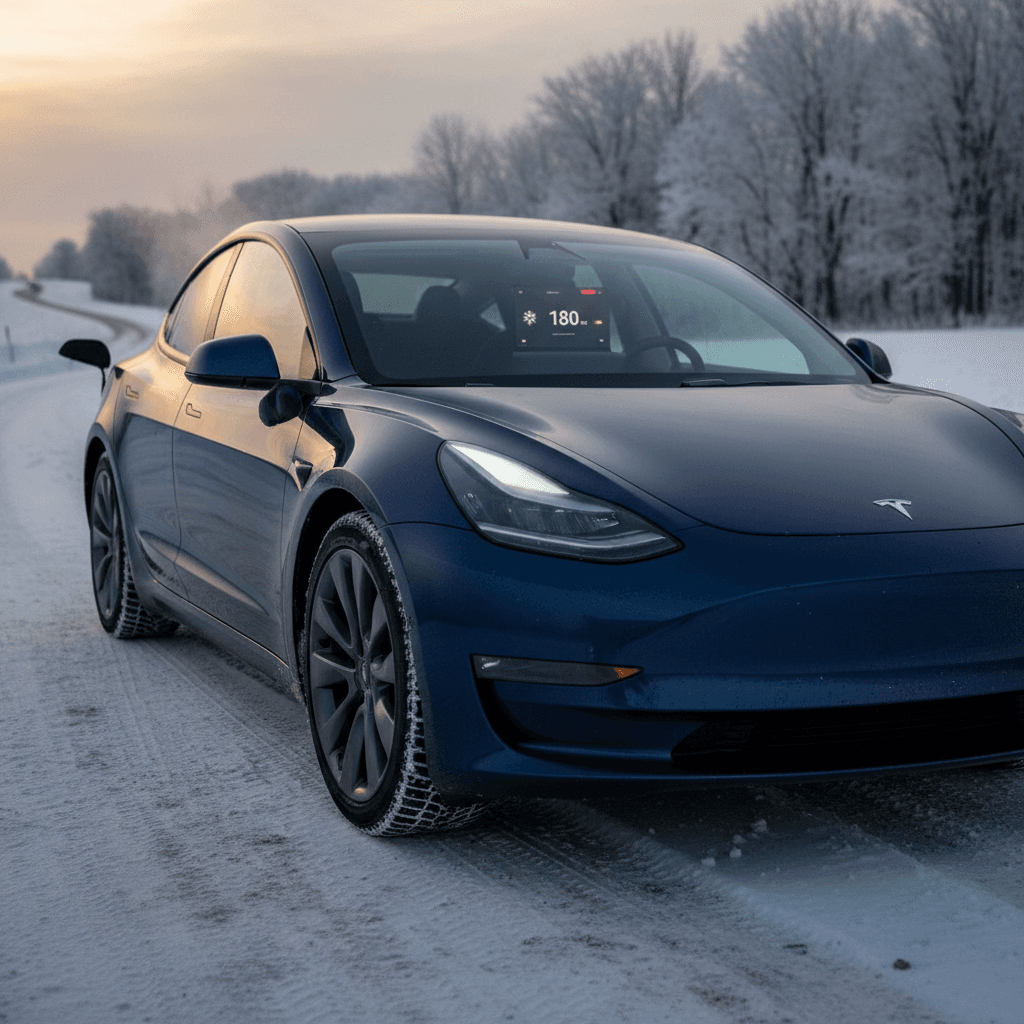
- You’ll often see a blue snowflake icon on the display indicating temporarily reduced usable battery capacity.
Longer highway drives
- Once the pack is warm, efficiency stabilizes and the range estimate becomes more predictable.
- Plan for more frequent DC fast‑charge stops and slower peak charging speeds in very low temperatures.
- Tesla’s built‑in trip planner will automatically adjust your route and charge stops based on weather and speed.
Snow, Ice, and Traction: How the Model 3 Handles
On a clear day, the Model 3 feels like a compact sports sedan. In snow, that same low center of gravity and fast‑reacting traction control become real safety assets. The car is constantly monitoring individual wheel slip and can cut power or apply brakes far faster than a human could react. The catch is simple: tires still decide 80% of your winter experience.
Tires Matter More Than Drivetrain
How different Model 3 setups behave in winter
RWD + good winter tires
Surprisingly competent in snow, especially at sane speeds. Traction control will step in early, and you’ll want to be gentle on the accelerator when pulling away on ice.
Dual Motor AWD + all‑seasons
Great in light to moderate snow but limited by tire compound. Excellent stability, but braking and cornering still suffer if tires are marginal.
Performance models
The stickier 20‑inch summer tires are not winter‑rated. You’ll need a second set of wheels and snow or severe‑duty all‑weather tires if you see real winters.
Don’t run performance summer tires in winter
- All‑wheel drive helps you get moving and stay stable, but it doesn’t shorten stopping distances on ice.
- Regenerative braking in the Model 3 is smooth and predictable, but in very slick conditions the car may reduce regen to avoid wheel lockup.
- The car’s weight is low and centered, which makes it feel planted in crosswinds and during emergency maneuvers, even on snow‑packed highways.
Winter capability verdict
Cabin Heat, Heat Pump & Comfort in the Cold
Older EVs used traditional electric resistance heaters that burned through range to keep the cabin warm. More recent Tesla Model 3s use a heat pump system that scavenges heat more efficiently and uses less energy in moderate cold. Regardless of year, the Model 3’s heated seats and steering wheel (on most trims) let you feel warm while using less power than blasting the cabin to 74°F.
Comfort Features That Help in Winter
Most trims include these cold‑weather helpers
Heated seats (front & rear)
Warm quickly and use far less energy than fully heating the air. Set the cabin to a lower temperature and rely on seat heat to stretch range.
Heated steering wheel
On many newer trims, this makes driving with a slightly cooler cabin much more tolerable in deep winter.
App‑based preconditioning
From your phone, you can preheat the cabin and battery while the car is still plugged in, scraping ice off the windshield becomes a much rarer chore.
Use preconditioning to your advantage
Charging a Tesla Model 3 in Winter
Cold batteries don’t like to charge fast, this is true of every EV. In the Model 3, you’ll notice three main winter charging effects: slightly higher energy use at home, slower DC fast charging until the pack warms up, and some temporary battery capacity “locked away” until the car gets up to temperature.
Smart Winter Charging Habits for Model 3 Owners
1. Keep it plugged in when parked
Tesla actually recommends leaving the car plugged in whenever practical. The car will sip power to maintain battery temperature and state of charge, reducing overnight cold‑soak losses.
2. Use scheduled departure or preconditioning
Tell the car when you plan to leave. It will time charging and warming so the pack is at an optimal temperature, which improves both range and DC fast‑charge speeds at your first stop.
3. Expect slower Supercharging in deep cold
If you navigate to a Supercharger, the car will start preheating the battery en route, but in very low temps you may not hit the maximum advertised kW, especially if you arrive with a cold pack.
4. Don’t obsess over 100% charges in winter
For most daily driving, charging to 70–90% is still fine. Save 100% charges for longer trips where you’ll immediately get on the road so the pack doesn’t sit full in the cold.
5. Watch for the blue snowflake icon
This icon means some energy is temporarily unavailable due to cold. It’s not permanent degradation; once the pack warms up, that capacity returns.
6. Factor in extra time on road trips
On a bitter‑cold highway run, add an extra stop or two vs summer and be prepared for 5–15 more minutes per DC fast‑charge session.
Home charging is the real game‑changer
Older vs Newer Model 3: Winter Differences
If you’re shopping the used market, it’s worth understanding how different Model 3 generations behave in winter. Tesla has refined the car’s heating, software, and even hardware over time, and those changes can matter if you live in Minnesota, upstate New York, or interior Canada.
Tesla Model 3 Winter Behavior by Era (High Level)
Key winter‑relevant differences across common used Model 3 vintages.
| Model year range | Key winter notes | Who it suits best |
|---|---|---|
| 2017–2019 (early cars) | More reliance on resistance heating; good traction but less efficient cabin heat in deep cold. | Drivers with moderate winters or shorter commutes who value lower upfront cost over ultimate efficiency. |
| 2020–2022 | Ongoing software improvements to preconditioning and battery management; cold‑weather behavior better than early cars. | Most used‑car shoppers in mixed climates; solid balance of price, features, and winter manners. |
| 2023+ “Highland” refresh | Further refinement to efficiency and cabin comfort, updated interior, and slightly improved aero; very competitive winter efficiency when driven sensibly. | Buyers in harsher climates who want the most refined Model 3 experience and plan to keep the car for several winters. |
This overview is simplified, always verify specific equipment on the exact car you’re considering.
How Recharged helps if you’re buying used
Tesla Model 3 Winter Pros and Cons
Key Winter Strengths and Weaknesses
What stands out once the temperature drops
Winter advantages
- Excellent traction control: Reacts faster than a human can, especially helpful on patchy ice.
- Low center of gravity: Heavy battery pack keeps the car planted in crosswinds and quick maneuvers.
- Instant heat: Cabin warms quickly; heated seats and wheel reduce the need for high HVAC temps.
- Remote preconditioning: Start cabin and battery heating from your phone while you’re still inside.
- No cold‑start drama: No engine oil to warm, no rough idles; the car either wakes up ready or tells you what it needs.
Winter drawbacks
- Noticeable winter range loss: 20–40% is normal, and more is possible in extreme cold or on short trips.
- Fast‑charge slowdown: DC charging can be significantly slower with a cold-soaked pack.
- Low ground clearance: Deep unplowed snow can challenge the Model 3 sooner than a crossover or truck.
- Tire‑dependent: On poor all‑seasons or summer tires, winter performance drops sharply.
Checklist: Buying a Used Model 3 for Winter
If you’re eyeing a used Tesla Model 3 as your all‑season daily driver, a little homework up front will make winters smoother and safer. Use this checklist to evaluate whether a particular car, and the deal around it, fits your climate and driving pattern.
Used Model 3 Winter-Readiness Checklist
Confirm battery health and warranty status
Healthy batteries lose capacity to cold more gracefully. Ask for battery health documentation. Vehicles sold through Recharged include a <strong>Recharged Score battery report</strong> so you know exactly what you’re getting.
Check whether it’s RWD or Dual Motor AWD
Rear‑wheel drive with good winter tires is adequate for most people, but if you regularly tackle steep, unplowed roads, Dual Motor AWD is the better bet.
Inspect or budget for proper winter tires
Ask what tires are on the car now and how much tread remains. If they’re worn all‑seasons or summer tires, plan on a new set of snow‑rated or severe‑service all‑weather tires.
Look for cold-weather options you’ll actually use
Features like heated steering wheel, rear heated seats, and upgraded all‑weather mats make winter more pleasant and help you rely less on energy‑hungry cabin heat.
Review the car’s software and service history
A car that has received regular software updates will have the latest tweaks to preconditioning and cold‑weather behavior. Service records can reveal whether previous owners addressed any heating or HVAC issues.
Think through your daily charging reality
Do you have access to home charging, even a basic 120V outlet? If not, map out nearby Level 2 or DC fast chargers and consider whether you’re comfortable planning around them during storms and cold snaps.
Tesla Model 3 Winter Driving FAQ
Common Tesla Model 3 Winter Questions
Bottom Line: Who the Model 3 Suits in Winter
If your picture of winter involves unplowed back roads, bitter windchill, and the occasional white‑knuckle commute, the Tesla Model 3 can still be a terrific choice, provided you’re honest about your needs. You’ll trade the gas‑station convenience of a quick fill‑up for the predictability of leaving home with a full battery every morning, and you’ll need to mentally write off a chunk of rated range on the coldest days.
Set up with the right tires, home charging, and smart use of preconditioning, the Model 3’s winter driving experience is calm, composed, and surprisingly enjoyable. Instant torque is tamed by excellent traction control, the cabin heats quickly, and the car quietly takes over the math of routing and charge planning when weather turns ugly.
If you’re considering a used Tesla Model 3 and want to be confident it will handle your winters, working with a specialist marketplace like Recharged gives you access to verified battery health data, fair pricing, and EV‑savvy support from first question to final delivery. With that foundation in place, winter goes from something you fear to just another season you drive through, quietly, efficiently, and without a drop of gas.