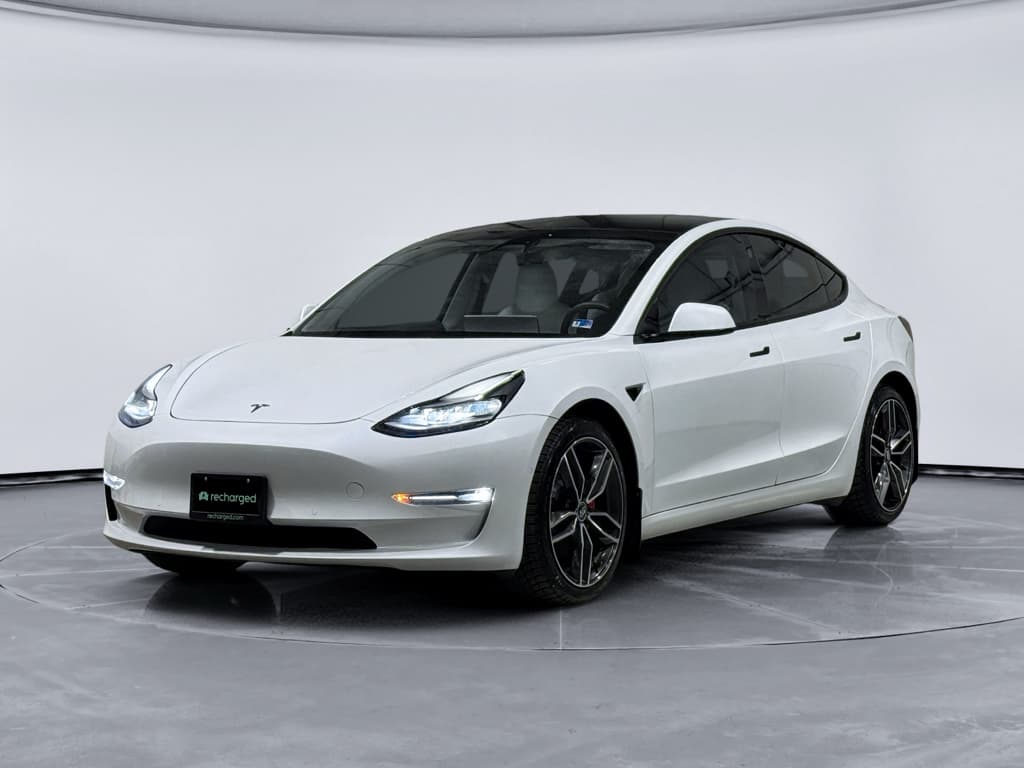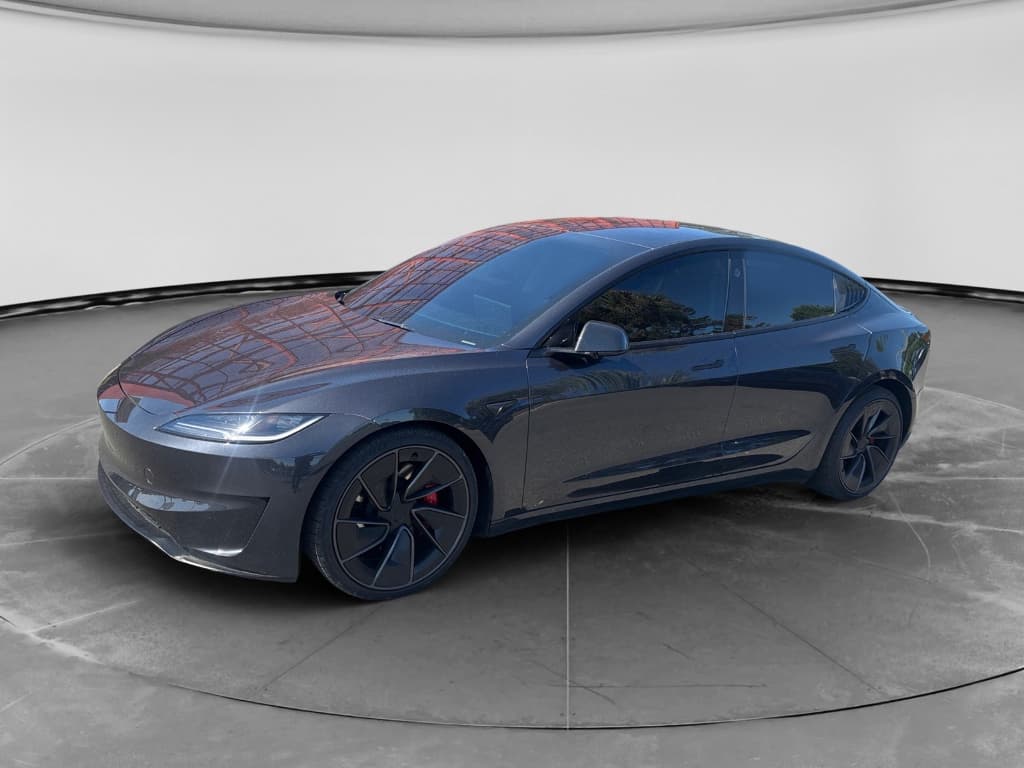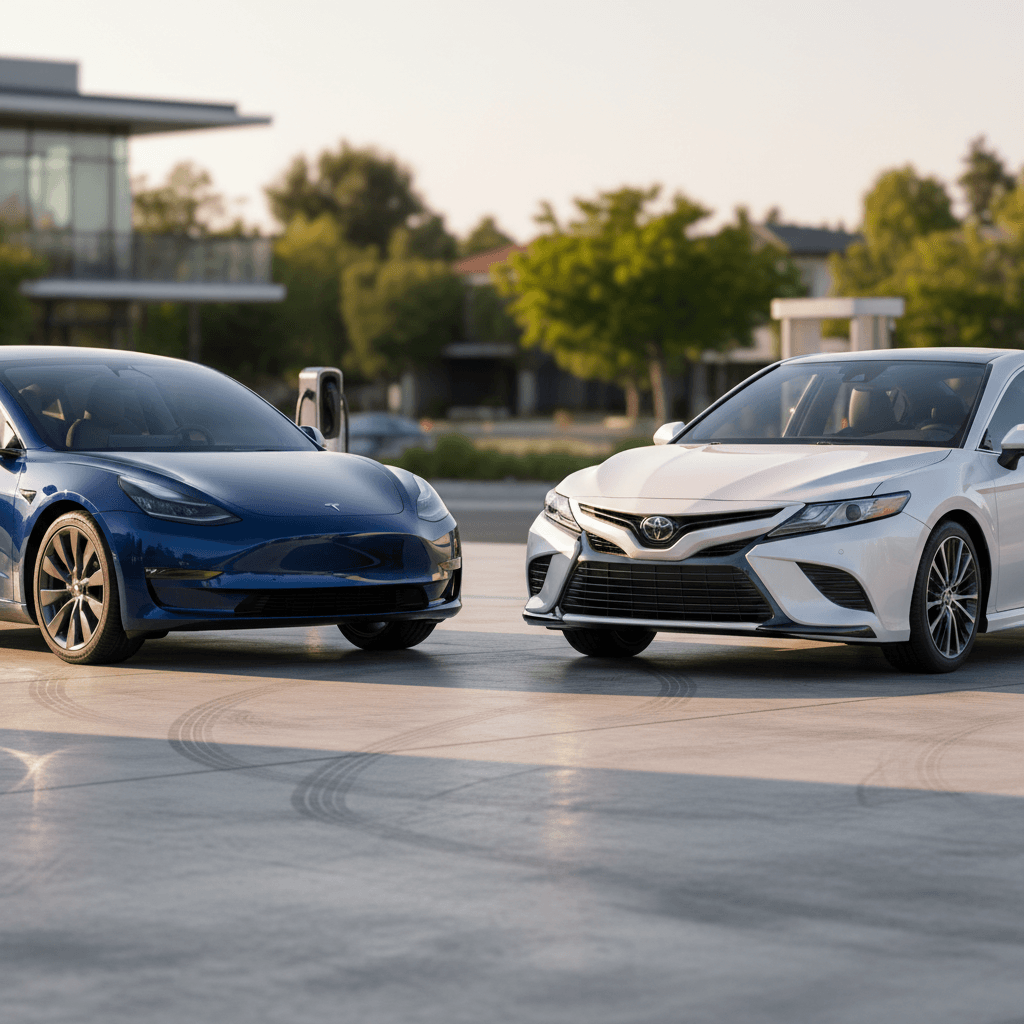
If you’re cross‑shopping a Tesla Model 3 vs Toyota Camry and wondering which you should buy, you’re not alone. One is the benchmark midsize sedan millions of Americans trust; the other is the EV that turned electric cars mainstream. The right answer depends less on brand loyalty and more on how you drive, where you live, and how long you’ll keep the car. Let’s walk through the trade‑offs in plain English.
Two great cars, very different philosophies
Tesla Model 3 vs Toyota Camry: who each car is for
Tesla Model 3: best for tech‑forward, longer‑term owners
- You want very low running costs and plan to keep the car at least 5–7 years.
- You can charge at home or at work and rarely drive more than a few hundred miles in a day.
- You value quick acceleration, over‑the‑air updates, and a minimalist, high‑tech cabin.
- You’re okay with more variation in build quality and a learning curve around charging.
Toyota Camry (gas or hybrid): best for no‑nonsense transportation
- You want a sedan that’s bulletproof simple to own and easy to service anywhere.
- You drive a lot of highway miles or in areas with sparse charging.
- You prioritize a conventional interior layout, physical controls, and dealership support.
- You want excellent fuel economy (especially with the Camry Hybrid) without changing how you drive.
How to read this comparison
Price, incentives, and what you actually pay
On paper, a Camry and a Model 3 can look similarly priced. In practice, what you pay up front depends a lot on incentives, options, and whether you’re buying new or used.
Typical new pricing: Tesla Model 3 vs Toyota Camry (2024–2025, U.S.)
Ballpark MSRPs before taxes, fees, and incentives. Real‑world transaction prices vary by location and discounts.
| Model | Representative trim | Approx. MSRP new | Powertrain |
|---|---|---|---|
| Tesla Model 3 | RWD | $39,000–$40,000 | Battery electric |
| Tesla Model 3 | Long Range AWD | $46,000–$48,000 | Battery electric |
| Toyota Camry | Gas LE/SE | $29,000–$31,000 | 2.5L gasoline |
| Toyota Camry Hybrid | Hybrid LE/SE | $31,000–$33,000 | Gas‑electric hybrid |
Use this as a directional guide, not a quote. Always check current pricing in your area.
Federal EV tax credit can be a swing factor
- Leasing: Tesla has periodically run aggressive lease offers that make a Model 3 payment competitive with or lower than a Camry Hybrid lease, especially when EV incentives are applied through the lease company.
- Used market: Depreciation has brought many used Model 3s and Camrys into the mid‑$20,000s. A used 2019–2021 Model 3 often costs similar money to a newer, lower‑mile Camry or Camry Hybrid.
Watch the out‑the‑door price, not just MSRP
Fuel vs electricity: what it really costs per mile
The biggest financial difference between a Tesla Model 3 and a Toyota Camry shows up at the pump, or rather, at the plug. Over 5–10 years, energy costs can dwarf small differences in purchase price.
Typical U.S. energy costs per mile (2026 assumptions)
Run your own numbers
Maintenance, reliability, and unexpected repairs
Toyota built its reputation on making Camrys that just quietly rack up miles. Tesla, by contrast, removes many traditional wear items entirely but adds software, battery, and electronics into the equation. The result: different risk profiles more than a simple “reliable vs unreliable” story.
Maintenance and reliability: Tesla Model 3 vs Toyota Camry
Where you’ll spend money, and where you probably won’t.
Tesla Model 3 maintenance profile
- No oil changes, timing belts, or conventional transmission service.
- Brake wear is low thanks to strong regenerative braking.
- Expect periodic costs for tires (EVs are hard on rubber), cabin filters, and brake fluid.
- Out‑of‑warranty concerns: battery or high‑voltage component failures are rare but expensive. Independent EV shops are growing but still fewer than Toyota service options.
Toyota Camry maintenance profile
- Regular oil changes, spark plugs, coolant, and transmission service on gas models.
- Camry Hybrid has an excellent track record; Toyota hybrid systems commonly run 200k+ miles with modest issues.
- Repairs are straightforward at almost any independent shop.
- Major engine or transmission failures are uncommon if maintenance is followed, but possible on very high‑mileage or neglected cars.
Battery health is the big question with used EVs
Driving experience: performance, comfort, and tech
Performance and feel
- Model 3: Even the base rear‑wheel‑drive car feels quick, with instant torque and a low center of gravity from the battery pack. All‑wheel‑drive versions are genuinely fast, with 0–60 mph times that rival performance sedans.
- Camry: The standard gas Camry is adequate but not thrilling. The Camry Hybrid trades some straight‑line punch for superb efficiency. Handling is predictable and confidence‑inspiring, especially in SE/XSE trims, but it won’t shock you like a Model 3’s instant acceleration.
Ride, noise, and tech
- Ride comfort: The Camry generally rides softer and isolates bumps better, especially on smaller wheels. The Model 3 can feel firmer and a bit noisier on rough pavement.
- Noise: The Tesla is incredibly quiet at low speeds with no engine noise, but tire and wind noise stand out more at highway speeds. The Camry’s engine is audible during acceleration but hums quietly on the freeway.
- Tech: The Model 3’s huge central touchscreen, over‑the‑air updates, and advanced driver‑assistance features feel futuristic. The Camry’s interface is more traditional, with physical buttons, smaller screens, and mainstream driver aids like adaptive cruise and lane‑keeping that are effective if less showy.
If you value fun, the Tesla wins
Range, mpg, and daily commuting realities
This is where some buyers get stuck. A Camry uses gas but goes as far as you care to drive with a 3‑minute refuel. A Model 3 uses electricity that’s cheaper and cleaner, but you need a charging plan that fits your life.
Real‑world efficiency: Tesla Model 3 vs Toyota Camry Hybrid
Approximate EPA figures for recent U.S. models; always verify exact numbers for the year/trim you’re considering.
| Model | EPA range / mpg | What it means day‑to‑day |
|---|---|---|
| Tesla Model 3 RWD | ~270–280 miles per charge | Plenty for most commutes; you’ll typically charge at home overnight and start each day near full. |
| Tesla Model 3 Long Range | ~330–340 miles per charge | Adds buffer for long commutes and winter; fewer charging stops on road trips. |
| Toyota Camry (gas) | Low‑30s mpg combined | 400–500 miles per tank; any gas station becomes your “charger.” |
| Toyota Camry Hybrid | Up to ~50 mpg combined | 600+ miles per tank with careful driving; excellent for high‑mileage drivers. |
Think in terms of your <strong>daily routine</strong>, not just maximum range or mpg bragging rights.
Home charging is the Model 3’s superpower
Frequent long‑distance driver? Think carefully
Practicality, space, and overall ownership experience
Everyday practicality: where each car shines
Cabin space, cargo, and livability matter as much as specs.
Interior space
Cargo and storage
User interface
Insurance costs can swing either way depending on your driving record and ZIP code, but it’s common to see Model 3 premiums higher than Camry premiums, especially for new or younger drivers, because of repair costs and vehicle value. Factor that into your monthly budget.
Buying used: Model 3 vs Camry on the pre-owned market
If you’re shopping used, the Tesla Model 3 vs Toyota Camry question gets more nuanced. Both have strong resale value, but they age differently.
Used Tesla Model 3
- Depreciation has made 2018–2021 Model 3s accessible, often in the mid‑$20,000 range depending on mileage and condition.
- Battery health, prior fast‑charging usage, and climate exposure are critical. Two cars with the same mileage can have very different remaining range.
- Features change frequently by year and even mid‑year. Autopilot hardware, range, interior updates, and build quality all vary.
- Best for buyers who get a professional EV inspection and a transparent battery‑health report.
Used Toyota Camry / Camry Hybrid
- Camrys are famously durable; high‑mileage cars can still have lots of life if maintained.
- Hybrids hold their value well but still undercut equivalent‑age Model 3s in many markets.
- Mechanical inspections are straightforward and inexpensive at independent shops.
- Ideal for buyers who want predictable reliability with minimal homework beyond a standard pre‑purchase inspection.
Why Recharged focuses on used EV transparency
Which should you buy? Real‑world scenarios
Choose based on how you actually drive
Daily commuter with home charging
Drive 25–70 miles a day, mostly predictable routes.
Have a garage or driveway where you can install Level 2 charging.
Keep cars 5+ years and care about long‑term operating costs.
➡ In this case, a <strong>Tesla Model 3</strong> usually wins. Lower fuel and maintenance costs plus a great driving experience outweigh the learning curve.
High‑mileage highway driver
Regularly drive 20,000+ miles per year.
Do frequent 300‑600‑mile highway trips, sometimes in rural areas.
Don’t always know where you’ll stop next.
➡ Here, a <strong>Toyota Camry Hybrid</strong> is hard to beat. Gas is available everywhere, refuels are fast, and mpg is outstanding.
Apartment dweller without reliable home charging
Street parking or a shared garage with limited outlets.
Occasional access to workplace charging but not guaranteed.
Public chargers in your area are often busy or unreliable.
➡ Unless your building is adding chargers soon, a <strong>Camry or Camry Hybrid</strong> is the safer, less stressful choice.
Short‑trip urban driver
Mostly city miles, under 10,000 per year.
Plenty of public chargers nearby or shared chargers in your building.
Value clean air and quiet driving more than road‑trip flexibility.
➡ A <strong>Model 3</strong> can shine here, especially if you can charge overnight at home or in your garage even on regular 120V.
Quick checklist: how to decide between Model 3 and Camry
7 questions to answer before you choose
1. Can you reliably charge at home or work?
If the answer is yes, especially with access to 240‑volt Level 2 charging, the Tesla Model 3 becomes far easier to recommend. If no, the Toyota Camry’s refuel‑anywhere convenience likely wins.
2. How many miles do you drive per year?
At 12,000–15,000 miles a year, a Model 3’s low electricity costs can save you close to four figures annually. At 6,000 miles, the fuel savings still help but matter less; other factors like comfort and insurance may dominate.
3. How long do you plan to keep the car?
The longer you keep it, the more the Model 3’s lower running costs have time to offset a higher purchase price. Short‑term leases or frequent trade‑ins favor the Camry’s simplicity and strong resale.
4. Do you prioritize low stress or cutting‑edge tech?
If you want a car that just works with minimal thought, Toyota’s conservative approach is appealing. If you enjoy new features, apps, and a more connected experience, Tesla leans your way.
5. How important is performance and feel?
If quick acceleration and a sporty, modern driving feel are at the top of your list, the Model 3 is the clear winner. If you care more about a smooth, quiet, traditional ride, look to the Camry, especially in non‑sport trims.
6. What’s insurance like for each car where you live?
Get real quotes for both before you decide. In many ZIP codes, the Model 3 is more expensive to insure than a comparable Camry, especially for younger drivers or those without a perfect record.
7. Are you open to buying used?
A well‑bought used Model 3 can deliver EV benefits at a Camry‑like price, but you must understand battery health. A used Camry is easier to evaluate with a traditional inspection. If you’re considering a used EV, lean on a platform like <strong>Recharged</strong> that specializes in battery‑health diagnostics and EV‑specific checks.
FAQ: Tesla Model 3 vs Toyota Camry
Frequently asked questions about Tesla Model 3 vs Toyota Camry
Bottom line: Tesla Model 3 vs Toyota Camry
If you want a sedan that you can fuel anywhere, service almost anywhere, and hand down without worry, the Toyota Camry, especially the Camry Hybrid, remains a fantastic choice. It’s the default answer for a reason: efficient, comfortable, and easy to live with. But if you can support home or workplace charging and plan to keep the car long enough to benefit from its lower operating costs, a Tesla Model 3 can be the smarter, more enjoyable long‑term play.
So, Tesla Model 3 vs Toyota Camry, which should you buy? If your life fits an EV’s strengths, predictable daily driving, access to charging, interest in new tech, the Model 3 is likely to make you smile every time you press the accelerator. If you value simplicity, universal refueling, and a sedan that quietly does its job for years, the Camry is still your best friend. And if you’re leaning toward a used Model 3 and want to be sure you’re not inheriting someone else’s battery problems, start your search with Recharged, where every used EV comes with transparent battery‑health data and expert guidance from click to driveway.