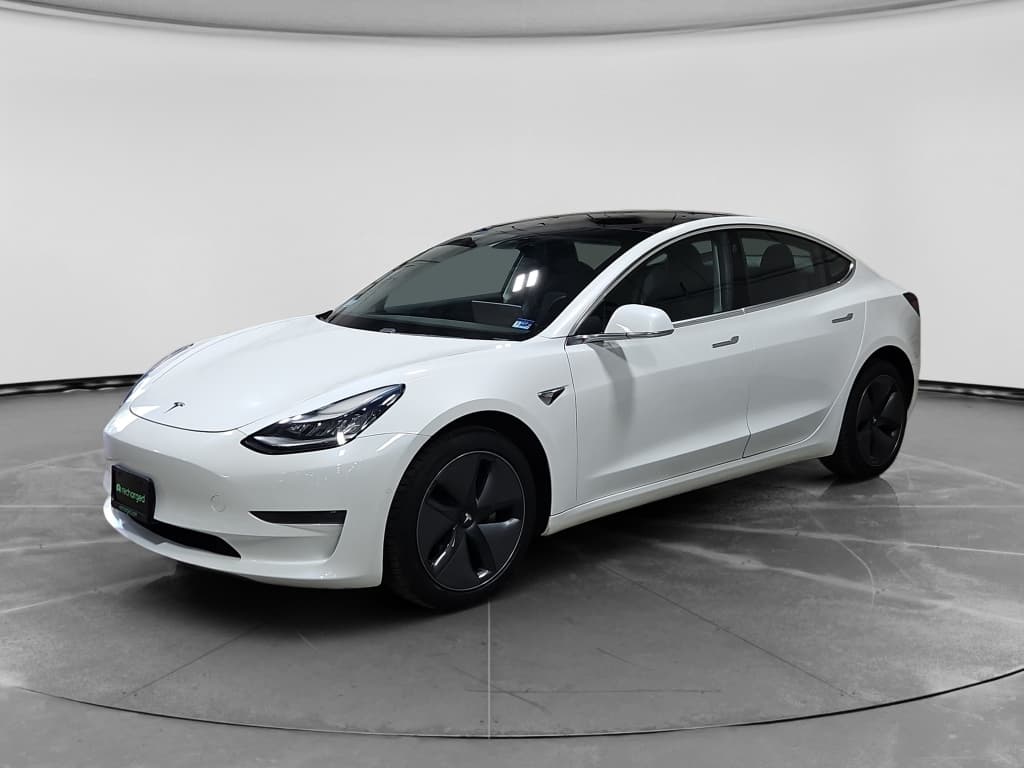
If you own a Tesla Model 3, or you’re eyeing one used, the question isn’t just what it costs today. It’s what it’ll be worth when you’re ready to move on. The Tesla Model 3 resale value forecast is more complicated than a simple “Teslas hold their value” sound bite, especially now that the used EV market is maturing and incentives keep shifting.
How this forecast was built
Why Tesla Model 3 resale value matters right now
The Model 3 has gone from futuristic outlier to the default choice for a lot of first‑time EV buyers. That means there are now hundreds of thousands of cars cycling into the used market, and you’re no longer buying or selling in a vacuum. Resale value directly affects your total cost of ownership, your next down payment, and even whether an EV makes more financial sense than a comparable gas sedan.
- EVs, on average, still depreciate faster than gas cars, largely because of rapid tech changes and incentives on new vehicles.
- Within that group, the Tesla Model 3 is one of the stronger value holders, but it’s no longer immune to big swings.
- Policy changes (like EV tax credits), Tesla’s own price cuts, and new competitors can all move used values within a few months.
So instead of thinking about resale as a mystery number five years from now, it helps to understand the patterns: where Model 3 values are today, how quickly they’ve been moving, and what typically happens as these cars age.
Where Tesla Model 3 resale values stand today
Current Tesla Model 3 value snapshot (early 2026)
Recent marketplace data points suggest that older Model 3s (2017–2019) are often trading below $25,000, with many well under $20,000 depending on mileage and condition. Later model years (2022–2024) tend to sit in the low‑to‑mid $30Ks, with 2025s still close to their original transaction prices in many cases.
Forecast tools that track long‑term trends typically assume a new Model 3 loses around 60–62% of its value over the first five years, landing at roughly $20,000 on a $50,000–ish original price point. That’s in line with what we see in real‑world asking prices, particularly for higher‑mileage examples by year five.

Short-term Tesla Model 3 resale value forecast (2026–2028)
Let’s say you buy or own a reasonably equipped Model 3 with an all‑in price of about $50,000 when new. Using current depreciation curves and today’s pricing as a guide, here’s a realistic, big‑picture forecast for the next few years, assuming typical mileage and no major accidents:
Illustrative Tesla Model 3 resale forecast (new price ~$50,000)
Approximate resale values for a Model 3 in average condition, 13,500 miles per year, U.S. market. These are directional estimates, not guaranteed prices.
| Year of ownership | Approximate age | Estimated depreciation from new | Estimated resale value |
|---|---|---|---|
| Year 1 (2026) | 1 year | ~30% | ~$35,000 |
| Year 3 (2028) | 3 years | ~55–60% | ~$20,000–$22,500 |
| Year 5 (2030) | 5 years | ~60–62% | ~$19,000–$21,000 |
Think in ranges, not pennies. Real‑world values bounce with incentives, local demand, and condition.
Why early years hurt the most
In the short term, through about 2028, we expect the following patterns to hold for most trims:
- Year 1–2: Steep but predictable drop as the car transitions from new to used. Leasing and fleet returns add supply.
- Year 3: Depreciation slows noticeably. At this point, much of the EV‑specific risk has been “priced in.”
- Years 4–5: Values flatten into a relatively narrow band, especially for cars with clean histories and healthy batteries.
Long-term outlook: What happens after year 7
The interesting part of the Tesla Model 3 resale value forecast is what happens after the first wave of depreciation. Current 10‑year projections suggest that a well‑kept Model 3 still retains around 18–20% of its original price by year ten, assuming typical mileage.
Years 6–8: Value floor forms
By this stage, most of the tech that once felt cutting‑edge is just normal. The car’s value starts to be driven less by features and more by basic used‑car math: mileage, accident history, and maintenance. For solid examples, we expect values to stay in the low‑to‑mid teens for several years.
Years 9–10+: Battery & body condition rule
Past about year 8, the market treats a Model 3 a lot like any other older premium compact sedan, with one big twist. Battery health becomes the whole story. A car with 75–80% of original range and a clean body can still be a desirable commuter. One with heavy degradation or major cosmetic issues quickly falls to budget‑car territory.
Where opportunity hides
8 factors that really move Tesla Model 3 resale values
What actually moves your Model 3’s value up or down
Some you control, some you don’t, but all of them matter when it’s time to sell or trade.
1. Battery health & range
2. Mileage & usage
3. Accident & repair history
4. Software & features
5. Charging landscape
6. New car pricing & incentives
7. Competition from newer EVs
8. Local market conditions
Battery health: The silent multiplier on resale price
If you remember nothing else about Model 3 resale value, remember this: range sells cars. Two otherwise identical Teslas, same year and mileage, can be separated by thousands of dollars in the real world based purely on how healthy their batteries are.
How battery health affects your Model 3’s value
Document your charging habits
Heavy DC fast charging use and repeated 100% charges can age a battery faster. If you mostly charge at home and keep it around 20–80%, that’s a selling point, document it.
Track real-world range
Buyers care more about how far the car actually goes than about a theoretical EPA number. Sharing realistic highway and city range figures builds confidence.
Get a third-party battery report
Tools like a <strong>Recharged Score Report</strong> provide independent diagnostics on usable capacity and pack health. That kind of proof can justify top‑of‑market pricing.
Stay ahead on software updates
Battery management improvements often arrive via over‑the‑air updates. Keeping the car current isn’t just convenient, it can literally protect long‑term value.
Where Recharged fits in
Ready to find your next EV?
Browse VehiclesModel 3 vs other EVs and gas sedans on resale
How does the Model 3 stack up when you zoom out and compare it with the wider market? The answer depends on whether you’re comparing it to other EVs or to the gas sedans people cross‑shop.
Approximate 5‑year depreciation comparison
High‑level snapshot using recent studies and pricing guides. Individual cars can, of course, do better or worse.
| Vehicle type / example | Approx. 5‑yr depreciation | Notes |
|---|---|---|
| Tesla Model 3 | ~55–61% | Better than many non‑Tesla EVs; depends heavily on trim and incentives at purchase. |
| Average EV (all brands) | ~58–60%+ | Segment, on average, depreciates faster than gas vehicles. |
| Strong non‑Tesla EV (e.g., Polestar 2) | ~58–60% | Closer to Tesla in retention, brand and tech help. |
| Mainstream gas sedan (e.g., Camry, Accord) | ~45–55% | Lower depreciation, but higher fuel and maintenance costs. |
| Entry luxury gas sedan (e.g., BMW 3 Series) | ~50–60% | Similar depreciation profile to a well‑optioned Model 3. |
In percentage terms, the Model 3 usually sits in the upper half of EVs for value retention, and roughly in line with many premium gas sedans.
Don’t look at depreciation in a vacuum
Owner playbook: How to protect your Model 3’s resale value
You can’t control global battery prices or federal tax credit rules. You can absolutely control how attractive your car looks to the next owner. Here’s a practical playbook you can follow starting today.
Smart habits that pay off at trade‑in time
1. Keep mileage in check
If you can stay a bit under the typical 13,000–15,000 miles per year, your Model 3 will line up better against retail comps instead of heading toward wholesale pricing.
2. Baby the battery
Favor Level 2 home charging, avoid frequent 0–100% cycles, and don’t live at Superchargers. Future buyers, and their inspectors, will see the difference in range and health.
3. Fix cosmetic issues promptly
Curb‑rashed wheels and cracked glass are red flags. Address small items before they pile up into a car that “looks tired” and invites lowball offers.
4. Stay current on maintenance
Keep service records for tire rotations, brake inspections, and any warranty work. A tidy digital paper trail reassures buyers that the car’s been cared for.
5. Time your sale wisely
If Tesla announces major price cuts on new Model 3s, or a sweeping refresh, used values can briefly sag. When possible, list your car before big changes hit, not after.
6. Consider selling into an EV‑savvy market
If you live somewhere with weak EV demand, it can make sense to sell through a platform that reaches buyers in high‑adoption regions rather than relying on your local lot.
Using Recharged to your advantage
Buying used: What to pay today and what it might be worth later
If you’re shopping for a used Model 3 today, your goal is to buy at a price that still looks smart 3–7 years down the road. Here are some realistic purchase and forecast scenarios to frame your expectations. These are directional ranges, not promises.
Sample used Tesla Model 3 purchase & resale scenarios
Numbers rounded for clarity; actual pricing varies by trim, incentives, mileage, and battery health.
Scenario A: Early car, value play
Car: 2018–2019 Model 3, ~70k miles
Today’s price: ~$18,000–$22,000
3‑yr outlook: Likely mid‑teens, assuming no major issues.
Who it fits: Budget‑minded commuter who will drive it into the ground.
Scenario B: Sweet spot shopper
Car: 2021–2022 Model 3, ~30k–45k miles
Today’s price: ~$25,000–$30,000
5‑yr outlook: High‑teens to low‑$20Ks if kept clean with a healthy battery.
Who it fits: Drivers who want most of the tech with less downside than buying new.
Scenario C: Nearly new buyer
Car: 2024–2025 Model 3, low miles
Today’s price: Often mid‑$30Ks, depending on options and incentives.
5‑yr outlook: Low‑to‑mid $20Ks, but more sensitive to future new‑car discounts.
Who it fits: Shoppers prioritizing latest styling and features over rock‑bottom cost of ownership.
Watch your total out‑the‑door cost
“The Model 3 is one of the few EVs where a seven‑year‑old example can still feel thoroughly modern. That’s good news for owners, but only if the battery and software have been cared for.”
FAQ: Tesla Model 3 resale value & forecast
Frequently asked questions about Tesla Model 3 resale value
Bottom line: Should you bet on a Model 3?
If you’re looking for an electric car with a predictable exit strategy, the Tesla Model 3 remains one of the safer bets in EV land. It doesn’t magically escape the laws of depreciation, especially in the first three years, but its combination of brand pull, real‑world efficiency, and software support gives it sturdier resale legs than many rivals.
Looking ahead to 2030, the most realistic Tesla Model 3 resale value forecast is this: expect meaningful losses if you buy new and sell quickly, slower and more manageable depreciation after year 3, and a long usable life for cars with healthy batteries and clean histories. Your job is to buy smart, care for the car, and pick your moment to sell.
If you’re ready to run the numbers on your own situation, Recharged can help you value your current EV, get pre‑qualified for financing, or shop used Model 3s with verified battery health, all without leaving the sofa. That way, whether you’re buying or selling, you’re making your move with eyes wide open.