If you’re eyeing a Tesla Model 3, especially a used one, the number you’re probably hunting for is the Tesla Model 3 repair cost average. The good news is that routine repairs tend to be lower than a comparable gas sedan; the bad news is that when something big does break or you’re in a crash, the bills can jump fast. Let’s walk through what owners actually spend, which repairs hurt the most, and how to budget so none of this catches you off guard.
A quick word on “average”
Tesla Model 3 repair cost average: the short version
Typical Tesla Model 3 repair & upkeep snapshot
Roll those categories together and a realistic Tesla Model 3 repair cost average for a careful U.S. owner, no major crashes, no battery failures, tends to land around $400–$700 per year over several years of driving. That’s often lower than a similarly quick German or Japanese sport sedan, but with more volatility if you’re unlucky with accidents or wheel damage.
Think in “risk bands,” not single numbers
How much do Model 3 owners actually spend on repairs?
Out-of-warranty owners
Once the basic warranty ends, many Model 3 drivers report one or two minor repairs per year plus normal wear items.
- Small repairs (rattles, trim, sensors): often $150–$400 each
- HVAC, window regulators, door handles: $300–$900
- Wheel & tire damage from potholes: $250–$1,000 depending on wheels and tires
Low-mile vs. high-mile drivers
How you use the car plays a big role:
- 10,000 mi/yr or less: You might go years seeing just tires, cabin filters, and maybe one minor fix.
- 20,000+ mi/yr: Expect more frequent tire replacement and a higher chance of hitting suspension or brake work simply from mileage.
Across those groups, a realistic budget for a daily‑driven Model 3 outside of warranty is about $500 per year for repairs and non‑tire wear items, with another $600–$1,200 per year for tires if you’re putting on serious mileage or running the bigger wheel packages.
Don’t mistake insurance for repairs
Common Tesla Model 3 repairs and what they cost
The Model 3 eliminates a lot of old‑school failures, no timing belt, spark plugs, or exhaust system, but it has its own greatest hits. Here are the most common Tesla Model 3 repairs you’re likely to encounter and the rough price ranges many owners see at Tesla service centers or qualified independents.
Typical Tesla Model 3 repairs & price ranges
Approximate repair costs for frequent issues. Actual prices vary by region, labor rate, and parts availability.
| Repair / Service | Typical Mileage/Timing | Approx. Cost Range (USD) | Notes |
|---|---|---|---|
| Cabin air filter replacement | Every 2 years | $80–$200 | DIY is cheap; service center visit costs more. |
| Tire rotation & balance | 6,000–10,000 miles | $40–$120 | Often bundled with inspections or alignment. |
| New tires (set of 4) | 25,000–40,000 miles | $800–$1,600 | Performance tires and 20" wheels cost more. |
| Wheel rash repair | Anytime | $150–$300 per wheel | Curb rash is common on bigger wheels. |
| Window regulator / door handle issues | 3–8 years | $300–$900 | Parts plus labor; exact price depends on side and model year. |
| Suspension components (control arms, bushings) | 5–10 years+ | $600–$1,500 | More likely on high‑mile cars or rough roads. |
| HVAC issues (actuators, valve, minor leaks) | Anytime | $400–$1,500 | Complex cases on early cars can run more. |
| 12V / low‑voltage battery replacement | 4–7 years | $250–$500 | Simple but unavoidable wear item. |
| Infotainment screen / MCU replacement | If it fails out of warranty | $1,000–$2,000+ | Less common on newer Model 3s than on early Teslas. |
These are ballpark out‑of‑warranty numbers meant to help you budget, they are not quotes.
The quiet upside
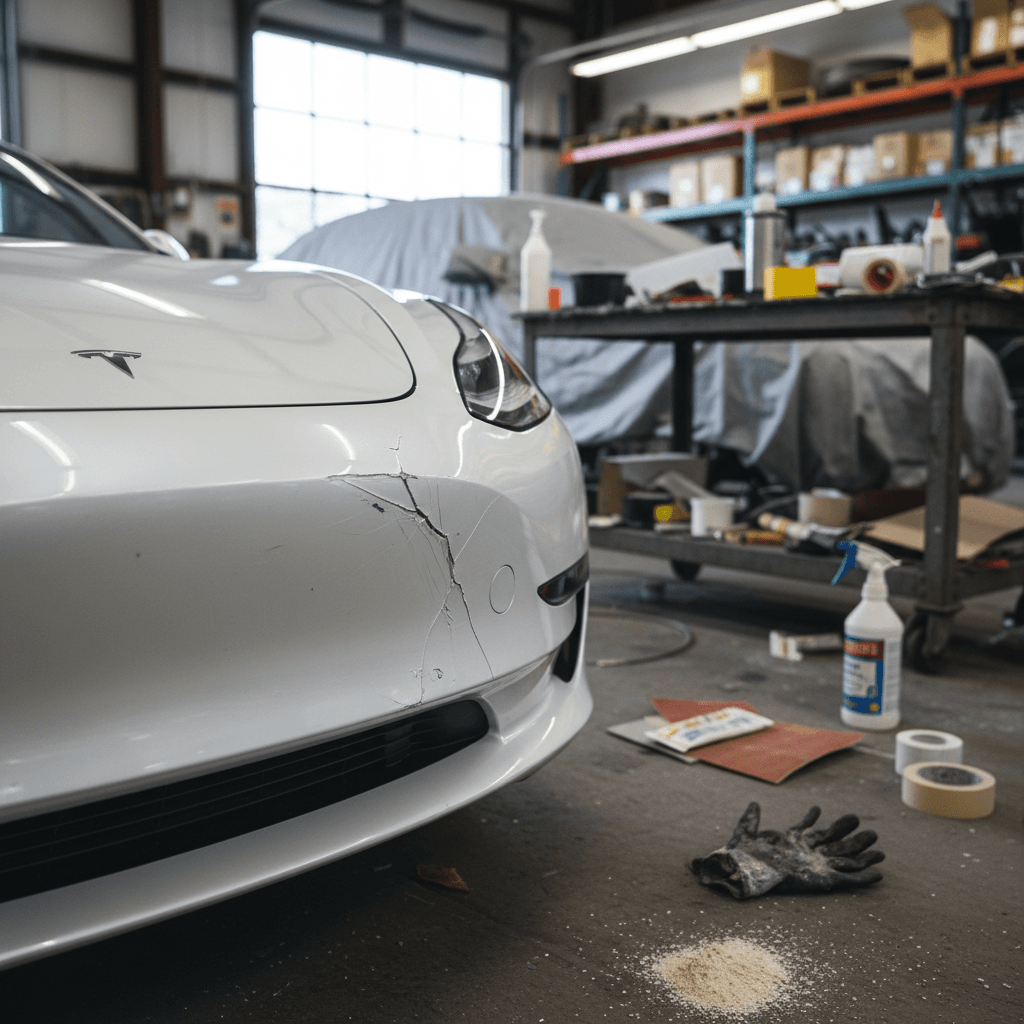
Collision and body repair: the big wild card
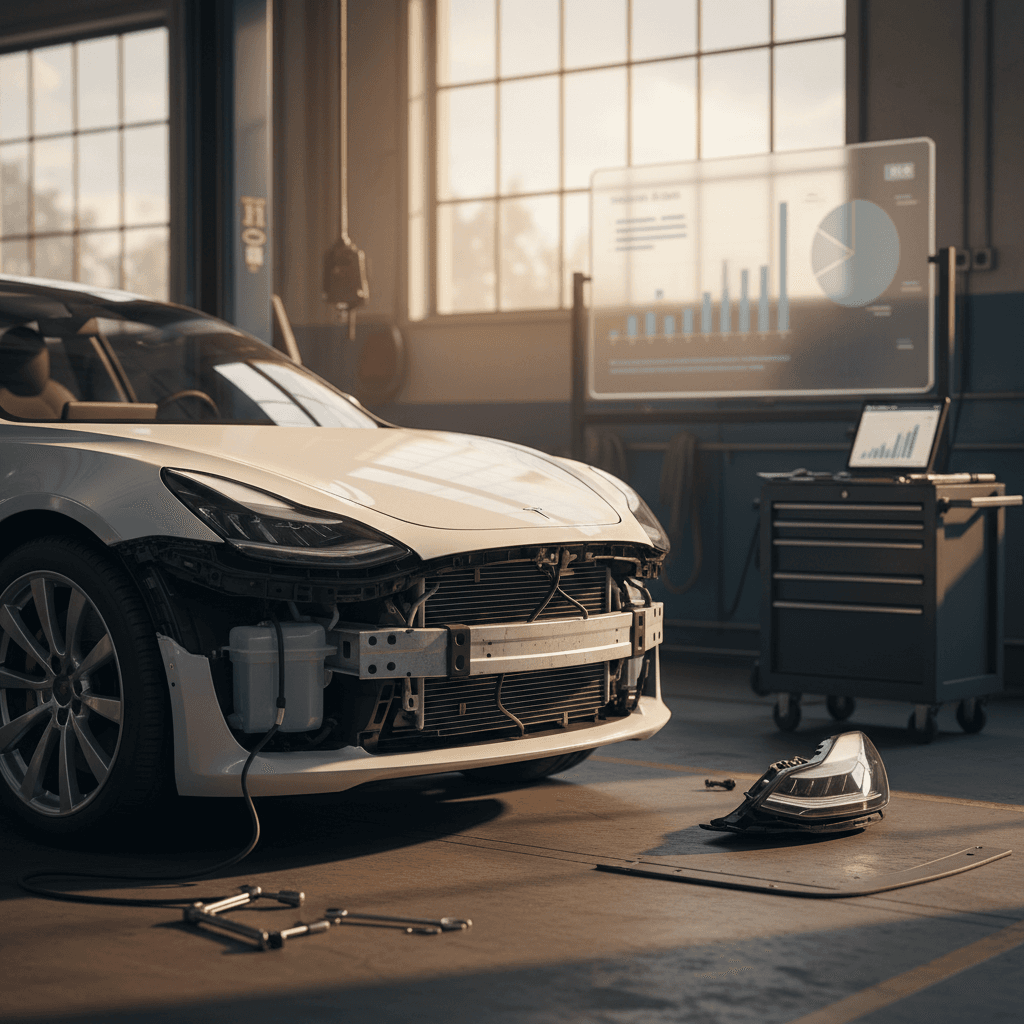
Where many owners get sticker shock is collision and cosmetic repair. Aluminum panels, special paint processes, and embedded sensors all mean your friendly neighborhood body shop may not be able, or allowed, to touch the car. You’re often sent to a Tesla body shop or a Tesla‑approved independent, where rates run high.
Realistic Model 3 collision repair ballparks
What common crash and cosmetic repairs can cost before insurance.
Minor bumper scrape
Scuffed plastic bumper cover, no sensor damage.
- Spot repair or respray: $600–$1,500
- New bumper cover + paint: $1,200–$2,500
Moderate front or rear hit
Bumper, sensors, reinforcement, maybe a headlight.
- Many owners see: $3,000–$8,000+
- More if the trunk floor or frunk structure is involved.
Structural / high‑voltage damage
Crash affects high‑voltage components or major structure.
- Repairs can exceed $15,000–$20,000
- Insurance may total the vehicle even on newer cars.
Sensors turn small hits into big bills
Battery and drive unit repairs: rare but expensive
Let’s talk about the scary line item: high‑voltage battery and drive unit repairs. The good news is that catastrophic failures are relatively rare and the core high‑voltage components carry longer warranties than the rest of the car on most Model 3s sold in the U.S.
- On many Model 3s, the battery and drive unit are covered for 8 years (with a mileage limit) from original in‑service date.
- If a pack fails inside that window and meets Tesla’s criteria, the repair is typically handled under warranty, not out of your pocket.
- Out‑of‑warranty failures are unusual, but when they happen, you’re looking at thousands to tens of thousands of dollars in potential work.
High‑voltage battery & drive unit: cost guide
Big‑ticket items you hope you never pay for out of pocket.
| Repair | Typical Scenario | Approx. Cost Range (USD) | Notes |
|---|---|---|---|
| Module‑level battery repair | Isolated module issue, pack repairable | $2,000–$7,000+ | Less common; depends heavily on Tesla’s approach at the time. |
| Full battery pack replacement | Severe pack failure out of warranty | $8,000–$16,000+ | Actual quotes can be higher; warranty covers most failures early in life. |
| Drive unit (motor) replacement | Noisy or failed motor, out of warranty | $3,000–$7,000+ | Drive units are generally durable; many last well past 100,000 miles. |
| High‑voltage wiring / contactor repairs | Isolated high‑voltage fault | $1,500–$4,000+ | Varies widely by diagnosis and labor time. |
These numbers are intentionally conservative; exact pricing depends on parts availability and whether Tesla uses remanufactured components.
Battery health matters more than age
How Model 3 repair costs compare to gas cars
If you’re cross‑shopping a Model 3 against a BMW 3 Series, Audi A4, or a nicely equipped Accord, the repair math looks different depending on what you include. Here’s the broad pattern owners see when they track total costs over several years.
Where the Model 3 usually wins
- Less routine maintenance: No oil changes, no transmission flushes, no spark plugs or timing belts.
- Brake wear is slower: Regenerative braking takes load off pads and rotors, so replacements are infrequent.
- Fewer moving parts: No exhaust system, fuel system, or complex multi‑gear transmission to fail.
Where the Model 3 can cost more
- Body and paint work: Collision damage can be pricier than on an equivalent gas car.
- Tire and wheel costs: Performance tires and big wheels are costly; curb rash is common.
- Electronics: You have one big touchscreen and a lot of sensors, when they fail out of warranty, they’re not cheap.
Total cost can still tilt in Tesla’s favor
Factors that make your Model 3 cheaper or pricier to repair
6 big levers that change your repair bill
Some are in your control, some aren’t, but all are worth knowing before you buy.
Where you live
Labor rates and Tesla support vary widely by region.
- Big coastal cities: higher shop rates, more traffic risk.
- Areas with strong EV adoption: more independent EV shops competing on price.
Road conditions
Potholes and bad roads break wheels and suspension.
- Rough roads → more alignments, tires, suspension work.
- Smooth suburbs → fewer underbody surprises.
Driving style
Hard launches and late braking feel fun but eat tires.
- Gentle driving: longer tire life and less wear.
- Track days and aggressive driving: expect frequent tire purchases.
Insurance choices
Deductible and coverage level change what you pay on crash repairs.
- Low deductible: higher premium, smaller repair bills.
- High deductible: lower premium, big out‑of‑pocket hits.
Age and mileage
Once you’re well past warranty, more components can fail simply from time.
- Low‑mile commuter: fewer age‑related issues, slower wear.
- High‑mile road warrior: more wear items and potential electronics issues.
Service options
Having access to a good independent EV shop can cut bills.
- Tesla‑only regions: you’re locked into their labor rates.
- EV‑savvy independents: more competition, more options.
Budgeting guide: what to set aside per year
Putting all this together, what’s a sensible annual repair budget for a Tesla Model 3 in the U.S., assuming no huge accidents or catastrophic battery issues?
Practical Model 3 repair budget ranges
1. Bare‑bones, optimistic budget: ~$400/yr
You drive moderate miles, avoid potholes, and your car is still relatively young. This assumes mostly minor fixes plus occasional filters and alignments. It’s possible, but it doesn’t leave room for an unlucky year.
2. Realistic comfort zone: $700–$1,000/yr
This is where many owners land over time. It gives breathing room for a couple of mid‑priced repairs, wheel or tire mishaps, and the odd sensor or switch that fails.
3. Conservative safety net: $1,200–$1,500/yr
If you’re buying a higher‑mile used Model 3 or you live where roads and winters are rough, this is a smart buffer. You may not spend it every year, but when a bigger repair shows up, you’ll be glad it’s there.
Wrap tires into a separate bucket
Buying a used Tesla Model 3: how to avoid a money pit
With used Model 3 prices softening, there are great deals out there, and a few landmines. The trick is separating the cars that will cost you only routine fixes from the ones that might surprise you with a $4,000 suspension job or a battery headache.
Used Model 3 repair‑risk checklist
1. Scan for accident and bodywork history
Ask for detailed records and look closely at panel gaps, paint match, and sensor behavior. Poorly repaired crash damage is one of the fastest ways to end up with chronic electrical and alignment issues.
2. Check for abnormal tire and wheel wear
Uneven wear, cupping, or a stack of old wheel repair invoices can hint at alignment problems or a hard life on rough roads. Budget for suspension and steering work if you see repeated issues.
3. Review service history, not just Carfax
Digital service records from Tesla or a trusted shop tell you whether key items, like the low‑voltage battery, HVAC system, or control arms, have been addressed. A lack of any record isn’t always bad, but it means more guesswork.
4. Evaluate battery health and charging behavior
Look at real‑world range at a given state of charge, not just the dash estimate. Ask how often the car fast‑charged and whether it spent long stretches at 100%, habits that can speed up degradation.
5. Test all electronics and ADAS features
Go down the list: windows, locks, cameras, Autopilot, audio, climate control, seat heaters. Glitchy electronics can add up quickly if multiple modules or sensors need replacement.
6. Get an independent EV‑savvy inspection
A pre‑purchase inspection from a shop that knows Teslas is money well spent. At Recharged, every vehicle gets a <strong>Recharged Score Report</strong> with battery health diagnostics and a detailed condition review, so you aren’t buying blind.
How Recharged helps you manage repair risk
FAQ: Tesla Model 3 repair costs
Common questions about Tesla Model 3 repair cost averages
Bottom line: Is a Tesla Model 3 expensive to repair?
If you only remember one thing, make it this: the Tesla Model 3 repair cost average is usually reasonable, often lower than an equivalent gas car, so long as you avoid major crashes and buy a car with a healthy battery and clean history. Routine repairs tend to be modest, big failures are rare, and the car pays you back every day in lower fuel and maintenance bills.
Where owners get into trouble is ignoring body damage, skipping inspections on used cars, or underestimating the price of electronics and big‑ticket components. Build a realistic repair budget, keep a separate tire fund, and be picky when you’re shopping used. If you’d like help finding a Model 3 that won’t ambush your wallet, Recharged can pair you with battery‑verified, transparently priced cars, plus financing and trade‑in options that fit the rest of your ownership budget.