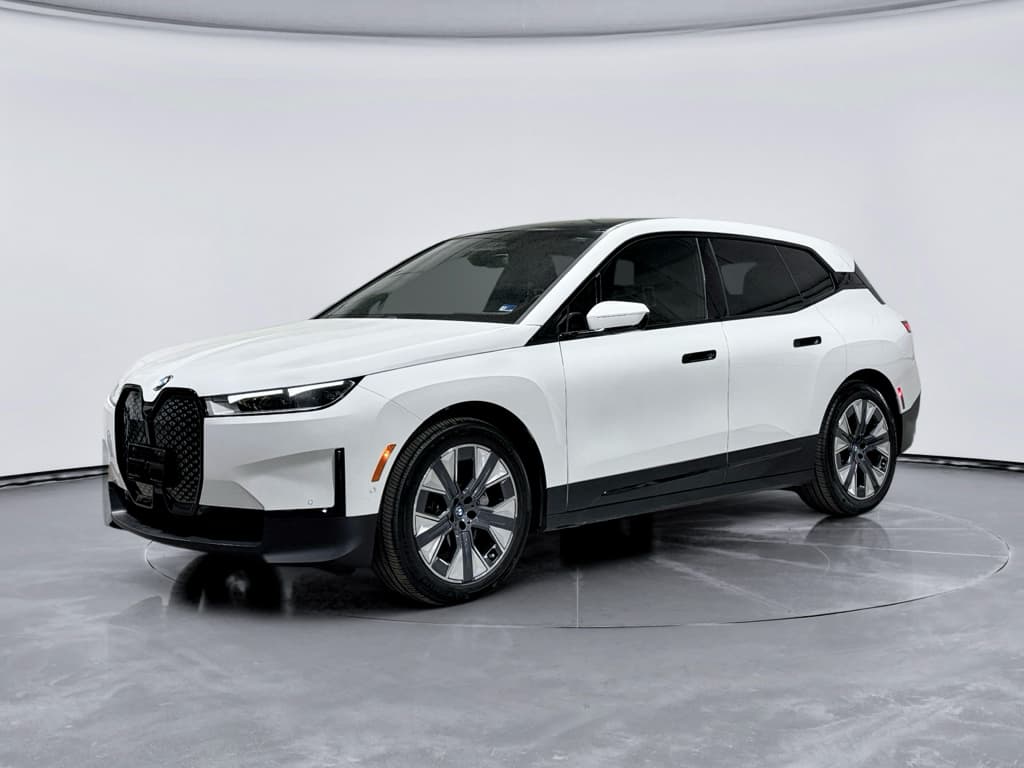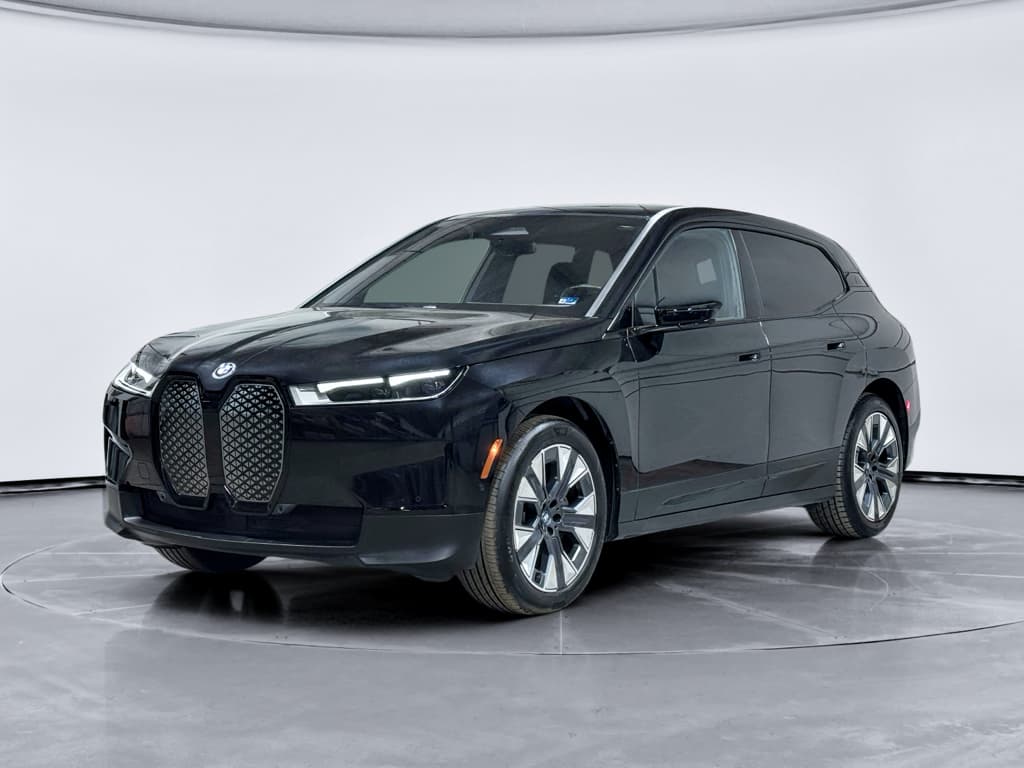
If you own, or are eyeing, a used BMW iX, the single most expensive component in the vehicle is the high‑voltage battery. A solid BMW iX battery health check isn’t about chasing a perfect number; it’s about understanding how much capacity you still have, how fast it’s fading, and whether you should be worried or just go for a drive.
High‑level takeaway
Why BMW iX battery health matters more than you think
BMW’s iX is a long‑range, heavy, luxury SUV built around a large lithium‑ion pack, roughly 76–112 kWh usable, depending on model and year. That battery defines your range, your DC fast‑charging speed, and a sizable chunk of the vehicle’s value. A 10–15% loss in capacity doesn’t just trim a few miles off the top; it reshapes how confidently you road‑trip and how much the vehicle is worth when you sell or trade it.
- Range: every 10% capacity loss is roughly 25–30 miles off highway range for larger‑pack iX models.
- Resale: shoppers are getting savvier; weak battery reports will increasingly be priced into used iX values.
- Warranty: BMW’s high‑voltage warranty typically hinges on minimum capacity (around 70%) within the first 8 years/100k+ miles. Knowing where you stand matters.
If you’re shopping used
How the BMW iX battery actually ages
BMW’s iX uses modern nickel‑rich lithium‑ion chemistry with robust thermal management. That’s the good news. The less glamorous reality is that all packs degrade, and they do it via a few predictable pathways:
Three main forces that age your iX battery
Understanding these helps you read any health report with a cooler head
Heat & high state of charge
Leaving the pack at 90–100% for days, especially in hot climates, is the fastest way to cook long‑term capacity.
Aggressive fast charging
Frequent DC fast charging, especially back‑to‑back sessions, adds stress. Occasional road‑trip use is fine; daily use is not ideal.
Mileage & time
Miles matter, but so does calendar age. A gently used four‑year‑old pack can look better than a hot‑climate commuter with half the miles.
Don’t obsess over the first few percent
Quick BMW iX battery health checks you can do yourself
Before you dive into data exports and dealer visits, you can learn a lot from a few simple, repeatable checks that any iX owner can do in a parking lot.
5‑minute BMW iX battery sanity check
1. Compare rated vs. displayed range
Fully charge to your usual limit (say 80%) and note the estimated range. Multiply by 1.25 to approximate a 100% number. If a pack that was rated around 300 miles new is consistently predicting 240 miles at the same conditions and driving profile, you’re looking at meaningful degradation, or a very heavy right foot.
2. Watch behavior at low state of charge
On a healthy pack, the iX still feels “normal” down into the teens. If power output and climate performance fall off a cliff at 30–40% regularly, it’s worth asking the dealer to scan for errors or cell imbalance.
3. Note DC fast‑charge speeds
A warm, healthy iX battery on a high‑power DC charger should climb quickly above 100 kW, then taper. If you struggle to clear 50–60 kW under good conditions, something may be limiting the pack, software, temperature or degradation.
4. Log your consumption
Reset a trip meter, drive a known route at steady highway speeds, and note kWh/100 miles. If your energy use is reasonable yet your predicted range is low, that hints at a smaller usable battery behind the scenes.
5. Pay attention to warnings
Repeated battery‑management or “increased power consumption while parked” alerts can point to background drain or module issues. One‑off messages are noise; patterns are the signal.
Using BMW iX CarData to see battery condition
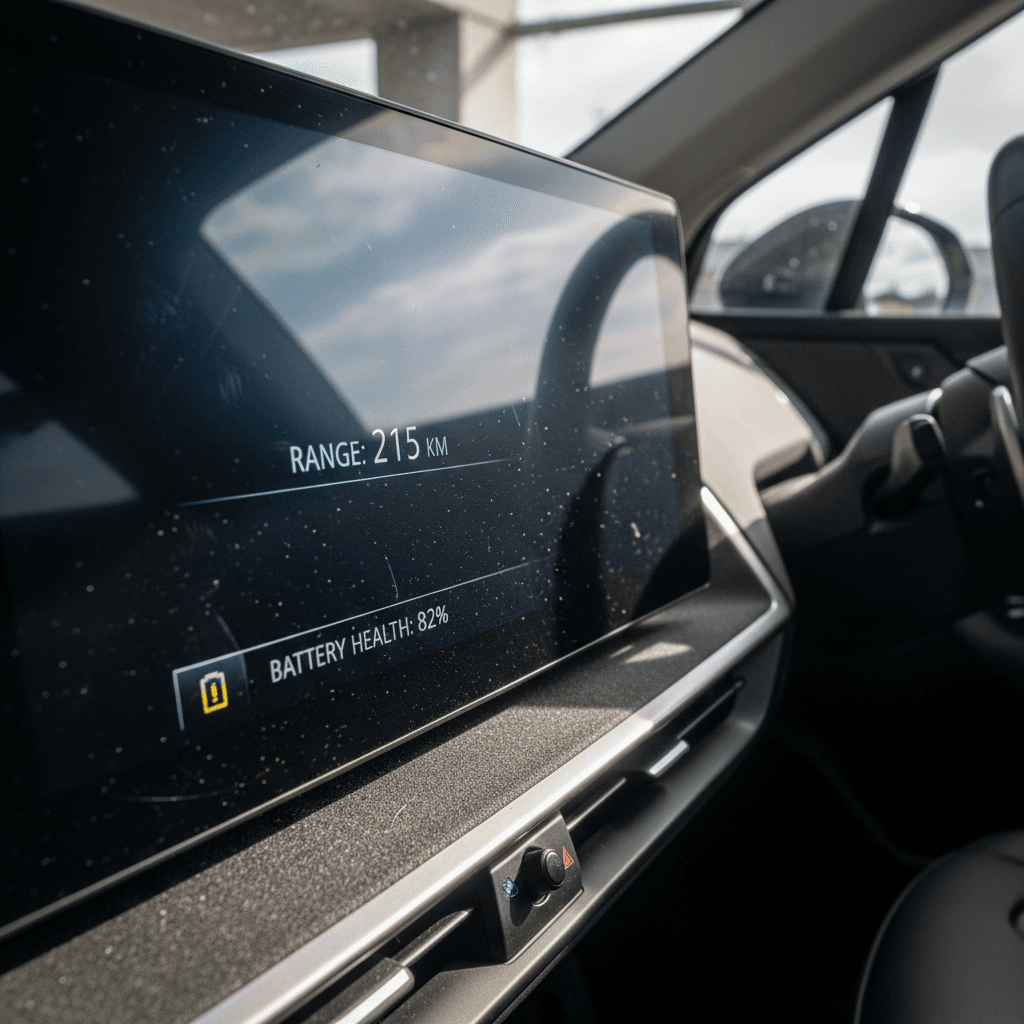
BMW doesn’t give you an iPhone‑style “Battery Health: 92%” readout in iDrive, but the data is there. Owners in the U.S. can pull a CarData report from their BMW account and mine it for battery clues.
Key BMW iX battery fields in CarData
Exact labels vary slightly, but these are the ones enthusiasts watch.
| Field name (example) | What it probably means | How to read it |
|---|---|---|
| Maximum energy content of the high-voltage battery | Approximate installed/nominal usable capacity when new | Use as your baseline. For a larger‑pack iX, mid‑70s kWh typically indicates usable, not gross capacity. |
| Energy content of the high-voltage battery | Current usable energy at the moment of the snapshot | Divide by state of charge to approximate full usable capacity. |
| Health status of the battery | Health code such as 200, 140, 110, 80 | Values around 200 suggest adequate health; lower codes indicate limited or inadequate health that may trigger dealer action. |
You’re not getting a neat state‑of‑health percentage, but the puzzle pieces are there.
How to request BMW CarData in the US
Owners who’ve compared CarData between new and multi‑year‑old iX models often see surprisingly small drops in usable capacity when the car’s been treated well. That’s encouraging, but remember, this is still an indirect view. For anything warranty‑related, BMW will run their own tests.
Dealer battery health checks, CPO, and what’s really tested
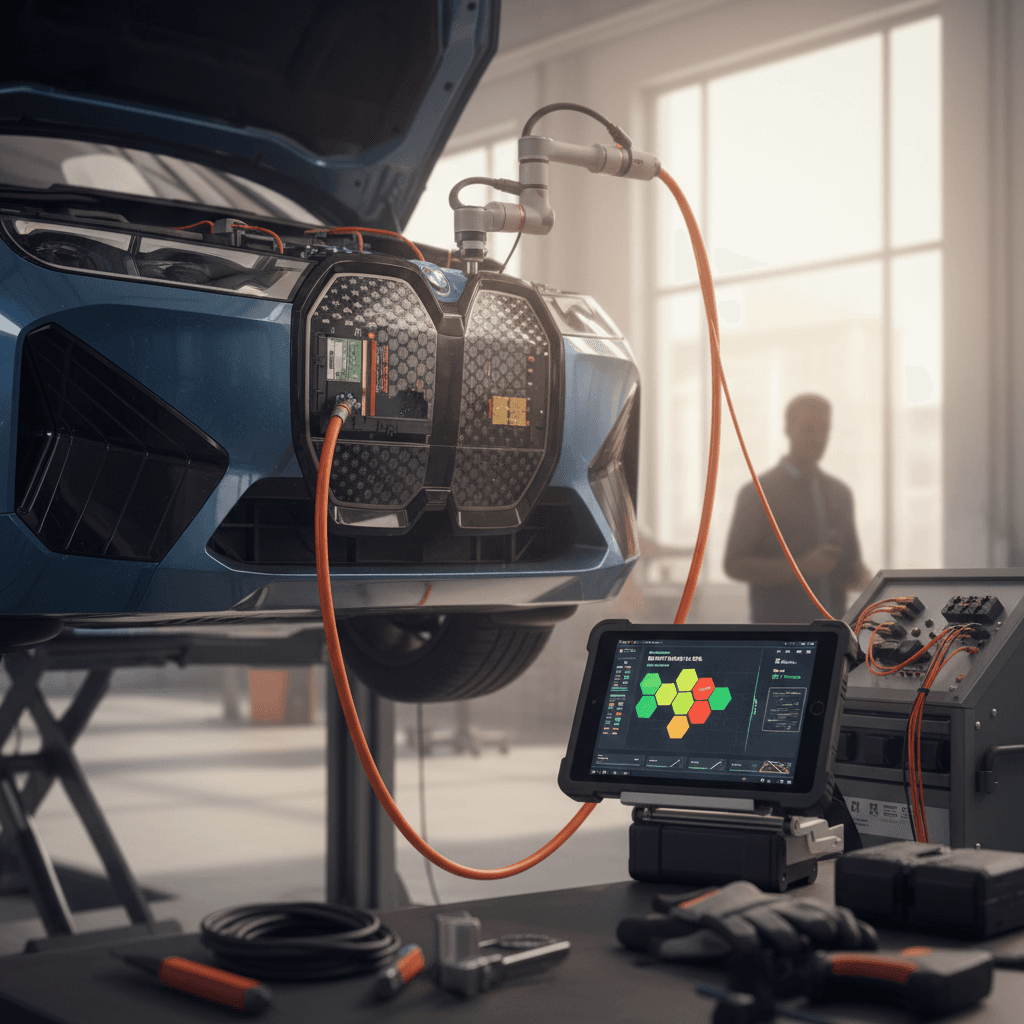
If you walk into a BMW store and ask, “Can you check my iX battery health?” you’ll usually be steered toward an official high‑voltage battery test that BMW ties to warranty decisions and Certified Pre‑Owned (CPO) inspections.
What’s typically behind a dealer battery health check
Not all tests are created equal, and not all are free
Diagnostic scan & capacity test
Dealers can run a guided test plan that cycles the pack and records energy moved in and out. BMW compares results to an internal threshold, often around 70% of original usable capacity, to decide if it’s warranty‑worthy.
CPO & inspection reports
On some BMW CPO vehicles, a Battery Health Check is part of the certification process. You may not see a percentage, but you can (and should) ask what tests were performed and whether the pack passed at full warranty spec.
Ask this before you pay for a test
DIY real‑world range test for your BMW iX
No laptop, no dongles, no conspiracy theories: the cleanest way to understand your BMW iX battery health is a controlled, repeatable range test. It won’t give you four‑decimal‑place precision, but it will tell you if your SUV is the hero or the problem child.
Step‑by‑step BMW iX range & capacity test
1. Pick your route and conditions
Choose a loop or out‑and‑back route you can repeat: mostly highway, light traffic, stable weather. Avoid howling headwinds and freezing temps unless that’s your normal life.
2. Start from a known state of charge
Charge to a clear, round number, ideally <strong>90 or 100%</strong> for this test. Reset a trip meter right before you leave. Note outside temperature and tire type (winter tires hurt range).
3. Drive consistently
Set cruise at a steady speed (for example, 70 mph) and drive as you normally would, but avoid drag‑race launches or dawdling in the right lane at 55. Consistency is everything here.
4. End near a low, safe state of charge
Drive down to around <strong>10%</strong> remaining. Note the miles driven and your average consumption in kWh/100 miles (or mi/kWh). Don’t push to 0%, you’re measuring capacity, not courage.
5. Crunch the numbers
If you used, say, 80% of the pack to drive 200 miles at 2.5 mi/kWh, you consumed 80 kWh. Divide 80 kWh by 0.8: that suggests ~100 kWh usable capacity. Compare that to what your iX variant had when new.
Example: healthy larger‑pack iX
You start at 100%, end at 10%, so you used 90% of the battery. Trip meter: 225 miles at 2.5 mi/kWh.
- Energy used = 225 ÷ 2.5 = 90 kWh
- Usable capacity ≈ 90 kWh ÷ 0.9 = 100 kWh
If your variant was ~105 kWh usable when new, you’re looking at modest degradation.
Example: potentially tired pack
Same drive, same conditions, but you only get 180 miles at 2.5 mi/kWh between 100% and 10%.
- Energy used = 180 ÷ 2.5 = 72 kWh
- Usable capacity ≈ 72 kWh ÷ 0.9 = 80 kWh
If that pack should be near 100 kWh usable, you may have significant capacity loss worth investigating.
Don’t run it flat on purpose
How to read the results, and when to worry
Once you’ve got CarData, trip logs, or a range test under your belt, you’ll have numbers. The trick is turning those into a story about your specific iX rather than an internet panic attack.
What your BMW iX battery health numbers are telling you
A rough, real‑world rubric, keep in mind climate and driving style
Looks healthy
Estimated usable capacity within ~5–8% of new, predictable range, no recurring battery warnings. For a several‑year‑old iX, this is excellent news.
Worth monitoring
10–15% below new capacity or noticeably shorter range, especially if you’ve fast‑charged heavily or live in a hot climate. Not catastrophic, but log it and retest in 6–12 months.
Time to involve BMW
Range test or dealer measurement suggests you’re flirting with the roughly 70% capacity boundary while still under warranty, or you’re seeing battery errors. Document everything and get it in the system.
The battery is the car now. Treat it as such, verify its health the way you’d once have checked a compression test on a big German V8.
BMW iX battery warranty and degradation thresholds
BMW’s high‑voltage battery warranty language varies slightly by region, but the subtext is broadly similar: the pack is covered against defects, including excessive capacity loss, for roughly 8 years or around 100,000–160,000 miles, whichever comes first. Behind the service counter, BMW looks for capacity slipping below about 70% of original before it considers major repair or replacement.
- The warranty doesn’t guarantee zero degradation, it expects gradual loss.
- BMW relies on its own test procedure and tools, not third‑party apps or your spreadsheet.
- If their test shows capacity above the internal threshold, they’re likely to call it “within spec,” even if you’ve lost more range than you’d like.
If you’re close to the warranty limit
Buying a used BMW iX: battery health checklist
Used luxury EVs are where optimism goes to haggle. The iX is no exception. The difference between a brilliant used buy and a creeping regret is usually the battery and how honestly its story is told.
Questions to ask about a used BMW iX battery
1. Can I see a recent battery health report?
Ask for any <strong>dealer battery test</strong>, BMW CarData excerpts, or third‑party reports. On Recharged, every vehicle comes with a Recharged Score battery health diagnostic so you don’t have to beg the seller for screenshots.
2. How and where was it charged?
Look for a car that mostly lived on Level 2 home charging, with DC fast‑charging reserved for trips. A lifetime of DCFC isn’t an automatic disqualifier, but it should be priced accordingly.
3. What’s the real‑world highway range today?
A seller who actually drives the thing should have an answer. “About 260 on the highway at 75 mph” tells you far more than “The EPA range is 324 miles.”
4. Any recurring battery‑related warnings?
Ask plainly about past error messages, software updates related to charging, or strange behavior when parked. Battery management alerts, especially repeated, deserve follow‑up.
5. Is it still under high‑voltage warranty?
An iX with several years of battery coverage left and clean diagnostic history is a different financial proposition than one that’s just aged out. Price and peace of mind should reflect that.
How Recharged approaches used iX battery health
Ready to find your next EV?
Browse VehiclesSimple habits to keep your iX battery healthy
You don’t need to live like a battery lab tech to keep your BMW iX happy. A few boring, repeatable habits move the needle far more than any magic additive or internet ritual.
- Use a sensible charge limit for daily driving, 70–80% is a sweet spot for most owners.
- Avoid leaving the car parked at 100% for days, especially in hot weather. Either drive it or lower the limit.
- Reserve DC fast charging for longer trips; Level 2 at home or work is easier on the cells.
- If you’re storing the car for weeks, park it around 40–60% state of charge and let it sleep.
- In very cold weather, let the car precondition the battery before hard driving or fast charging, it’s primarily about performance and longevity, not comfort.
When to bring in the pros
BMW iX battery health check: FAQ
Common questions about BMW iX battery health
The BMW iX is one of the most sophisticated electric SUVs on the road, and its battery systems, cooling, software, cell chemistry, are part of what makes it feel so effortless. But effortless doesn’t mean maintenance‑free. A thoughtful BMW iX battery health check is the difference between confidently enjoying that engineering and quietly wondering what’s happening under the floor. With a bit of data, a simple range test, and, when needed, professional diagnostics from a dealer or a used‑EV specialist like Recharged, you can turn the iX’s biggest unknown into a known quantity, and use it to drive a smarter deal and a calmer ownership experience.