If you’re considering a Tesla Model 3, you don’t just want first‑drive impressions, you want a genuine Tesla Model 3 owner review after 2 years. That’s the point where the honeymoon is over, the odometer is climbing, and real‑world costs and annoyances start to show up. In this guide, we’ll walk through what Model 3 ownership typically looks like at the 24‑month mark, and how to use that information if you’re shopping for a used Model 3 today.
Who this review is for
Two-Year Tesla Model 3 Review: Overview
Typical 2‑Year Model 3 Snapshot (U.S. commuter)
By the 2‑year mark, a typical Model 3 has settled into a predictable rhythm. The software has updated dozens of times, the battery has lost a few percent of capacity, tires are halfway through their life, and any early build issues have usually surfaced. For most owners, the car is still quick, efficient, and relatively low‑maintenance, but some costs and compromises show up that don’t appear in day‑one reviews.
What Changes After 2 Years of Model 3 Ownership?
How Year 1 vs. Year 2 Feel Different
From “new toy” to just another part of your daily routine.
Year 1: Novelty and Learning Curve
- You experiment with Autopilot, one‑pedal driving, and over‑the‑air updates.
- You visit Superchargers more often “just to try them.”
- Software quirks and minor fit‑and‑finish issues feel like part of the tech‑toy experience.
Year 2: Routine and Real Costs
- You mostly use the same routes, same chargers, same settings.
- Tires, insurance, and charging bills become more noticeable than the 0–60 time.
- You start to care more about battery health and long‑term value.
Think like a second owner
Real-World Range and Battery Health After 2 Years
One of the biggest questions around a Tesla Model 3 owner review after 2 years is battery health. Most owners report about 3–6% capacity loss after two years of typical driving, enough to notice on the display, but not enough to change how you use the car day‑to‑day. Tesla backs the Model 3 battery and drive unit with an 8‑year / 100,000–120,000‑mile warranty (depending on variant), so outright failures in the first 24 months are rare.
How range feels in daily driving
- A Rear‑Wheel‑Drive Model 3 that started around 272 miles EPA might show ~255–262 miles at 100% after 2 years.
- Most owners charge to 70–80% for daily use, so usable daily range is typically 180–210 miles.
- Cold weather and high speeds still have a bigger impact than modest battery degradation.
What to look for on a used car
- Check displayed range at 90% or 100% and compare against the original EPA figure.
- Ask how often the car was fast‑charged versus charged at home on Level 2.
- Look for a battery health report or third‑party data if available.
Don’t obsess over a few miles
Charging Habits: Home vs. Public Stations
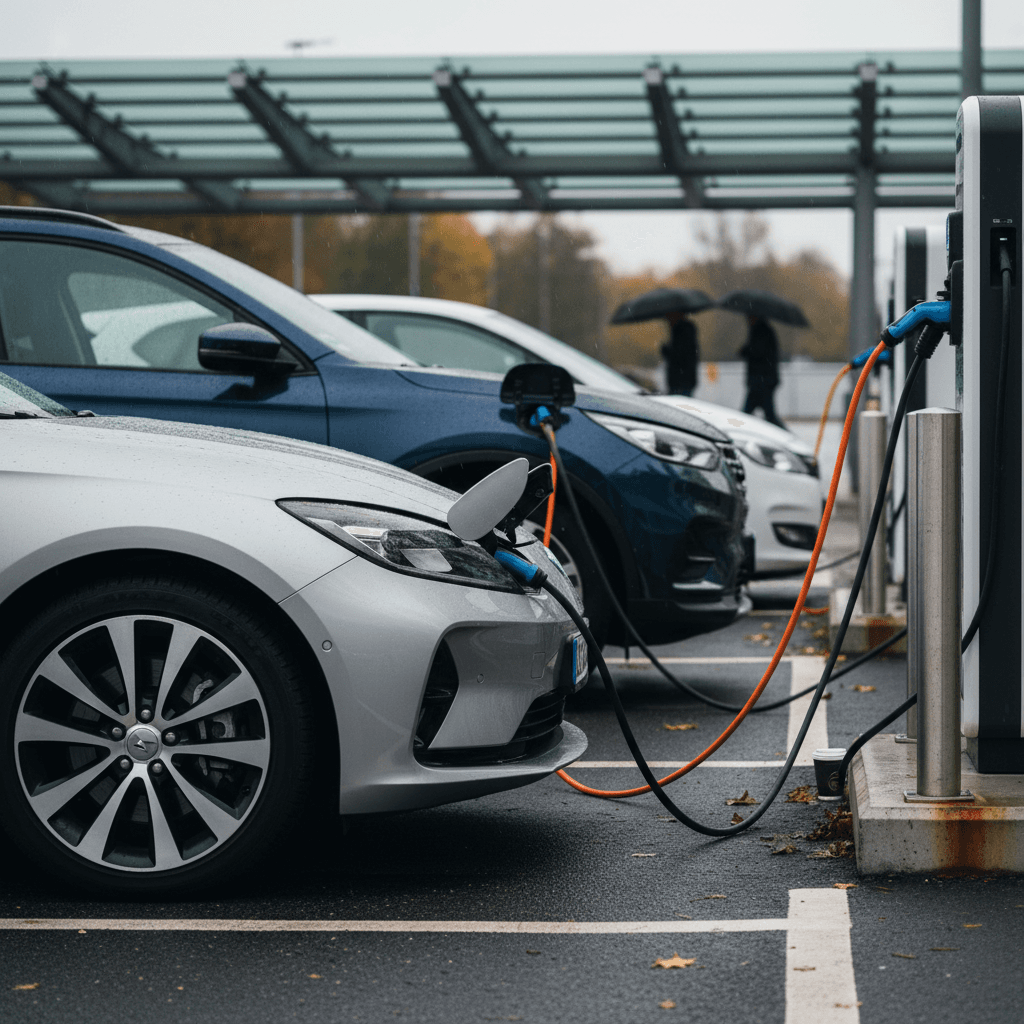
Two years in, most Model 3 owners settle into a simple routine: plug in at home overnight, rely on the Supercharger network for road trips, and fill in the gaps with workplace or public Level 2 charging. Surveys and usage data consistently show that 70–90% of charging happens at home for typical commuters.
What 2‑Year Owners Typically Do (and What You Should Do)
1. Install or use Level 2 home charging
If you have a garage or driveway, a 240V Level 2 setup is the single biggest quality‑of‑life upgrade. You’ll wake up to a “full tank” almost every morning.
2. Set a sane daily charge limit
Most owners set charge limits to 70–80% for daily driving and only go to 100% before longer trips. This helps preserve long‑term battery health.
3. Use Superchargers mostly for trips
Regular DC fast charging is fine, but living at the Supercharger isn’t ideal. Occasional fast charging won’t hurt; daily fast charging is when you start to trade convenience for degradation.
4. Track your real electricity cost
Don’t just look at kWh, check your utility rate and whether you have time‑of‑use pricing. Many owners pay the equivalent of <strong>$30–$50 per month</strong> for normal commuting.
5. Check charge‑port and cable wear
On a 2‑year‑old car, the charge port door, seals, and cable area should look used but not abused. Excess scuffing or bent pins are red flags.
Good news for apartment dwellers
Maintenance and Running Costs Over 24 Months
One of the strongest points in any Tesla Model 3 owner review after 2 years is how little traditional maintenance the car needs. There’s no oil to change, no timing belt, no transmission service. Instead, your main expenses are tires, occasional filters, and routine inspections. Across various ownership studies, a Model 3 typically runs about $400–$600 per year in routine maintenance and wear items, depending on mileage and how aggressively it’s driven.
Typical 2‑Year Out‑of‑Pocket Maintenance Snapshot
Approximate costs for a Model 3 driven 12,000–15,000 miles per year. Actual numbers vary by location and driving style.
| Item | Service Interval in First 2 Years | Typical Cost (Each) | 2‑Year Estimate |
|---|---|---|---|
| Tire rotations | Every 6,000–7,500 miles | $50–$100 | $150–$250 |
| Cabin air filter | Around 2 years | $25–$75 | $25–$75 |
| Wiper blades | As needed | $30–$60 | $30–$60 |
| Brake service in harsh climates | Annually (salt regions) | $100–$150 | $0–$300 |
| Tires (if replaced early) | Some aggressive drivers need them by 25k–30k miles | $800–$1,200 | $0–$1,200 |
Insurance and charging costs are separate; this table focuses on maintenance and wear.
Don’t forget insurance and tires
Comfort, Tech, and Everyday Usability
After two years, the Model 3’s minimalist interior and software‑centric interface tend to either solidify as a favorite feature or remain a mild annoyance. The touchscreen ages well thanks to over‑the‑air updates, but not everyone loves having nearly all controls routed through the center display.
- Seats: Most owners find the seats comfortable even after long commutes, though taller drivers sometimes wish for a bit more thigh support.
- Ride quality: Standard wheels (18‑inch) deliver a more compliant ride than larger wheels. On rough roads, the Model 3 can feel firm compared with some compact sedans.
- Noise: The cabin is generally quiet but not luxury‑car silent, and tire noise may grow as the original tires wear down.
- Storage: The trunk and frunk combination remains a standout; most owners find cargo space more than adequate for daily chores and road trips.
- Software: Over‑the‑air updates can add features, tweak range estimates, or change the user interface. Most 2‑year owners have seen the car feel “new” a few times thanks to software alone.
Test‑drive the interface, not just the car
Reliability Issues and What to Watch For
Two years is long enough for early build issues to show up. While the Model 3’s electric drivetrain is generally robust, owners do report some recurring themes: minor trim issues, infotainment glitches, wind noise, and faster‑than‑expected tire wear, especially on Performance models or cars driven aggressively.
Common 2‑Year Model 3 Complaints
Not every car has these issues, but they’re worth checking.
Fit & Finish
- Panel gaps, misaligned trim, and minor paint imperfections are still reported on some cars.
- By 2 years, most obvious issues should have been fixed under warranty.
Wind & Road Noise
- Whistling around mirrors, A‑pillars, or doors is a common forum complaint.
- Test on the highway; listen around 65–75 mph.
Software Quirks
- Glitches in Bluetooth, camera views, or infotainment are usually corrected with updates or a system reboot.
- Occasional bugs are part of the Tesla experience.
Always check recall status
An EV’s long‑term reliability hangs more on battery and charging behavior than on the calendar. Two well‑cared‑for years can be better than one year of hard fast‑charging and abusive driving.
Two-Year Tesla Model 3 Ownership: Pros and Cons
What most 2‑year owners still love
- Instant torque: The fun factor doesn’t fade; quick acceleration remains a highlight.
- Low routine maintenance: No oil changes, far fewer moving parts than a gas car.
- Charging convenience: Home charging and the Supercharger network make road trips straightforward.
- Software updates: The car can genuinely feel better at 2 years than it did new.
What some owners grow tired of
- Ride firmness and noise: Especially on rough pavement or larger wheels.
- Minimal physical controls: Always reaching for the screen isn’t for everyone.
- Insurance and tire costs: Can be higher than expected for a compact sedan.
- Build quality nitpicks: Squeaks, rattles, and trim issues can annoy perfectionists.
Buying a Used Tesla Model 3 That’s ~2 Years Old
A 2‑year‑old Model 3 often hits the sweet spot: most of the initial depreciation has already happened, but there’s plenty of battery warranty and useful life left. You’re essentially stepping into the car right after its “trial period” with the original owner, when any early defects should have already surfaced.
Used 2‑Year‑Old Model 3 Buying Checklist
1. Verify battery health and charging habits
Ask for recent screenshots of state of charge and displayed range. If you’re buying from a platform like <strong>Recharged</strong>, review the <strong>Recharged Score battery health diagnostics</strong> for an objective look at pack condition.
2. Inspect tires, wheels, and brakes
Uneven tire wear can signal aggressive driving or poor alignment. Curb rash on multiple wheels is a sign of a hard‑used city car.
3. Review software and connectivity
Confirm the car is on current software, that the touchscreen is responsive, and that all cameras and sensors function normally during a test drive.
4. Check build quality pain points
Look closely at door seals, trunk alignment, interior squeaks, and wind noise on the highway. Minor fixes are no big deal, but multiple issues can add up.
5. Confirm warranty start date and coverage
Tesla warranties start from the original in‑service date, not model year. For a 2‑year‑old car, you should still have several years of battery and drive‑unit coverage remaining.
6. Compare price to current new‑car incentives
Tesla’s new‑car pricing and incentives can move quickly. Always compare the used price you’re seeing with a similarly equipped new Model 3, including tax credits where you qualify.
Cross‑shop trim levels, not just years
How Recharged Helps With Used Model 3s
Shopping for a used Tesla is different from shopping for a traditional gas car. You’re not just evaluating paint and upholstery, you’re buying a battery, a software platform, and a charging ecosystem. That’s where Recharged comes in.
Why Consider a Model 3 Through Recharged
Extra visibility into the things that matter most on an electric car.
Recharged Score Battery Health
Fair Market Pricing
EV‑Specialist Support & Delivery
Ready to find your next EV?
Browse VehiclesMake the learning curve easier
FAQ: Tesla Model 3 Owner Review After 2 Years
Common Questions About 2‑Year‑Old Model 3s
Final Thoughts: Is a 2‑Year‑Old Model 3 Worth It?
After two years, the Tesla Model 3 has usually proven what it is: a quick, efficient, software‑driven EV with relatively low routine maintenance and a few trade‑offs in ride comfort, noise, and build polish. For many owners, the balance still leans strongly positive at the 24‑month mark.
If you’re shopping for a 2‑year‑old Model 3, focus on the fundamentals, battery health, charging history, tire and brake condition, and remaining warranty. Use objective data, not just a shiny paint job, to decide what the car is really worth. Platforms like Recharged can make that easier by bundling verified battery diagnostics, fair‑market pricing, financing, trade‑in options, and nationwide delivery into a single, transparent experience.
Do that, and you won’t just be buying yesterday’s hot EV, you’ll be getting a well‑sorted electric sedan with years of useful life left, at a price that makes sense for your budget and driving style.