If you grew up with oil changes every 5,000 miles, the Tesla Model 3 maintenance schedule and costs can feel almost too good to be true. No oil, no spark plugs, no timing belts. But that doesn’t mean you can ignore maintenance altogether, especially if you’re planning to keep the car a long time or are shopping for a used Model 3.
Quick takeaway
Why Tesla Model 3 maintenance looks different
The key difference between a Tesla Model 3 and a gasoline sedan is what’s not under the hood. Instead of hundreds of moving engine parts, you have an electric motor, power electronics, and a large battery pack. That simplicity is why multiple studies in the past few years have found EV owners spend roughly one‑half to two‑thirds as much on maintenance and repairs as drivers of comparable gas cars over time.
- No engine oil changes, fuel filters, spark plugs, or timing belts
- Far less stress on brakes thanks to strong regenerative braking
- Fewer fluids overall (no transmission fluid service, for example)
- Most software and diagnostics handled over‑the‑air or through the Tesla app
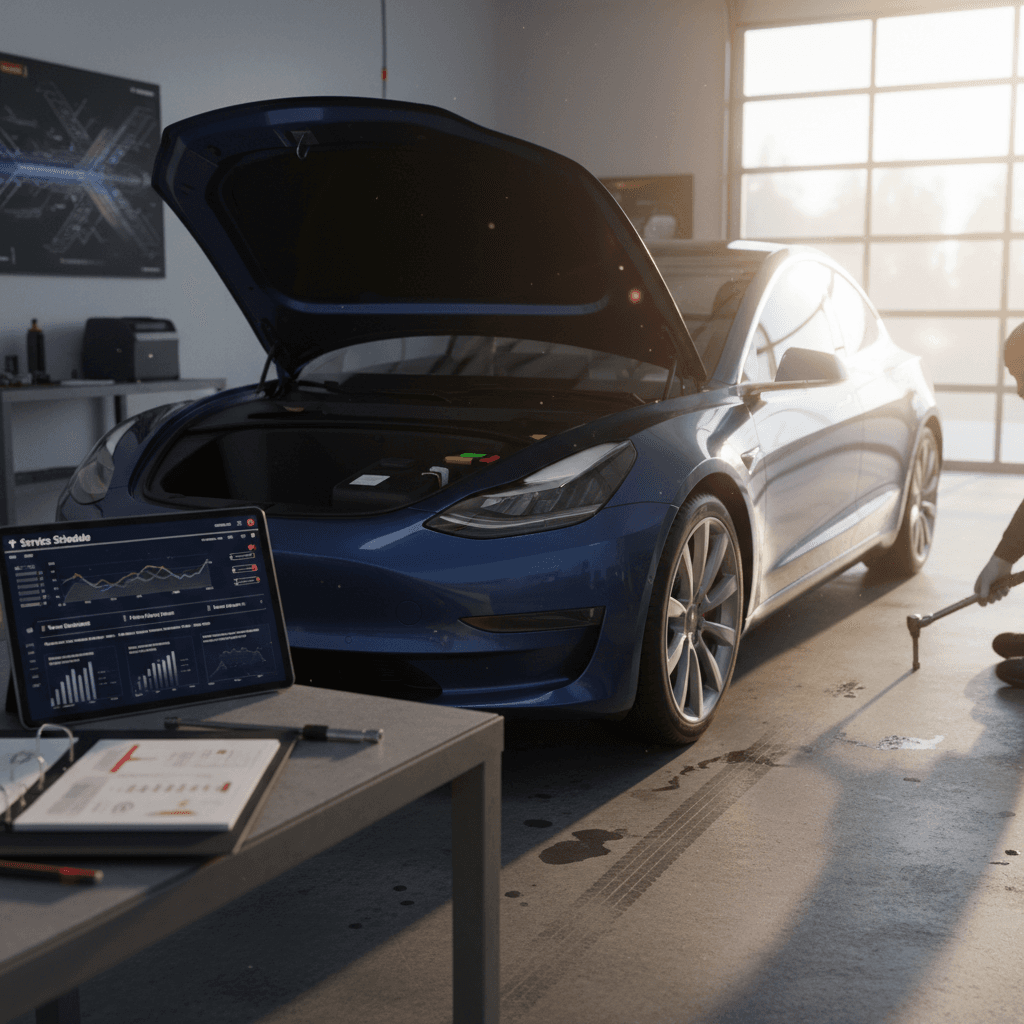
For the Model 3, that translates into a maintenance schedule that focuses on tires, brakes, cabin air filters, fluids, and inspections rather than engine work. Tesla also no longer pushes a fixed annual service visit; instead, you follow mileage- and time-based items and respond to alerts in the app.
Don’t confuse “low-maintenance” with “no-maintenance”
Official Tesla Model 3 maintenance schedule
Tesla periodically updates its guidance, but the current Model 3 maintenance schedule as of early 2026 looks roughly like this. Always double‑check the latest version in your in‑car manual or the Tesla app for your exact model year.
Core Tesla Model 3 maintenance schedule
Key service items and recommended intervals for most recent Model 3 vehicles in North America.
| Item | Recommended interval | Notes |
|---|---|---|
| Tire rotation, balance, alignment | Rotate every 6,250 miles or when tread difference ≥ 2/32" | Heavy drivers may benefit from alignment checks yearly, especially after pothole seasons. |
| Cabin air filter replacement | Every 2 years (Model 3/Y) | Some older guidance listed 2 years; in dusty or urban areas, yearly replacement can improve air quality. |
| Brake fluid test | Every 2 years | Tesla tests moisture content and replaces only if needed. |
| Brake caliper cleaning (cold/salty climates) | Every 12 months or 12,500 miles | Especially important where roads are salted in winter to prevent calipers from seizing. |
| A/C desiccant bag service | Around 6 years or 75,000 miles | Helps keep the HVAC system efficient and reduces odors and fogging issues. |
| High-efficiency particulate (HEPA) filter | If equipped, about every 3 years | Mostly applies to cars with the optional Bioweapon Defense Mode package. |
| 12V / low‑voltage battery | Often 4–6 years | Service is on‑condition; the car will warn you when replacement is needed. |
| High-voltage battery & drive unit | No routine service; 8‑year warranty coverage window | Tesla monitors these continuously; address any alerts promptly. |
Intervals are typical for 2018+ Model 3. Check your owner’s manual for any updates or regional differences.
Use the app as your service advisor
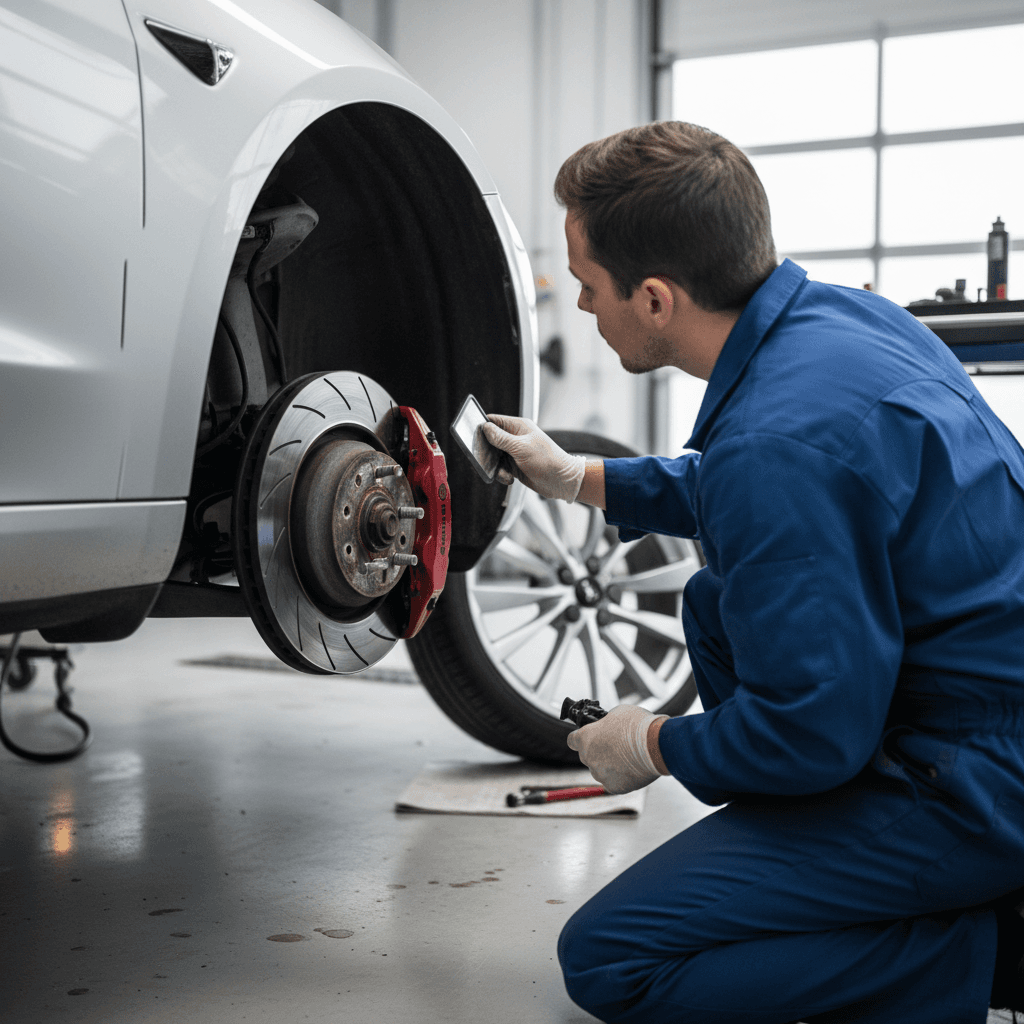
Typical Tesla Model 3 maintenance costs per year
Tesla itself estimates annual maintenance for a Model 3 in the $250–$500 ballpark on average, and real‑world data from ownership cost tools and Recharged’s own analysis put most newer Model 3 drivers between $400 and $700 per year when you blend routine service, tires, and the occasional surprise over an 8–10‑year span.
Model 3 maintenance cost snapshot
Your personal number can sit below or above those averages depending on how and where you drive. A low‑mileage commuter in a warm climate might spend closer to $300 per year, while a high‑mileage driver in snow country who chews through performance tires and pays for annual brake cleanings could easily land near the top of the range.
Common Tesla Model 3 maintenance items and typical price ranges
These are ballpark figures from Tesla service menus and independent EV shops as of 2025–2026; local prices will vary.
Tires
$800–$1,200 per set installed for quality all‑season tires, more for performance rubber. Expect every 25,000–40,000 miles depending on driving style.
Cabin air filters
Usually $80–$150 at a Tesla Service Center or independent shop. You can DIY for much less with OEM‑quality filters.
Brake fluid service
Brake fluid test and replacement (if needed) typically runs $120–$200.
A/C desiccant service
Often $200–$400, usually not needed until year 5–7. Sometimes bundled with A/C cleaning or deodorizing.
Brake caliper cleaning
In salty climates, annual cleaning and lubrication can cost $130–$200, but it can prevent much more expensive brake repairs later.
12V / low‑voltage battery
Replacement is commonly in the $200–$300 range. Your Model 3 will warn you well in advance when it’s time.
Where the savings really appear
Model 3 maintenance costs vs comparable gas cars
When you stack a Tesla Model 3 against a well‑equipped gasoline compact or midsize sedan, the maintenance story is consistent: the EV nearly always wins on ongoing service costs.
Typical Tesla Model 3
- No oil or transmission fluid service.
- Regenerative braking stretches pad and rotor life.
- Most updates and diagnostics are software‑based.
- Maintenance spending averages hundreds per year, not thousands, for the typical owner.
Comparable gas sedan
- Regular oil changes, engine air filters, spark plugs, belts.
- Transmission service and more frequent brake jobs.
- More complex emissions and cooling systems to maintain.
- National studies still show gas cars using roughly twice the maintenance dollars over similar mileage.
Remember the full picture
Big-ticket items: tires, brakes, and battery
For long‑term Model 3 ownership, three components drive most of your financial risk: tires, brakes, and the high‑voltage battery pack. The good news is that each of them is more manageable than many first‑time EV shoppers assume, especially if you know what to watch for.
How the expensive parts really behave
Tires
The Model 3 is quick and heavy for its footprint, and that can chew through cheap or aggressively driven tires. Choosing quality tires, rotating them every 6,000–7,500 miles, and keeping pressures set correctly can easily add 10,000–15,000 miles of life per set.
Brakes
Regenerative braking means pads and rotors often last 70,000 miles or more. In snowy, salty climates, annual caliper service is cheap insurance against seized slides or uneven pad wear.
High‑voltage battery
Tesla backs most Model 3 packs with an 8‑year / 100,000–120,000‑mile warranty (check your exact trim). Real‑world data so far shows relatively low replacement rates in that window. Thoughtful charging habits, avoiding frequent 0–100% swings, help preserve capacity.
Battery replacement is rare, but costly
DIY vs service center: what you can handle yourself
One under‑appreciated way to keep your Tesla Model 3 maintenance costs under control is to separate the jobs you can reasonably do yourself from the work best left to Tesla or a qualified EV shop.
Smart DIY vs. leave‑it‑to‑the‑pros
DIY: Washer fluid and wiper blades
Topping off washer fluid and swapping worn wiper blades are as simple on a Model 3 as on any other car. Doing this yourself saves a surprising amount over a decade.
DIY: Cabin air filters (if you’re handy)
Many owners are comfortable replacing the cabin filters with basic tools and a YouTube video. If that’s outside your comfort zone, paying a shop is still inexpensive compared to traditional engine service.
DIY: Tire pressure checks
Regularly checking and adjusting tire pressure is free and dramatically affects tire life and efficiency. The car will warn you if pressures drift far out of range, but a monthly check is ideal.
Pro: High-voltage battery or drive unit work
Anything involving the orange high‑voltage cabling and battery pack is <strong>strictly professional territory</strong>. Don’t improvise here.
Pro: Advanced diagnostics and firmware issues
If you see drive‑train warnings, range anomalies, or charging faults, schedule Tesla service through the app. They can often diagnose remotely before you ever visit a center.
Pro: Structural repairs after a crash
Body and suspension work on a Model 3 is more specialized than on a conventional sedan. Look for a Tesla‑approved body shop if the car has collision damage.
Independent EV shops are growing
Maintenance timeline: your first 10 years with a Model 3
To make the schedule more concrete, here’s how maintenance usually unfolds for a typical Model 3 driver putting 12,000–15,000 miles per year on the clock.
Model 3 maintenance by ownership stage
Years 1–3 (0–36,000 miles)
Rotate tires about every 6,000–7,500 miles.
Watch for uneven tire wear; get an alignment if you notice pulling or abnormal tread wear.
Replace cabin air filters once (around year 2).
Test brake fluid at 2 years and replace only if moisture content is high.
Minimal other service beyond software updates and any warranty items.
Years 4–6 (36,000–72,000 miles)
Likely first full set of tires somewhere in this window, depending on driving style.
Second and possibly third tire rotation cycle.
Second cabin filter replacement; consider A/C desiccant service around year 6.
Brake fluid test at year 4; replace if needed.
In snowbelt regions, plan on yearly brake caliper cleaning.
Years 7–10 (72,000–120,000+ miles)
Second or third set of tires as mileage accumulates.
Ongoing tire rotations and alignments after pothole seasons.
Another round of cabin filters and A/C service as needed.
Possible 12V/low‑voltage battery replacement in this window.
Continue addressing any alerts promptly, many owners still haven’t done pads or rotors even at 100,000 miles.
High‑mileage drivers, adjust upward
Used Tesla Model 3 maintenance checklist
If you’re shopping for a used Model 3, the best time to control your future maintenance costs is before you buy. You want to know how the previous owner treated the car, whether the battery and tires are healthy, and what’s coming due soon.
Key maintenance questions before you buy a used Model 3
1. Review tire condition and history
Check tread depth across all four tires and ask when they were last rotated or replaced. Uneven wear can hint at alignment or suspension issues.
2. Confirm cabin filter and A/C service
Ask for receipts showing recent cabin filter and, on older cars, A/C desiccant service. A neglected HVAC system can smell and work harder than it should.
3. Ask about brake service, especially in snowy regions
Look for evidence of regular brake inspections or caliper cleanings if the car lived where roads are salted. Stuck calipers can quietly drag down range and wear pads.
4. Check for 12V/low‑voltage battery replacement
Find out if the low‑voltage battery has been replaced yet and when. If it’s original on a 5–6‑year‑old car, budget proactively for a replacement.
5. Evaluate battery health and range
Compare displayed full‑charge range to the original EPA figure for that trim. Moderate degradation is normal; big gaps may merit a deeper look or price adjustment.
6. Scan for open recalls or pending repairs
Use the VIN to check for open recalls and ask for a printout of service history if available. You want a clear picture of any past issues.
How Recharged can help with a used Model 3
Ready to find your next EV?
Browse VehiclesFAQ: Tesla Model 3 maintenance schedule and costs
Frequently asked questions
Bottom line: how much to budget for Model 3 maintenance
If you’re coming out of a conventional sedan, the Tesla Model 3’s maintenance schedule will feel refreshingly simple. Over a 5‑year span, many owners spend somewhere around $2,500–$3,000 on routine service, mostly centered on tires, cabin filters, brake fluid checks, and occasional small items. That’s often thousands less than a similarly priced gas car once you factor in all the oil changes, tune‑ups, and more frequent brake work that internal‑combustion ownership demands.
To keep your own Tesla Model 3 maintenance costs predictable, think in terms of a modest yearly budget, $40–$60 per month set aside for tires and service will cover most drivers, and pay attention to what the car and the Tesla app are telling you. Follow the schedule, don’t ignore odd noises or warning lights, and you’ll likely find that maintenance is one of the least stressful parts of owning a Model 3.
If you’re weighing a used Model 3, buying from a source that understands EVs makes all the difference. At Recharged, every car comes with a detailed Recharged Score Report so you can see battery health, tire and brake status, and upcoming maintenance before you sign anything. That kind of transparency turns an unknown future expense into a clear line item in your ownership budget.