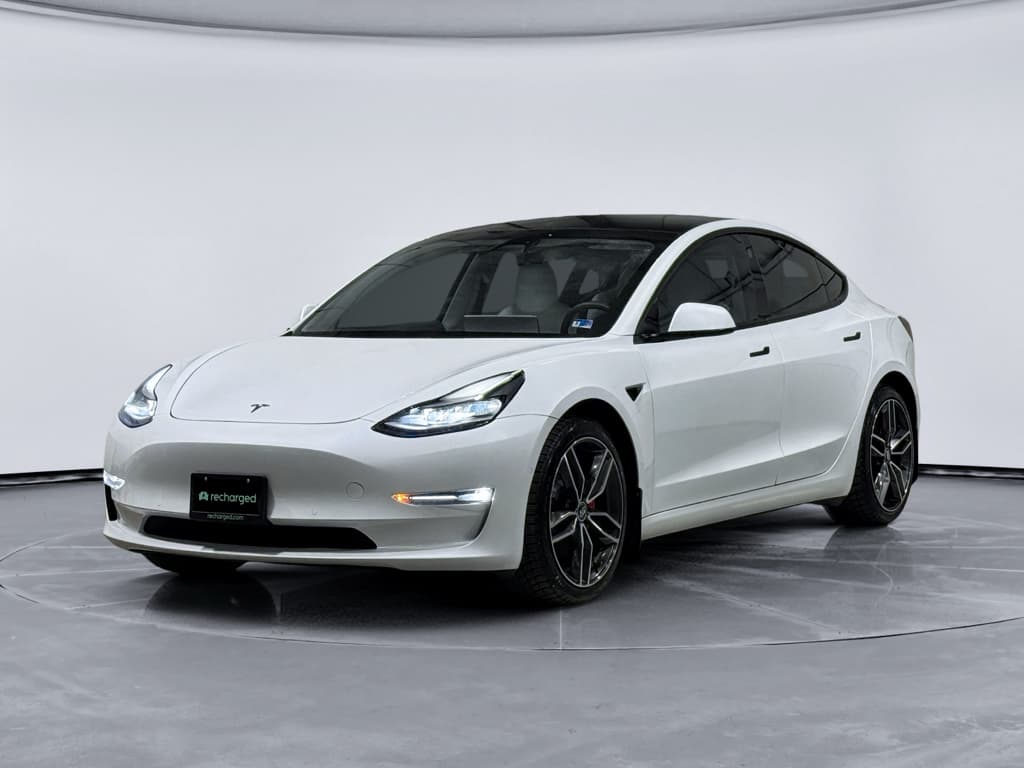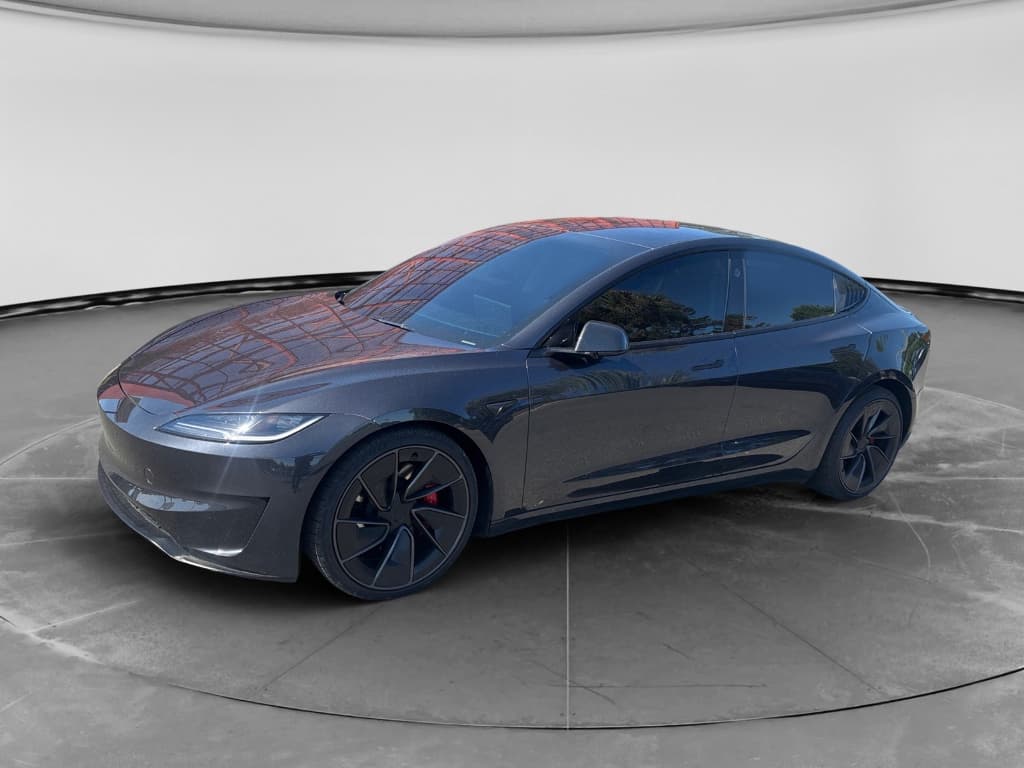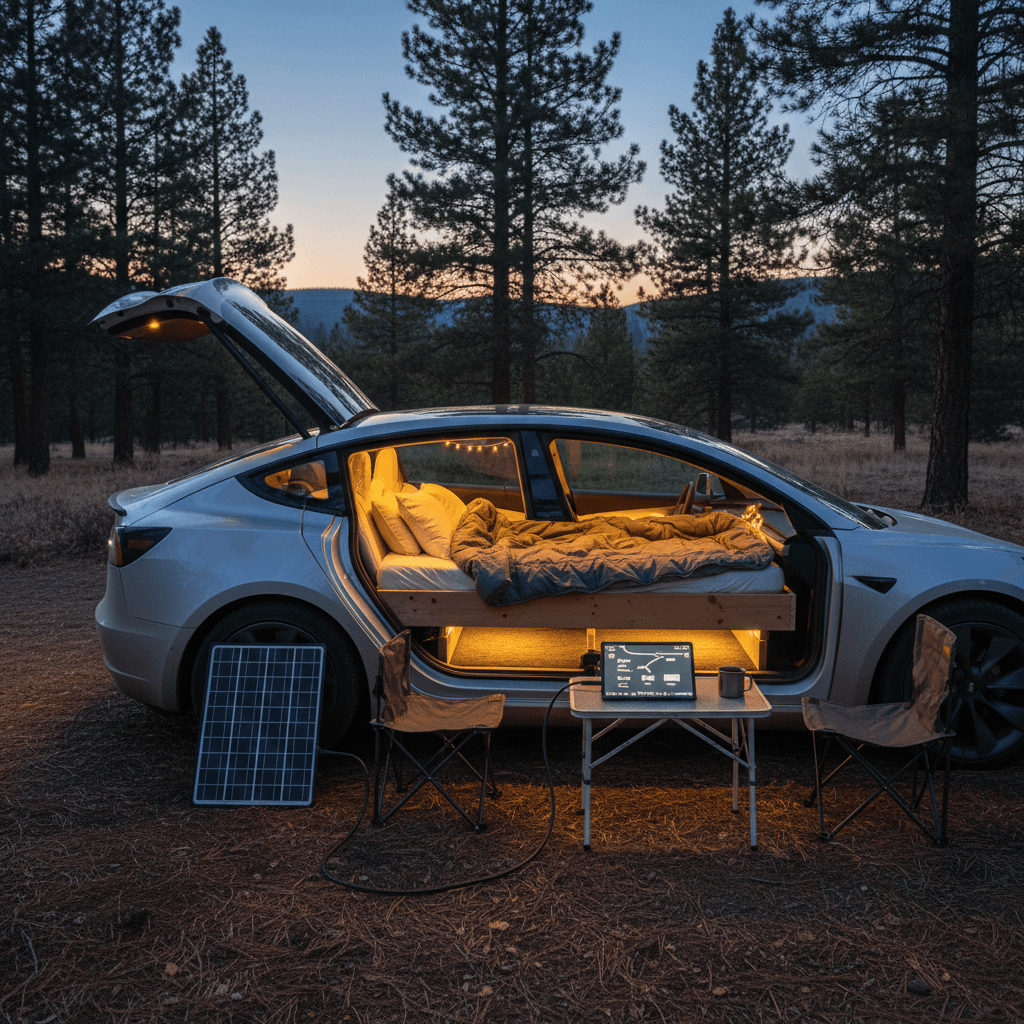
If you own a Tesla Model 3, you’re already halfway to owning a tiny, electric camper. With the right Model 3 camping setup, you can sleep comfortably inside the car, keep the climate dialed in with Camp Mode, and wake up ready to hit the trail, or the next Supercharger. This guide walks you through everything step by step: interior setup, battery planning, safety, and the gear that’s actually worth packing.
Good news for EV campers
Why camp in a Tesla Model 3?
- Built‑in climate control. Camp Mode keeps the cabin at your chosen temperature all night without idling an engine or dealing with fumes.
- Stealth and security. Tinted glass, lockable doors, and multiple cameras make “stealth camping” in parking lots or roadside stops feel more secure than a tent.
- Weather protection. You’re off the ground, out of the wind and rain, and far less exposed to cold snaps or sudden storms than in a traditional tent.
- Less gear to buy. No need for a separate tent, heater, or big camp power station to stay warm and charge devices.
- Easy relocation. If the campsite’s noisy or sketchy, you can simply put the car in Drive and move on. No breaking down a tent in the dark.
How Camp Mode works, and how much battery it uses
Camp Mode is Tesla’s built‑in feature that keeps the cabin comfortable while you sleep. When enabled, it keeps HVAC, USB ports, and interior lights available, and it prevents the car from shutting everything off after you exit or recline the seat.
How to turn on Camp Mode in a Model 3
1. Park safely and level
Choose a flat spot away from traffic. Shift into Park and apply the parking brake if you’re on any kind of grade.
2. Set your target charge
Before you settle in, decide what minimum state of charge (SoC) you want by morning, many owners use 20–30% as a hard floor.
3. Adjust temperature and fan
Set a realistic temperature, not a refrigerator. Around 68–72°F (20–22°C) is comfortable for most people and easier on the battery than extreme settings.
4. Enable Camp Mode
On the touchscreen, go to Climate and tap <strong>Camp</strong>. You’ll see the Camp Mode icon appear, confirming the car will maintain climate and keep systems powered.
5. Dim the screen
Tap the brightness controls or turn on Screen Clean/Display Off to keep the cabin dark and reduce small but unnecessary power draw.
Typical Camp Mode battery use for a Model 3
Low Power Mode disables Camp Mode
Step-by-step Tesla Model 3 sleeping setup
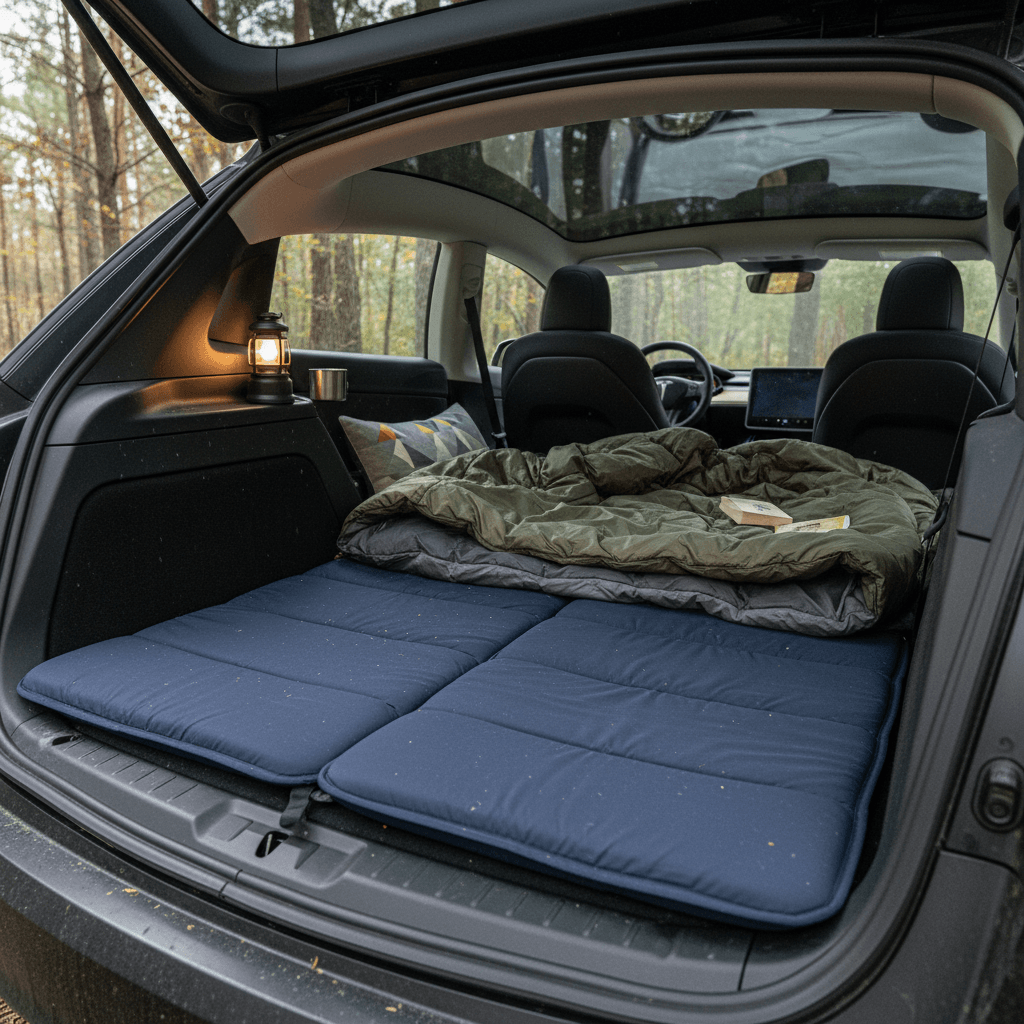
The Model 3 doesn’t look like a camper at first glance, but once you fold the rear seats and lay out a mattress, the interior becomes a surprisingly usable sleeping platform. Here’s how to transform it in 10–15 minutes once you’ve practiced a couple of times.
1. Prep the cabin
- Remove bulky items from the rear seats and floor.
- Slide the front seats forward and tilt the seatbacks upright to maximize length.
- Clean up any grit or debris, small stones feel big at 2 a.m.
2. Fold the rear seats
- Release the rear seatbacks using the latches in the trunk or on the shoulders of the seats.
- Push them down firmly until they’re flat, creating a continuous surface from trunk to back of front seats.
3. Level and fill gaps
- There’s a height difference between the trunk floor and seatbacks. Use a folding platform, foam, or duffel bags to support this step so your mattress doesn’t sag.
- Lay a thin, rigid board or thick foam exercise mats across the gap for better weight distribution.
4. Lay out your mattress and bedding
- Position your mattress so your head is toward the rear or the front, try both to see what feels better for your height.
- Add a fitted sheet, light comforter, and real pillows; they make a huge difference versus camping pillows.
Practice in your driveway first
Mattress and bedding: what actually fits in a Model 3
From the back of the front seats to the rear of the trunk, the Model 3 offers roughly 75–80 inches of usable length when the front seats are scooted forward, and just over 50 inches of width at the shoulders. That’s enough for most people to lie flat, but only if you choose the right mattress size and thickness.
Common mattress options for Tesla Model 3 camping
Choose a mattress that balances comfort with ease of setup and storage in the trunk or frunk.
| Option | Typical Size | Sleeps | Pros | Cons |
|---|---|---|---|---|
| Dedicated Tesla mattress | Custom to Model 3 (approx. 75" x 50") | 1–2 | Perfect fit, contoured around wheel wells, packs into trunk bag | More expensive, single‑purpose gear |
| Full-size camping pad | About 72" x 50" | 1–2 | Lighter, easier to roll and store, often insulated for cooler temps | May leave small gaps at edges, can slide on slick upholstery |
| Two single pads | Around 72" x 20–25" each | 2 | Flexible, use one or both; easier to stuff into frunk/trunk | Center seam can be noticeable; more setup time |
| Standard full air mattress | Approx. 75" x 54" | 2 | Comfortable and familiar bed feel; great for short trips | Can be a tight fit at the sides; thick mattresses may hit the roof when fully inflated |
Dimensions are approximate and can vary by brand, check exact specs before buying.
Ideal thickness and R‑value
Privacy, ventilation, and condensation control
Sleeping in a glass‑roof sedan raises three big questions: Who can see me? Is there enough fresh air? And will I wake up to dripping windows? With a little planning, you can get excellent privacy and a dry cabin without sacrificing safety.
Dialing in a comfortable, private cabin
Focus on three things: light control, airflow, and moisture.
Window shades and screens
Magnetic or custom‑cut window shades are the cleanest solution. They block light, help with insulation, and make it much harder for anyone to see in.
A budget alternative is black Reflectix or sunshades cut to fit, attached with suction cups.
Ventilation without bugs
Camp Mode keeps HVAC running and recirculates air. Still, slightly cracking one or two windows (with mesh screens or rain guards) can reduce condensation and keep things feeling fresher.
Avoid sleeping with windows wide open in busy or unknown areas.
Managing condensation
Two people breathing in a closed car will fog the windows quickly. Use:
- Moderate cabin temperature, not sauna levels
- Fan set to low or medium
- A microfiber towel to wipe windows in the morning
Security and stealth
Packing and storage: using every cubic inch
The Model 3’s trunk, under‑floor well, rear seat area, and frunk give you more storage than you might expect, but it can turn into chaos quickly. Think in zones and containers so you’re not digging for a toothbrush at midnight.
Smart packing zones for a Model 3 camping trip
1. Trunk floor: bedding & mattress
Keep your mattress and bedding in the main trunk area. When you arrive at camp, it’s the first thing you’ll pull out and set up.
2. Trunk well: tools and infrequently used items
Use the under‑floor compartment for items you only need occasionally: jack pads, basic tools, jumper pack, spare clothes bag, and cleaning supplies.
3. Rear footwells: soft duffels
Once the bed is set up, the rear footwells become perfect homes for duffel bags with clothing and personal items. They support the mattress and keep weight low.
4. Frunk: kitchen and food
Store your camp stove (if allowed), cookware, non‑perishable food, and small cooler in the frunk. It’s easy to access without opening the main cabin at every stop.
5. Door pockets and console: everyday carry
Use these for headlamps, charging cables, snacks, and wipes, the little items you’ll reach for repeatedly during the night.
Powering gear, cooking, and lighting
One of the biggest perks of Tesla camping is that your car is also a giant battery. That doesn’t mean you should plug in everything you own, but it does give you options for lights, electronics, and low‑draw appliances.
Using the car’s built‑in power
- USB and 12V ports: Great for phones, tablets, small fans, and camera batteries. These stay live in Camp Mode.
- In‑car screen and sound: Movies and music are fair game, but remember the screen itself uses some power, dim it once you’re ready to sleep.
- No high‑draw devices: Avoid plugging in kettles, hot plates, or hair dryers via inverters. They can spike draw and may trip protection circuits.
Supplementing with a power station
- Portable power station (500–1500 Wh): Handy if you prefer to keep your car’s battery for driving and use a separate unit for laptops and lights.
- Solar panels at camp: Flexible panels can top up the power station during multi‑day stays, though you’ll still rely on Superchargers for the car.
- Low‑draw appliances: If you cook electrically, look at compact induction cookers or hot pots under ~1000W, and use them outside the car.
Never cook with open flame inside the car
Safety checklist before you sleep in your Tesla
Sleeping in a car introduces a few unique safety considerations. The Model 3 eliminates carbon‑monoxide concerns from an idling engine, but you still need to think about battery level, ventilation, and how quickly you can drive away if you need to.
Pre‑sleep safety checklist for Tesla Model 3 camping
Confirm state of charge and morning plan
Know exactly how far you need to drive the next day and make sure your current SoC plus a safety buffer will comfortably cover that distance.
Check Low Power threshold
Verify where Low Power Mode is set and remember that Camp Mode will shut off below that threshold. Don’t plan a night that leaves you skimming near 0% in the morning.
Park legally and discreetly
Only camp where overnight parking is allowed. If you use rest areas or retail lots, look for posted regulations or confirm with management when possible.
Keep a clear exit path
Park so you can put the car in Drive and pull away without complex maneuvering. Avoid boxing yourself in between obstacles.
Secure valuables
Put laptops, cameras, and wallets out of sight in the trunk well or frunk. Window shades help, but don’t rely on them alone.
Keep keys and phone handy
Store your key card/key fob and phone within arm’s reach. In an emergency, you don’t want to rummage through bags to unlock the car or start it.
Sample one-night Tesla Model 3 camping routine
Sometimes it helps to see how everything fits together in a real‑world scenario. Here’s a simple one‑night Model 3 camping routine you can adapt to your trip.
- Arrive at a fast charger late afternoon and charge to 70–90%, depending on how far you’ll drive tomorrow.
- Drive to your campsite or overnight spot, ideally arriving before dark so it’s easy to get oriented.
- Park on the flattest section you can find, with a clear route to pull out in the morning.
- Fold the rear seats, set up your platform, lay out mattress and bedding, and move duffels into the rear footwells.
- Set climate to a comfortable temperature, enable Camp Mode, and dim the screen once you’re done watching or scrolling.
- Crack a window slightly if conditions allow, or rely on moderate fan speed to reduce condensation.
- In the morning, turn off Camp Mode, stow bedding and mattress, return the rear seats upright, and do a quick cabin tidy.
- Check remaining battery, confirm your next charging stop, and hit the road.
FAQ: Tesla Model 3 camping setup
Common questions about camping in a Model 3
How a used Tesla Model 3 can be your road-trip camper
If you’ve been eyeing #teslacamping posts and thinking you need a pricey van build to join the fun, the Tesla Model 3 proves otherwise. With Camp Mode, a well‑chosen mattress, smart packing, and a bit of practice, you can turn a compact electric sedan into a capable long‑weekend camper, whether you’re heading for national parks or simply want a comfortable place to crash on a cross‑country drive.
If you’re still in the shopping phase, a used Model 3 can be a smart way to get into EV camping without paying new‑car money. At Recharged, every used EV comes with a Recharged Score Report that details verified battery health and fair market pricing, plus EV‑savvy help from real specialists who understand road trips, camping, and everyday commuting. That way, you can focus on planning your first night under the stars instead of worrying whether your next charge, or your next car, is up to the journey.