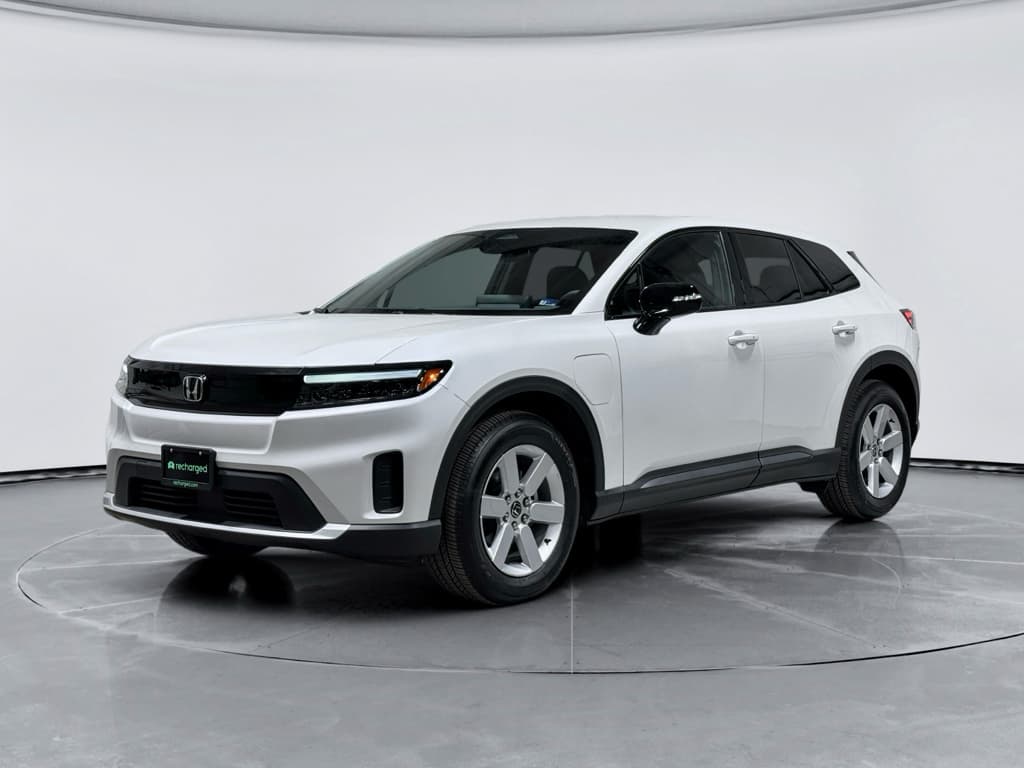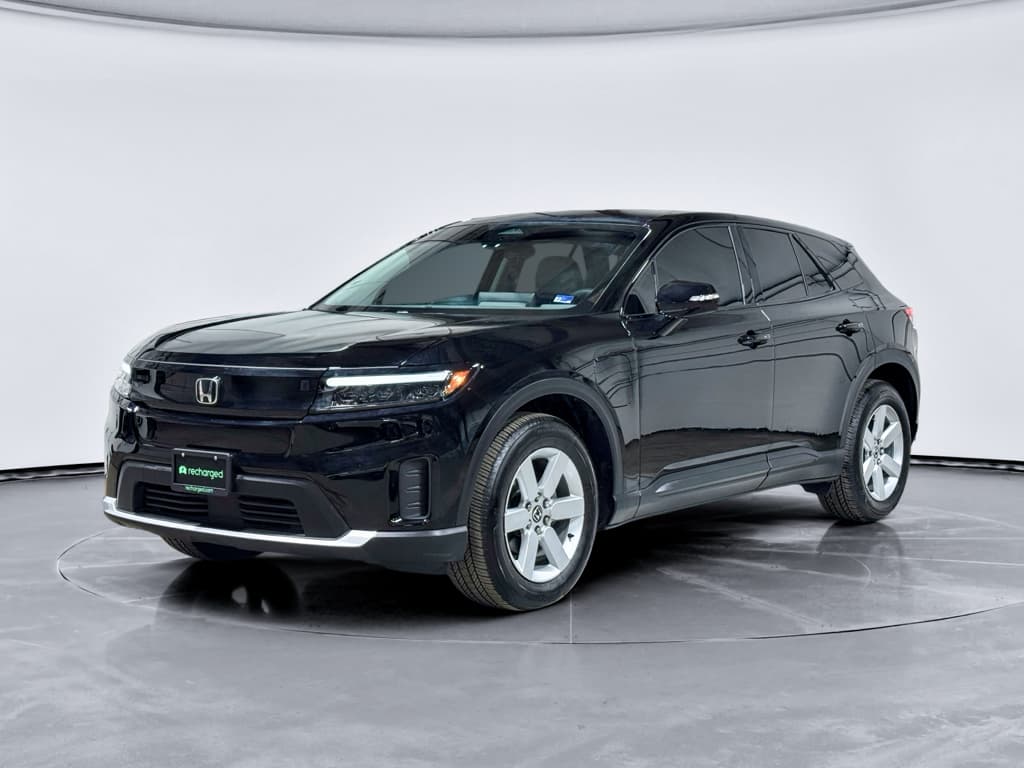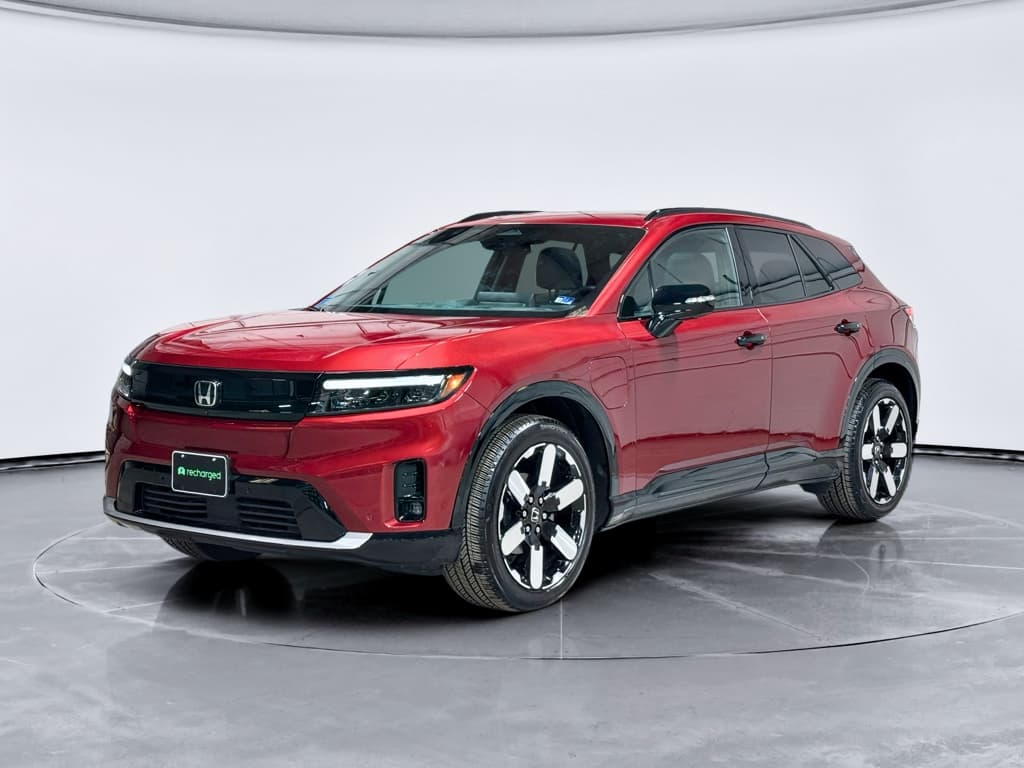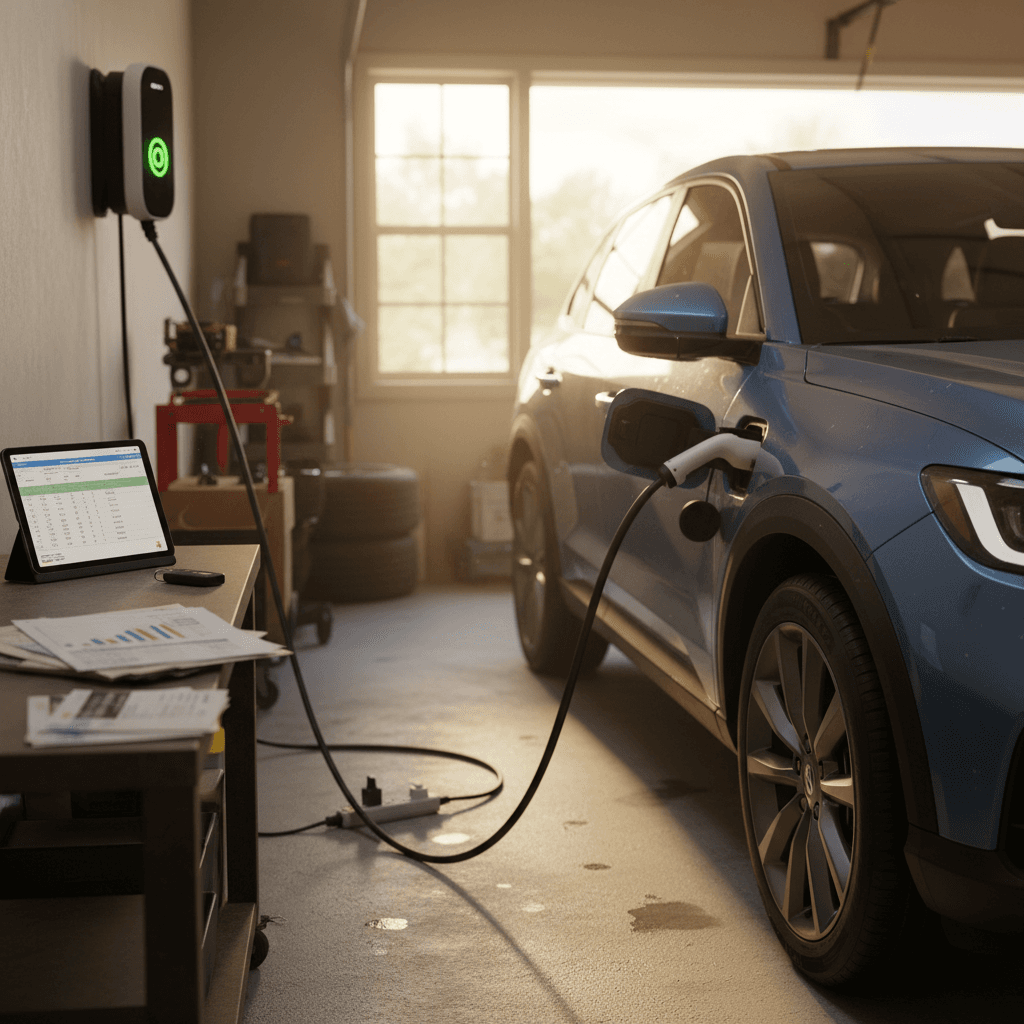
If you’re eyeing Honda’s all-electric SUV, a natural question is: how much does it cost to own a Honda Prologue per year? The sticker price only tells part of the story. Charging, insurance, maintenance, taxes, depreciation and financing all play into what you really spend to keep a Prologue in the driveway.
Quick takeaway
Overview: What does Honda Prologue cost to own each year?
Typical 1‑year Honda Prologue ownership snapshot (new, U.S. average)
Those figures are directional, not a quote. Your personal numbers will move up or down based on where you live, how much you drive, trim level, financing terms and how aggressively you use DC fast charging. To make this concrete, we’ll walk through a set of transparent, U.S.-based assumptions and build a few real-world ownership scenarios, then look at how the math changes if you buy a used Honda Prologue through a marketplace like Recharged.
Key assumptions: Miles driven, electricity rates and trim
Every total-cost-of-ownership estimate is only as good as its assumptions. Here are the baselines this guide uses so you can easily adjust for your situation.
Core assumptions behind our annual cost estimates
Tweak these inputs to mirror your own driving and utility bill
Annual miles
Efficiency & battery
Electricity price
Your local numbers will differ
We’ll also assume you’re looking at a mainstream Prologue trim (not an ultra‑bare or fully loaded configuration) and financing it over 72 months with an average credit-tier APR. Later in the article, we’ll strip out financing and depreciation to focus only on cash running costs, what it costs to keep the Prologue on the road each year once you own it.
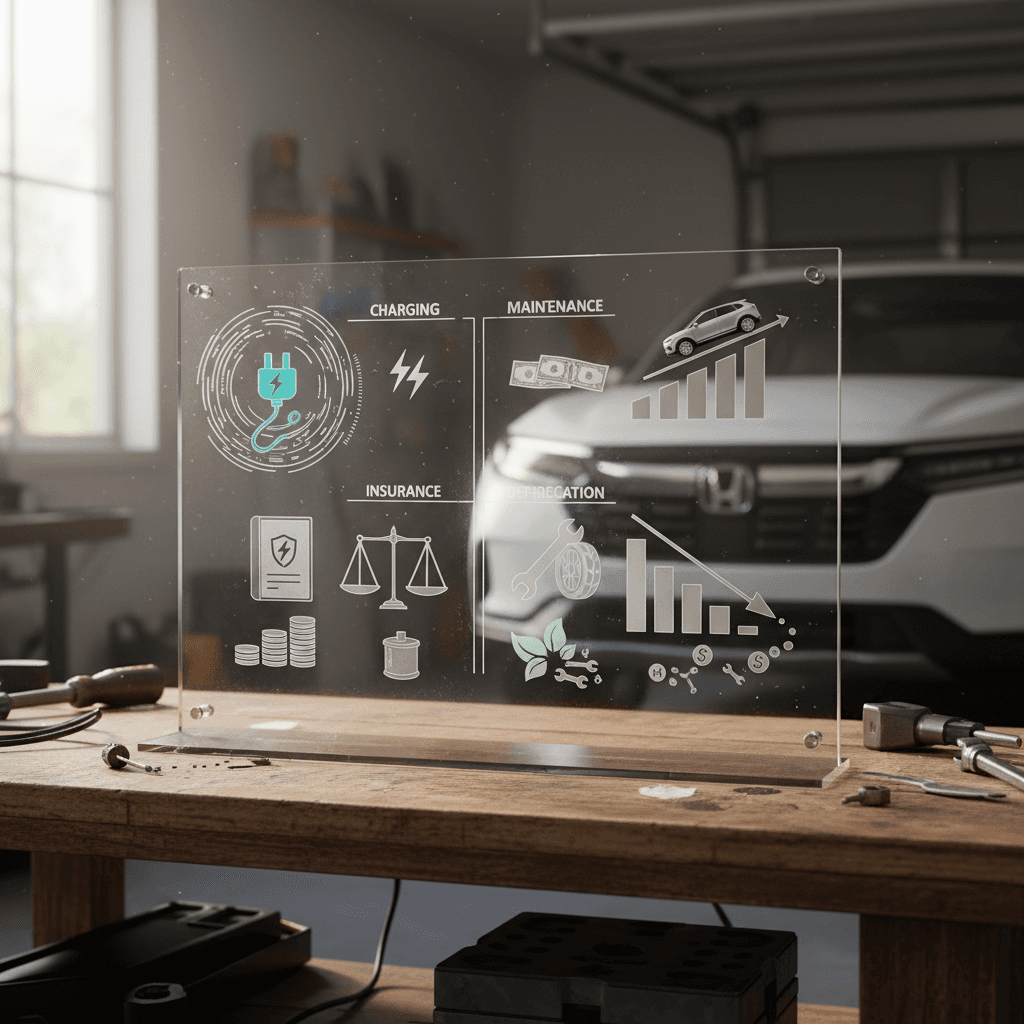
Charging cost per year for a Honda Prologue
Let’s tackle the most EV-specific question first: how much you’ll spend to power your Honda Prologue each year. We’ll use the combined efficiency figure of about 34 kWh/100 miles and our 13,500‑mile annual mileage assumption.
Estimated Honda Prologue annual charging costs
Based on 34 kWh/100 miles efficiency, 13,500 miles/year, and different home/public charging mixes.
| Scenario | Home share | Public DC fast share | Blended kWh price | Annual kWh used | Estimated annual charging cost |
|---|---|---|---|---|---|
| Home‑only commuter | 100% home Level 2 | 0% | $0.17 | 4,590 | ≈$780 |
| Mixed charging (typical) | 75% home | 25% DC fast | $0.20 | 4,590 | ≈$920 |
| Road‑warrior EV | 50% home | 50% DC fast | $0.23 | 4,590 | ≈$1,060 |
These are directional examples; plug in your own kWh price and mileage for a more precise estimate.
Those numbers assume modest charging losses and typical public fast‑charging pricing. If your electricity is cheaper, say $0.13/kWh in parts of the Midwest or South, home‑heavy drivers can easily slide under $600–$650 per year. In higher‑cost regions or fast‑charge‑heavy use, $1,000+ annually is realistic, especially if you drive more than 15,000 miles a year.
Use your own math in 30 seconds
Insurance, taxes and registration fees
Next up: the paperwork costs that don’t care whether your vehicle burns gas or electrons. These are highly location‑ and profile‑dependent, but we can outline realistic ranges for a new electric SUV like the Prologue.
Insurance: biggest variable after energy
Insuring a new Honda Prologue will usually cost more than a similarly sized gasoline CR‑V, mainly because:
- It’s a new EV with higher repair costs for certain components.
- It carries a relatively high MSRP for a Honda badge.
- Many owners opt for full coverage due to vehicle value.
In many U.S. markets, full‑coverage premiums on a new Prologue often land around $130–$190 per month for a clean‑record driver, roughly $1,600–$2,300 per year. Urban, high‑theft or high‑litigation areas can easily sit above that, while rural drivers with excellent credit may see lower bills.
Taxes, fees and registration
State and local charges vary dramatically:
- Sales tax hits you mostly up front but is worth noting in first‑year cost.
- Title and registration typically run $100–$300 per year, depending on state and vehicle weight/value.
- Roughly half of U.S. states now add annual EV fees (often $100–$250) to replace lost gas tax revenue.
For budgeting, it’s reasonable to pencil in $250–$500 per year for ongoing registration and EV-specific fees on a Prologue, once that initial sales‑tax hit is behind you.
Check your state’s EV fee
Maintenance and repair costs for Honda Prologue
One of the Honda Prologue’s biggest selling points is that maintenance costs are structurally lower than an equivalent gas SUV. There’s no engine oil, timing belt, transmission fluid or spark plugs to replace. You’re mainly looking at tires, brakes, cabin air filters, brake fluid and general inspections.
Typical yearly maintenance on a Honda Prologue
Tire rotations and potential replacements
Expect to rotate tires at least once or twice per year. A heavier EV SUV like the Prologue may need new tires every 25,000–35,000 miles depending on your driving style, which can translate into $800–$1,200 every 2–3 years.
Cabin air filter and inspections
Most EVs call for periodic cabin air filter replacements and multipoint inspections. Budget <strong>$100–$200 per year</strong> on average for these minor service items at a dealer or independent shop.
Brake service (eventually)
Thanks to strong regenerative braking, pads and rotors typically last much longer than on a gas SUV. You may not see significant brake work for several years, but it’s smart to reserve a small annual amount, say <strong>$100–$150</strong>, toward future brake maintenance.
Fluids and alignments
Even EVs have coolant, brake fluid and alignment needs over time. These aren’t yearly in most cases, but spreading them out, figure <strong>$50–$100 per year</strong> as a long‑term average.
Roll it all together, and a realistic annual maintenance and light‑repair budget for a Honda Prologue is about $250–$450 per year in the first several years, rising as the vehicle ages. Major unexpected repairs (collision damage, out‑of‑warranty components) can of course spike costs in any single year.
EV vs. gas maintenance gap
Depreciation and financing costs
Depreciation, how much value your Prologue loses every year, is usually the single largest cost of ownership, even though you never see it on a monthly bill. Financing multiplies that by adding interest on top of the vehicle’s purchase price.
Depreciation on a new Honda Prologue
Exact Prologue resale data is still forming, but BEV SUVs as a group have shown faster early depreciation than many gas counterparts as incentives, tech changes and new models arrive.
On a new Prologue purchased around $50,000 (after destination but before incentives), it’s reasonable to expect:
- Year 1–3: $4,000–$6,000 in value loss per year.
- Years 4–6: Depreciation moderates, but still often $3,000–$4,000 annually.
Over a 5‑year window, total depreciation might easily cross $18,000–$25,000, depending on miles, condition and how the broader EV market evolves.
Financing: interest on top
Assume a typical 72‑month loan at market interest rates for a buyer with solid, but not perfect, credit.
- On a $50,000 out‑the‑door price with a small down payment, total interest over the life of the loan can easily run $6,000–$9,000.
- That’s roughly $1,000–$1,500 per year in the first 5 years, depending on rate and down payment.
Buyers who put more cash down or score a lower APR shrink that number considerably. Leasing moves the structure around but still bakes depreciation and finance charges into the monthly payment.
Why used Prologues can be a bargain
Total annual cost examples: Low, average and heavy use
Let’s put all the pieces together. Below are illustrative 1‑year cost snapshots for three fictional Prologue owners. These figures focus on cash outlay plus economic depreciation, not counting any EV tax credits you might claim.
Sample 1‑year Honda Prologue ownership costs (new vehicle)
Three usage profiles to benchmark your own situation against. All figures are approximate and will vary by location and credit profile.
| Owner profile | Annual miles | Charging | Insurance | Maint. & repairs | Taxes & fees | Depreciation | Finance charges | Total annual cost |
|---|---|---|---|---|---|---|---|---|
| Suburban commuter | 10,000 | ≈$600 | ≈$1,700 | ≈$300 | ≈$300 | ≈$4,000 | ≈$1,000 | ≈$7,900 |
| Typical driver | 13,500 | ≈$850 | ≈$1,900 | ≈$350 | ≈$350 | ≈$4,500 | ≈$1,200 | ≈$9,150 |
| Road‑trip family | 18,000 | ≈$1,200 | ≈$2,200 | ≈$450 | ≈$400 | ≈$5,000 | ≈$1,400 | ≈$10,650 |
Depreciation estimates assume early‑ownership years, when value loss is typically steepest.
If you look only at operating expenses, charging, insurance, maintenance and recurring fees, the same three owners land closer to $2,850–$4,150 per year. That’s the range many households feel directly in their monthly budgets after the car is in the driveway.
Compare to your current vehicle
How a used Honda Prologue changes the yearly cost
New-vehicle depreciation is where Honda Prologue ownership gets expensive. Buying used can materially change the equation, especially if you’re not chasing the latest model‑year or options package.
Lower purchase price, slower depreciation
Suppose you pick up a 2–3‑year‑old Prologue for, say, $32,000 instead of $50,000 new.
- Annual depreciation may drop into the $2,000–$3,000 range instead of $4,000–$6,000.
- Financing a smaller amount cuts yearly interest substantially.
- Insurance can fall, too, as the vehicle’s replacement value declines.
That combination often trims $2,000–$4,000 off yearly ownership costs compared with buying the same model new.
Battery health is the key wildcard
With any used EV, real‑world range and long‑term reliability hinge on battery condition. That’s where transparency matters:
- A strong, independently measured battery report helps you avoid expensive surprises.
- Charging history (heavy DC fast charging vs. mostly home Level 2) can affect long‑term performance.
Every EV listed on Recharged includes a Recharged Score Report, a verified read on battery health, pricing fairness and vehicle history, so you’re not buying blind.
How Recharged can help
Ways to reduce your Honda Prologue ownership costs
You can’t control everything, macro EV pricing trends and state fee structures are out of your hands, but you have more levers than you might think. Here are practical ways to bend your Honda Prologue’s yearly cost curve downward.
Actionable steps to cut Prologue ownership costs
1. Optimize your charging mix
The cheapest miles come from overnight home Level 2 charging on a reasonable kWh rate. If your utility offers time‑of‑use rates, shifting charging to off‑peak hours can trim your annual energy bill by hundreds of dollars.
2. Shop insurance like a major purchase
Don’t treat insurance as a set‑and‑forget line item. Get quotes from EV‑friendly carriers, adjust deductibles and ask about discounts for telematics, garage parking or low annual miles. Re‑shopping at renewal can shave $200–$500 per year.
3. Baby your tires and alignment
Heavy EVs can chew through tires if alignment is off or pressures are low. Keep tires properly inflated, rotate on schedule and inspect alignment yearly. Extending a set of tires by even 5,000–10,000 miles saves real money.
4. Avoid unnecessary fast charging
High‑power DC fast charging is convenient but typically more expensive per kWh and harder on the pack. Favor home or workplace charging where possible to save both money and long‑term battery health.
5. Consider gently used instead of new
Let the first owner take the steepest depreciation hit. A 2–3‑year‑old Prologue with a clean Recharged Score Report may deliver nearly the same daily experience with a meaningfully lower yearly cost.
6. Right-size your loan
Shorter loan terms and larger down payments mean less interest. If you’re pre‑qualifying through Recharged or another lender, compare multiple offers and model how different down payments change your total interest over 5 years.
FAQ: Honda Prologue yearly cost questions
Frequently asked questions about Honda Prologue ownership costs
Bottom line: Is Honda Prologue cheap to own?
A Honda Prologue can be inexpensive to operate, especially if you charge mostly at home, drive a typical number of miles and take advantage of low‑maintenance EV design. Where total yearly costs creep up is depreciation and financing on a brand‑new EV SUV, just as they do on many new vehicles today.
If you want a Prologue experience with a friendlier annual budget, the sweet spot is often a lightly used example with verified battery health and fair‑market pricing. That’s exactly where Recharged focuses: used EVs backed by a transparent Recharged Score Report, expert EV support and nationwide delivery. Whether you’re wondering how much it costs to own a Honda Prologue per year or comparing it to other EVs, building your budget around these charging, insurance, maintenance and depreciation buckets will keep your expectations grounded, and your ownership experience a lot less surprising.