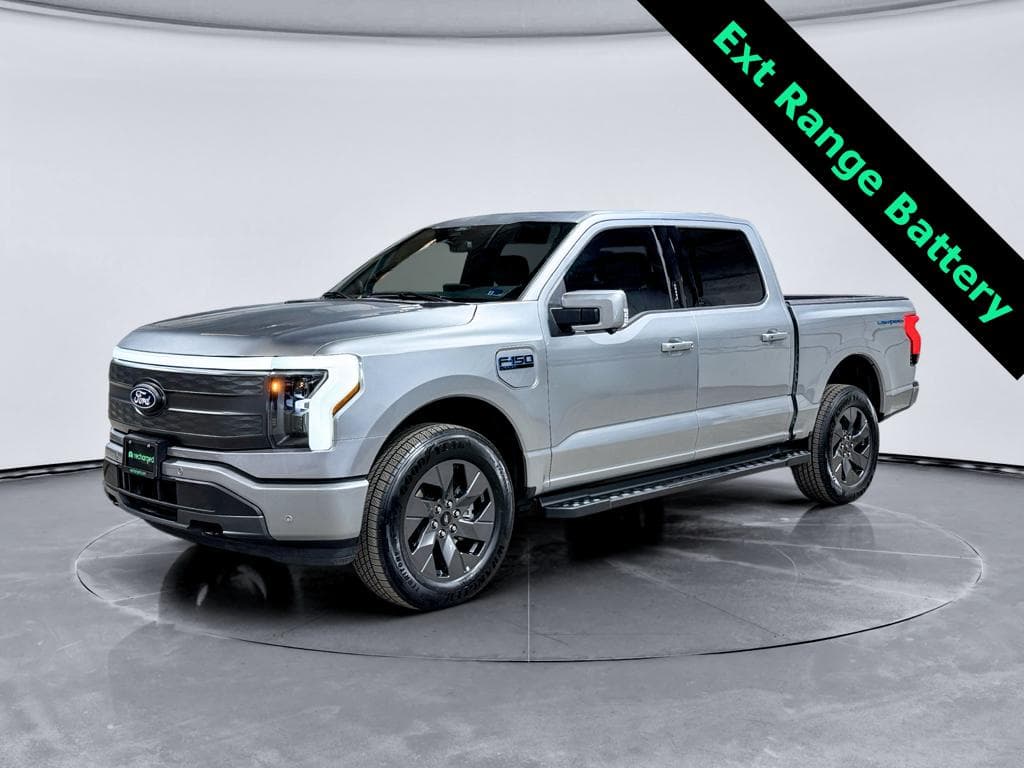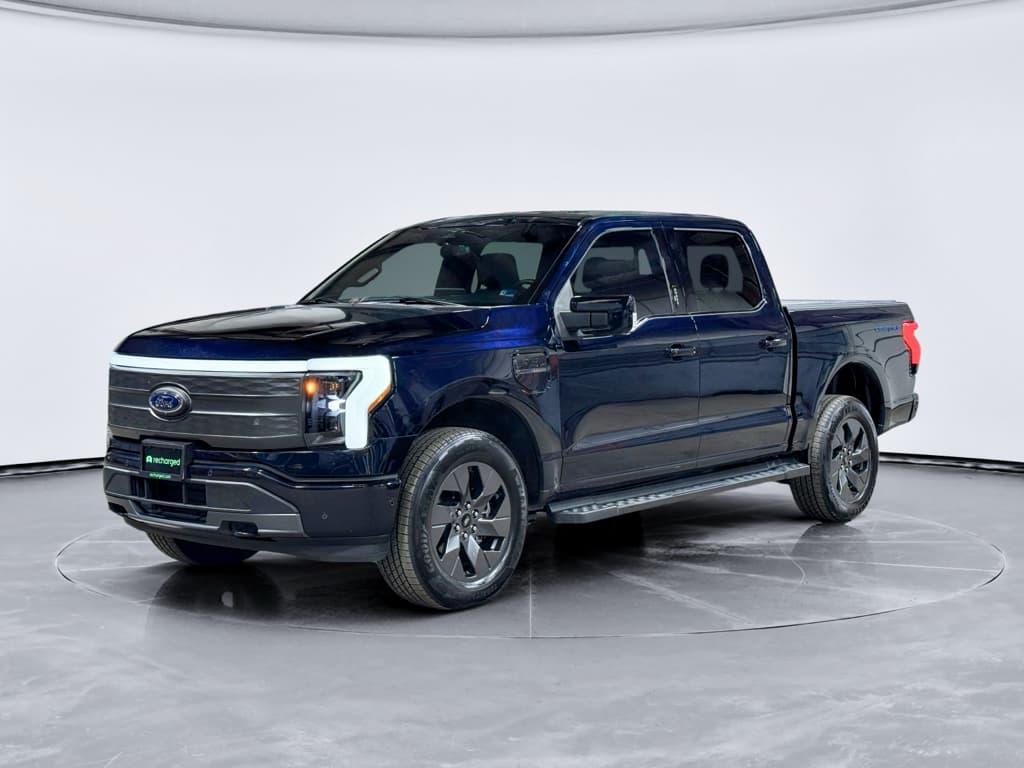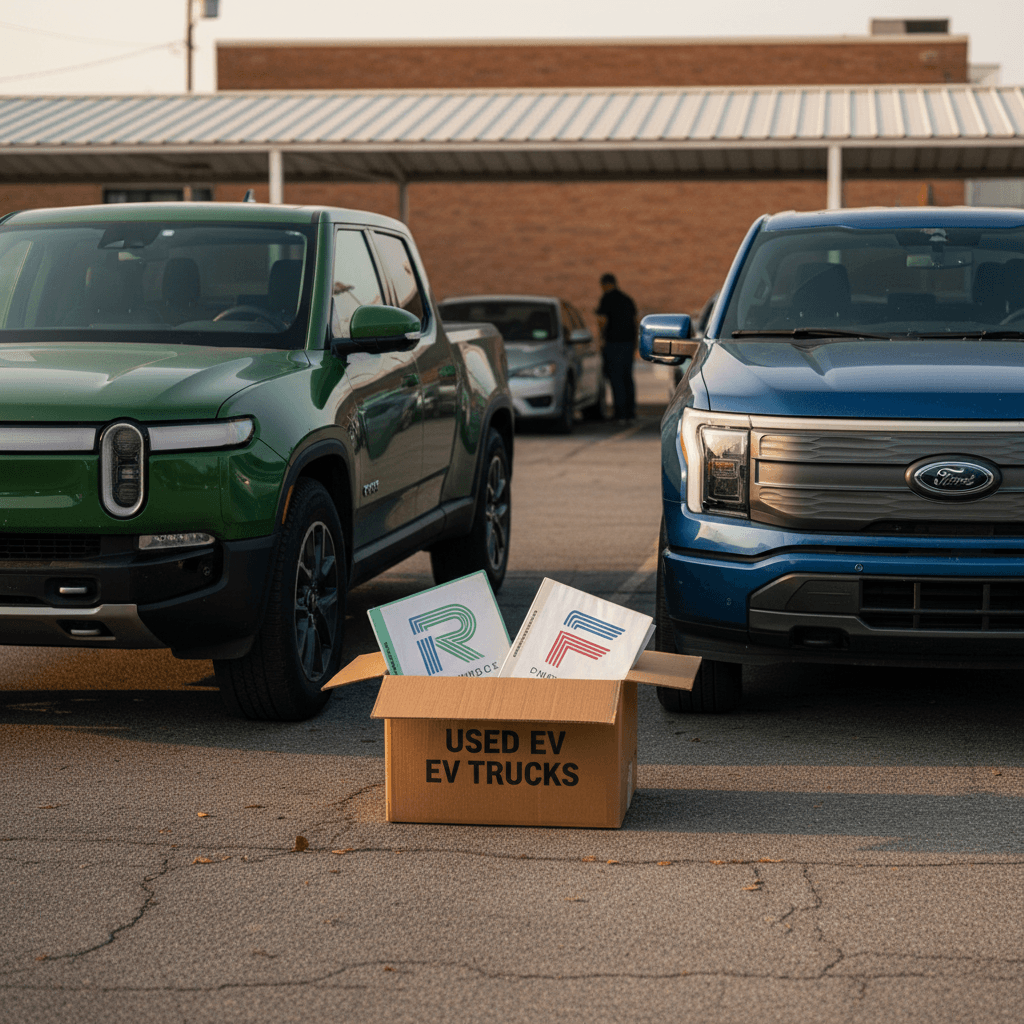
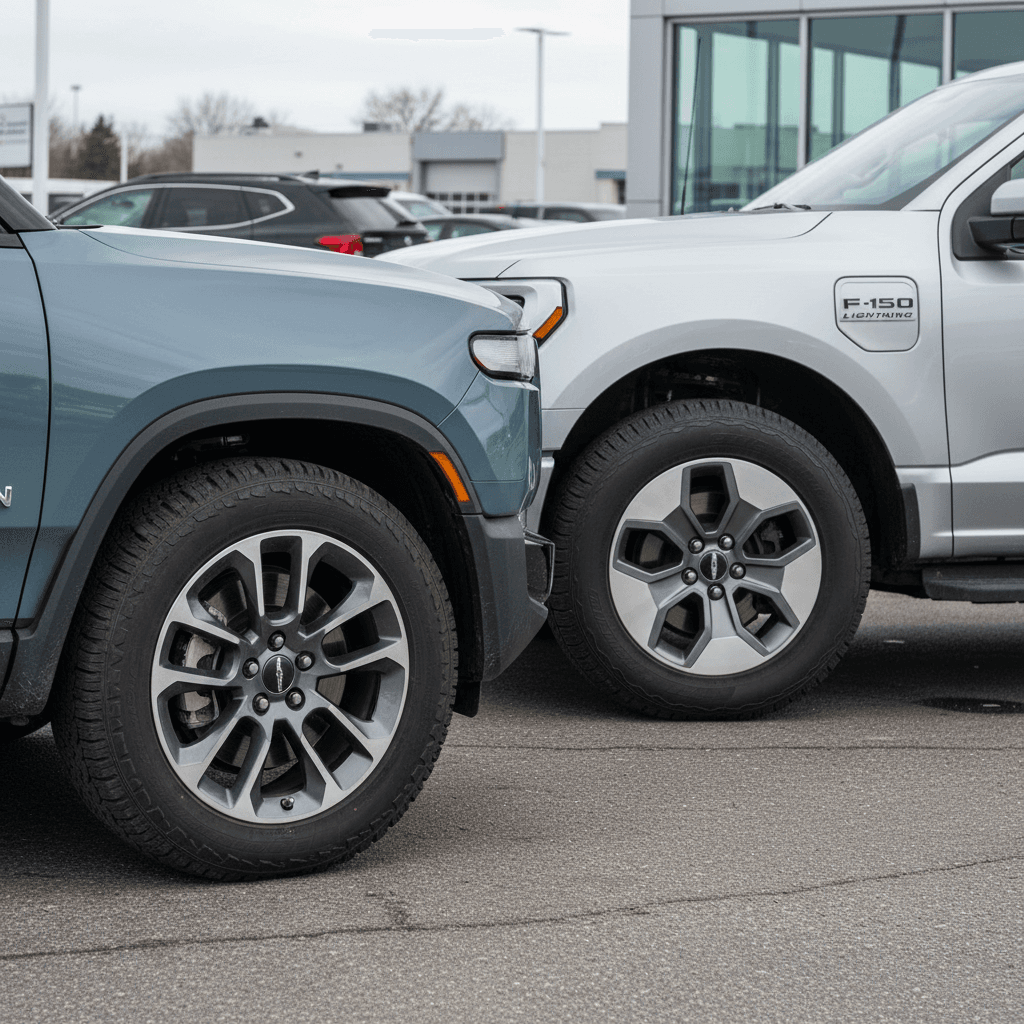
If you’re shopping for a used electric pickup, it usually comes down to a **Rivian R1T vs Ford F-150 Lightning used**. Both trucks tow hard, sprint like sports cars, and undercut brand-new EV truck prices, but they don’t behave the same once miles and years stack up. This guide walks you through how they compare on price, depreciation, range, towing, charging, reliability, and day‑to‑day ownership so you can pick the truck that actually fits your life.
Context: The Lightning is ending, the R1T isn’t
Why compare Rivian R1T vs F-150 Lightning on the used market?
New electric pickups are still expensive and often hard to find in the exact configuration you want. The used market is where deals start to appear, especially as early adopters trade out of 2022–2024 trucks. The **Rivian R1T** targets adventure and off‑road buyers, while the **F-150 Lightning** leans into work‑truck familiarity and Ford’s huge dealer network. On the used side, you’re balancing three questions:
- How much capability (towing, payload, off‑road) do you really need?
- How important is dealership coverage vs over‑the‑air support from a newer EV startup?
- Do you want the more future‑facing, adventure‑oriented R1T, or a familiar F-150 that happens to be electric?
How Recharged can help
Quick specs: used Rivian R1T vs Ford F-150 Lightning
Core specs snapshot (typical used configurations)
These are common configurations you’ll see in today’s used market, not every possible build.
| Spec | Rivian R1T (Dual / Quad Motor) | Ford F-150 Lightning (SR / ER) |
|---|---|---|
| Model years commonly on used market | 2022–2024 | 2022–2024 (current generation ends after this run) |
| Max towing capacity | Up to 11,000 lbs | Up to 10,000 lbs with Extended Range + Max Trailer Tow |
| Typical payload rating | Around 1,760 lbs | Roughly 1,800–2,200+ lbs depending on trim/battery |
| Battery options | Multiple packs; roughly mid‑200s to 350+ miles EPA depending on year/pack | Standard‑Range (about 230 miles); Extended‑Range (~300–320 miles, trim‑dependent) |
| Drive layout | Standard dual‑motor; early trucks offered quad‑motor with individual wheel drive | Dual‑motor, all‑wheel drive |
| Off‑road hardware | Available air suspension, adjustable ride height, strong off‑road modes | Conventional pickup suspension, off‑pavement capable but not built as an off‑roader |
| Pro Power / vehicle power | AC outlets, gear‑focused utility; not as extreme as Lightning’s "generator" role | Extensive Pro Power Onboard system, can power tools, home backup in some setups |
| Charging peak (DC fast) | Roughly 200+ kW peak depending on pack and year | Around 150 kW peak on most trims |
Always verify exact specs (battery, motors, tow package) on the specific VIN you’re considering.
Headline numbers that matter on the used market
Used pricing & depreciation trends
By 2026, depreciation has finally caught up to first‑wave electric pickups. Original prices well into the $70,000s and $80,000s mean there’s real money on the table if you buy smart on the used side.
What we’re seeing for used Rivian R1T
- Early 2022–2023 Adventure and Launch Edition trucks commonly listed tens of thousands below original MSRPs, which often hovered in the mid‑$70,000s or higher when new.
- Recent retail listings and auction data show some well‑optioned 2022–2023 R1T trucks in the low‑to‑mid $50,000s, especially with 40,000–60,000 miles.
- Lower‑mile dual‑motor trucks and Max Pack configurations can still command more, but the days of near‑MSRP used pricing are gone.
What we’re seeing for used F-150 Lightning
- New‑truck price cuts and production shifts pressured used values. It isn’t unusual to see 2022–2023 XLT and Lariat trucks well below original stickers.
- Shoppers tracking dealer lots and online marketplaces often report mid‑$40,000s to mid‑$50,000s asking prices for nicely equipped trucks, depending on miles, battery, and Max Trailer Tow.
- Work‑oriented Pro trims can dip lower, while top‑spec Platinum trucks still ask a premium but have come down sharply versus MSRP.
Don’t compare to MSRP, compare to today’s fair value
On balance, both trucks have seen meaningful price corrections. Rivian’s boutique status and off‑road cred help support prices, while Ford’s dealer discounts and the announcement that this generation is ending put extra pressure on Lightning values. That’s good news if you’re buying a used Lightning, less so if you’re selling one.
Range, battery options & real-world battery health
On paper, the **Rivian R1T and Ford F-150 Lightning** can both crest 300 miles of range, but real‑world numbers, especially on used trucks, depend heavily on battery size, wheels, driving style, climate, and how much you tow or haul.
Range and battery: how they really compare used
What you should expect when you’re looking at trucks that already have a few winters and road trips behind them.
Rivian R1T battery & range
- Multiple packs over the years, with many used trucks in the mid‑200s to 300+ miles EPA range depending on configuration.
- Quad‑motor trucks with big wheels and aggressive tires can see significantly less, especially at highway speeds.
- Owners commonly report relatively modest degradation so far, but the platform is still young; pack management and software help, but usage history matters.
F-150 Lightning battery & range
- Two main battery choices: Standard‑Range (around 230 miles EPA) and Extended‑Range (roughly 300–320 miles EPA depending on trim).
- Heavier Extended‑Range pack reduces payload but is the better pick if you tow or road‑trip.
- Like most EV pickups, Lightning owners see range fall sharply when towing, often to half or less of the displayed estimate on long highway pulls.
Towing shreds range in both trucks
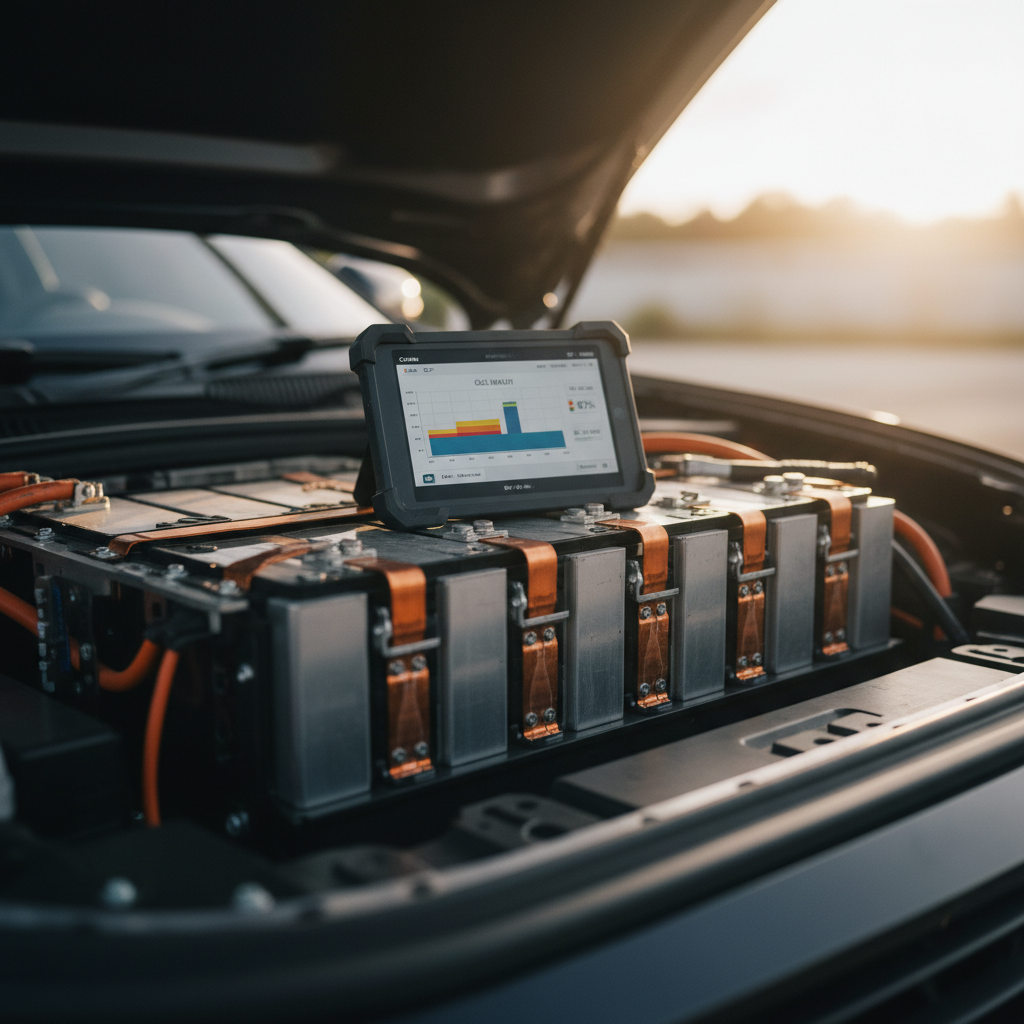
For a used purchase, **battery health** is the wildcard you can’t see from a spec sheet. That’s where objective testing matters. A truck that shows 95%+ of original usable capacity will be much easier to live with in five years than one that’s already down 10–15% from new.
How Recharged measures battery health
Ready to find your next EV?
Browse VehiclesTowing, hauling & real truck utility
If you’re buying a truck, the conversation has to include towing, payload, and bed utility. Both the Rivian R1T and F-150 Lightning can pull serious weight, but they do it with different personalities.
Towing & payload comparison (headline numbers)
Headline figures are for properly equipped trucks; real‑world capability depends on specific trim, battery, hitch, and load.
| Capability | Rivian R1T | Ford F-150 Lightning |
|---|---|---|
| Max conventional towing | Up to 11,000 lbs | Up to 10,000 lbs (Extended‑Range + Max Trailer Tow) |
| Typical payload | Around 1,760 lbs in many configs | Often around 1,800–2,200+ lbs depending on trim/battery |
| Bed length | Shorter bed, adventure focus | Traditional F‑150 bed sizing; more work‑truck friendly |
| Off‑road focus | Air suspension, big approach/departure angles, off‑road modes | More traditional pickup setup; competent but not a rock‑crawler |
| Onboard power | AC outlets, gear tunnel creativity | Pro Power Onboard can run tools or, in some setups, even back up a home |
Always confirm tow and payload ratings on the door jamb label and in the owner’s manual for the exact truck you’re buying.
Adventure toy vs work truck
In real towing tests, reviewers have found the Lightning’s range drops quickly with big trailers, and the same is true of the R1T. The difference is how the rest of the truck fits your use case: the R1T’s shorter bed and gear tunnel are great for bikes and camping gear, while the Lightning’s bed and familiar F‑Series ergonomics suit contractors and anyone already in Ford’s ecosystem.
Daily driving, comfort & tech experience
Living with a used Rivian R1T
- Interior feels like a modern premium SUV: clean design, big central screen, and lots of software‑driven features.
- Air suspension smooths out rough roads and lets you adjust ride height for highway vs off‑road use.
- Over‑the‑air updates are frequent; Rivian has pushed performance, range, and feature improvements since launch.
- Cabin and interface may feel more "tech startup" than traditional truck, great if you like that, less so if you prefer physical buttons and knobs.
Living with a used F-150 Lightning
- Inside, it’s very much an F‑150: big, comfortable, and familiar, with a huge touchscreen on many trims but still plenty of physical controls.
- Ride is smooth and quiet, especially compared to gas F‑150s, but it feels like a full‑size truck, tall, wide, and substantial.
- Ford’s software and over‑the‑air story is improving, but historically updates have been less aggressive than Rivian’s.
- If you’re coming from any recent F‑Series, the learning curve is short: your muscle memory still works.
Test how you park and commute
Charging, road trips & public network experience
Charging is where ownership reality sets in. Both trucks work well if you can charge at home regularly. For road trips and heavy towing, the story is more nuanced.
Charging experience: Rivian vs Ford
Home charging is similar; public fast charging feels different depending on the network and software.
Home charging
- Both trucks are happiest with a 240V Level 2 charger at home. Expect overnight full charges in most scenarios.
- Either truck can use portable or hard‑wired Level 2 equipment; check your panel capacity and plan for dedicated circuits.
- Recharged can help you understand home‑charging requirements and recommend hardware if you’re moving from gas to your first EV truck.
Public fast charging & road trips
- Rivian drivers often lean on large DC fast‑charging networks and, in more recent builds, growing access to NACS (Tesla) infrastructure via adapters or native ports.
- Lightning owners tap the same public networks, and Ford has been rolling out access to NACS as well, though availability and adapter support vary by model year.
- On both trucks, **plan trips more carefully when towing**: you’ll stop more often and need sites with easy trailer access.
Check NACS / adapter support by model year
Reliability, warranty coverage & long-term risk
Every used EV truck buyer wrestles with the same question: **what happens when something big breaks out of warranty?** With the R1T and F-150 Lightning, you’re balancing different risks.
Rivian R1T reliability picture
- Still a relatively new platform with limited long‑term data; early owners have reported a mix of software bugs and some hardware issues that Rivian has been iterating on.
- Service center coverage is growing but remains thinner than legacy brands, which can mean longer drives or mobile service in some regions.
- On the plus side, over‑the‑air fixes can resolve many software‑driven complaints without a shop visit.
F-150 Lightning reliability picture
- Built on Ford’s truck expertise but with an all‑new electric powertrain; some owners have raised concerns about early‑production quirks and Ford’s repair costs.
- Huge dealer network is a major advantage, almost anywhere in the U.S., there’s a Ford store that can at least start the diagnosis.
- Because Ford is ending this fully electric generation, long‑term parts and support will depend on how many trucks remain on the road and how Ford treats this first wave over time.
Don’t ignore the high-voltage warranty window
If you’re especially risk‑averse, a used Lightning from a Ford dealer or a used R1T backed by strong documentation and health reports will feel safer than a cheap, high‑mile example with gaps in its history. Either way, budget for extended coverage where available, and scrutinize service records closely.
Which used EV truck fits you best?
Who should pick a Rivian R1T vs a Ford F-150 Lightning?
Match the truck to your lifestyle, not just the spec sheet.
Choose a used Rivian R1T if…
- You want an adventure‑oriented truck for camping, overlanding, and outdoor toys.
- Off‑road capability, adjustable suspension, and a more compact footprint matter more than bed length.
- You value a modern, software‑forward interior and frequent over‑the‑air improvements.
- You live reasonably close to a Rivian service center or are comfortable with mobile service support.
Choose a used F-150 Lightning if…
- You want a familiar full‑size work truck experience with electric torque and quiet operation.
- Bed length, payload, and Ford’s Pro Power systems are central to how you work.
- You like the idea of walking into a large dealer network for service and parts.
- You’re value‑focused and want to capitalize on recent price drops and Ford’s transition away from this generation.
Bottom line: there’s no single winner
Checklist for buying a used Rivian R1T or F-150 Lightning
Essential checks before you sign on a used R1T or Lightning
1. Verify battery health and remaining warranty
Ask for a recent battery health report and confirm how many years and miles of high‑voltage warranty remain. With Recharged, this is baked into your Recharged Score so you’re not guessing.
2. Confirm towing and payload ratings on the actual truck
Check the door jamb sticker, owner’s manual, and build sheet. Verify battery size, Max Trailer Tow (Lightning), hitch rating, and any aftermarket changes that might affect ratings.
3. Inspect tires, wheels and suspension setup
On R1T trucks, big off‑road tires and lift settings can hurt range; on Lightnings, heavy aftermarket wheels or tires affect efficiency too. Factor replacement cost into the deal.
4. Check software level, recalls and update history
Make sure the truck is up to date on recalls and has current software. Ask the seller for proof of completed campaigns, both Rivian and Ford have issued important updates since launch.
5. Test DC fast charging and home charging behavior
If possible, plug into a fast charger and a Level 2 charger to confirm normal charging speeds and that there are no fault messages. Charging behavior is often the first sign of deeper issues.
6. Evaluate your local service and charging ecosystem
Map out nearby service centers or dealers, plus the fast‑charging networks you’ll rely on. A great truck on paper can still be a headache if it’s hard to service or charge where you live.
Frequently asked questions: used R1T vs F-150 Lightning
Used Rivian R1T vs Ford F-150 Lightning: FAQs
The used EV truck market is finally maturing, and that’s good news if you’ve been eyeing a **Rivian R1T vs Ford F-150 Lightning used**. The R1T leans toward adventure and off‑road enthusiasts who want cutting‑edge software and design. The Lightning caters to value‑minded buyers and long‑time truck owners who want an electric workhorse with a big‑box dealer footprint. If you want help comparing real trucks, not just spec sheets, Recharged can pair you with EV‑specialist advisors, verified battery health data, and transparent pricing so you can confidently pick the electric pickup that fits your life for the long haul.