If you’re comparing the Tesla Cybertruck vs Chevy Silverado EV, you’re not just choosing between two electric pickups, you’re picking between two very different philosophies of what a truck should be. One is a stainless‑steel wedge built around software and Supercharging. The other is an Ultium‑based workhorse that looks and feels like a familiar full‑size Chevy, just electrified.
Context: Both Are Still Rolling Out
Overview: Cybertruck vs Silverado EV in 2025
At a high level, here’s how the matchup looks today in the U.S. market:
How These Electric Pickups Position Themselves
Same mission, very different personalities
Tesla Cybertruck
Role: Tech-forward lifestyle truck with serious performance.
- Single body style, stainless exoskeleton, air suspension
- All-wheel drive standard, up to 4.1s 0–60 mph
- 325 miles estimated range for the AWD model
- 11,000 lbs max towing, 2,500 lbs payload
- Tight integration with Tesla’s Supercharger network
Chevy Silverado EV
Role: Full‑size work and family truck, electrified.
- Multiple trims (WT, LT, RST; Trail Boss coming) and battery options
- Up to 492 miles EPA‑estimated range on some WT Max Range models
- Up to 12,500 lbs towing, ~1,800–2,100 lbs payload depending on trim
- Traditional truck feel with a midgate and big bed
- Runs on GM’s Ultium platform and DC fast‑charges up to ~350 kW
How to Read This Comparison
Quick Specs: Cybertruck vs Silverado EV
Headline Specs: Tesla Cybertruck vs Chevy Silverado EV
Core specs for mainstream trims most buyers will cross‑shop.
| Spec | Tesla Cybertruck (AWD) | Chevy Silverado EV LT (Extended Range) | Chevy Silverado EV WT / RST Max Range |
|---|---|---|---|
| Estimated range | ~325 miles | 408 miles EPA‑estimated | Up to 492 miles EPA‑estimated (WT Max) / ~460 miles GM‑estimated (RST Max) |
| Max towing | 11,000 lbs | 12,500 lbs | 12,500 lbs |
| Payload | 2,500 lbs | ~1,800 lbs (LT) | Up to ~2,100 lbs (some Max Range trims) |
| Battery size (approx.) | Not disclosed; mid‑size pack plus large pack optional later | ~170 kWh pack reported in testing | Up to ~205 kWh Max Range pack |
| DC fast‑charge peak | 325 kW on Tesla Supercharger network | Up to ~300–350 kW on CCS/NACS DC fast chargers | Up to 350 kW |
| Starting MSRP (early 2025 reality) | Typically well above original headline prices; varies by configuration and fees | ~$75,000 for LT Extended Range before incentives | WT from high‑$50Ks with smaller pack; RST and Max packs push toward or past $90K |
Numbers are manufacturer or EPA estimates where available and can vary by configuration. Always check the exact trim you’re considering.
Spec Sheet Trap
Range, Battery, and Efficiency
On paper, the Silverado EV is the undisputed range king. Work Truck Max Range models claim up to 492 miles EPA‑estimated, while retail LT and RST trims post numbers in the high 300s to low 400s depending on wheels and options. By contrast, the mainstream all‑wheel‑drive Cybertruck is listed at around 325 miles of estimated range.
Range and Battery Highlights
Where things get nuanced is real‑world efficiency. Early testing has shown the Silverado EV LT’s big battery delivering less range on the highway than its EPA rating would suggest, because it’s nearly 8,500 lbs and shaped like a conventional brick‑shaped full‑size truck. The Cybertruck, while also hefty, benefits from a more aerodynamic shape and a smaller footprint, which can narrow the real‑world gap versus some Silverado EV trims even if the rated ranges look lopsided on paper.
What About the Cybertruck Range Extender?
When Silverado EV’s Range Wins
- You routinely drive 250–350 miles in a day before you can recharge.
- Your work involves long rural routes with few DC fast chargers.
- You prefer to stop less often, even if charging sessions are longer.
When Cybertruck’s Efficiency Helps
- You mostly do suburban commuting with occasional road trips.
- You care more about energy used per mile than absolute max range.
- You value smaller physical size for parking and city use.
Towing, Payload, and Real Utility
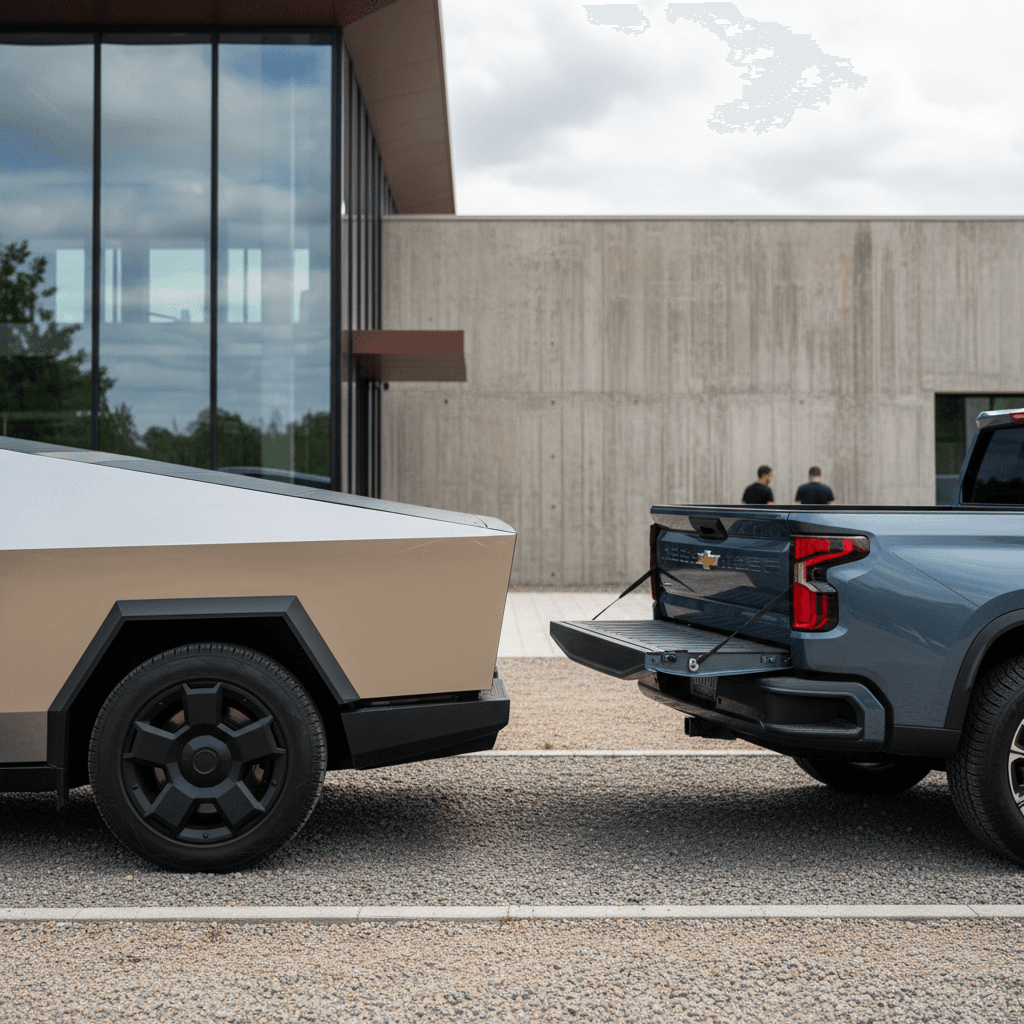
Both trucks are fully capable of doing “truck things,” but they prioritize different aspects of utility. The Cybertruck leans into payload and clever storage, while the Silverado EV doubles down on heavy towing and flexibility in bed length via its midgate.
Utility Comparison: Cybertruck vs Silverado EV
Cybertruck bed and storage
Cybertruck offers a 6‑foot vault‑style bed with a powered tonneau cover, under‑bed storage, and a front trunk. It’s great for locking gear away and keeping the aero profile clean, but the wedge shape can limit tall cargo compared to a traditional open bed.
Silverado EV bed and midgate
Silverado EV uses a more conventional bed, but adds an available midgate that opens the cab to the bed, letting you carry items over 9 feet long with the tailgate closed. If you regularly haul lumber, kayaks, or work materials, this flexibility is huge.
Towing behavior
On paper, the Silverado EV edges out the Cybertruck on maximum towing capacity. In practice, both will see steep range penalties at highway speeds with big trailers. Your ability to fast‑charge on your towing routes matters more than which truck claims an extra 1,000–1,500 lbs on the spec sheet.
Payload and GVWR
Cybertruck’s high payload rating is great if you haul tools, landscaping materials, or bed‑mounted campers. Silverado EV’s lower payload in some trims is more typical for half‑ton trucks, but still easily enough for most family and light commercial uses.
Heavy EV Truck + Big Trailer = Range Hit
Charging, Road Trips, and Networks
Charging is where the Tesla Cybertruck has the cleanest story today: it lives inside the Supercharger ecosystem from day one. The Silverado EV relies on CCS for now but is part of the broader industry shift toward the NACS connector and access to Tesla’s network over time.
Charging Experience: Day to Day and On the Road
Home charging equals convenience; fast charging defines road trips.
Home & Workplace Charging
- Cybertruck: Pairs naturally with Tesla Wall Connector, easy app integration, scheduled charging, and energy tracking.
- Silverado EV: Works with any Level 2 charger that supports CCS/NACS. Many owners opt for 40–80A home units to keep big Ultium packs topped up.
- Reality: If you can charge at home overnight, both trucks are vastly easier to live with, no matter the battery size.
DC Fast Charging & Networks
- Tesla Cybertruck: Uses Tesla’s Supercharger network with up to 325 kW peak charging and simple, app‑or plug‑and‑charge‑based billing.
- Silverado EV: Supports up to ~300–350 kW on compatible DC fast chargers and will increasingly have access to Tesla’s network as GM adopts NACS and opens roaming deals.
- Planning: For cross‑country towing or remote routes, the Cybertruck’s head start on charging infrastructure is a real advantage today.
Think in Time, Not Just kW
Driving Experience, Comfort, and Tech
Here the trucks really diverge. Cybertruck feels like a Tesla product first and a truck second, minimalist cabin, giant center screen, heavy reliance on software updates, and a unique suspension and steering feel. Silverado EV feels like a modern GM truck, just one that happens to be electric and extremely heavy.
Cybertruck Interior & Tech
- Futuristic cabin with large front and rear touchscreens and minimalist controls.
- Deep integration with the Tesla app, energy tracking, over‑the‑air updates, and Autopilot/FSD options.
- Air suspension and four‑wheel steering give it surprising agility for its size, especially in tight parking lots.
- Some drivers love the stark design, others find it cold or impractical compared to a traditional truck interior.
Silverado EV Interior & Tech
- Looks and feels like a contemporary Chevy truck with a big center screen and digital cluster.
- Available Super Cruise allows hands‑free highway driving, even while towing on some trims.
- Certain trims have dropped Apple CarPlay/Android Auto in favor of GM’s own software ecosystem and subscription‑based services, which some shoppers see as a negative.
- The sheer weight can make the truck feel substantial but also less agile and more energy‑hungry.
Phone Projection vs Subscriptions
Pricing, Trims, and Incentives
Headline launch prices for both trucks generated buzz, but the reality in early 2025 is more complex. Real‑world transaction prices depend on battery size, trim level, dealer markups or discounts, and federal and state incentives that change over time.
Price Landscape: Cybertruck vs Silverado EV
Approximate pricing snapshots for key trims as of early 2025. Always verify current offers and incentives.
| Truck | Trim / Pack | Approx. Starting MSRP* | Key Notes |
|---|---|---|---|
| Cybertruck | AWD | High‑$70Ks+ typical once configured | Tesla pricing and availability have been volatile; expect meaningful dealer‑equivalent fees and destination charges. |
| Cybertruck | Higher‑performance trims | Well into six figures when fully optioned | Prioritizes performance and tech over value per mile. |
| Silverado EV | WT Standard/Extended | Mid‑ to high‑$50Ks and up depending on battery | Primarily aimed at fleets; top Max Range trucks get pricey but offer class‑leading range. |
| Silverado EV | LT Extended Range | ~$75K before incentives | Likely eligible for full federal tax credit for many buyers, bringing effective cost down. |
| Silverado EV | RST / Trail Boss Max Range | $90K+ | High‑power, high‑range trims with serious capability and serious price tags. |
Federal and state EV tax credits can significantly change your effective price; eligibility depends on income, vehicle MSRP caps, and final assembly rules.
Leaning on Incentives and Financing
Ready to find your next EV?
Browse VehiclesOwnership Costs and the Emerging Used EV Truck Market
With vehicles this expensive, total cost of ownership matters just as much as the window sticker. Both trucks promise lower fuel and brake costs than their gasoline peers, but insurance, tires, and depreciation can easily eat into those savings, especially on early, high‑MSRP builds.
- Energy costs: Even with big, inefficient packs, charging at home is usually cheaper per mile than fueling a comparable gas truck, especially in regions with off‑peak or EV‑specific rates.
- Maintenance: No oil changes and fewer moving parts, but you’re still on the hook for pricey truck‑sized tires and suspension components.
- Insurance: Unusual construction (Cybertruck’s stainless body) and very high MSRPs can push premiums up; shop around before you commit.
- Depreciation: Early adopters often take the biggest hit. As more Cybertrucks and Silverado EVs enter the market, used prices will tell you how each brand holds value.
Consider a Used EV Instead of Waiting
Which Electric Truck Fits Your Life?
There’s no universal winner in the Tesla Cybertruck vs Chevy Silverado EV debate. There is, however, a clear winner for your use case once you’re honest about how you’ll actually use a truck 90% of the time.
Who Should Buy Which Electric Truck?
Match the truck to your real life, not your social media feed.
Cybertruck is Best If…
- You want something visually and culturally different from every other truck in the parking lot.
- You value tight integration with Tesla’s app, Supercharger network, and software features.
- Your typical day is commuting, light hauling, and weekend adventures, not constant long‑distance heavy towing.
- You have reliable home charging and can live inside Tesla’s ecosystem without CarPlay or Android Auto.
Silverado EV is Best If…
- You’re coming from a traditional full‑size truck and want something that feels familiar.
- You routinely tow or haul for work and want the highest available range and towing specs.
- You’ll use the midgate, long bed configurations, and traditional box shape for real cargo.
- You prefer to work with a Chevy dealer network for service and fleet support.
You’re On the Fence If…
- You split usage between family duty, commuting, and occasional big towing jobs.
- You care about range and charging, but also cabin comfort and traditional ergonomics.
- You’re open to waiting 12–24 months to see how pricing, incentives, and NACS access shake out.
- In that case, consider a more affordable used EV now, then move into an EV truck once the dust settles.
Shopping Checklist for Future EV Truck Buyers
10 Things to Decide Before You Order an Electric Truck
1. How often you tow, and how far
Write down how many days a year you’re actually towing more than 5,000 lbs and how far you drive on those days. If that number is small, optimize the truck for your daily life, not the once‑a‑year boat trip.
2. Where you’ll charge most of the time
If you can install Level 2 charging at home, ownership gets dramatically easier. If you rely on public DC fast charging, lean toward the truck with the strongest network in the places you travel.
3. Garage and parking constraints
Measure your garage height, length, and width. Both of these are big trucks; the Silverado EV in particular has a long wheelbase and feels huge in tight spaces.
4. Bed and cargo needs
Do you really use an open bed for tall loads, or would a secure vault‑style bed like the Cybertruck’s be more useful? Will you actually take advantage of the Silverado EV’s midgate for extra‑long cargo?
5. Tech ecosystem comfort
Are you okay living fully in Tesla’s interface? Are you comfortable with GM’s shift away from CarPlay and Android Auto in some trims? Your truck’s software will matter just as much as its hardware over time.
6. Budget vs capability
Decide if you truly need Max Range or performance packs, or if a mid‑spec trim with solid range and lower price will do. Overspec’ing batteries is the quickest path to a truck that’s great on paper but painful on monthly payments.
7. Incentive eligibility
Check your tax situation and the latest federal and state EV incentives. Silverado EV trims may qualify where certain Cybertruck configurations don’t, or vice versa, and that can swing the value equation by thousands of dollars.
8. Service and repair expectations
Tesla service centers and Chevy dealers operate very differently. Consider which model fits your expectations for communication, loaners, body work, and parts availability, especially for early‑production vehicles.
9. Resale and depreciation risk
First‑generation EV trucks are exciting but can be volatile in resale value. If you’re risk‑averse, a slightly used EV from a brand with more history in the space can be a smarter move.
10. Your timeline
If you don’t need a new truck this year, you have the luxury of waiting to see how Cybertruck and Silverado EV shake out in the real world. In the meantime, a used EV from a marketplace like Recharged can cover your daily driving at a far lower cost.
FAQ: Tesla Cybertruck vs Chevy Silverado EV
Frequently Asked Questions
Tesla Cybertruck and Chevy Silverado EV prove that “electric truck” is no longer a single idea. One is a radical rethinking of the pickup as a tech product; the other is a conventional truck re‑engineered around massive batteries and electric torque. If you start from your own use case, how far you drive, what you tow, where you charge, and how much risk you’re willing to take on a first‑generation product, the right answer tends to emerge. And if you decide that now isn’t the moment to bet big on an $80,000–plus electric truck, the fast‑growing used EV market gives you plenty of ways to go electric today, with more data and less drama.