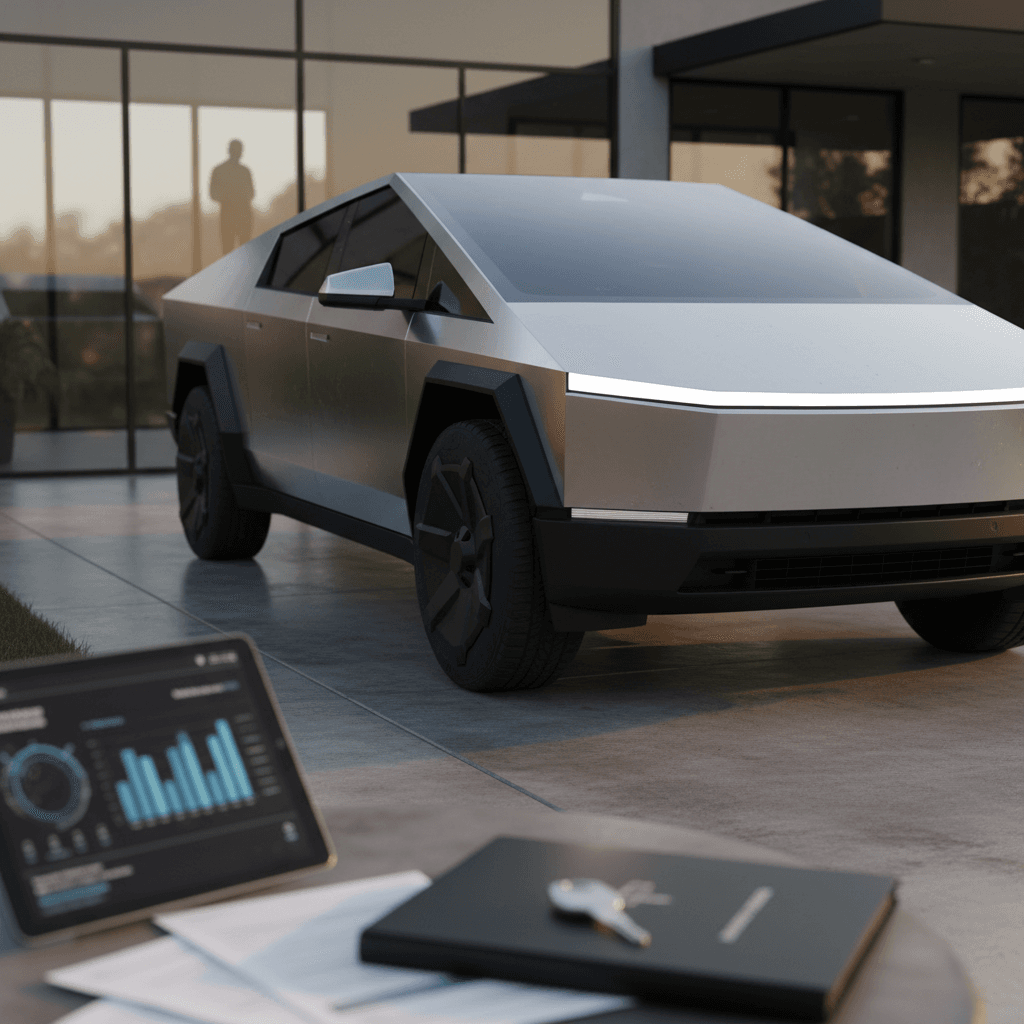
If you’ve looked at early quotes, you already know Tesla Cybertruck insurance cost isn’t cheap. Between the stainless-steel body, cutting-edge tech, and eye-catching performance, insurers see the Cybertruck as a high-value, high-risk electric truck. The good news: with a little planning, and the right vehicle and insurer, you can keep those premiums under control, especially if you’re open to a used Cybertruck.
Quick take
Tesla Cybertruck insurance cost at a glance
How Cybertruck insurance compares
Because the Cybertruck is still new, published data is limited and rates are moving around as insurers collect more claim history. For now, treat any estimate as a starting point and expect more variation than you’d see on a long‑established pickup.
Why is Tesla Cybertruck insurance so expensive?
Insurers price risk. When they look at the Tesla Cybertruck, they see a brand‑new, expensive vehicle with unique construction and limited repair history. That combination typically leads to higher premiums, at least in the first few model years.
The big reasons behind higher Cybertruck premiums
From repair costs to driver behavior, here’s what insurers see when they model risk.
Unproven repair costs
High performance
Packed with tech
Limited data
Urban usage
Safety is strong, but complex
New model penalty
7 key factors that drive Cybertruck insurance cost
Beyond the truck itself, insurers look at a long list of variables about you, your driving, and how you’ll use the Cybertruck. Understanding these inputs helps you see what you can and can’t control.
- 1. Your driving record – Recent at‑fault accidents, DUIs, or moving violations can move Cybertruck premiums from “high” to “ouch.” A clean record over three to five years is one of the strongest money‑savers.
- 2. Where you live and park – Dense urban ZIP codes with higher crash rates and theft claims will cost more than rural or small‑town addresses. Garage parking at home can sometimes earn a small discount.
- 3. Annual mileage and usage – A Cybertruck used for a short daily commute and weekend errands is cheaper to insure than one running 20,000+ miles a year in heavy traffic or commercial use.
- 4. Trim level and options – A Cyberbeast with bigger wheels, performance upgrades, and premium audio usually costs more to fix, and more to insure, than a lower‑spec dual‑motor truck.
- 5. Coverage limits and deductibles – Higher liability limits and low deductibles (like $250) raise your payment. Nudging deductibles to $1,000 or higher can significantly cut collision and comprehensive premiums if you can afford that out‑of‑pocket hit.
- 6. Credit‑based insurance score (where allowed) – In many U.S. states, your credit profile directly affects your rate. Stronger credit usually means lower premiums; weaker credit can add hundreds of dollars a year.
- 7. Safety and telematics programs – Usage‑based programs that track your driving via app or in‑car data can generate meaningful discounts if you drive smoothly, avoid hard braking, and limit late‑night mileage.
Leverage EV‑friendly carriers
Sample Tesla Cybertruck insurance rates by trim and driver profile
Every insurer prices differently, but it helps to anchor your expectations. The table below shows ballpark annual full‑coverage premiums for a Cybertruck compared with a popular gas pickup, assuming a U.S. driver with no major violations. These are illustrative, not quotes, and real numbers will shift by state, insurer, and time.
Illustrative annual full‑coverage premiums
Approximate ranges for a 35‑year‑old driver with a clean record, good credit, and 12,000 miles/year. Actual quotes will vary.
| Vehicle & profile | Estimated annual premium | Notes |
|---|---|---|
| Cybertruck Dual Motor – suburban driver | $2,500 – $3,300 | Higher than typical half‑ton pickup due to repair costs and new‑model risk. |
| Cybertruck Cyberbeast – urban driver | $3,200 – $4,500+ | Performance trim, big wheels, and city traffic can push premiums to the top of the range. |
| Cybertruck Dual Motor – rural driver | $2,200 – $2,900 | Lower traffic density and garages can help, especially in lower‑cost states. |
| Gas F‑150 or Silverado 1500 – similar driver | $1,600 – $2,300 | Well‑understood repair costs and massive claim data usually keep rates lower than Cybertruck. |
Use these figures as directional benchmarks only, not firm offers.
Don’t budget off one quote
Tesla Insurance vs traditional insurers for Cybertruck
Tesla Insurance for Cybertruck
Tesla offers its own insurance product in select U.S. states, and Cybertruck owners are natural candidates. Tesla uses vehicle telemetry (via its Safety Score or similar systems) to help set your rate and adjust pricing over time.
- Pros: Designed specifically for Teslas, often competitive for safe drivers, integrates with the app, claims handled by a company that knows the vehicle.
- Cons: Not available in every state, pricing can be sensitive to short‑term changes in driving behavior, some owners prefer not to share detailed driving data.
Traditional insurers
Large national and regional carriers continue to write Cybertruck policies. Their comfort level, and pricing, varies widely depending on how quickly they’ve adapted to EVs and Tesla repairs.
- Pros: Wide availability, bundling discounts (home/auto), multiple coverage options, and sometimes more forgiving of occasional spirited driving.
- Cons: Some carriers still rate Cybertrucks as highly exotic, leading to steep quotes. Others may have limited experience with Tesla‑certified body shops.
Smart move
How to lower your Cybertruck insurance premium
You can’t change the fact that the Cybertruck is an expensive, high‑tech EV. But you do control how it fits into your risk profile. These strategies often make a visible difference on the quote screen.
Practical ways to cut Cybertruck insurance cost
1. Adjust deductibles thoughtfully
If you have emergency savings, consider raising collision and comprehensive deductibles to $1,000 or even $1,500. That can significantly drop your bill while keeping you protected against large losses.
2. Right‑size your coverage
Don’t under‑insure a six‑figure truck, but don’t over‑buy either. Match liability limits to your assets and risk tolerance, and delete extras you truly don’t need, like duplicate roadside assistance if you already have coverage elsewhere.
3. Bundle policies
Combine your Cybertruck policy with home, renters, or umbrella coverage. Bundles often deliver 10–25% discounts that add up on a high‑value EV.
4. Use telematics or Safety Score
If you’re a smooth, cautious driver, a usage‑based program can directly reward you with lower premiums. Avoid late‑night trips and aggressive acceleration or braking while the insurer is evaluating you.
5. Add experienced drivers, not risky ones
Listing a seasoned, claim‑free driver as primary can help. On the flip side, adding very young or high‑risk drivers to the policy can spike your Cybertruck premium dramatically.
6. Protect where and how you park
Parking in a locked garage, installing cameras in your driveway, and using the Cybertruck’s built‑in security features can all reduce theft risk, some insurers will reflect that in their pricing or underwriting.
7. Keep your record clean for 3–5 years
Over time, a spotless record matters more than almost anything else. Each year without at‑fault accidents or major violations can gradually drag your premium back toward earth.
Think total cost of ownership
Insuring a used Tesla Cybertruck: what changes?
Moving from a new to a used Cybertruck doesn’t just change the sticker price, it can shift your insurance picture, too. In some cases you’ll see relief; in others, not as much as you’d expect.
How a used Cybertruck can affect insurance
Same radical design, different risk profile.
Depreciation can help
Repair cost stays high
Mileage and wear matter
Loan and coverage requirements
Where Recharged fits in
Checklist: Before you insure a Tesla Cybertruck
Before you sign for a Cybertruck, new or used, run through this quick checklist. It can save you from an unpleasant surprise when the first insurance bill hits your inbox.
Pre‑purchase Cybertruck insurance checklist
Confirm Cybertruck availability with multiple insurers
Not every carrier is ready, or willing, to write Cybertruck policies in every state. Get confirmation (and quotes) before you commit to the truck, especially if you’re relying on a specific insurer or bundle.
Get at least three competitive quotes
Include Tesla Insurance if it’s available in your state, plus a couple of mainstream carriers. Use the <strong>same coverage limits and deductibles</strong> so you’re comparing apples to apples.
Model different trims and wheels
Ask your agent or online quote tool how switching from a Cyberbeast to a dual‑motor, or from 20‑inch to larger wheels, affects your rate. Slight spec changes can sometimes save meaningful money.
Decide on your deductible strategy
Set a realistic plan: how much could you comfortably pay out‑of‑pocket in a worst‑case scenario? Align deductibles with that number before you lock in coverage.
Check telematics or Safety Score expectations
If discounts depend on continuous monitoring, understand <strong>what behaviors are tracked</strong>, how often rates are recalculated, and what happens if your driving pattern temporarily changes.
If buying used, review inspection and history
For a used Cybertruck, review any independent inspection or the seller’s condition report. On Recharged, the <strong>Recharged Score</strong> and vehicle history help you spot prior damage that might affect future insurability.
Frequently asked questions about Cybertruck insurance costs
Tesla Cybertruck insurance FAQ
Bottom line: planning for Cybertruck insurance in your budget
The Tesla Cybertruck rewrites a lot of rules, from styling to structure to performance. Insurance companies are still catching up, and that uncertainty is reflected in today’s premiums. Expect higher‑than‑average insurance costs compared with a traditional truck, at least for the first few years of ownership.
If you do the homework up front, shopping multiple insurers, choosing the right trim and deductibles, and driving in a way that earns the best telematics scores, you can keep those costs manageable. And if you’re open to a used Cybertruck or other used EV, pairing a carefully vetted vehicle with transparent battery and history data, like the Recharged Score Report, makes it much easier to judge whether the total package fits your life and your budget.