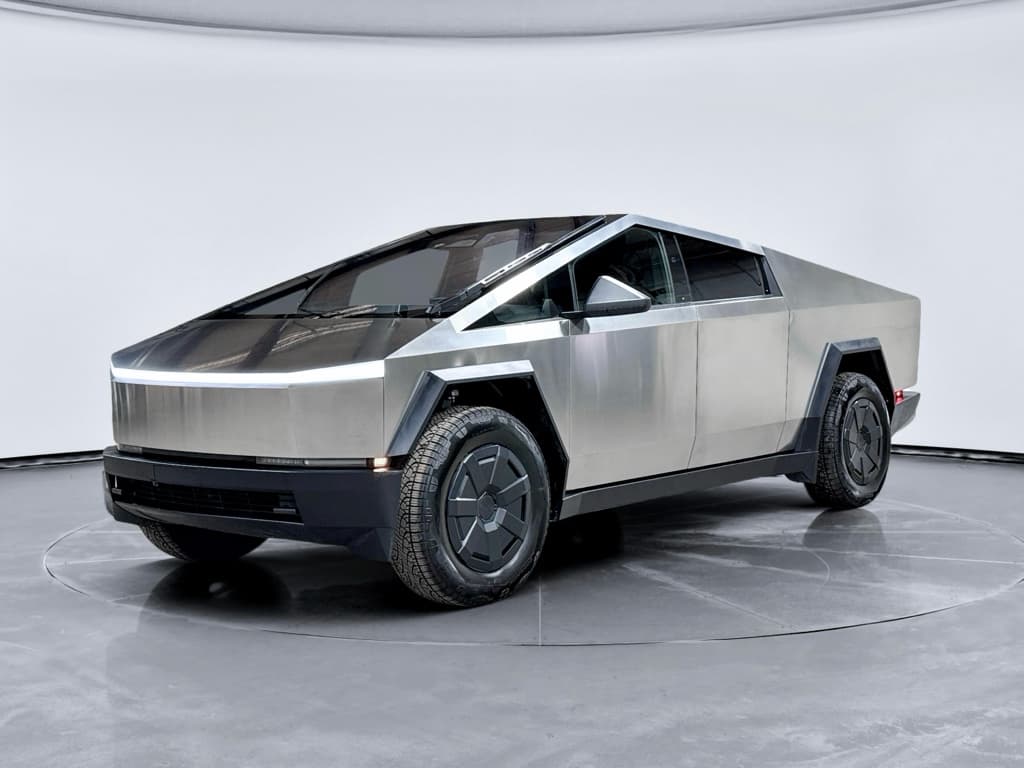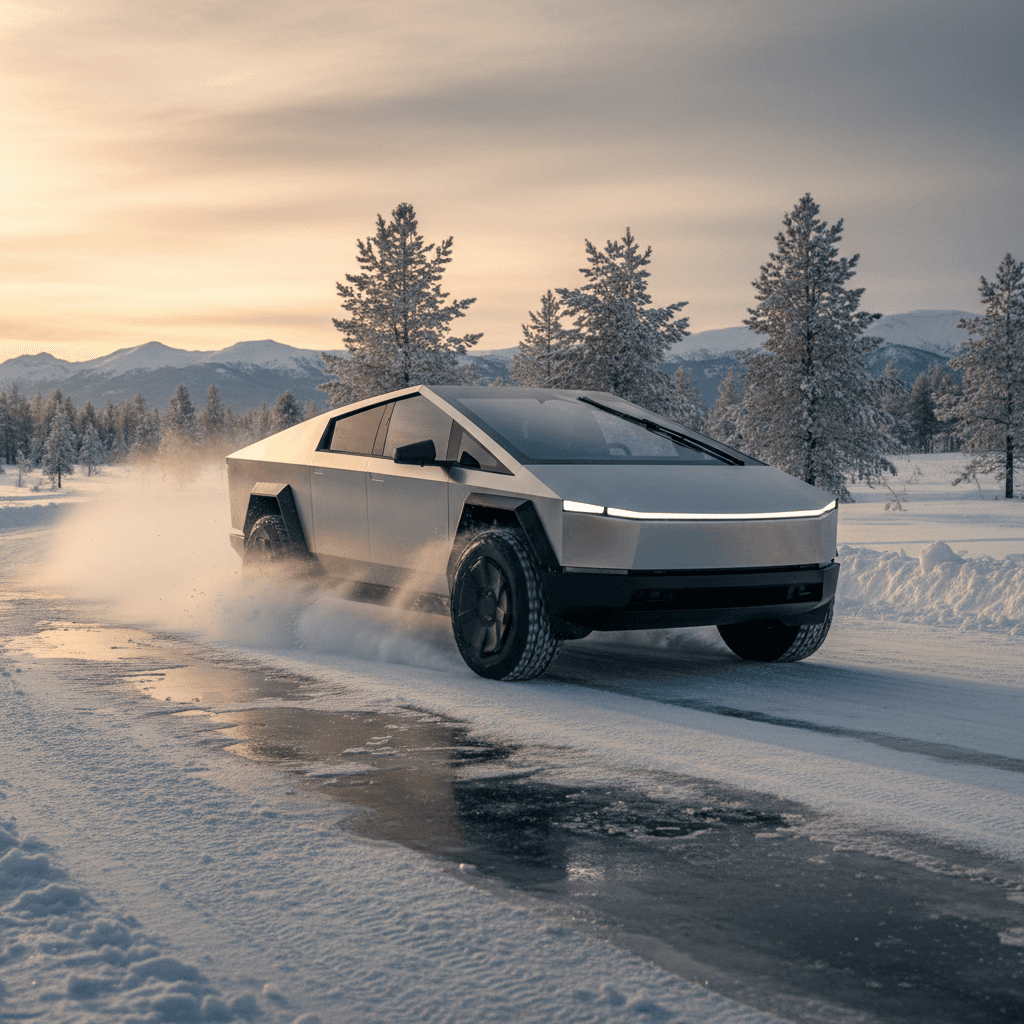
Searches for “Tesla Cybertruck best for snow and ice” have exploded since the truck hit real driveways. Early marketing suggested an apocalypse-proof wedge that could bash through blizzards. The reality in 2025 is more nuanced: Cybertruck can be a very capable winter vehicle in the right conditions and setup, but it’s not a magic cheat code for physics.
Quick Answer
Tesla Cybertruck in Snow and Ice: Big Picture
When you strip away the hype, the Cybertruck is a heavy, high-clearance, dual- or tri-motor EV with sophisticated traction control. On paper, that’s a strong formula for snow. The challenge is that winter driving is about more than getting moving; it’s also about stopping, steering, visibility, and energy use. Here, Cybertruck’s size, weight, aero-obsessed shape, and EV realities cut both ways.
- In deep snow and rutted roads, Cybertruck’s clearance and AWD make it feel like a snow tank.
- On normal packed snow, it behaves like a well-tuned modern AWD truck, assuming good tires.
- On pure ice, it behaves like physics says it must: heavy, momentum-rich, and completely dependent on winter tires and driver judgment.
Winter EV Reality Check
Why the Cybertruck Looks Great on Paper for Snow
Cybertruck Specs That Matter in Winter
From a chassis perspective, the Cybertruck is built more like an off-road toy than a typical street truck. The air suspension gives it up to roughly 16 inches of ground clearance in its highest modes, with approach angles in the mid-30-degree range and departure angles just under 30 degrees. That’s serious off-road geometry for pushing through snowbanks, unplowed driveways, and forest service roads.
Paper Advantages That Translate Well to Snow
Where Cybertruck’s hardware genuinely helps in winter
Instant Torque AWD
Low Center of Gravity
Adjustable Ride Height
Think Beyond “AWD = Winter-Proof”
What Owners Are Actually Seeing in Winter
Early Cybertruck owners who’ve taken their trucks into real snow, from Sierra passes to Midwestern ice, paint a more grounded picture than Tesla’s launch demos. The pattern looks like this:
- On fresh or packed snow, owners report that the truck feels composed and surprisingly easy to drive, especially using the built-in Snow/Slippery settings.
- In slush and mixed conditions, Cybertruck feels similar to other heavy trucks: secure in a straight line, but you need to brake and turn earlier.
- On ice or refrozen slush, the limiting factor is almost always tire compound and tread, not the motors or electronics. With all-season tires, you will slide if you ask too much of it.
“Other than the handling change from the Snow setting I can’t say I noticed that I was driving in slush and snow at all… Ice is a bit rough though, feels like I’m on all-season tires instead of winter tires.”
It’s important to separate two ideas that often get blurred: traction to get going and grip to slow down or change direction. Cybertruck’s motors are fantastic at the first. The second is still firmly dictated by tires, road surface, and weight.
Cybertruck on Snow vs. Cybertruck on Ice
On Snow: Cybertruck’s Comfort Zone
- Deep snow and drifts: High ground clearance and torquey AWD mean you’re much less likely to get high-centered than in a low-slung SUV.
- Rutted, unplowed roads: Steering-by-wire and weight distribution help the truck track straight instead of tramlining badly in ruts.
- Hill starts on snow: Instant torque and traction control make it relatively drama-free if you’re on decent rubber.
On Ice: Same Physics, Bigger Consequences
- Stopping distances: Cybertruck weighs far more than a compact crossover. On ice, that mass means longer stops if you don’t slow down early.
- Cornering: Even with stability control, it will push wide if you carry too much speed into a slick corner.
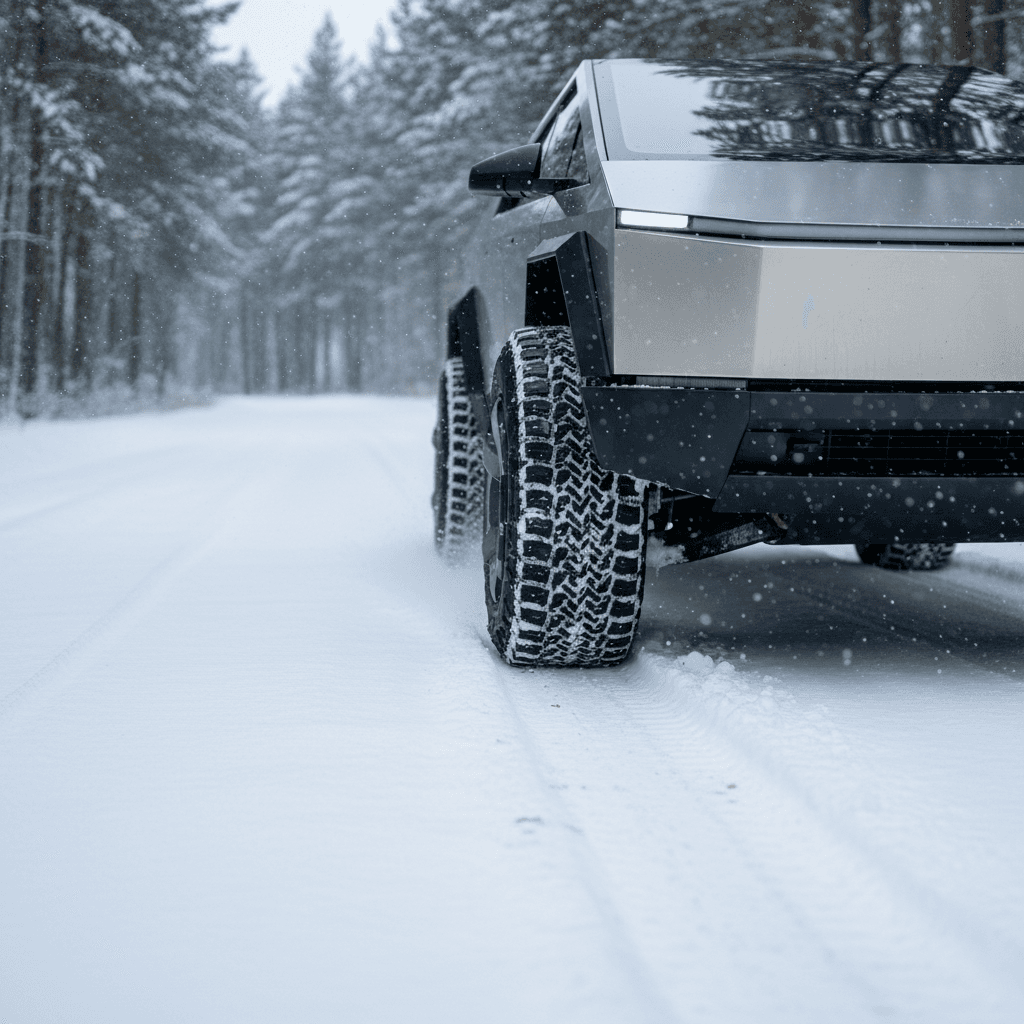
- Tires x Weight: Dedicated winter tires are non‑negotiable if you routinely see glaze ice or packed snow-ice mix.
The Ice Trap
Key Cybertruck Features That Matter in Winter
Winter-Relevant Cybertruck Tech
What actually helps you when temperatures drop
Snow / Off-Road Modes
Air Suspension
Battery & Cabin Preconditioning
Lighting & Visibility
Regenerative Braking Control
Remote Control & Monitoring
Snow Mode vs. Traction Control Off
Where the Cybertruck Struggles in Snow and Ice
Cybertruck’s winter story isn’t all upside. The same hardware that makes it impressive in some scenarios can bite back in others. Before you move it to the top of your snow-vehicle shortlist, you should be clear about its weak spots.
- Weight and momentum: Once this truck is moving on a slick surface, it takes serious distance to stop, even with good tires.
- Headlight and frunk icing: Owners in freezing rain report ice sheets forming on the flat nose, partially blocking headlights and requiring stops to chip it off.
- Door and tonneau icing: Complex flush handles, power tonneau, and seals can freeze, making access to the bed or even the cabin more tedious than on a simple steel truck.
- Range loss in cold: Like every EV, Cybertruck loses a chunk of usable range in deep cold, noticeable given its already large frontal area and all‑terrain tires.
- Charging in storms: Exposed fast-charging sessions in sleet or blowing snow are simply less pleasant in any truck, and Cybertruck’s stainless steel retains cold impressively well.
Design Matters in Freezing Rain
Cybertruck vs. Other Trucks for Winter Driving
Cybertruck vs. Common Winter Truck Choices
How Cybertruck stacks up against a gas 4×4 pickup and a smaller AWD crossover for snow and ice.
| Vehicle | Deep Snow Capability | Ice Braking & Steering | Everyday Winter Usability | Cold-Weather Range/Refueling |
|---|---|---|---|---|
| Tesla Cybertruck (AWD) | Excellent: huge clearance, smart AWD, strong traction. | Good with real winter tires; weight can hurt if you overdrive conditions. | Mixed: great traction, but large footprint, potential for icing on nose and bed systems. | Range drops in cold but DC fast charging is widely available; planning required on rural routes. |
| Gas 4×4 Half-Ton Pickup | Good to Excellent depending on tires and clearance; may drag low-hanging parts. | Good with winter tires; engine braking and low range can help careful drivers. | Strong: simple mechanical systems, easy to de‑ice, but cold starts and fuel costs add up. | Range barely affected by cold; fuel is quick to add but pricier over time. |
| AWD Compact Crossover EV | Fair: ground clearance usually the limiting factor in deep snow. | Very good with winter tires and lighter weight; easier to stop and turn. | Excellent in cities and suburbs: small footprint, warm fast, easy access. | Cold-weather range hit can be significant; smaller pack means more frequent charges on long trips. |
This isn’t about brand loyalty, it’s about matching the right tool to your winter reality.
When Cybertruck Makes Sense as a Winter Rig
- You regularly face deep snow, unplowed roads, or long rural driveways.
- You want a vehicle that can combine work-truck utility with serious snow capability.
- You’re comfortable managing EV range in cold, and have reliable home or workplace charging.
When Another Vehicle May Be Better
- You mostly deal with city ice and light snow where nimble size and short stopping distances matter.
- You have limited access to charging, especially in very cold, rural regions.
- You want a simple, easily repaired beater truck for salt, slush, and tight parking rather than a tech-heavy flagship.
How to Set Up a Cybertruck for Harsh Winters
Cybertruck Winter Setup Checklist
1. Install Real Winter Tires
All-season tires are a compromise. If you routinely see snow or ice, invest in <strong>dedicated winter tires</strong> with the 3PMSF (three-peak mountain snowflake) symbol. They dramatically improve braking and cornering on slick surfaces.
2. Dial In Snow / Off-Road Modes
Learn how to activate and customize Cybertruck’s Snow or Slippery modes before the first storm. Practice in an empty snowy lot so you understand how throttle response, regen, and traction control change.
3. Precondition Before You Drive
Use scheduled departure or the Tesla app to <strong>preheat the battery and cabin while plugged in</strong>. This preserves range, improves regen availability, and means you start with clear glass instead of scraping ice.
4. Use Ride Height Strategically
Stay near normal height on plowed roads for stability and efficiency. Raise the truck only when you actually need the extra clearance, this keeps dynamics predictable and reduces aero drag.
5. Build a De-Icing Routine
Keep a soft scraper and de-icer spray handy. Make it a habit to <strong>clear the front light bar, cameras, and door handles</strong> before driving, and check them again on long winter trips.
6. Plan Winter Charging on Routes
In deep cold, plan more frequent DC fast-charging stops with comfortable amenities nearby. A few extra, shorter stops often work better than trying to stretch range to the last few percent in a storm.
Set Up Right, Live Easy
Buying a (Used) Cybertruck as a Winter Vehicle
If you’re considering a used Cybertruck specifically for snow and ice, you’re not just buying a winter beater, you’re buying a complex EV truck whose winter performance is tightly linked to battery health, software, and tires. This is where a transparent, data-driven used‑EV marketplace like Recharged becomes especially useful.
Winter-Specific Checks for a Used Cybertruck
What to verify before trusting it in your next blizzard
Battery Health & Cold Range
Suspension & Underbody
Tire & Wheel Setup
Recharged combines battery diagnostics, fair-market pricing, and EV‑specialist support to help you decide whether a given Cybertruck is really up for your local winter. You can shop, finance, trade in, and arrange nationwide delivery all online, or visit the Recharged Experience Center in Richmond, VA if you want to talk through winter use cases in person.
Frequently Asked Questions About Cybertruck in Snow
Cybertruck Winter FAQ
Bottom Line: Is Cybertruck the Best for Snow and Ice?
If your image of the “best vehicle for snow and ice” is something that can punch through drifts, claw its way up unplowed driveways, and shrug off typical winter storms, the Tesla Cybertruck is absolutely in that conversation. Its ground clearance, all-wheel-drive system, and software give it genuine, not just theoretical, winter capability, especially when paired with proper winter tires.
If, on the other hand, your main battle is sheet ice on crowded city streets, tight parking, and short hops in subfreezing temps, Cybertruck’s size, weight, and design quirks start to look less like superpowers and more like trade-offs. A smaller AWD EV or even a conventional 4×4 might be a more rational choice.
The smart move is to match the tool to your real winter. If you’re leaning toward a Cybertruck, new or used, as your snow rig, take the time to drive one in bad weather, budget for winter tires, and insist on clear battery health and condition data before you buy. At Recharged, every used EV comes with a Recharged Score Report, fair-market pricing, and EV‑savvy guidance, so you can decide whether this stainless steel wedge is truly the right partner for your winters, or whether another EV might fit your roads, and your climate, better.